
Poem: Sunrise Over Worcester
5 Questions About: Jason Pinter
12 Signs That You Might Be A Banker
The 9 Worst Movies to Win Oscars
Book Review: Narrow Miss for "Above the Law"
5 Questions About: Screaming Blue Messiahs
What's Up With All the Fat, Naked Guys?
Thoughts from the Shadows: The Craziness of Publis...
How to Make a Damn Good Horror Movie
Literary Criticism
Fantastically Bad Cinema
Essays
Under God's Right Arm
June 2006
July 2006
August 2006
September 2006
October 2006
November 2006
December 2006
January 2007
February 2007
March 2007
April 2007
May 2007
June 2007
July 2007
August 2007
September 2007
October 2007
November 2007
December 2007
January 2008
February 2008
March 2008
April 2008
May 2008
June 2008
July 2008
August 2008
September 2008
October 2008
November 2008
December 2008
January 2009
February 2009
March 2009
Alcoholic Poet
Baby Got Books
Beaman's World
BiblioAddict
Biblio Brat
Bill Crider's Pop Cultural Magazine
The Bleeding Tree
Blog Cabins: Movie Reviews
A Book Blogger's Diary
BookClover
Bookgasm
Bookgirl's Nightstand
Books I Done Read
Book Stack
The Book Trib
Cold Hard Football Facts
Creator of Circumstance
D-Movie Critic
The Dark Phantom Review
The Dark Sublime
Darque Reviews
Dave's Movie Reviews
Dane of War
David H. Schleicher
Devourer of Books
A Dribble of Ink
The Drunken Severed Head
Editorial Ass
Emerging Emma
Enter the Octopus
Fatally Yours
Flickhead
The Genre Files
The Gravel Pit
Gravetapping
Hello! Yoshi
HighTalk
Highway 62
The Horrors Of It All
In No Particular Order
It's A Blog Eat Blog World
Killer Kittens From Beyond the Grave
The Lair of the Evil DM
Loose Leafs From a Commonplace
Lost in the Frame
Little Black Duck
Madam Miaow Says
McSweeney's
Metaxucafe
Mike Snider on Poetry
The Millions
Moon in the Gutter
New Movie Cynics Reviews
Naked Without Books
A Newbie's Guide to Publishing
New & Improved Ed Gorman
9 to 5 Poet
No Smoking in the Skull Cave
Orpheus Sings the Guitar Electric
Polly Frost's Blog
Pop Sensation
Raincoaster
R.A. Salvatore
Reading is My Superpower
Richard Gibson
SciFi Chick
She Is Too Fond Of Books
The Short Review
Small Crimes
So Many Books
The Soulless Machine Review
Sunset Gun
That Shakesperherian Rag
Thorne's World
The Toasted Scrimitar
This Distracted Globe
Tomb It May Concern
2 Blowhards
Under God's Right Arm
A Variety of Words
The Vault of Horrr
Ward 6
When the Dead Walk the Earth
The World in the Satin Bag
Zoe's Fantasy
Zombo's Closet of Horror
Bookaholic Blogring
Power By Ringsurf
(Our grand prize winner – our Undead Zombie General -- in the DaRK PaRTY Wicked Scary Short Story Contest is, believe it or not, a loving wife and mother. Tiffany Biles, a Native-American writer from Oklahoma, is married to her high school sweetheart and the mother of two children. She works in advertising to support her unnatural addiction horror, science fiction, and fantasy. Biles has previously been published in the magazine “Thirteen.”
The judges were impressed with Biles simple, yet elegant prose and her ability to mirthfully string along the reader as she sets them up for a twisting tale of horror. Remember – not everything is as it always appears!)
Cattle Mutilations

There are more cattle in
Martin Kingsley liked it that way. He hated the city. Not the city itself, of course. He always thought it would be nice to be able to walk to the nearest McDonald’s or Taco Bell whenever he had the urge for a midnight snack. No, it wasn’t the city he hated, it was all the people. People so involved in their own hunger and thirst, pain and pleasure, thoughts and emotions, they charge or loiter through life with a dull glaze in their eyes and a dim wit in their step. That’s why Marty liked the country so much. He could drive for hours and never have to talk to a single human being. He could set his own time and terms for each meeting, catch them at home, away from their human herd, and take what he needed from them.
Martin Kingsley was a vacuum cleaner salesman.
Marty usually tried to hit about three houses a day. If he only made one sale every two days that kept him in food, gasoline, hotels, and the occasional pair of socks or underwear. Everything a man like Marty ever really needed. Other than his art of course…that’s what really drove him in life.
Marty was in southwest Oklahoma, somewhere between Walters and Duncan…on his way to dump coffee grinds onto the carpet of a Mrs. Brocks, a 250 pound mother of five who always had the appearance of melting wax…when he found Clive impaled in a wheat field on what appeared to be the remains of an ancient windmill.
He didn’t know his name was Clive at the time. In fact, he couldn’t even wrap his mind around the idea that the gentleman was impaled until he saw for himself up close and personal. Marty was simply minding his own business, trying his best to avoid the worst of the pot holes, listening to Jerry Reed telling him he still had a long way to go and a short time to get there, when he noticed, not fifty feet off of the road, an upright piece of timber with what appeared to be a man slouched over the top of it. As he slowed the car, eventually coming to a stop on the dirt-red shoulder, he realized that the timber did not end at the man’s stomach, but continued clear through his back, ending in a splintered point, below which the man’s feet and hands dangled nearly four feet off of the ground.
“What the hell,” Marty mumbled as he climbed from behind the wheel of the old Buick, mopping sweat from his pink forehead with a more gray than white handkerchief. He took the cell phone out of his front pocket, figuring he should call the Sheriff before the buzzards started in, and noticed that, like most of rural
“I could just leave,” he thought, “No one around, no harm done. But, how the hell did a man manage to get all the way up there?”
The pole, which he then realized must have once been one leg of a windmill based on the abandoned trough not far from it, rose at least eight feet off of the ground. The only way a man could get up there would be to be placed there by someone else who was no longer anywhere to be seen. Marty decided he couldn’t leave until he got a closer look at how this accident had occurred.
Marty was a big man. Actually, those are the words he preferred to use. Marty was in fact a fat man; a pink, bald, short, middle-aged, heart attack waiting to happen, fat man. These qualities did not aid in the short trek down a slight embankment, over a stagnant ravine, up the other side, then over the barbed wire. The walk left him with a torn shirt, wet shoes, out of breath, and only about twenty feet from the car. After the final thirty feet over rock-hard clods of dirt under a scalding 102 degree sun Marty was just about ready to kick himself in the ass when he reached the foot of the pillar.
The stench was already abominable, like any slaughter house in summer, thick with blood, bile, and excrement. Marty looked up, shielding his eyes from the two p.m. glare, but couldn’t make out anything more than a vague human shape; further down the pole, however, dripped the remains of the man who hung there, already drying in the heat. Marty looked around, thinking he would find a ladder or maybe some tire tracks, but other than his own footprints, there was no evidence anyone had been here since the last failed crop was plowed under leaving neat little rows of infertile soil. Marty shrugged over his stupidity as he turned to make the walk back to the Buick, figuring that even if he decided to report it he could at least let the deputy know he had made some sort of effort.
“Excuse me, sir, could I maybe get a hand. I seem to have fallen.”
Marty looked around. In fact he turned completely around three times before realizing that the very smooth, distinguished voice he heard, was coming from what he had assumed was a corpse.
“Uh, what,” Marty asked, not quite sure how people were expected to behave in these situations.
“I’m sorry sir, but I was wondering, since you took the time to walk all of the way over here in this dreadful heat, you might give me a hand. You see, I’ve been trying for several hours to either push myself back up and off of here, or to shake the pole loose from the ground thereby landing myself back on my feet, but neither seem to be working very well. You have been the only vehicle to pass since I came into the situation sometime during the night, and I was hoping you could be of assistance.”
“Shouldn’t I go for help? I mean, the nearest farm is only a few minutes away, I could call an ambulance or something,” Marty answered knowing full well he didn’t care if the man lived or died, but wanted to get as far away from this bizarre situation as he could.
“Oh, no, that won’t be necessary. Really. I just need a little push, then you can be on your way. My name is Clive by the way, and yours?”
“Martin…Marty actually,” he answered out loud, while in his head he shouted, “Why the hell you telling this guy your real name?!”
“Well, Marty, could you maybe just give this pole a push. It seems fairly old from what I can see of it from here, maybe if we’re lucky it will be rotten enough in the earth to tumble me right on over.”
“Yeah…okay,” Marty answered timidly. The sun had moved just enough in the sky that he was able to make out some of Clive’s features behind his wind-lashed black tresses. He looked to be about thirty, grown out of anything that might be considered youthful, but not quite up to the wrinkles and gray of true maturity. Marty placed him as Native American, but he could easily have been of several ethnicities. Either way, he definitely did not look dead, or even in the least little bit of pain. In fact, when he smiled down at Marty looking up at him he would have looked almost cheerful if the vision wasn’t so horrifyingly wrong.
Marty circled the post a couple of times before finding what he hoped was the least messy side and place his shoulder against the wood.
“On the count of three…one, two, three,” then he pushed with whatever force he could muster, grinding his cheap shoes into the earth.
The pole didn’t budge.
“You said you fell,” Marty asked, wiping his forehead again. “You mind telling me how a man falls on an eight foot high spear in the middle of nowhere?”
“Well, it’s a bit of a long story actually. You see that trough over there? Maybe if you could roll it over here close enough, and set it up on its side, I’d be able to use it for leverage and lift myself off of here? While you’re working on it, I could tell you how this happened.”
Marty had been in sales for a long time and he knew when he was being played. Marty could care less if this man lived or died, and Clive knew it. Clive was also aware that it was morbid curiosity that brought Marty here to begin with and it would be morbid curiosity that kept him around. Marty expected that if he didn’t stick around he’d wonder for the rest of his life how Clive ended up there. So, Marty did as he was asked and turned to retrieve the trough.
“I assume you’ve heard of vampires?” Clive asked, raising his voice slightly to Marty’s back.
“Yeah, sure,” Marty answered rolling his eyes.
“Crazy Indian,” Marty thought as he lifted the edge of the trough and rolled it onto the side. “Probably all strung out on peyote.”
“While ‘vampire’ is the closest description of what I am in English, there is no word for that sort of creature in my language. The word we have for what I am translates to mean “the creator’s hand” or “Protector”. An angel, if you will, created by God to protect the people I was born into.”
“Huh,” Marty grunted in acknowledgment as he finally brought the trough to a standstill next to the pole chaining Clive, “so once I help you down, you gonna drink my blood or something?”
Clive chuckled at the remark. A chuckle that did not ignite in Marty the security it was meant to, but instead chilled his lower spine enough to cause him to step back and look up again at the dark figure.
“No, no, my friend. I feed only from animals. To the people I was born to, the buffalo was a great animal that provided almost everything we needed. Nothing went to waste. There was meat for the tribe, pelts for warmth and shelter, bones for tools…and blood to feed the Protector.”
“Here, put your feet on here. I’ll hold it to keep it from rolling and you should be able to push yourself up.” Marty looked up, once again shielding his eyes, “That what’s been causing all those alien cattle mutilations? Folks like you?”
“I really doubt it…but I suppose it makes more sense than aliens,” Clive quipped, ending the sentence with an uncomfortable chuckle, like someone who had farted in church.
“Uh, back to how I found myself in this predicament. You see, my people are all nearly gone now. For centuries I lived among them, roaming freely throughout the country. I can’t imagine another race thriving like they did, on love and off the land.”
Clive’s eyes glazed o ver in remembrance as he continued.
“Then the exterminators came. I call them that because that’s was how it was orchestrated,” his voice became huskier, pained, “…millions were slaughtered, poisoned, marched into death by people who had no right to do so other than that given them by gun powder. To know the pain of watching the genocide of such a proud people…people I was born to protect…is like no hell man will ever have to endure.”
Clive paused in thought then seemed to recall suddenly that he had an audience and pulled himself from the memories.
“Anywho,” he continued with his original chirpy tone, “the few that are left have no memory of my kind. Modern society now portrays my breed as either a child murdering demon or Tom Cruise with a bad dye job,” he once again chuckled…no, twittered, before adding, “the latter of which I didn’t mind so much.
“Since my work on this plane appears to be completed, I decided to visit the next one. And what better way to the next plane but by plane?” He smiled broadly at Marty, hoping for at least a smile, but the oaf of man just stared dully back, probably deciding which porno to watch with his TV dinner.
“I’ve know from past experiences,” Clive continued quickly before losing his inadvertent parishioner completely, “that I, well, have trouble dying. I’ve been shot, stabbed, electrocuted, even stoned once. I guess you would call me a fast healer,” that twitter again, like the new kid at school wanting so much to be liked.
As he spoke, he continued to struggle to free himself, twisting and wiggling, never able to make headway.
“Like a worm on a hook,” thought Marty and smiled. Clive took his grin to mean renewed interest in his story and smiled back.
“That’s when I decided that I would commit suicide by jumping from an airplane. There’s not much chance of my surviving being instantly transformed into tapioca pudding, now is there?”
“Thought you guys could fly,” Marty half-heartedly responded, his mind a million miles away from giving a flying fuck whether he could or not.
“Uh, no, that’s Tom Cruise again. What I hadn’t bargained for was ending up here. Uh, Marty?”
Martin had turned and was walking back in the direction of the car.
“Are you leaving?” Clive called louder, his voice instinctively raising an octave to what Martin often referred to as a begging voice.
Martin turned his head just slightly as he answered, “I just had a brilliant idea my new friend.” Clive just barely glimpsed the grotesque smile that seemingly stretched from one of Marty’s ears to the other. But a glimpse was all he needed to know that it was the most frightening thing he had eve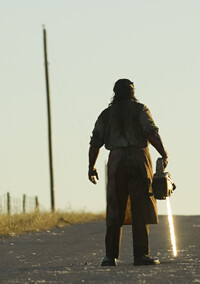 r seen.
An hour later, Martin Kingsley was back on the road, whistling and sometimes even singing right out loud. This was the best sales day of his entire life. Hell, he might even take some vacation time off from vacuum cleaner sales and spend some time at home…give himself time to really develop his art.
Running into Clive out there in that field, dangling like bait waiting for a big old cat to swim up and grab him, was truly an act of God. God wanted him to pursue his art. When he finally realized that, everything else just fell into place. He went back to the car and grabbed the oversized vacuum cleaner bag he had in there for Mrs. Brock’s body and the chainsaw he had under it. In no time, he was back on the road.
“Cattle,” Marty shouted, hoping to be heard over road noise. “That’s what you all are. Like my daddy always said, I don’t care if you’re black, white, red, or green I can use you for something. And you, my friend, can be used over and over and over again.”
Marty’s booming laughter filled the car as the thumps emanating from the trunk were joined by Clive’s terrified screams.
Read the winning entries in our last contest -- The Short, Short Story Contest here
go to main page
Labels: Contest, Fiction, Horror
 StumbleUpon |
 Digg |
 del.icio.us |
 Reddit |
 Technorati |
 E-mail

(The second place winner – our Animated Corpse Colonel – in the DaRK PaRTY Wicked Scary Short Story contest is a Canadian college student. Shannon Fay is a journalism student at King’s College in
The judges were struck by how Fay incorporated her journalistic style into her story. The straight-forward narration and strong voice of the main character kept us reading to the surprise ending. Short, but powerful.)
By Your Side
By Shannon Fay
Love has always frightened me. How could it not? It is an omnipotent force, cruel in its blind impartiality. ‘Love conquers all.’ ‘Love will find you in a crowded room.’ ‘Love can come at any time.’ I took these quaint sayings for what they really were: warnings. Dire messages tucked safely inside greeting cards and sealed in envelopes. I’ve always been able to see the true meaning behind common words and pictures, and I always took their advice straight to the heart.
And so I was careful. I wore long sleeves and wore my hood up and tucked my hands in my pockets throughout high school. I avoided eye contact by letting my hair hang in front of my face and looking at my ink scribbled shoes. Somehow I managed to graduate without love finding me.
But then I went to university. I let my guard down and got comfortable, sure that love would never find me among Plato and Darwin. But love comes when you least expect it. And one day, I noticed that Jonathon Thisby wasn’t in tutorial. Where was he? Had he dropped out? Was he sick?
He came back the next day. I listened to every word he said, laughed at every lame joke. I was just so relieved he was back.
It was only after tutorial that I realized what this meant. It was a new sensation, this nauseous feeling from the root of my brain stem to the pit of my stomach. Even after I threw up in the dorm bathroom the feeling did not go away.
Last year I went to a party knowing that he would be there as well. I didn’t drink, I never did, but I watched as Jonathon downed shot after jello shot. It almost made me wonder if he was as uncomfortable th ere as I was.
I stayed late because he did, but it was worth it because he offered me a ride home seeing as we both lived on campus. I barely heard myself say yes. I just couldn’t believe it. I was going to be alone with Jonathon Thisby. The hours of standing awkwardly in the corner of a stranger’s house had paid off.
We didn’t talk too much on the way back. I was always pretty quiet, but I just couldn’t think of the right way to confess my feelings.
“How are you liking philosophy?” he asked.
“I like it,” I replied, surprised that he had broken the silence. “Even though I wonder if I even belong here.”
“Hey, don’t sell yourself short.” He rubbed his forehead with his hand. “There are plenty of people who will do that for you.”
He didn’t see the STOP sign. I did, but it didn’t matter. There was no secret message in the sign; it was one of the few things in life that meant what it stood for.
He didn’t STOP. Neither did the car coming from the other direction, but they didn’t have a STOP sign so it’s understandable. They slammed into the passenger door and pushed us into the other lane.
I don’t remember the accident beyond that. It’s been a year but things are still strained between me and Jonathon. He blames himself. His hands still shake when he puts them on a steering wheel.
We haven’t spoken since then, but he knows I’m around, always. Sometimes he’ll see me out of the corner of his eye, or glimpse me in the mirror when he shaves or brushes his teeth. Or he’ll be studying and suddenly look up from his book as if he expects to see me standing there, but he never does. But I am there.
I think he thinks I blame him too. He thinks I’m out for revenge. No, Jonathon, that’s not it at all. I’m here because I love you. Maybe if I had told you that night, things wouldn’t have happened the way they did. I know this love is bad for both of us; it consumes me and soon I won’t have any soul left. It keeps you up at night and looking over your shoulder during the day. It’s eating away at both of us, but hopefully I’ll be able to make you understand before it devours us whole.
Labels: Contest, Fiction, Horror
StumbleUpon |
Digg |
del.icio.us |
Reddit |
Technorati |
E-mail
Our third place winner -- who has the distinction of being our Rotting Carcass Captain -- is Michael Carr. The judges like the way Michael was able to create a rich, detailed environment with many distinct characters. The story -- a familiar one to zombie fans -- teams with fast-paced action and excellent dialog.)
Infection
By Michael Carr

“What happened?”
“Close the door!”
“Where’s John?”
“I said ‘close the fucking door!’”
With a snap the barred door jammed in place, I shoved the wooden brace against the handle for added security. Carter slid to the ground, his back against the wall. The sound of his harsh breathing filled the silent hallway.
Charlie stood above him, his eyes closed, his hands against his
head, the small gun in his holster shaking. Both their jackets were covered in mud and a mixture of dried vomit and blood. Mary and David appeared from the dining room.
“What’s going on?” David asked.
“Go back to the dining room, David, take Mary with you.”
“Where’s John?”
“Just get back into the dining room!” I shouted, struggling to keep my
patience, “and make sure your kids are safe.”
“Safe? What happened? I thought the hills were deserted-”
Carter stumbled up, tearing away his jacket. He hurled it to the floor. The inside layer was streaked with fresh blood. Mary turned away, burying her face in David’s chest.
“We were wrong! We were utterly, totally, completely fuck all wrong!”
I grabbed Carter. His pale arms were slick with sweat.
“Calm down, Carter, just tell me what happened.”
“We were-we were, God, it happened so fast, Alex-” Carter whispered, shaking his head.
“What happened? Tell me!”
A choked gasp came from behind me. Charlie stood, his shoulders thrashing. He stared at me through bright blue eyes, terrified and pure. Blood trickled from his eyes and nose. His hands flew up to his head, pressing against his temples as if he were trying to crush them like a grape. He smacked his hands against his head as blood came up from his ears. He sank to his knees and uttered a childlike coo, before landing face down into the hard floorboard.
“He was contaminated!?” I screamed, shoving Carter away from me.
“I didn’t know! He was fine, we were running like hell!”
I turned Charlie over, his body shaking violently, his arms and legs
thrashing.
“Carter get over here! Help me hold him!” I screamed, “Mary, get Sam and Tim and take them upstairs! David, wake Tom, Emilio too! Go!”
Mary broke from David’s arms and rushed into the kitchen, snatching up the pale eight year old in her arms. Tim, the elder son at fourteen, followed close behind. David slid in Charlie’s blood as he rushed upstairs with Mary to the bedroom.
“Find the infected area. We have to stop it before it gets to the heart!”
Carter and I tore away Charlie’s jacket, pulling up his shirt. I turned his thrashing arms while Carter scanned the legs. Charlie’s screams had ceased. He stared into the distance, muttering to himself. I found it. Orange blood, infected blood, spreading slowly through the veins of the right arm. They pulsated slowly as they burst, sending the blood swirling in orange puddles beneath the skin.
“Here, Jesus it’s in his arm, just started. Tom!”
Tom took the stairs two at a time, jumping to the bottom, still dressed in his pajamas.
“Okay, where’s the infection?” Tom asked, taking his glasses from his back pocket and placing them across his eyes. He brushed his gray hair from his eyes. His hands no longer shaking from age.
“Right arm. It’s spreading.”
“Alright,” Tom whispered, “Emilio’s getting the tools. We’re gonna have to amputate it.”
“Cut it off? Are you sure?”
“Damn sure, he’s dead if we don’t. Carter, go to the bathroom, get all the towels in the hamper.”
“Yes sir.”
Emilio reached the stairs. His long black hair brushed back as he hits the floor, opening Tom’s medical box.

“Give me the saw.”
“No morphine?”
“No time.”
Tom steadied Charlie’s head. He shined the light against his eye.
“They aren’t dilated yet, we’re still okay. Charlie, buddy if you can hear
me, we have to take the arm.”
“Yellow matter custard...” Charlie whispered.
“Hold him still, Alex.”
I tightened my grip on Charlie’s shoulders. Carter arrived with a bundle of towels clutched to his chest.
“Place them around the arm.”
Carter lifted Charlie’s arm and stuffed the towels under it. Tom looked
around at us above his glasses. His eyes shone darkly, his lips tightened.
“Brace yourselves,” he whispered.
The shining saw slid smoothly across Charlie’s arm, tearing the skin and veins, digging into the tendons. Orange blood burst from the veins, speeding upward only to be trapped by the gleaming saw as it began to cut the bone. Charlie’s eyes flew wide as if he’d just realized what was happening. His screams pierced my ears as I held him down.
“Keep your mouths shut, don‘t let the blood in!” Tom shouted.
With a wet snap Charlie’s arm came apart. Emilio whipped his belt off and tied it around Charlie’s stump.
“We need to stop the bleeding! Cauterize it somehow!”
Carter jumped up and turned away, running into the kitchen. When he returned he held the clothing iron in his hands. He dropped to the floor and plugged it in.
“Hold him steady,” Tom whispered as Carter passed him the hot iron.
Tom placed the iron against Charlie’s stump. Steam spilled out as his flesh burned and browned under the iron. Charlie slumped back, unconscious. It was over.
“He’ll be okay,” Tom whispered, turning to Emilio.
“Burn the towels. Anything the blood’s touched. Burn it.”
-------
Charlie lay on the living room couch, shaking slightly. Tim and Emilio sat in separate chairs. Emilio watched over Charlie. Tim watched over his portable TV. The rest of us sat at the kitchen table. Carter sat sipping black coffee, he set the cup down and looked up.
“We were down by the river, John, Charlie and I. We’d just finished the
fishing when the attack came. I don’t know how many there were, I think five. They just...came out of nowhere, knocked John down. They fucking tore him apart. Literally ripped his arms off. Just pulled and scatched and bit until there was nothing but a puddle. Charlie got one through the head. I remember now, one came up, a little girl, like Sam’s age. Her eyes, the eyes I’ll never forget. They were scratched out, one of them was torn out, she just ran at me. And I shot her. I killed a kid...”
Tom grasped Carter’s shoulder, squeezing it tightly.
“And I ran. I ran and I ran like Satan himself was behind me. There was blood flying everywhere. On me, on the trees, on the leaves. Charlie, I think he got bit somewhere in the corn fields. I really can’t remember. How did they find us? We’re in the middle of nowhere, it’s like these ‘things’ have GPS.”
“We’ve locked all the doors?”
“Of course,” Mary whispered.
“Now what do we know about these things, they can’t speak, right?”
“No. No they can.”
The table had fallen silent.
“What?” I asked.
“They can speak,” Tom whispered, “in the first stages, before the virus
takes them over completely.”
“If they speak then maybe they can think. I mean they’ve tracked us this far, how do we know they won’t find a way in?”
David stood slowly, accidentally sweeping his cup off the table.
“What’s wrong?” Tom asked.
“Sam. Where’s my son?”
--------
Sam had been told never to answer the door. The monsters outside would kill him. He might not have seen Charlie’s arm but he’d heard the screams. But he also knew that there were survivors. When they’d started it had just been his family along with the doctor and his assistant. Soon Alex, Charlie, Carter, and John had come. Even Harry had been a survivor, before he turned.
Now Sam was alone, in the washing room, facing the back door and listening to the scratching that came from the other side.
“Let me in little boy. I won’t hurt you. I’m like you. I’m a survivor!”
The voice echoed from behind the locked door. Soft thumps issued from the other side. Sam stepped back. A face appeared in the window. An unharmed, perfect face. A young man’s face, it gave a sly smile.
“You see? I’m just like you...”
Sam took a step forward, placing his hand on the doorknob.
“Yes...”
With a click the door unlocked. It swung open. The man slowly shambled into view. He smiled again, his blond hair fluttering in the wind. A dripping noise could be heard. Sam glanced down to see the orange blood dripping from the man’s hands.
Sam opened his mouth to scream.
“Sam!” came his father’s voice.
David stood in the doorway, the pistol raised. The blond angel smiled
again, and turned. Sam was lifted off his feet, swept up in the man’s arm. The door slammed with a snap, and Sam was gone.
“No!” Mary screamed, pushing past Tom and ripping the door open.
“Mary don’t!” David shouted, reaching for his wife.
The door flew open and the infected spilled into the cabin. At least five of them, over taking Mary. She screamed as she was dragged out of the hallway and out into the lawn. Her screams were silenced as a young child tore out her throat.
“Mary!” David shrieked pulling the trigger. The head of an infected
disappeared with a spray of orange blood. The hallway was empty, but the infected would grow tired of Mary, they would be back.
“Into the living room!” I screamed, tearing David away from the doorway.
“No! No! Let go of me! My son, Sam! Sam!”
“He’s gone, David.”
“No...”
Tom and Carter rushed out as I dragged David back.
“What about Tim!?” I screamed.
David froze. “What?”
“Your son. Tim needs you. I’m not a father, Carter’s an asshole and Tom is pushing seventy, we need you!”
David stopped struggling. We entered the living room.
“Up, get up, we’re going upstairs.”
“What happened?” Emilio asked, holding a tire iron, “I heard gunfire.”
“Sam and Mary,” I whispered in his ear, trying not to let Tim hear.
“They’re coming back!” Carter screamed.
David and Carter stood tall, holding their weapons. Emilio tossed me the baseball bat above the mantle, gripping the tire iron in his hands.
The children came first. The infected children. The fucking bastards were smart, they sent the children first to throw us off. It worked. Carter was the first to fire.
A teenager’s Van Halen shirt evaporated as he was lifted off his feet and across the room from the shotgun blast. A boy’s head split, sending a wet spray of blood as I bashed it across the face. Even David pulled the trigger. Emilio faltered. He died first.
I watched as the two teens latched onto Emilio, bringing him down, slamming his face into the wood floor over and over. His nose splintered and he screamed only once. Then his skull cracked, a loud, whip-like snap, and he was still. I brought the bat down over the teen's neck, snapping it.
“Out! Let’s get out, we have to get to the boat!” I rushed forward and
slammed the door, chaining it. It wouldn’t hold. Out across the lawn the blond man stood watching me. He slid his tongue across his teeth, his eyes were full of hunger. Not real hunger, the infected didn’t eat, it wasn’t about food. The brutality was their cure, the murder, the only thing that could satisfy him.
I shut the curtains.
Tom stood over Emilio, holding his fallen friend’s hand. He lifted the tire iron and held it tight, hauling Charlie to his feet with his other hand.
“What the hell have I missed?” Charlie whispered.
“Tom, take Charlie to the front door, we’re exiting there. Carter, get as
much food and as many shells as you can carry. We’re leaving.”
Tim sat against his father in the couch, David held him close. They spoke softly, I couldn’t understand what they were saying, but I think I knew. David let go of his son’s hands and approached me.
“I need to talk with you, Alex.”
“Sure.”
“Follow me.”
We reached the bathroom, David entered and stared into the mirror. He spoke softly, as if we were in the presence of God himself.
“I want you to promise to take care of Tim.”
“David, what are you talking about?”
“I’m infected, Alex.”
I took a step back.
“What?”
David lifted his shirt, veins of orange blood clouded his chest.
“Won’t be long now.”
“When?” I asked.
“When they killed Mary. They told you the virus was fast, but God. I can feel it.”
“We’ll get you some help David, it doesn’t have to be like this.”
“I’m going to close this door Alex, and you’re going to leave, and when you are gone, with my son, I’m going to blow my brains out.”
“David-”
The door closed. The last glimpse of David I ever saw, was his face and the small, ironic smile it held. And he was gone. I turned from the door and stepped downstairs. Everyone was there. I glanced at Tim. Tim nodded. I took his hand in mine, and we opened the door.
“Let’s go.”
The gunshot echoed inside the house...
---------
The five of us stumbled down the steep hill. Carter and Tom dragged Charlie along. The boat was only half a mile down, hidden in the river.
“I have an itch on my right arm,” Charlie moaned.
“You don’t have a right arm, Charlie,” Tom said.
“I know, that’s what’s messed up about it!”
“Quiet!” I whispered.
We came to a halt. I turned. A flock of birds took off in the distance, from the forest, they emerged. Dozens of them, sprinting towards us.
“Run!”
We turned and ran. Charlie trudged on as he was half guided, half dragged toward the river.
“Forget this,” Carter said, dropping Charlie, who hit the ground, and
sprinted off into the wilderness.
“Carter!? Carter you bastard!” I screamed.
---------
Carter was almost at the river bank when the blond man dropped him. Carter moaned and glanced up at the blond man. The blond man smiled, petting Carter’s cheek. Then he brought the axe down into Carter’s chest. Carter gulped and coughed. A spray of blood shot forth as the blond man yanked out the axe. Carter coughed once more as blood filled his lungs. Then he drowned.
---------
We reached the boat. Tim jumped in and pulled the motor. Charlie shambled in next.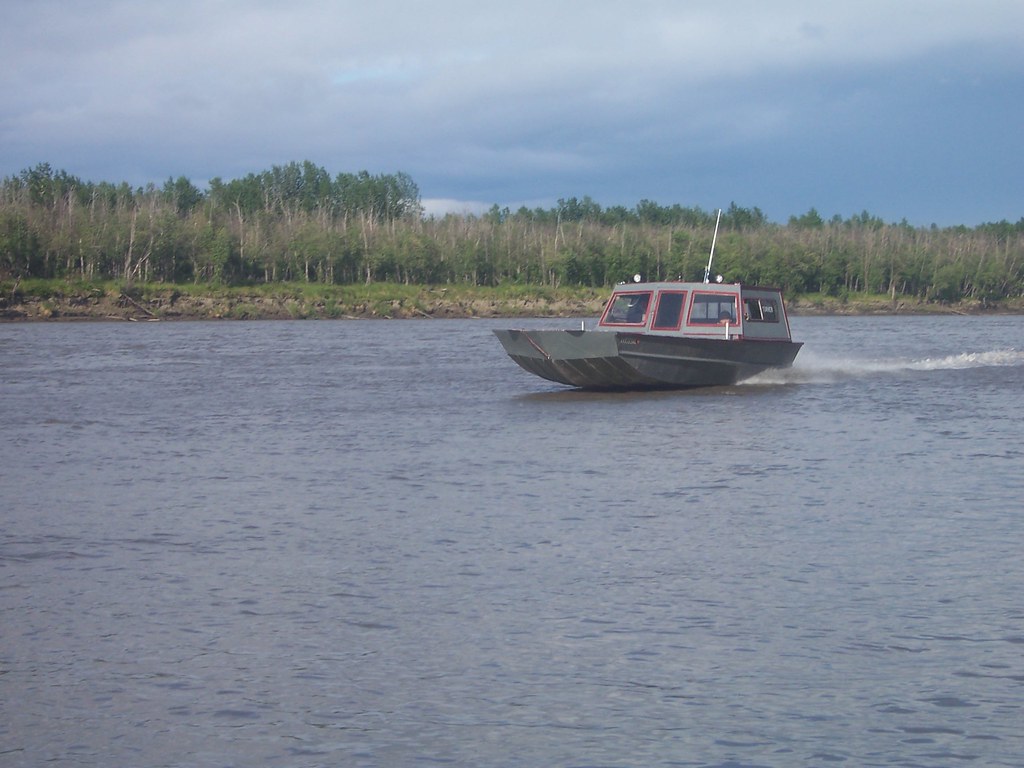
“Get in!” Tom screamed, his glasses bobbing on his ears.
The boat rocked as I stepped in. I turned to Tom.
“Come on, Tom!”
“I’m com-” Tom said, and was cut short. The blond man leaped across the dock and drove the axe into his back. Tom gave a little gasp and sank to his knees, his fingers touching mine, then he dropped.
I fell back and into the river water. I struggled to pull myself up as the
blond man stepped into the boat, axe raised. Charlie aimed a kick in the best spot available. The blond man was lifted back and onto the docks. With a shriek I tackled him, holding him down and burying my fist in his face. His teeth shattered. He no longer smiled. He elbowed me and slashed to the side with the axe, I dropped back onto the wood. The blond man’s remaining teeth formed a malicious grin. He raised the axe.
A crack issued and the blond man’s brains sprayed the deck. He fell
forward, the grin forever plastered on his face. Tim stood behind him,
holding Charlie's pistol in his hands. Tim dropped the gun and fell back. I stepped over the body and entered the small motor boat. I pulled the motor, and the boat was off.
--------
Charlie sleeps huddled against the wood, snoring loudly. Tim sits against me, watching the remaining infected that follow us as they stumble through the woods, moaning. They’re dying, which serves the question, who is left? I hold the revolver in one hand, keeping it close to my side.
“What did my dad say?” Tim asks.
“When?”
“Before he died.”
I glance at the boy next to me.
“He said he wanted us to keep going,” I whisper.
Tim looks away, watching the moonlight on the rocking waterway. He sighs and leans his head back, falling into the deepest of slumbers.
“I can deal with that,” he whispers.
I smile.
go to main page
Labels: Contest, Fiction, Horror
StumbleUpon |
Digg |
del.icio.us |
Reddit |
Technorati |
E-mail
(DaRK PaRTY has been known to get into knock-down-drag out literary brawls about Ernest Hemingway. We are enormous fans of Papa – and believe that many people misunderstand the man and his work. So it was with a great sigh of relief when we stumbled upon Bill Newmiller, an English professor at the
DaRK PaRTY: It's often difficult to sift fact from fiction when discussing Ernest Hemingway. What do you think is the most common misunderstanding about him?
Bill: Many mistakenly believe that Hemingway truly was such an insensitive macho man. He did have a lot to do with that kind of commercial branding, but in reality he was much more sensitive, more deeply intellectual than that public image. A lot of harm has come out of that: people, who haven’t even read him, know him but as an icon rather than as a man.
The best way to understand Hemingway is to read all of him—not just “The Old Man and the Sea” (1952). Stay away from the biographies until you have read him first. Then, read Michael Reynolds and Carlos Baker both. Also, we are in the process of publishing the complete letters collections; read them as they come out as well.
DP: Hemingway remains a larger than life figure. Why do you think people remain fascinated by him?
Bill: Largely because he wrote so keenly about how modernity was so changing life and traditions and human spiritually so rapidly. Hemingway on many occasions tried to re-authenticate some of those lost special occasions in life, such as the fiesta of Saint Fermin in
DP: What three Hemingway novels are your favorites and why?
Bill: “In Our Time” (1925) was a remarkable accomplishment for a writer of any age, but Hemingway was only 25 when it was published. It’s a novel about war, but the war remains off-stage. Instead we learn about war from its effects. And it’s about a different kind of war, one where the winners were also the losers. As one reads “In Our Time” within its historical context, one can feel the ground shifting: modernity has taken over and human culture will never be as it once was. That the book arrives at its truths episodically, in a series of inter-related but loosely woven strands distinguishes as a new way of story-telling, one that reflects modern art and imagination.
In “A Farewell to Arms” (1929) lies the tragedy of modernity. Frederick, the story’s protagonist, learns the ugly nature of war. As the book ends and he’s lost everything, we realize that modern man can turn only to an inner fortitude to light his way through an ever-darkening modern world.
“The Sun Also Rises” (1926). There is a no more poignant depiction of seeking the unobtainable. Jake’s unspeakable war injury has destroyed his future in ways both metaphoric and real. Still, he moves on, with unfathomable courage.
DP: Hemingway was a prolific short story writer. What story do think best encompasses his work and why?
Bill: As good as Hemingway was as a novelist, he was that much better as a short story writer. In fact, he may be the best in the English language. His greatest work is his collected short fiction. My favorite short story is the “Short and Happy Life of Francis Macomber.” In it Hemingway distills the complexity of gender, masculinity, femininity, love, lust, and violence, and creates a penetrating analysis of the human condition. His second best work may be the nonfiction, “A Moveable Feast” (1964), which offers great insight into his life.
DP: What is the Hemingway Society and what are its primary goals?
Bill: We are actually The Hemingway Foundation and Society. We wear two hats. The foundation was established in 1964 by Mary W. Hemingway, his fourth and last wife, and we are chartered to promote Hemingway and modern fiction. As such, we present the Hemingway Foundation/PEN award annually at the John F. Kennedy Library. As a society, we promote Hemingway scholarship. For one thing, we meet biennially at a global location that meant something to Hemingway and his work. For example, we are going to
Read our review of Hemingway's short story "A Clean, Well Lighted Place" here
Read our 5 Questions interview about Dorothy Parker here
Labels: 5 Questions, Bill Newmiller, Hemingway, interview, literature
StumbleUpon |
Digg |
del.icio.us |
Reddit |
Technorati |
E-mail
By Rev. Colson Crosslick
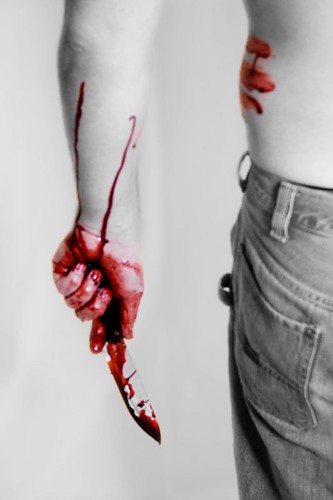
In the 1980s there were several Halloween incidents in which innocent children were brutally murdered by liberal Satanists handing out poisoned candy and apples riddled with razor blades. Children literally perished on the streets!
So if the life of your child isn’t enough of a reason to avoid Halloween then maybe you should also consider your soul. Think logically. Would Jesus condone a holiday symbolized by ghosts, goblins, witches, and orgies? If you need further proof – look no further than the Holy Bible:
“Don't participate in the things these people do. For though your hearts were once full of darkness, now you are full of light from the Lord, and your behavior should show it! For this light within you produces only what is good and right and true.
Try to find out what is pleasing to the Lord. Take no part in the worthless deeds of evil and darkness; instead, rebuke and expose them. It is shameful even to talk about the things that ungodly people do in secret.” (Ephesians 5:7-12)
While Halloween isn’t mentioned by name in this passage of scripture, it refers to pagan rituals. Halloween, as any educated person knows, originated as a Pagan celebration of darkness – a time when the spirit world and the real world became one. Celtic druids would dance around bonfires and toss babies into the flames in order to pay tribute to their vile gods. The druids – mostly robust, muscular men – would then have a homosexual orgy and howl at the moon with unrelenting passion.
As you can plainly see this is behavior for a
So what should a good Christian do on Halloween? Here are five family filled fun activities to participate in rather than dressing up like a whore or a pirate to beg for poisoned candy at your neighbor’s house.
· Go to your church and worship Jesus Christ
· Hold a pumpkin carving contest with your kids using Bible themes. You haven’t lived until you’ve seen a pumpkin carved to look like Moses smiting the Egyptians!
· Decorate your house with crucifixes and hand out pamphlets filled with Bible sayings to the children of misguided parents who clearly don’t understand that they are setting their children on the road to Hell.
· Hold a Noah’s
· Hold a fundraising party for a local Christian charity. You can serve Jell-O and hand out lollipops while raising money for those less fortunate.
Some of my parishioners think my stance on Halloween is extreme. But in the eyes of God, celebrating Halloween would be the same thing as worshipping pagan gods, reading comic books or attending a service at a Synagogue. In other words, Halloween is a sin. Celebrate at your own risk!
(The Rev. Colson Crosslick is pastor of the
Read the Good Reverend's views on Darwin here
Labels: Halloween, Under God's Right Arm
StumbleUpon |
Digg |
del.icio.us |
Reddit |
Technorati |
E-mail

 RSS Feed
]saddlebrown]tan]maroon](],](])us.st11.yimg.com/us.st.yimg.com/I/getfishy_1912_2002960]Fishboy]black],]1]10]3]1]1]1]1]1]1]1]1]1],](](]papayawhip])])]DaRK^20PaRTY^20ReVIEW]^3A^3ALiterate^20Blather^3A^3A],](](],](]maroon](](](]brown](],](]maroon](](](],]60]10],](](]^23F5ECE1])])]maroon]0.5]0],](](]^23F5ECE1])])]maroon]^23F5ECE1])])]^23666]16]maroon]maroon],](](]maroon](],](]^23333]^238C4614]tan],](](]^23F5ECE1])])],](](]^23F5ECE1])])],](](]^23F5ECE1])])],](]maroon]maroon]15]3]23]18]maroon],](](],](],](](],](]black](](](],](](](],]black](](](],](](]^23333](](](](](],]^2336F]^23333](],](]Posted^20by^20^24AUTH^20at^20^24TIME.]36],](](]black])])]^23F5ECE1])])]^23666]16]maroon]maroon],](](]maroon](],](]^23333]^238C4614]tan]Contributors]]]^24PROFILE]]]DaRK^20PaRTY^20LiNKS]]]The^20Ambrose^20Bierce^20Site])donswaim.com/]Ambrose^20Bierce]Ironic^20Times])www.ironictimes.com/index.html]Ironic^20Times]Gallery^20Voyer])www.voy-art.com/]Gallery^20Voyer]Tintinologist])www.tintinologist.org/]Tintin]Arcanum^20Cafe])www.arcanumcafe.com/]Arcanum^20Cafe]LADA^20-^20Protect^20our^20Kids])da.co.la.ca.us/pok/poklist.htm]POK^20List]Tom^20Caron^20-^20Boston.com])www.boston.com/sports/nesn/aboutus/onair/tomcaron/]TC]The^20Captain^20Humphreys^20Project])www.captainhumphreys.com/]Captain^20Humphreys]Torpedo^20Design])www.torpedodesign.com/]Torpedo^20Design]^3Cimg^20src^3D^22)us.st11.yimg.com/us.st.yimg.com/I/getfishy_1912_2002960^22^20alt^3D^22Fishboy^22^20style^3D^22border^3A^201px^20none^20black^3B^22^20/^3E])www.fishboy.com/]Fishboy]Etc]]]^3Cimg^20src^3D^22)psyc.horm.org/barimg/bar_psycho.png^22^20width^3D^2280^22^20height^3D^2215^22^20alt^3D^22PsycHo^3A^20Free^20Template^20Generator^22^20style^3D^22border^3A^200px^20solid^20black^22^20/^3E]^24PSYCHO]PsycHo^3A^20Free^20Template^20Generator]^3Cimg^20src^3D^22)psyc.horm.org/barimg/bar_firefox.png^22^20width^3D^2280^22^20height^3D^2215^22^20alt^3D^22Get^20FireFox^21^22^20style^3D^22border^3A^200px^20solid^20black^22^20/^3E])www.mozilla.org/products/firefox/]Get^20Firefox^21]^3Cimg^20src^3D^22)psyc.horm.org/barimg/bar_xhtml.png^22^20width^3D^2280^22^20height^3D^2215^22^20alt^3D^22XHTML^20Validator^22^20style^3D^22border^3A^200px^20solid^20black^22^20/^3E])validator.w3.org/check/referer]XHTML^20Validator]Recent^20Posts]]]^24RECENT]^20]]Archive]]]^24ARCHIVE]^20]]ADVERTISEMENTS]]]^20]]^26^2361470^3BPsycHo})


This work is licensed under a Creative Commons Attribution-No Derivative Works 3.0 License.
The Template is generated via PsycHo and is Licensed.