Poem: Sunrise Over Worcester
5 Questions About: Jason Pinter
12 Signs That You Might Be A Banker
The 9 Worst Movies to Win Oscars
Book Review: Narrow Miss for "Above the Law"
5 Questions About: Screaming Blue Messiahs
What's Up With All the Fat, Naked Guys?
Thoughts from the Shadows: The Craziness of Publis...
How to Make a Damn Good Horror Movie
Literary Criticism
Fantastically Bad Cinema
Essays
Under God's Right Arm
June 2006
July 2006
August 2006
September 2006
October 2006
November 2006
December 2006
January 2007
February 2007
March 2007
April 2007
May 2007
June 2007
July 2007
August 2007
September 2007
October 2007
November 2007
December 2007
January 2008
February 2008
March 2008
April 2008
May 2008
June 2008
July 2008
August 2008
September 2008
October 2008
November 2008
December 2008
January 2009
February 2009
March 2009
Alcoholic Poet
Baby Got Books
Beaman's World
BiblioAddict
Biblio Brat
Bill Crider's Pop Cultural Magazine
The Bleeding Tree
Blog Cabins: Movie Reviews
A Book Blogger's Diary
BookClover
Bookgasm
Bookgirl's Nightstand
Books I Done Read
Book Stack
The Book Trib
Cold Hard Football Facts
Creator of Circumstance
D-Movie Critic
The Dark Phantom Review
The Dark Sublime
Darque Reviews
Dave's Movie Reviews
Dane of War
David H. Schleicher
Devourer of Books
A Dribble of Ink
The Drunken Severed Head
Editorial Ass
Emerging Emma
Enter the Octopus
Fatally Yours
Flickhead
The Genre Files
The Gravel Pit
Gravetapping
Hello! Yoshi
HighTalk
Highway 62
The Horrors Of It All
In No Particular Order
It's A Blog Eat Blog World
Killer Kittens From Beyond the Grave
The Lair of the Evil DM
Loose Leafs From a Commonplace
Lost in the Frame
Little Black Duck
Madam Miaow Says
McSweeney's
Metaxucafe
Mike Snider on Poetry
The Millions
Moon in the Gutter
New Movie Cynics Reviews
Naked Without Books
A Newbie's Guide to Publishing
New & Improved Ed Gorman
9 to 5 Poet
No Smoking in the Skull Cave
Orpheus Sings the Guitar Electric
Polly Frost's Blog
Pop Sensation
Raincoaster
R.A. Salvatore
Reading is My Superpower
Richard Gibson
SciFi Chick
She Is Too Fond Of Books
The Short Review
Small Crimes
So Many Books
The Soulless Machine Review
Sunset Gun
That Shakesperherian Rag
Thorne's World
The Toasted Scrimitar
This Distracted Globe
Tomb It May Concern
2 Blowhards
Under God's Right Arm
A Variety of Words
The Vault of Horrr
Ward 6
When the Dead Walk the Earth
The World in the Satin Bag
Zoe's Fantasy
Zombo's Closet of Horror
Bookaholic Blogring
Power By Ringsurf
(A quick glance at the books we’ve been reading over the last several weeks. A “cracked-back” is what happens to the spine of a new book once you’ve thoroughly read it. Please feel free to add your own list of recommendations by leaving behind a comment.)

The Good Father: On Men, Masculinity, and Life in the Family
By Mark O’Connell
Usually we’re not fond of self-help books or the latest pop psychology tomes, but O’Connell’s book was surprisingly free of those sugary-feel-good-moments that generally come with this type of fare. O’Connell, a
Grade: C+
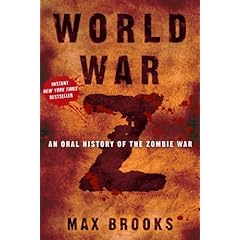
World War Z: An Oral History of the Zombie War
By Max Brooks
The only weakness is this remarkable novel is that it may read too much like a history. The story takes place 10 years after a plague renders the dead into flesh-eating zombies and takes us around the globe for first-hand accounts of the action. It’s this premise that makes Brooks’ novel seem so realistic, but it’s also the weakness as there are no central characters to watch, see develop, and continually root for. But there’s lots to like in the compelling and often horrifying vignettes crafted by Brooks (who may have found a niche as the zombie fiction king of the
Grade: A-
99 Coffins
By David Wellington
“99 Coffins” falls on the other end of the pulp spectrum from “World War Z.” It has none of the sophistication or literary aspirations of the latter novel. “99 Coffins” simply wants to scare people – and it finds mixed success in that endeavor. Give
Grade: C-

DEMO: The Collected Edition
By Brian Wood and Becky Cloonan
“DEMO” is a graphic novel set up like a series of 12 short stories (it’s taken from the independent comic of the same name). The strength of this collection is Becky Cloonan’s amazing artwork that captures magnificently the alienation of young adulthood through shifting angels and perspectives and the heavy black-and-white line work. The stories by Brian Wood aren’t as powerful as the drawings. Some of the tales, which focus on young people forced into making crucial decisions in their lives, feel cliché. Yet Wood does manage to tap into the darkness and the struggle of many young people who feel alienated by their peers. Many of the stories feature characters with disturbing superpowers – such as being able to kill people with a word or living forever. So give Wood credit for creativity, but only a B for pulling it through all of the stories. “DEMO” has high expectations for itself and it pushes the graphic novel into places that it hasn’t often gone. So if you’re a fan of the genre – this is a must read. It’s also a good place for people who want to read graphic novels to start.
Grade: B+
Read about our favorite gunslingers from the Old West
Read our picks for some of the best books of the last few years
Read our last Cracked-Back column
Labels: Becky Cloonan, book review, books, Brian Wood, Cracked-Back, David Wellington, Mark O'Connell, Max Brooks
 StumbleUpon |
 Digg |
 del.icio.us |
 Reddit |
 Technorati |
 E-mail


By Christine Larson
One: Say That a Thousand Times
In the air,
on my tongue,
on the paper,
each time it weighs differently.
Say that a thousand times more:
My father killed himself.
Two: They Made Love
He threatened to kill himself a thousand times,
a thousand times, maybe more.
Maybe she threatened to leave.
I can see him pleading
baby, baby, baby.
I can see her enjoying that.
Maybe she said
this isn’t working,
smoked a cigarette.
They made love.
It grew within him like a cancer,
one that only he could imagine and foster.
Already in touch with failure,
he fucked her, pretending to enjoy it.
Maybe she was distant,
already worried, perhaps.
we need to talk
she might have said
and then lit a cigarette.
They made love.
My father was not well
and she was
not affectionate.
They made love.
I imagine it went something like this.
Three: Did She Know?
His oldest daughter
almost called him on Father’s Day.
Did she know?
One brother had just died and
another refused him money.
Did she know this?
His mother had just disowned him.
I don’t know if she knew.
Did she say
you have your family
And did he say
without you there is nothing
Maybe she said
no, it’s over
never actually intending to go.
I picture her smiling.
I think she smiled a little.
baby, baby, baby
That day, I think he begged.
She played his loneliness,
and he, her guilt.
She threatened to leave;
he threatened the same.
Maybe this was an old dance for them.
Did she know?
Four: The Safety
This moment was far from the first.
He did something different, maybe,
fucked up to start with.
To show he was serious,
would he have taken off the safety?
Or out of habit perhaps.
Was the safety even on?
He would have held the gun to his head.
it isn’t working
this isn’t working
That day, did he hear her?
He certainly fucked her
on the fold-out couch.
He always kept his gun
by the fold-out couch.
He would have reached for the gun,
his gun.
You are all there is
He would have said.
I have no family
He would have said.
It would have put him over the edge,
the perfect jumping-off point.
Did he take the safety off?
It doesn’t matter.
Five: It Hurt to Hear Her
It hurt to hear her
say those things:
generous and loving, kind
She talked of a man I didn’t know,
this woman.
Not one kind word did the others offer:
his brother, sad-faced and quiet;
his ex-wife, pretending to cry
my poor girls;
the same as always
and beautiful like him, his daughters,
silent.
She was the only person
I thought I didn’t know.
Maybe his last thought was
bitch
I’m serious, damn it
His hand tight to keep from being swatted away,
without intent, squeezing.
Annoyed, he reacted.
She might have reached to swat the gun away;
this is what she said.
I suspect they struggled and the gun went off.
She said she tried to take it from him.
She said she reached for it
but something happened
this time.
My father, with a gun to his head,
generous and loving, kind.
It hurt to hear her.
(Artist by day and poet by night, Christine Larsen is a meanderer by nature. She is prone to overly dramatic pauses in conversations, unpredictable detours in thought and picking up shiny things. Christine is sometimes clever, often sarcastic and always highly susceptible to the temptations of chocolate and tequila. She lives and writes in
Read Christine's other poem "Senryrus for Dirtbags"
Read our 5 Questions About Modern Poetry
Labels: Christine Larsen, Poem
StumbleUpon |
Digg |
del.icio.us |
Reddit |
Technorati |
E-mail
Several years ago we muddled through Cormac McCarthy’s “All the Pretty Horses” (1992). We found it long and dull; peppered with McCarthy’s annoying omission of simple punctuation (what’s wrong with using quotation marks and apostrophes?) and filled with run-on sentences of questionable clarity.
Try this sentence on for size:
“Although the night was cool the double doors of the grange stood open and the man selling the tickets was seated in a chair on a raised wooden platform just within the doors so that he must lean down to each in a gesture akin to benevolence and take their coins and hand them down their tickets or pass upon the ticketstubs of those who were only returning from outside.”
Yeah, it makes you dizzy that McCarthy can write a 70-word sentence about a man handing another man a ticket stub (which is two words, Cormac). Our jaw dropped when this novel won the National Book award.
We applauded critic and author B.R. Myers scathing literary criticism “A Reader’s Manifesto” when he called out McCarthy as one of the guilty among the long list of pretentious literary writers (other authors called out by Myers included E. Annie Proulx, David Guterson, Paul Auster, Charles Frazier, and Don DeLillo).
Myers took offense at this sentence from McCarthy’s “The Crossing” (1995): “He ate the last of the eggs and wiped the plate with the tortilla and ate the tortilla and drank the last of the coffee and wiped his mouth and looked up and thanked her.”
Then Myers tore into it:
“This is a good example of what I call the andelope: a breathless string of simple declarative statements linked by the conjunction and. Like the "evocative" slide-show and the Consumerland shopping-list, the andelope encourages skim-reading while keeping up the appearance of “literary” length and complexity. But like the slide-show (and unlike the shopping-list), the andelope often clashes with the subject matter – the unpunctuated flow of words bears no relation to the methodical meal that is being described.”
We were greatly revealed to learn that another critic found McCarthy’s prose pompous, confusing, and as heavy as a lead weight.
We still find McCarthy’s Border Trilogy to be overrated, but his last two novels have us reconsidering McCarthy: “No Country for Old Men” (2005) and “The Road” (2007).
While we still find McCarthy’s reluctance to use proper grammar maddening it appears that he may have been listening to his critics (such as it is). Both novels are shorter and he strays away from his past sin of using long complicated sentences to describe simple mundane moments.
Instead, he focuses both “No Country for Old Men” and “The Road” on developing rich complex characters and then mines their interactions with each other for great emotional depth. The novels evoke great truths about human nature that at times left us breathless (and eager for more).
While reading “All the Pretty Horses” felt like a miserable chore, we couldn’t put down “No Country for Old Men” or “The Road.” There was energy to the prose and while the plots weren’t intricate – at least they had plots. The action feels more external and less internal. And that’s a good thing.
While we’ll stop short of lavishing McCarthy with the praise the likes of Literary Critic Harold Bloom – who called him one of the most important authors of his time – we have changed our minds about McCarthy.
The greatest praise we can give to McCarthy is that both “No Country for Old Men” and “The Road” have stayed with us. Both novels are haunting and powerful and stick to the ribs of your mind for a long, long time (like good, old-fashioned oatmeal).
So we kind-of apologize, Mr. McCarthy. We’re not going back to the Border Trilogy, but we can’t wait for your next book – ‘cause we’re going to be first in line to buy it.
Knock Your Socks Off Great Books
Labels: book review, books, Cormac McCarthy, literary criticism
StumbleUpon |
Digg |
del.icio.us |
Reddit |
Technorati |
E-mail
Our Interview with Documentary Filmmaker
Beth Murphy
(DaRK PaRTY isn’t afraid to admit that we shed quite a few tears while watching the 9/11 documentary “Beyond Belief” (but in a he-man kind of way). You can read our review of the film here. The story is about two 9/11 widows who decide to break out of their grief and reach out to war widows in

DaRK PaRTY: When did you first meet Susan Retik and Patti Quigley and what about them made you want to create "Beyond Belief"?
Beth: I learned about Susan and Patti’s mission to help Afghan war widows through my role on the board of the International Institute of Boston, an organization that helps immigrants and refugees. Immediately, I knew I wanted to tell their story. To me, it was a story that needed to be told. After three years of code red and orange terror alerts coming out of
DP: You chose not to use news footage from
Beth: I knew I personally didn’t want to see this footage again, and I suspected others felt the same. And from a filmmaking perspective, I felt it would detract from -- rather than add to -- the story telling I was trying to achieve. To be honest, it would have been very easy to show footage of the planes hitting the
DP: "Beyond Belief" manages to be heart-wrenching, but without being overly sentimental. How did you balance their grief with their mission and strength?
Beth: Susan and Patti deserve all the credit for that. This is their story told in their own words. And I tried to stay true to that. Of course, they grieve. But they are focused on life after 9/11. They didn’t want to be public figures - but September 11th forced them into that role, and they wanted to use the new voice they’d been given for good.
DP: The movie displays a striking contrast of cultures. What struck you as the biggest differe nces between Susan and Patti and the Afghan war widows?
Beth: The economic divide is about as vast as you can possibly imagine. Susan and Patti are upper middle class women living in the affluent suburbs of the world’s richest superpower. The Afghan widows are the most desperate and destitute members of an already impoverished nation.
After their tragedies, Susan and Patti received incredible support from family, friends, and, in fact, an entire nation. Cards, presents, dinners arrived daily – sometimes overwhelming them and their families. Despite their losses, life continued in much the same way it had before the deaths of their husbands: Their children continued classes at the same schools. They lived in the same houses. They had no financial hardships to consider.
The opposite is true for an Afghan woman who loses a husband. She is forced to experience the unraveling of her entire life. There is no life insurance in
As Susan says in the film, “I just could not imagine living in
DP: Patti and Susan were amazed and awed at the poverty of
Beth: I was astonished to see so many women still covered head-to-toe in the all-encompassing burqa. With just a little piece of mesh to see out of, women in
Today, with the Taliban once again gaining strength, rights are once again being eroded. One of the most horrific signs of this is the fact that self-immolation cases are rising dramatically. To save themselves from chronic abuse, poverty, forced marriages and a life without education or human rights, women are setting themselves on fire, believing that burning to death is a better alternative to their current existence. In
Read our review of "Beyond Belief"
Read our review of "3:10 to Yuma"
Labels: 5 Questions, 9/11, Beth Murphy, Beyond Belief, interview
StumbleUpon |
Digg |
del.icio.us |
Reddit |
Technorati |
E-mail
“We're not gay; not that there's anything wrong with that!”
- Jerry Seinfeld
(So you’re watching a movie, munching on popcorn (maybe sneaking a few Raisinets – cause hell chocolate and popcorn rock) and then you feel the hair at the nape of your neck tingling and an odd stirring in the loins. You recognize this as your Gaydar going off like a freakin’ fire alarm. On the screen, quite inexplicably, the actors have gone totally and completely gay. Not that there’s anything wrong with that – if the movie was, you know, supposed to be gay. We don’t mean gay as in homosexual either. “Brokeback Mountain,” for example, is a movie about homosexual cowboys, but the actors were cowboys – real men. There are homosexual scenes in the film – but there are no “gay” moments. It’s difficult to describe – so allow DaRK PaRTY to show you what we mean. Here’s our partial list of Unintentionally Gay Moments in Cinema.)

Into the Wild (2007)
Quick Synopsis: The movie is based on the Jon Karkauer’s non-fiction book by the same title. It chronicles the short life of Chris McCandless, a college graduate who gave away his life savings and dropped out of society to live a simple, ascetic life on the road. He died in
The Offending Actors: Emile Hirsch and Hal Holbrook
The Gay Moment: McCandless (Hirsch) meets a retired widower named Ron Franz (Holbrook) while camping out in the desert. The two strike up a fast friendship. At one point, the 23-year-old McCandless and the 70-year-old Franz take a gondola ride up the side of a mountain. They turn towards each other and suddenly gaze lovingly at one another. The scene just lingers like a peeping Tom at the toilet window. One imagines the scene was trying to capture the bond developing between the two (in a grandfather to grandson kind of way), but it fails miserably. Franz looks like a horny old goat ready to start licking the belly hairs on the nubile flesh of his young ward. It’s… creepy.
Spiderman 3 (2007)
Quick Synopsis: An alien life form takes control of Spiderman’s suit and begins to turn him evil even as he learns that the man who killed his uncle is still at large. That killer, Flint Marko, is transformed into super villain Sandman. Sandman and the alien creature, Venom, team up against Spiderman and his new ally, Green Goblin.
The Offending Actor: Tobey Maguire
The Gay Moment: Green Goblin (James Franco) has been mortally wounded and lies on top of the construction skeleton of a building as Mary Jane Watson (Kirsten Dunst) kneels by his side. Spiderman (Maguire) lowers down from his web and lands gingerly on the platform. And then, in one of the most feminine moves since Red Sox pitcher Derek Lowe’s swinging fist pump after his no hitter in 2002, Maguire pitter patters to the Green Goblin’s side and kneels delicately next to him. The movement is so wildly girlish that it whisks you right out of the movie. Instead of the superhero Spiderman, you’re staring at the rather reedy and androgynous Maguire dressed in silly, but very tight, costume. Suddenly you desire soap and a shower.
Return of the King (2003)
Quick Synopsis: The last movie in the Lord of the Rings trilogy has Frodo and Sam hiking to
The Offending Actors: Elijah Wood, Sean Astin,
The Gay Moment: There’s not much to say here because this may be the seminal moment in all of unintentional gay moments in cinema. It takes place during one of the last scenes when Frodo (Wood) wakes up from a coma. The rest of the fellowship comes prancing into his bedroom like a pack of rabid
Risky Business (1983)
Quick Synopsis: Joel, a suburban teenager, takes daddy’s Porsche for a spin when his parents are on vacation and crashes it into a lake. In desperate need of fast cash, he ends up turning his parents’ suburban manor into a whorehouse for his buddies.
The Offending Actor: Tom Cruise
The Gay Moment: Joel cranks up the stereo to Bob Seger’s “Old Time Rock n’ Roll” and proceeds to dance about his living in a pink button down shirt, tightie-whities, and white tube socks. He sings into a candle stick and then proceeds to hu mp a golf club. Awkward (see video clip below).
Pretty in Pink (1986)
Quick Synopsis: A punk girl and outcast at her high school is invited to the prom by one of the popular boys. But the pressure from his preppy friends proves too much and he breaks off the date. She decides to go by herself, but he finally comes around and breaks through the peer pressure to admit his love for her.
Offending Actor: Andrew McCarthy
The Gay Moment: It only just seems like every scene featuring McCarthy (as Blane) is wicked gay in this movie. McCarthy just has that look – the sad puppy dog eyes and that goofy grin. But the really offending scene from “Pretty in Pink” is when McCarthy walks into the record store where Andie (Molly Ringwald) works. He sidles in and lifts up his sunglasses over his glossy raven locks so it looks like a barrette and gives her his stupid-ass grin before squeezing by another male patron – and they actually bump asses. The other patron actually gives McCarthy the once over. And it’s not even surprising. You expect it.
Legends of the Fall (1993)
Quick Synopsis: A colonel raises his sons in the wild of
Offending Actor: Brad Pitt
The Gay Moment: It should be noted that Brad Pitt’s blown dried blond hair is gay throughout the film. However, the really gay moment occurs when Pitt (playing Tristan – the wildest of the boys) comes loping toward his family on a horse. They are with the bride to be and they all pause to admire Tristan as he rides toward them. The youngest brother, Samuel (played by Henry Thomas), stands next to Tristan and gives him an unabashedly admiring glance and then Tristan, wearing a white shirt unbuttoned to his chest and wearing a hemp necklace, tips his cowboy hat to the bride to be (played by Julia Ormand) and – get this – raindrops explode off his hat in a spray. What’s the symbolism here? Eh. It’s like a Dove bar ad done in 1970s porno.
Top Gun (1986)
Plot Synopsis: A wild child nicknamed Maverick goes through the Navy flight school program trying to blaze his own way. He angers almost everyone and nearly quits when his partner dies. But he comes back, saves the day, and everyone comes to love him.
Offending Actors: Tom Cruise, Val Kilmer, Anthony Edwards
The Gay Moment: There are two really, really gay moments in this movie. The first? Volleyball anyone? When four shirtless pilots, including Tom Cruise and Val Kilmer, get all sweaty and start flexing and posing at one another as they as they play beach volleyball. When Val Kilmer spins the volleyball on his finger and gives Cruise a come hither look – well, that’s all she wrote. But it actually gets worse. At the end of the movie as Val and Cruise hug and embrace, Val says: “You can be my wingman anytime.” Cruise says: “Bullshit, you can be mine!” They almost start French kissing right there on the aircraft carrier.
Hollywood's Most Awkward Nude Scenes
The Best Baseball Movies
I'll Be Back and the Rest of Arnie's Greatest Lines
Labels: Homosexuality, Humor, Movies
StumbleUpon |
Digg |
del.icio.us |
Reddit |
Technorati |
E-mail
The Fixx
Origin: The Fixx was a British new wave band formed in 1980 by a group of college buddies.
Band Members: Cy Curin (vocals), Jamie West-Oram (guitar), Rupert Greenall (keyboards), Adam Woods (drums), Dan K. Brown (bass)
Best Album: “Reach the Beach” (1983)
Next Best Album: “Shuttered Room” (1982)
Best Song: “Red Skies”
Second Best Song: “Saved by Zero”
Third Best Song: “One Thing Leads to Another”
Why They Should Have Made It: The Fixx made some excellent pop music with that 1980s alternative sound. They were on the cusp of making it big with “Reach the Beach,” which hit number 12 on the
Why They Remain Underrated: The Fixx had a couple of minuses and one of them was lead singer Cy Curin’s lack of charisma. In the heyday of MTV, the Fixx’s videos were long and boring and Cy’s flowing blond locks on top of his skinny body looked… well, strange. Their 1984 album “Phantoms” also took the band into a more esoteric artistic direction with oddly named songs such as “
Where Are They Now?: The band – minus bassist Dan K. Brown – is back together and preparing a world tour.
Violent Femmes
Origin: A three-piece alternative that was formed in
Band Members: Gordon Gano (guitar, lead vocals), Brian Ritchie (bass), Victor DeLorenzo (drums)

Best Album: “Violent Femmes” (1982)
Next Best Album: “The Blind Leading the Naked” (1986)
Best Song: “Kiss Off”
Second Best Song: “Add It Up”
Third Best Song: “Gone Daddy Gone”
Why They Should Have Made It: The Violent Femmes first album is a classic punk-infused alternative album. It’s gritty, angry, and possesses a wry streak. It’s also confident and brimming with angst.
Why They Remain Underrated: They Violent Femmes were never able to capture lightning in a bottle again. Each subsequent album got worse and the music never had the same smarmy energy of the first one.
Where Are They Now?: Gano released a solo album in 2002 and has had minor success as an actor. Brian Ritchie lives in
The Feelies
Origin: A rock band formed in
Band Members: Glenn Mercer (guitars, vocals), Bill Million (guitars, vocals), Andy Fier (drums, percussion), Keith DeNunzio (bass)
Best Album: “Crazy Rhythms” (1980)
Next Best Album: “Only Life” (1988)
Best Song: “Away”
Second Best Song: “Too Far Gone”
Third Best Song: “Crazy Rhythms”
Why They Should Have Made It: The Feelies were music critics darlings in 1980 after their first album. The Village Voice named “Crazy Rhythms” the 17th best album of 1980 and Rolling Stone has it ranked number 49 among its best albums of the 1980s. The Feelies mixed driving guitars – rattling out at a machine gun like intensity with improvised percussion for a sound like no other.
Why They Remain Underrated: Egos got in the way – along with side projects. The band went through a revolving door of members and didn’t produce their second album until six years after the first – the disappointing “The Good Earth” (1986). They roared back with the very underrated “Only Life” in 1988, but by then it was just too late.
Where Are They Now?: The band broke up in 1992 and the members have scattered into other bands and side projects.
The Alarm
Origin: The band was formed in Rhyl,
Band Members: Mike Peters (vocals, guitars, harmonica), Dave Sharp (lead guitar), Eddie MacDonald (bass), Nigel Twist (drums)

Best Album: “Declaration” (1984)
Next Best Album: “Strength” (1985)
Best Song: “The Stand”
Second Best Song: “Where Were You Hiding When the Storm Broke?”
Third Best Song: “Rain in the Summertime”
Why They Should Have Made It: The Alarm was a punk-infused rock band that wrote some anthem like standards that got heavy rotation on college radio stations in the early to mid 1980s. They toured with U2 and were often compared to them.
Why They Remain Underrated: The Alarm seemed to rebel against the U2 comparisons and left their politically infused alt-rock anthems behind and tried to make it as a straight rock band. They started wearing leather and lost their raw edgy sound. It just didn’t catch on.
Where Are They Now?: Mike Peters has been diagnosed with cancer, but seems to be recovering. He has launched a new version of the Alarm and is working on an EP.
Hoodoo Gurus
Origin: Formed from the remains of several bands in
Band Members: Dave Faulkner (vocals, guitar), Mark Kingsmill (drums), Brad Shepherd (guitar, harmonica), Richard Grossman (bass)
Best Album: “Stoneage Romeos” (1984)
Next Best Album: “Mars Needs Guitars!” (1985)
Best Song: “I Want You Back”
Second Best Song: “Lelani”
Third Best Song: “Bittersweet”
Why They Should Have Made It: The Hoodoo Gurus were fun. Their pop infused tunes mixed punk, alternative, surf, and New Wave into joyful songs ready for dancing or driving fast. They were the hits of the college radio in the early to mid-1980s.
Why They Remain Underrated: The band may have been too talented. Their music was all over the map and they experimented with different styles and sounds. Listeners are notoriously impatient with bands like the Hoodoo Gurus.
Where Are They Now?: After breaking up in 1998, the band is back together again. They went back into the studio to record “That’s My Team,” a takeoff on “That’s My Scene” for the National Rugby League in
13 Alternative Songs That Make You Think You're Cooler Than You Really Are
12 Best One Hit Wonders From the 1980s
The 10 Finest Soundtracks in World History
Labels: 1980s, Alarm, Alternative, Fixx, Hoodoo Gurus, Music, The Feelies, Violent Femmes
StumbleUpon |
Digg |
del.icio.us |
Reddit |
Technorati |
E-mail
The 10 Greatest Hits by AC/DC
Before we start banging our heads to the music, DaRK PaRTY wants to share with you five damn cool facts about AC/DC, one of the greatest heavy-metal bands on the planet.
5. Angus and Malcolm Young named the band AC/DC when they saw the acronym on the back of their sister’s sewing machine (meaning, of course, alternating current/direct current). They had no idea – none at all – that AC/DC was also a term used in homosexual circles for bisexuality until a taxi driver clued them in after a show several years later.
4. Bon Scott was not the first lead singer of the band. He was the second replacing Dave Evans in 1974. Most people think Scott died by choking on his vomit, but that’s not the case. He died in 1980 of acute alcohol poisoning after a night of binge drinking at MusicMachine, a
3. The band has sold more than 150 million albums across the globe, including 68 million in the
2. The band fired drummer Phil Rudd in 1987 after he got into a fistfight with Malcolm Young. Rudd took Scott’s death poorly and fell into depression and alcoholism. After being fired Rudd bought a helicopter charter company and moved to
1. Before he selected his school boy uniform that has become his trademark, Angus Young wore other costumes on stage: Spiderman, Zorro, and even an ape suit.
Now on to the music. Here are DP’s picks for the 10 Best AC/DC songs of all time:

Whole Lotta Rosie
One of the best singles off the 1977 album “Let There Be Rock.” The song is about a real sexual experience Bon Scott had with an obese women who, apparently, was really, really good in bed. The song outlines her rather large assets: 42” by 39” by 56” and weighing in at 260 pounds. Fans have tried to find the real “Rosie,” but she has never surfaced. “Whole Lotta Rosie” is one of the songs current singer Brian Johnson sang when he auditioned as the replacement for Scott in 1980.
Walk All Over You
This is an underrated guitar rocker from “Highway to Hell” (1979). It has a great instrumental opening with Angus ripping through a staggered guitar solo which is soon joined by bass and drums before flying into the hard rhythm of the number.
Dirty Deeds Done Dirt Cheap
This may be one of the greatest named heavy-metal songs. The title was actually stolen from the “Beany and Cecil” cartoon. A character of the show, Dishonest John, had a business card that read: “Dirty Deeds Done Dirt Cheap. Holidays, Sundays and Special Rates.” The number is an advertisement for a gentleman who invites people to hire him for a menu of despicable deeds.
It’s a Long Way to the Top (If You Wanna Rock n’ Roll)
A scorching rock n’ roller with bagpipes. How can you go wrong? His song was released on the “T.N.T.” album in 1975. The song outlines the dangers of being in a successful rock band. These include being robbed, beaten up, conned, ripped off, and getting old. Brian Johnson doesn’t perform the song live because it was a signature number by Bon Scott.
Hells Bells
Yes, grammatically it should be “Hell’s Bells,” but give Angus and his mates a pass here (remember they didn’t know what AC/DC meant either). The song starts with a death knell and then kicks into a hard rocker. The song is probably the band’s most popular and was written as a tribute to Scott on the “Back in Black” album from 1980. It’s also played at New England Patriots games to get the fans pumped up.
You Shook Me All Night Long
Another rocker from “Back in Black.” This one is probably the tightest song AC/DC has ever written. It’s a by the book heavy-metal pop number (with plenty of sex with lyrics like “She made a meal outta me and came back for more”), but AC/DC just let’s this one fly and it works.
Have a Drink on Me
Another tribute to Bon Scott from “Back in Black.” It’s a song about boozing with the boys.
For Those About to Rock (We Salute You)
From the 1981 album by the same name. The song has a cannon firing off in salute to AC/DC fans. Believe it or not, but the song is based on an ancient Roman salute: “Ave Caesar, morituri te salutant” (Latin for “Hail, Caesar, those who are about to die salute you”). In concert, the band usually plays this as their last song.
Who Made Who
This song was on an album of the same name that was the soundtrack to the 1986 Stephen King directed movie “Maximum Overdrive.” The movie is about trucks conquering the world and enslaving humans. The song reflects this very serious issue.
Thunderstruck
From the 1990 album of the same name. One of the finest rocking numbers by the band that is about an airplane journey Angus took where lightning stuck the wing of the plane. The song has become a staple at sporting event.
Read our post on 7 Really Angry Bands here
Read our tribute to R.E.M. here
Labels: AC/DC, Music, Music Review, Rock
StumbleUpon |
Digg |
del.icio.us |
Reddit |
Technorati |
E-mail
An Interview with Horror Novelist David Wellington
(DaRK PaRTY is devouring David Wellington’s new vampire novel “99 Coffins.” It’s a lot of fun – and it’s packed with some damn creepy moments. We won’t give it away, but it delightfully mixes in Civil War history and vampire hunting. We love writers like David because he busted his hump getting a book deal by posting his fiction online and developing an audience first. What’s not to love about that? Especially when it turns into a book deal for said hard-working scribe? David is now the author of five novels, including a zombie trilogy – “

DaRK PaRTY: What is your attraction to the horror genre -- especially zombies and vampires?
David: I grew up on horror. I grew up in
u can't read this, but I don't think you should. They'll give you nightmares." Well, of course anything your mother tells you not to do is the first thing you're going to try. So I got hooked at an early age. I don't have a special love for zombies and vampires as opposed to any other kind of monsters – I've also written a werewolf book, for instance – just for monsters in general. Monsters are interesting to me because they break the rules. That's what makes them monsters. They don't fit in.
DP: You break some of the traditional rules with your "monsters." Take vampires for example. How do your vampires differ from the traditional vampires most readers are used to?
David: The typical vampire you read about today wears fluffy lace shirts and drinks wine while he's out on a date with his vampire-hunter girlfriend. I wanted to get back to what made vampires scary. My vampires don't want to read you bad poetry. They want to rip your head off and drink blood out of the stump of your neck. They're predators, pure and simple. Stronger than us, faster than us, more often than not smarter than us. To me, that's scary.
DP: You broke into published writing through the internet. Can you tell us about how you got your start?
David: I started by writing my first novel, “

DP: Did your internet publications help or hinder you when you tried to break into traditional print books?
David: Well, without the online readers I would never have gotten a book deal. It's very tough to break into the publishing world right now unless you can prove people want to read your work. The internet let me prove that. I had to do a lot of work with no pay and no real hope of accomplishing anything, but it definitely paid off.
DP: What projects are you working on now and do you plan to revisit zombies again?
David: I'm working on a third vampire book – there will be at least four of them before I'm done. The next one is called “Vampire Zero” and it's a direct sequel to “99 Coffins.” I went back to zombies last year with a serial called “Plague Zone,” completely unrelated to my
Read our picks for the best werewolf movies ever laid to film
Read our picks for the scariest horror movies made since 2000
Novelist Kim Harrison writes scary detective books. Read her interview here
Labels: 5 Questions, David Wellington, Horror, interview, Writing
StumbleUpon |
Digg |
del.icio.us |
Reddit |
Technorati |
E-mail

 RSS Feed
]saddlebrown]tan]maroon](],](])us.st11.yimg.com/us.st.yimg.com/I/getfishy_1912_2002960]Fishboy]black],]1]10]3]1]1]1]1]1]1]1]1]1],](](]papayawhip])])]DaRK^20PaRTY^20ReVIEW]^3A^3ALiterate^20Blather^3A^3A],](](],](]maroon](](](]brown](],](]maroon](](](],]60]10],](](]^23F5ECE1])])]maroon]0.5]0],](](]^23F5ECE1])])]maroon]^23F5ECE1])])]^23666]16]maroon]maroon],](](]maroon](],](]^23333]^238C4614]tan],](](]^23F5ECE1])])],](](]^23F5ECE1])])],](](]^23F5ECE1])])],](]maroon]maroon]15]3]23]18]maroon],](](],](],](](],](]black](](](],](](](],]black](](](],](](]^23333](](](](](],]^2336F]^23333](],](]Posted^20by^20^24AUTH^20at^20^24TIME.]36],](](]black])])]^23F5ECE1])])]^23666]16]maroon]maroon],](](]maroon](],](]^23333]^238C4614]tan]Contributors]]]^24PROFILE]]]DaRK^20PaRTY^20LiNKS]]]The^20Ambrose^20Bierce^20Site])donswaim.com/]Ambrose^20Bierce]Ironic^20Times])www.ironictimes.com/index.html]Ironic^20Times]Gallery^20Voyer])www.voy-art.com/]Gallery^20Voyer]Tintinologist])www.tintinologist.org/]Tintin]Arcanum^20Cafe])www.arcanumcafe.com/]Arcanum^20Cafe]LADA^20-^20Protect^20our^20Kids])da.co.la.ca.us/pok/poklist.htm]POK^20List]Tom^20Caron^20-^20Boston.com])www.boston.com/sports/nesn/aboutus/onair/tomcaron/]TC]The^20Captain^20Humphreys^20Project])www.captainhumphreys.com/]Captain^20Humphreys]Torpedo^20Design])www.torpedodesign.com/]Torpedo^20Design]^3Cimg^20src^3D^22)us.st11.yimg.com/us.st.yimg.com/I/getfishy_1912_2002960^22^20alt^3D^22Fishboy^22^20style^3D^22border^3A^201px^20none^20black^3B^22^20/^3E])www.fishboy.com/]Fishboy]Etc]]]^3Cimg^20src^3D^22)psyc.horm.org/barimg/bar_psycho.png^22^20width^3D^2280^22^20height^3D^2215^22^20alt^3D^22PsycHo^3A^20Free^20Template^20Generator^22^20style^3D^22border^3A^200px^20solid^20black^22^20/^3E]^24PSYCHO]PsycHo^3A^20Free^20Template^20Generator]^3Cimg^20src^3D^22)psyc.horm.org/barimg/bar_firefox.png^22^20width^3D^2280^22^20height^3D^2215^22^20alt^3D^22Get^20FireFox^21^22^20style^3D^22border^3A^200px^20solid^20black^22^20/^3E])www.mozilla.org/products/firefox/]Get^20Firefox^21]^3Cimg^20src^3D^22)psyc.horm.org/barimg/bar_xhtml.png^22^20width^3D^2280^22^20height^3D^2215^22^20alt^3D^22XHTML^20Validator^22^20style^3D^22border^3A^200px^20solid^20black^22^20/^3E])validator.w3.org/check/referer]XHTML^20Validator]Recent^20Posts]]]^24RECENT]^20]]Archive]]]^24ARCHIVE]^20]]ADVERTISEMENTS]]]^20]]^26^2361470^3BPsycHo})


This work is licensed under a Creative Commons Attribution-No Derivative Works 3.0 License.
The Template is generated via PsycHo and is Licensed.