Poem: Sunrise Over Worcester
5 Questions About: Jason Pinter
12 Signs That You Might Be A Banker
The 9 Worst Movies to Win Oscars
Book Review: Narrow Miss for "Above the Law"
5 Questions About: Screaming Blue Messiahs
What's Up With All the Fat, Naked Guys?
Thoughts from the Shadows: The Craziness of Publis...
How to Make a Damn Good Horror Movie
Literary Criticism
Fantastically Bad Cinema
Essays
Under God's Right Arm
June 2006
July 2006
August 2006
September 2006
October 2006
November 2006
December 2006
January 2007
February 2007
March 2007
April 2007
May 2007
June 2007
July 2007
August 2007
September 2007
October 2007
November 2007
December 2007
January 2008
February 2008
March 2008
April 2008
May 2008
June 2008
July 2008
August 2008
September 2008
October 2008
November 2008
December 2008
January 2009
February 2009
March 2009
Alcoholic Poet
Baby Got Books
Beaman's World
BiblioAddict
Biblio Brat
Bill Crider's Pop Cultural Magazine
The Bleeding Tree
Blog Cabins: Movie Reviews
A Book Blogger's Diary
BookClover
Bookgasm
Bookgirl's Nightstand
Books I Done Read
Book Stack
The Book Trib
Cold Hard Football Facts
Creator of Circumstance
D-Movie Critic
The Dark Phantom Review
The Dark Sublime
Darque Reviews
Dave's Movie Reviews
Dane of War
David H. Schleicher
Devourer of Books
A Dribble of Ink
The Drunken Severed Head
Editorial Ass
Emerging Emma
Enter the Octopus
Fatally Yours
Flickhead
The Genre Files
The Gravel Pit
Gravetapping
Hello! Yoshi
HighTalk
Highway 62
The Horrors Of It All
In No Particular Order
It's A Blog Eat Blog World
Killer Kittens From Beyond the Grave
The Lair of the Evil DM
Loose Leafs From a Commonplace
Lost in the Frame
Little Black Duck
Madam Miaow Says
McSweeney's
Metaxucafe
Mike Snider on Poetry
The Millions
Moon in the Gutter
New Movie Cynics Reviews
Naked Without Books
A Newbie's Guide to Publishing
New & Improved Ed Gorman
9 to 5 Poet
No Smoking in the Skull Cave
Orpheus Sings the Guitar Electric
Polly Frost's Blog
Pop Sensation
Raincoaster
R.A. Salvatore
Reading is My Superpower
Richard Gibson
SciFi Chick
She Is Too Fond Of Books
The Short Review
Small Crimes
So Many Books
The Soulless Machine Review
Sunset Gun
That Shakesperherian Rag
Thorne's World
The Toasted Scrimitar
This Distracted Globe
Tomb It May Concern
2 Blowhards
Under God's Right Arm
A Variety of Words
The Vault of Horrr
Ward 6
When the Dead Walk the Earth
The World in the Satin Bag
Zoe's Fantasy
Zombo's Closet of Horror
Bookaholic Blogring
Power By Ringsurf
"Towards thee I roll, thou all-destroying but unconquering whale; to the last I grapple with thee; from hell’s heart I stab at thee; for hate’s sake I spit my last breath at thee.”
- Moby-Dick

Victory!
At 11:45 p.m. on Monday, April 22, I finished “Moby-Dick.” With a deep satisfied sigh, I re-read the last sentence and then closed the volume and leaned back into my pillow.
After two previous failed attempts – I had finally done it. After more than two months, I had completed one of the greatest and most challenging reads in American literature.
The monstrous tome had been conquered; harpooned, if you will.
The last 50 pages of the novel were outstanding. It was – by far – the best part of the book. After one of the most agonizing, tedious build-ups I had ever experienced, Melville delivered. The suspense became nearly agonizing and at times I wanted to scream at the heavens like Ahab.
Yet, there are no surprises in “Moby-Dick.” The novel ends just as it should.
That’s why it’s finally time to discuss Ahab. Mystifying, terrifying, and dangerous Ahab.
He is perhaps the most complicated and compelling figures in literature. Ahab is not likable and, in fact, many consider him a villain. His obsession with killing the White Whale borders on the maniacal, but calling him a villain is too simplistic. Ahab is more the misguided, doomed hero. He is defiant, obstinate, and a brilliant sea captain.
He is the great American. He captures the spirit of the
In fact, literary critic Harold Bloom writes in his book “Genius” that Ahab joins the characters of Walt Whitman in “Leaves of Grass” and Huckleberry Finn as the three most definitive American literary characters.
Bloom goes on to call Ahab the “American King Lear.” It’s a compelling comparison. Both men are aging masters of their universe. Both men are single-minded and ultimately bring about their own doom.
So what is Ahab’s quest? On the surface, it seems a journey for revenge. Forever marred by his first encounter with the White Whale; an encounter that ripped the lower part of his leg off and left him delirious and near dead. But the White Whale isn’t a whale – he is merely a symbol.
Ahab is hunting his fate – his destiny. He is hunting God. “Talk not to me of blasphemy, man; I’d strike the sun if it insulted me,” Ahab shouts as he tries to lobby his crew to help him stalk Moby-Dick. This is a man who fears nothing – who will risk everything in his defy God.
There’s a reason why most of the crew on the Pequod are named after Biblical figures. There’s a reason why there are few Christians (or white men) on board. Most of the crew is pagans or atheists. And they all die; every one of them.
Except for Ishmael.
But Ishmael knows he has been spared for one reason; to tell the story to others.
In the end, the Christian God prevails. He rolls over and destroys the free-spirits, the defiant, and the bold American characters. How would Melville react to the fundamentalist explosion happening today in the
“Moby-Dick” is an enormous book. Huge. But ultimately, Melville let it get away from him. The novel is flawed because of the tiresome passages about whaling, whaling history, and whaling anatomy. It nearly brings down the book and wading through some of the chapters is like sinking into quicksand.
You almost need a maniacal determination to finish.
I’m glad I read it. It has been one of my goals as a reader for a long time. But would I recommend it?
Difficult question. For some readers, I would; for other’s I would not. That sounds like a cop out – but it’s the best answer. If you are willing to read the novel slowly and carefully – to absorb it and patiently fight through the difficult sections – then that reader will find it a worthwhile endeavor.
But readers like that are rare these days.
Progress to date: Page 655 of 655.
 StumbleUpon |
 Digg |
 del.icio.us |
 Reddit |
 Technorati |
 E-mail

“Now the Lord had prepared a great fish to swallow up Jonah.”
- Jonah
It has been an uphill battle to finish this monstrous book. I’ve been neck-deep in whale lore for more than a month now and it has come close to drown ing me.
My edition of “Moby-Dick” is as battered as a paperback can get. Dinged, dented, creased, and folded over. It’s lived inside my briefcase and computer bag for weeks and joined me on a couple of business trips and on a sub-tropical vacation.
The first trip was to
I read about 
From
It seemed an apt setting for the topic of quarter decks on whaling vessels.
I read another whale-sized chunk returning to
But I did learn about the Specksynder – which means “chief harpooner.”
Next was a business trip to
But I did get to experience the Pequod’s first kill as the second mate, Stubb, harpooned a Sperm whale. Except for the first 30 pages, it was the best part of “Moby-Dick” so far in the novel. When Melville focuses on the “story” of “Moby-Dick” his prose is wonderfully rendered. The words sing.
Then it was off on a week-long vacation to  r (and heavier).
But I made a major dent in the book. I ate up a lot of the story and also hit the most difficult and irritating part (which made the mind-numbingly boring “Cetology” chapter seem refreshing and breezy).
Chapters like “The Fountain” (all about the whale’s spout) and “The Tail” (yes, it’s an entire section on a whale’s tail) were bone-jarringly technical and contained more detail about whaling and whales than anyone in his right mind would want. I nearly tossed the book into the swimming pool.
But I got muddled through it.
It has taken me much longer than I had hoped to get this far along in “Moby-Dick” and despite strong urges to put it down or burn it or start something new (I’ve got a stack of new books on my shelf calling my name), I’ve been doggedly determined not to let Melville beat me this time.
I keep telling myself that the third time will be the charm. So I’m going to finish – even if I have to harpoon myself. The good news is that I see the end now. And the chapters about boiling whale meat and the critical review of what kind of whale may have actually swallowed Jonah appear to be behind me.
Soon Ahab and Moby-Dick will meet.
I’m eagerly awaiting that encounter and praying it lives up to Melville’s frustrating and hyper-detailed build up.
Progress to date: Page 530 of 655.
StumbleUpon |
Digg |
del.icio.us |
Reddit |
Technorati |
E-mail
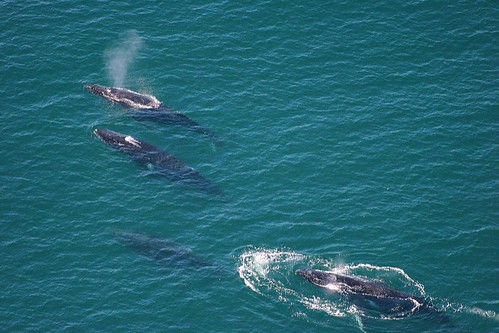
Chapter Three: There She Blows!
“So be cheery, my lads, let your hearts never fail,
While the bold harpooner striking the whale!”
-
One can only imagine the pain and agony of being cornered at a cocktail party by Herman Melville. How in the world would you get him to shut-up? Would he spend the next 30 minutes droning on about whale line? Would his tips about how to properly cook whale blubber stretch into the wee hours? Oh, my god, is he going to talk about the different kinds of whales – again?
The answer was probably yes.
There’s little doubt that one of the great challenges of reading “Moby-Dick” is Melville’s tendency towards long-winded sermons about whaling. Every agonizing detail is described in all its glory. These temporary sidetracks to the story often don’t feel very temporary.
In fact, I groaned audibly when I came upon the dreaded “Cetology” chapter on page 169.
In my other two failed attempts at reading “Moby-Dick,” Cetology was the beginning of the end. The chapter is 14 pages long, but feels like 30 pages. This is the first chapter where Melville takes a break from his characters and narrative – to lecture.
Cetology is about whales. Every different type of whale under the ocean – from Right Whales to dolphins. The chapter is divided into three books called:
I. The Folio Whale
II. The Octavo Whale
III. The Duodecimo Whale
The urge to skip this section is powerful – especially when your eyes begin to glaze over and you find your mind wandering to more satisfying endeavors like washing dishes or shoveling snow. Halfway through it this time – I felt a strong desire to vacuum the living room rug.
Agony, dreadful agony.
It is chapters like Cetology that lead the New York United States Magazine and Democratic Review to write in 1852:
“…If there are any of our readers who wish to find examples of bad rhetoric, involved syntax, stilled sentiment and incoherent English, we will take the liberty of recommending to them [Moby-Dick]…”
That’s, of course, unfair.
There are passages of writing in Melville’s masterpiece so breathtaking – so magical – that a reader is forced to double back and read it again. The writing in these passages is that profound – that good.
Melville was writing an epic – a narrative of remarkable scope and imagination. Part of his goal was to build a world so real that he felt it necessary to describe every iota of it. That’s why we get the constant explaining.
Modern readers don’t need this type of exposition (it’s especially annoying because much of Melville’s information on whales is wrong. We’ve learned quite a lot of whales since the mid-19th century).
Patience is the key. A modern reader must make these narrative lectures part of the story – part of the experience. Go slowly and absorb them. Put the misinformation into the context of the time and the story.
Soldier on.
It’s worth it and makes the magical moments even more magical.
Progress to date: Page 245 of 655.
StumbleUpon |
Digg |
del.icio.us |
Reddit |
Technorati |
E-mail
 Chapter Two: Queequeg
“And God created great whales.”
- Genesis
Is there a more unusual character in literature than the cannibal turned harpooner? One expects traditionalism when reading “Moby-Dick,” so when the reader is first introduced to Queequeg, well, call me surprised. We first meet this literary icon at the Sprouter-Inn in
Ishmael, on his way to
His hunger sated, Ishmael begins to worry about where he’ll be sleeping. The landlord – a creaky old fellow – informs him that the inn is full. No more beds. However, the landlord is willing to sell Ishmael half a cot that he must share with a harpooner.
Ishmael balks at first. Instead, he finds a hard bench by the windows and tries to make due. But the cold is deep and seeps through the window glass. Finally, he reluctantly agrees to shard a bed.
He discovers that his bedfellow is “a dark complexioned chap. He never eats dumplings, he don’t – he eats nothing but steaks, and likes ‘em rare.”
Ishmael frets mightily about his decision. He learns that the harpooner may be returning to the inn late because he’s out selling a shrunken head. The news causes Ishmael to lose his patience with the landlord.
But exhausted, he climbs into his bed to await his mysterious roommate. Time ticks away and the night lapses into the wee hours of the morning. At last, Queequeg arrives carrying a lone candle. In the flickering light, Ishmael gets his first look at the head-peddling harpooner from the
“Good heavens! What a sight! Such a face!”
Queequeg has a dark purplish, yellow skin tone with black, square tattoos running along his cheeks. He is completely bald, except for a “scalp-knot twisted on his forehead.” His back and chest are also covered in tattoos and he carries a tomahawk that doubles as a tobacco pipe.
Ishmael is shocked and terrified to be sleeping with this savage cannibal. He screams for help from the landlord – and a row nearly erupts. But there is something in the demeanor of Queequeg that calms the sailor and they end up fast friends.
Some say more than friends. The relationship between Queequeg and Ishmael has raised more than a few eyebrows. Many people see a sexual relationship. It’s easy to see why with passages like these:
- “Upon waking next morning about daylight, I found Queequeg’s arm thrown over me in the most loving and affectionate manner. You had almost thought I had been his wife.
- “Wild he was; a very sight of sights to see; yet I began to feel myself mysteriously drawn towards him.”
- “How it is I know not; but there is no place like a bed for confidential disclosures between friends. Man and wife, they say, there open to very bottom of their souls to each other; and some old couples often lie and chat over old times till nearly morning. Thus, then, in our hearts honeymoon, lay I and Queequeg – a cosy, loving pair.
Are Ishmael and Queequeg gay?
Probably not. “Moby-Dick” was written in 1851 and society was a different place. It wasn’t uncommon for straight men to share beds, to embrace and touch, to become bosom buddies in a short period of time. This, of course, would be considered homosexual behavior today. I tend to agree with Melville scholar Carl F. Houde who notes:
“There has been controversy about this imagery, some seeing a movement toward romantic love. But one must be very careful before pushing Melville’s language into special meanings.”
Certainly the bond between the two characters is a strong one – but not a gay one (although there’s nothing wrong with that).
Progress to date: Page 132 of 655.
StumbleUpon |
Digg |
del.icio.us |
Reddit |
Technorati |
E-mail

“Immense as whales, the motion of whose vast bodies can in peaceful calm trouble the ocean till it boil.”
- Sir William Davenant, Preface to Gondibert
Call me Determined.
Some time ago – never mind how long precisely – I tried to read Herman Melville’s “Moby-Dick.” But being a young man without much patience, I abandoned the novel somewhere about page 100. It was a discouragement to be sure and I found myself grim at the mouth.
“Moby-Dick,” after all, was a classic. One of those “big” books. Nay! One of those “giant” books ranking with Leo Tolstoy’s “War and Peace,” Charles Dickens’ “Bleak House,” and Miguel de Cervantes’ “Don Quixote.”
Alas, I had purchased an ill conceived paperback with print the size of micro-dots. My eyes were left strained and bloodshot and the book seemed an impossible endeavor.
With a damp, drizzly November in my soul, I returned “Moby-Dick” to my bookshelf, where it remained for many years. There it collected dust and the pages turned yellow and brittle. Oh, occasionally I’d finger the spine or pull it off the shelf – the old disappointment returning like a flash of lightning.
The years went by – the exact number is now lost to my memory – but I was older and more mature. One hazy, rainy winter weekend, I quite surprised myself by seeking out the volume and trying again. I spent an inglorious week struggling with the tiny type and the brittle pages.
This time my determination – my utter drive – took me to nearly 300 pages before, exhausted, I once again gave it up in vain. This time, I thought miserably, would be the last. It wasn’t meant to be. I was clearly not robust enough to tackle this weighty masterpiece.
Time continued to tick by – marriage, career change, children – and my copy of “Moby-Dick” ended up in a cardboard box in the basement. No longer would this tome mock me from my bookshelf!
And then – out of the blue – the reasons quite unclear to my foggy mind – I decided to try a third time. It was my copy of the novel – my cheap, tattered edition – that was preventing me from finishing. The brilliance of this insight set me to action.
I stuffed a dollar or two into my old wallet, tucked it into my back pocket, and started for the bookstore. I perused the finery of the stocked shelves. Is there any sight more grand and heart-warming than the glistening volumes of new books waiting patiently for an eager reader?
I found a hefty copy of “Moby-Dick” with big, bold letters practically leaping off the thick pages. Ah, I thought, this is the companion I’ve been waiting for! This is the copy of the novel that will help me to accomplish my mission!
The clerk rang up the sale and I was on my way. This time I am called Determined and I will finish “Moby-Dick.” I will record my adventures here – for you to experience, dear reader. Together we shall overcome the daunting task and my past failures and read one of the greatest American novels of all time.
But no more of this blubbering now, we are going a-whaling! Let us scrape the ice from our frosted feet, and see what sort of place this “Moby-Dick” may be.
Progress to date: Page 41 of 655.
StumbleUpon |
Digg |
del.icio.us |
Reddit |
Technorati |
E-mail

 RSS Feed
]saddlebrown]tan]maroon](],](])us.st11.yimg.com/us.st.yimg.com/I/getfishy_1912_2002960]Fishboy]black],]1]10]3]1]1]1]1]1]1]1]1]1],](](]papayawhip])])]DaRK^20PaRTY^20ReVIEW]^3A^3ALiterate^20Blather^3A^3A],](](],](]maroon](](](]brown](],](]maroon](](](],]60]10],](](]^23F5ECE1])])]maroon]0.5]0],](](]^23F5ECE1])])]maroon]^23F5ECE1])])]^23666]16]maroon]maroon],](](]maroon](],](]^23333]^238C4614]tan],](](]^23F5ECE1])])],](](]^23F5ECE1])])],](](]^23F5ECE1])])],](]maroon]maroon]15]3]23]18]maroon],](](],](],](](],](]black](](](],](](](],]black](](](],](](]^23333](](](](](],]^2336F]^23333](],](]Posted^20by^20^24AUTH^20at^20^24TIME.]36],](](]black])])]^23F5ECE1])])]^23666]16]maroon]maroon],](](]maroon](],](]^23333]^238C4614]tan]Contributors]]]^24PROFILE]]]DaRK^20PaRTY^20LiNKS]]]The^20Ambrose^20Bierce^20Site])donswaim.com/]Ambrose^20Bierce]Ironic^20Times])www.ironictimes.com/index.html]Ironic^20Times]Gallery^20Voyer])www.voy-art.com/]Gallery^20Voyer]Tintinologist])www.tintinologist.org/]Tintin]Arcanum^20Cafe])www.arcanumcafe.com/]Arcanum^20Cafe]LADA^20-^20Protect^20our^20Kids])da.co.la.ca.us/pok/poklist.htm]POK^20List]Tom^20Caron^20-^20Boston.com])www.boston.com/sports/nesn/aboutus/onair/tomcaron/]TC]The^20Captain^20Humphreys^20Project])www.captainhumphreys.com/]Captain^20Humphreys]Torpedo^20Design])www.torpedodesign.com/]Torpedo^20Design]^3Cimg^20src^3D^22)us.st11.yimg.com/us.st.yimg.com/I/getfishy_1912_2002960^22^20alt^3D^22Fishboy^22^20style^3D^22border^3A^201px^20none^20black^3B^22^20/^3E])www.fishboy.com/]Fishboy]Etc]]]^3Cimg^20src^3D^22)psyc.horm.org/barimg/bar_psycho.png^22^20width^3D^2280^22^20height^3D^2215^22^20alt^3D^22PsycHo^3A^20Free^20Template^20Generator^22^20style^3D^22border^3A^200px^20solid^20black^22^20/^3E]^24PSYCHO]PsycHo^3A^20Free^20Template^20Generator]^3Cimg^20src^3D^22)psyc.horm.org/barimg/bar_firefox.png^22^20width^3D^2280^22^20height^3D^2215^22^20alt^3D^22Get^20FireFox^21^22^20style^3D^22border^3A^200px^20solid^20black^22^20/^3E])www.mozilla.org/products/firefox/]Get^20Firefox^21]^3Cimg^20src^3D^22)psyc.horm.org/barimg/bar_xhtml.png^22^20width^3D^2280^22^20height^3D^2215^22^20alt^3D^22XHTML^20Validator^22^20style^3D^22border^3A^200px^20solid^20black^22^20/^3E])validator.w3.org/check/referer]XHTML^20Validator]Recent^20Posts]]]^24RECENT]^20]]Archive]]]^24ARCHIVE]^20]]ADVERTISEMENTS]]]^20]]^26^2361470^3BPsycHo})


This work is licensed under a Creative Commons Attribution-No Derivative Works 3.0 License.
The Template is generated via PsycHo and is Licensed.