
Poem: Sunrise Over Worcester
5 Questions About: Jason Pinter
12 Signs That You Might Be A Banker
The 9 Worst Movies to Win Oscars
Book Review: Narrow Miss for "Above the Law"
5 Questions About: Screaming Blue Messiahs
What's Up With All the Fat, Naked Guys?
Thoughts from the Shadows: The Craziness of Publis...
How to Make a Damn Good Horror Movie
Literary Criticism
Fantastically Bad Cinema
Essays
Under God's Right Arm
June 2006
July 2006
August 2006
September 2006
October 2006
November 2006
December 2006
January 2007
February 2007
March 2007
April 2007
May 2007
June 2007
July 2007
August 2007
September 2007
October 2007
November 2007
December 2007
January 2008
February 2008
March 2008
April 2008
May 2008
June 2008
July 2008
August 2008
September 2008
October 2008
November 2008
December 2008
January 2009
February 2009
March 2009
Alcoholic Poet
Baby Got Books
Beaman's World
BiblioAddict
Biblio Brat
Bill Crider's Pop Cultural Magazine
The Bleeding Tree
Blog Cabins: Movie Reviews
A Book Blogger's Diary
BookClover
Bookgasm
Bookgirl's Nightstand
Books I Done Read
Book Stack
The Book Trib
Cold Hard Football Facts
Creator of Circumstance
D-Movie Critic
The Dark Phantom Review
The Dark Sublime
Darque Reviews
Dave's Movie Reviews
Dane of War
David H. Schleicher
Devourer of Books
A Dribble of Ink
The Drunken Severed Head
Editorial Ass
Emerging Emma
Enter the Octopus
Fatally Yours
Flickhead
The Genre Files
The Gravel Pit
Gravetapping
Hello! Yoshi
HighTalk
Highway 62
The Horrors Of It All
In No Particular Order
It's A Blog Eat Blog World
Killer Kittens From Beyond the Grave
The Lair of the Evil DM
Loose Leafs From a Commonplace
Lost in the Frame
Little Black Duck
Madam Miaow Says
McSweeney's
Metaxucafe
Mike Snider on Poetry
The Millions
Moon in the Gutter
New Movie Cynics Reviews
Naked Without Books
A Newbie's Guide to Publishing
New & Improved Ed Gorman
9 to 5 Poet
No Smoking in the Skull Cave
Orpheus Sings the Guitar Electric
Polly Frost's Blog
Pop Sensation
Raincoaster
R.A. Salvatore
Reading is My Superpower
Richard Gibson
SciFi Chick
She Is Too Fond Of Books
The Short Review
Small Crimes
So Many Books
The Soulless Machine Review
Sunset Gun
That Shakesperherian Rag
Thorne's World
The Toasted Scrimitar
This Distracted Globe
Tomb It May Concern
2 Blowhards
Under God's Right Arm
A Variety of Words
The Vault of Horrr
Ward 6
When the Dead Walk the Earth
The World in the Satin Bag
Zoe's Fantasy
Zombo's Closet of Horror
Bookaholic Blogring
Power By Ringsurf
 (Summary: A group of six crusty, old men have a dinner club called The Black Widowers. They enjoy inviting guests to dinner in order to ponder over mysteries or puzzles. One of the widowers brings to dinner John Sands who regales them with a complicated tale. Sands, who cannot tell a lie, tells the group that he is accused of stealing money and bonds from his company. As a gambler, Sands says he was in dire need of cash and he is one of the few people with the combination to the safe. But he tells the widowers: “I did not take the cash or the bonds.” But after much questioning the club’s enigmatic waiter, Henry, figures out the puzzle with simple logic: “If we cannot lie, we must make the truth lie for us.” With Sands glowering on, Henry asks him one question: “Did you, by any chance, take the cash and the bonds?” Sands grabs his coat and departs, reminding the widowers that they cannot repeat dinner conversations outside of their club.)
Analysis: “The Man Who Never Told a Lie” was originally published in 1972 under the name “Truth to Tell” (it appeared in the collection of short stories about the Black Widowers called “Tales of the Black Widowers”).
Isaac Asimov, the prolific science fiction writer, created the Black Widowers for a series of mysteries that originally appeared in Ellery Queen’s Mystery Magazine in 1971. The series became extremely popular and influential, especially among other mystery writers.
The group of six Black Widowers were based on an actual dinner club that Asimov belonged to called Trap Door Spiders. Each of the Black Widowers has a real life counterpart:
- Geoffrey Avalon is based on L. Sprague de Camp (a science fiction and fantasy writer who is perhaps best known as reviving the Conan writings of Robert E. Howard).
- Emmanuel Rubin is based on Lester del Rey (the science fiction editor and founder of Del Rey Books).
- James Drake based on Dr. John D. Clark (a scientist and writer who also helped revive the Conan series).
- Thomas Trumbull is based Gilbert Cant (a journalist who wrote for the New York Post and Time).
- Mario Gonzalo is based on Lin Carter (a science fiction writer and editor).
- Roger Halsted is based on Don Bensen.
“The Man Who Never Told a Lie” follows the predictable pattern of most of the stories in the series. The six members have a guest join them for dinner and they try to puzzle out the mystery the guest lays out before them. There’s much squabbling and digressions during the dinner. And then, per usual, Henry, the mysterious waiter, ends up cutting through the clutter to provide a simple and logical solution. While Henry isn’t based on any real-life character, Asimov was an enormous fan of P.G. Wodehouse and said Henry was inspired by Wodehouse’s character Jeeves.
The Black Widower stories are great fun – and while the tales hold up well alone, they are much better read in large chunks. That’s because Asimov has developed a supper club with complex and intriguing characters. The personality traits and histories of each of the Black Widowers get revealed slowly and carefully over the course of the series (until they begin to feel like old friends). The collection is like fine wine and gets more intricate and flavorful the longer it ages.
“The Man Who Never Told a Lie” is similar to the other stories in that it is fast-pace – and yet it seems leisurely at the same time. Asimov was a fantastic writer – a master of genre fiction for the thinking reader. His confidence and skill as a writer are in top form in this series. Readers can delight in the sidetracks and minor sojourns into the lives of the Black Widowers – without the stories ever losing focus on the mysteries.
Asimov died in 1992 and left behind more than books and about 9,000 letters. His science fiction (especially his Foundation and Robot series) was so influential and popular that it’s easy to forget that he was an excellent mystery writer as well. The Black Widower series is a great way to remember that and “The Man Who Never Told Lie” is a great starting point.
5 Writers Every Man Should Read
Literary criticism of Ring Lardner's "Haircut"Lurid Confessions of a Man-Book Whore
Labels: Isaac Asimov, literary criticism, literature
 StumbleUpon |
 Digg |
 del.icio.us |
 Reddit |
 Technorati |
 E-mail


Summary: Whitey, a small town barber, trims the hair of a newcomer to town. He starts blathering away about the townspeople. Finally, Whitey settles on telling the story about the death of Jim Kendall and how his demise has been unfortunate for everyone in town. The more the barber talks the character of Jim Kendall slowly begins to reveal itself. Kendall was a callous bully who drank took much, cheated on his wife, and eventually began to stalk and harass one of the local women, Julie Gregg. Whitey seems unaware of Kendall’s substantial flaws often dismissing his questionable actions with “He certainly was a card!” Kendall crosses Doc Stairs, a newcomer to town, who fancies Julie. The doctor also befriends a mentally handicapped young man named Paul, who is often the butt of Kendall’s vicious pranks. Kendall and Paul go duck hunting together and to protect Julie and the doctor from Kendall, he shoots Kendall and calls it an accident. The story ends with Whitey saying it was unfortunate and Kendall probably got what he deserved for bring a half-wit hunting with him.
Analysis: Ring Lardner was Ernest Hemingway before Ernest Hemingway. In fact, a young Hemingway wrote sport stories for his high school newspaper under the pseudonym of “Ring Lardner Jr.”
Lardner was also a friend of F. Scott Fitzgerald.
While a great influence on the writers of the Lost Generation, Lardner remains on the fringes of literary fame – unable to shake the label of newspaperman (and even worse – sports columnist). But his satirical short stories pack a lot of wallop and “Haircut” is one of his best.
“Haircut,” published in 1925, is written as a rambling monologue by Whitey, the town barber. It’s a classic small town story where friends who grew up together become blind to each other’s flaws – and in the case of Jim Kendall the flaws are enormous. In fact, Kendall is a deeply disturbed man: angry, vindictive, self-centered, and prone to cruelty.
The beauty of “Haircut” is that the reader starts out on the side of Whitey and settles in to listen to a story about a poor man and his death. We believe Whitey when he tells us that Kendall’s death has been a blow to the small town.
“I bet they was more laughin’ done here than any town its size in America. Jim was comical, and Hod was pretty near his match for him. Since Jim’s gone, Hod tries to hold his end up just the same as ever, but it’s tough goin’ when you ain’t got nobody to kind of work with. They used to be plenty of fun in here Saturdays.”
But as Whitey continues to blather, the character of Kendall unravels and it begins to dawn on the reader that Kendall is anything but a nice man. In fact, he’s quite the opposite.
Kendall is a salesman and when he travels on the train and passes through a town he writes down the names of the storeowners. So if he sees “Henry Smith, Dry Goods” he jots it down. Then he writes Henry Smith a postcard that says: “Ask you Missus who kept from gettin’ lonesome the last time you was in Carterville” and then signs it “A Friend.”
Even worse, as Whitey tells this reprehensible story – he dismisses it as a joke.
Next, we discover that Kendall has been fired from his job and begins working odd jobs around town. His wife tries to prevent Kendall from spending the money on gin and approaches his bosses about sending her his checks. Angered by her tactics, Kendall invites his wife and children to a traveling circus. He asks them to meet him outside the tent, but instead he goes to a pool hall and gets drunk.
When the new doctor, Doc Stairs, sees the distraught Mrs. Kendall, at the circus he buys her and the children tickets. This, of course, doesn’t sit well with Kendall.
When Doc Stairs and Julie Gregg fall for each other, Kendall decides to move in. He pursues Julie with a frightening passion – on one occasion attacking her instead her home and nearly raping her. He flees before the police can arrive.
These horrible actions are told almost off-hand by the ignorant Whitey – easily dismissed as pranks by Kendall. The reader begins to dislike the barber – the foolish enabler of such actions – as much as Kendall.
Kendall eventually gets his comeuppance when the town half-wit, Paul, decides to take the law into his own hands. Often the butt of Kendall’s vicious pranks, Paul can’t sit idly by while Kendall attacks his friends Doc Stairs and Julie Gregg. So he offers to go hunting with Kendall and “accidentally” shoots him.
Whitey remains clueless that Kendall was murdered and not killed by accident. But the reader is blissful aware.
Whitey, however, misses his old friend.
“But still we miss him round here. He certainly was a cad!”
Indeed.
Labels: literary criticism, literature, Ring Lardner
StumbleUpon |
Digg |
del.icio.us |
Reddit |
Technorati |
E-mail
 (Summary: A chance meeting at an airport lounge changes the life of business executive Dick Morrison. Morrison meets an old colleague, Jimmy McCanns, who appears fit, trim, and successful at his new firm. McCanns slides Morrison a business card of the outfit who helped him quit smoking. A few weeks later, the card for Quitters, Inc. falls out of Morrison’s wallet and he decides to make an appointment. Morrison enrolls after a meeting with Vic Donatti, his program director. Then he learns the real story: Quitters, Inc. has a sure-fire way to help its clients give up cigarettes. Donatti explains that Morrison will be watched 24/7 and if he smokes – they will kidnap his wife and electrocute her. The more he cheats, the longer the treatments for his wife and then child will get. Slip up 10 times and they will murder him. Morrison struggles, cheats once, and gets to watch his wife tortured. Amazingly, she understands. He beats the habit and then is told he’s gained too much weight. Start losing it, Donatti says, or they’ll cut off his wife’s pinkie. Morrison’s marriage is saved, he’s fit and trim and his career on track. So he gives the card to an acquaintance who asks for his secret. Months later, Morrison bumps into McCanns at a party. While shaking McCann’s wife’s hand, he notices she only has four fingers.)
Analysis: Stephen King is much maligned by the alleged guardians of literature. When the horror writer won the National Book Foundation’s annual award for “distinguished contribution” in 2003, the guardians got downright frothy.
“I've described King in the past as a writer of penny dreadfuls, but perhaps even that is too kind,” wrote Harold Bloom, the distinguished literary critic from Yale.
Ouch. Hard to dismiss Bloom, a brilliant literary scholar, but his comment is unfair. Obviously, no one is going to mistake King for D.H. Lawrence, but King has contributed a lot to the world of letters – especially in horror and supernatural fiction.
King’s talent lies in uncovering the dark underbelly of the ordinary. For example, on the surface his novels “Cujo” and “Christine” are stories about a rabid dog and a car geek obsessed with his wheels. But running below both tales – and rippling like a snake – are dark, supernatural currents.
King’s short story “Quitters, Inc.” falls into this family. In this gem of a story, King takes self-help into a nightmarish realm. The beauty of “Quitters, Inc.” is its scope – its damnation of our results driven culture. Who cares about the methodology! Look at the outcome!
Basically, he “mobs up” Weight Watchers. And what hand-wringing fun it is to watch Dick Morrison crack down under the authoritarian rule. How after his mild protests, Dick succumbs to the terrorism and torture. Why not? Once his wife gives her approval (even after being subjected to shock treatment), what’s not to like about quitting cigarettes and losing weight?
Here’s the scene right after Dick’s wife is tortured and he has to tell her why it happened:
“When he had finished he was silent a moment and then said, ‘I suppose you hate me. I wouldn’t blame you.’
He was looking at the floor, and she took his face in both hands and turned it to hers. ‘No,’ she said. ‘I don’t hate you.’
He looked at her in mute surprise.
‘It was worth it,’ she said. ‘God bless these people. They’ve let you out of a prison.’
What an indictment on the American way of life. King is skewering our first under any circumstances mentality – and with such wit.
There’s never a dull moment in King’s stories and “Quitters, Inc.” rips along at a fast pace. The best part of the story is that King lays it all out for the reader – gives us a long, hard look at the consequences and then we get to ride along with Dick and wonder where he’s going to end up.
The reader, in fact, becomes Dick Morrison. We feel his pain – his anguish and his fear. We’re even right there with him when he hands over the business card to another patsy who wants to quit smoking.
And that’s the fascination with “Quitters Inc.” We’re all in the rat race together and we’re all keeping score. So who amongst us didn’t feel smugly superior (despite the sudden jolt in the belly) to Jimmy McCanns when we learned his wife only had four fingers?
Isn’t that the real horror here?
Read our literary criticism of Guy de Maupassant
Read our picks for the five scariest Stephen King novels
Labels: Horror, literary criticism, literature, Stephen King
StumbleUpon |
Digg |
del.icio.us |
Reddit |
Technorati |
E-mail
Several years ago we muddled through Cormac McCarthy’s “All the Pretty Horses” (1992). We found it long and dull; peppered with McCarthy’s annoying omission of simple punctuation (what’s wrong with using quotation marks and apostrophes?) and filled with run-on sentences of questionable clarity.
Try this sentence on for size:
“Although the night was cool the double doors of the grange stood open and the man selling the tickets was seated in a chair on a raised wooden platform just within the doors so that he must lean down to each in a gesture akin to benevolence and take their coins and hand them down their tickets or pass upon the ticketstubs of those who were only returning from outside.”
Yeah, it makes you dizzy that McCarthy can write a 70-word sentence about a man handing another man a ticket stub (which is two words, Cormac). Our jaw dropped when this novel won the National Book award.
We applauded critic and author B.R. Myers scathing literary criticism “A Reader’s Manifesto” when he called out McCarthy as one of the guilty among the long list of pretentious literary writers (other authors called out by Myers included E. Annie Proulx, David Guterson, Paul Auster, Charles Frazier, and Don DeLillo).
Myers took offense at this sentence from McCarthy’s “The Crossing” (1995): “He ate the last of the eggs and wiped the plate with the tortilla and ate the tortilla and drank the last of the coffee and wiped his mouth and looked up and thanked her.”
Then Myers tore into it:
“This is a good example of what I call the andelope: a breathless string of simple declarative statements linked by the conjunction and. Like the "evocative" slide-show and the Consumerland shopping-list, the andelope encourages skim-reading while keeping up the appearance of “literary” length and complexity. But like the slide-show (and unlike the shopping-list), the andelope often clashes with the subject matter – the unpunctuated flow of words bears no relation to the methodical meal that is being described.”
We were greatly revealed to learn that another critic found McCarthy’s prose pompous, confusing, and as heavy as a lead weight.
We still find McCarthy’s Border Trilogy to be overrated, but his last two novels have us reconsidering McCarthy: “No Country for Old Men” (2005) and “The Road” (2007).
While we still find McCarthy’s reluctance to use proper grammar maddening it appears that he may have been listening to his critics (such as it is). Both novels are shorter and he strays away from his past sin of using long complicated sentences to describe simple mundane moments.
Instead, he focuses both “No Country for Old Men” and “The Road” on developing rich complex characters and then mines their interactions with each other for great emotional depth. The novels evoke great truths about human nature that at times left us breathless (and eager for more).
While reading “All the Pretty Horses” felt like a miserable chore, we couldn’t put down “No Country for Old Men” or “The Road.” There was energy to the prose and while the plots weren’t intricate – at least they had plots. The action feels more external and less internal. And that’s a good thing.
While we’ll stop short of lavishing McCarthy with the praise the likes of Literary Critic Harold Bloom – who called him one of the most important authors of his time – we have changed our minds about McCarthy.
The greatest praise we can give to McCarthy is that both “No Country for Old Men” and “The Road” have stayed with us. Both novels are haunting and powerful and stick to the ribs of your mind for a long, long time (like good, old-fashioned oatmeal).
So we kind-of apologize, Mr. McCarthy. We’re not going back to the Border Trilogy, but we can’t wait for your next book – ‘cause we’re going to be first in line to buy it.
Knock Your Socks Off Great Books
Labels: book review, books, Cormac McCarthy, literary criticism
StumbleUpon |
Digg |
del.icio.us |
Reddit |
Technorati |
E-mail
Analysis: Author Paul Theroux is a writer with a ham-fisted attitude. It’s difficult to dislike a writer with the gumption to blast celebrities like Bono and Angelina Jolie in an op-ed for the New York Times as “mythomaniacs, people who wish to convince the world of their worth.”
Theroux is a writer with strong opinions, but his bombast isn’t evident in “World’s End” – an amazingly subtle short story about the quiet and ferocious destruction of a family. Robarge, an American, is an executive at a drilling equipment supplier based in
The beauty of the story is that Theroux lets Robarge’s character slowly unfold before readers – who at the beginning of the story have no reason not to trust the perceptions of Robarge (the story is told from his point of view). But it becomes clear that Robarge has created an illusion of familiar tranquility.
“World’s End” is so powerful because readers start out in the same place as Robarge – completely clueless. But as the narrative continues, readers begin to realize that Robarge not an innocent. In fact, if this were a murder story, he’d be the killer.
The best part of the story is how Theroux – with the precision of a dentist – turns the readers against his protagonist. At first, we’re ready to jump to Robarge’s defense. We’re willing to give him the benefit of the doubt, but by the end of the story that isn’t possible anymore. We realize that Robarge is a manipulative coward and a selfish, ill-tempered bully.
It’s a wild ride for a story that on the surface is about a father bringing his son to a hill to fly a kite.
At the beginning, Robarge revels in the isolation of his family at the aptly named “World’s End” neighborhood in
Robarge wants to place his family on a shelf – away from the real world; a knick-knack to be admired on those occasions when he has the time. Our first hint that all may not be well is when Robarge notes that his wife has slimmed down and gotten a new haircut. Meanwhile, he has gained weight – so much that he lumbers like a fat man.
Theroux sprinkles hints throughout the story to paint a troubled portrait of Robarge. For example, he returns from a business trip after midnight and wakes up his six-year-old son because he wants the pleasure of giving him a kite. Then he crawls into bed with his wife who says “You’re back” and then turns away from him.
Hmmm.
It gets worse in the morning. Kathy is visibly unhappy – flat and unfocused during breakfast. The couple has a tiff – although it becomes clear that Robarge is unaware they are fighting. His wife leaves the room in tears and Robarge pretends not to notice.
Flying the kite with his son at Box Hill, Robarge and the boy are continually awkward with each other. They are uncomfortable and the boy is a spoiled brat. Yet like everything else, Robarge seems oblivious to this flaw in his son.
Quite accidentally, Robarge discovers that his son has been to the hill before with his wife and her new “friend.” The man has been around enough that the boy actually talks like him.
Robarge comes up with a plan. Afraid – is it fear or cowardice? – to confront his wife with her affair, he enlists his son as a spy. To set the stage, he concocts another business trip and flees to
While away, the boy has confessed to his mother. The boy now vehemently denies that his mother has a friend. His son is so fearful of his father that he has hidden a knife under his pillow.
That night, while struggling to sleep, his wife and son leave him. The ending packs a wallop:
“His fear left him and he was penetrated by the fake vitality of insomnia. After an hour he decided that what he had heard, if anything, was a thief leaving the house, not breaking in. Too late, too far, too dark, he thought; and knew now they were all lost."
Read our literary criticism of James Joyce's "Counterpart" here
Read our literary criticism of Anton Chekov's "The Dead Body" here
Labels: literary criticism, literature, Paul Theroux
StumbleUpon |
Digg |
del.icio.us |
Reddit |
Technorati |
E-mail
Summary: A fast-moving, deadly plague strikes humanity killing everything in its path. The disease ultimately mutates corpses into vampires that crave the flesh of the living. Unfortunately for the vampires, the only human survivor appears to be Robert Neville. Neville transforms his home into a fortress as he battles vampires and struggles to find food, water, and ammunition. Years later, Neville finally meets another human being – a woman named Ruth. But Ruth has a horrible secret. She is one of a group of people that have found a way to treat the plague so that it doesn’t kill them. These survivors are still vampires – but are alive. They are threatened by Neville and end up hunting him down. Caught by the “new” humans, Neville realizes that he will soon become a legend – just as vampires were legends to humans before the plague.

Analysis: Robert Matheson doesn’t put pen to paper much anymore. He can be forgiven. After all, Matheson is 81 years old. He’s become a living legend – a masterful author of science fiction and horror (Stephen King lists Matheson as one of his inspirations). He’s also a screenwriter that has been lucky enough to turn his own novels and short stories into films and TV programs (Matheson wrote for the “Twilight Zone” and “The Night Stalker”).
“I Am Legend” will soon be a
“I Am Legend” has several problems – one of them being that today’s readers are experiencing a vampire hangover. Vampire fiction has become its own genre of horror fiction (Amazon.com has more than 1,400 titles under vampire fiction – from the graphic novel “30 Days of Night” to Elizabeth Kostova’s “The Historian”).
None of this is Matheson’s fault, of course. He wrote “I Am Legend” in 1954 (when Anne Rice was 13 years old). At one time “I Am Legend” might have put a fresh face on vampire fiction – but no longer.
Unfortunately, that’s not the only problem with the novella. There are two other problems: scariness and the main character.
Matheson approaches “I Am Legend” like it is a scientific equation that needs solving. His main character, Robert Neville, spends an inordinate amount of time contemplating the true nature of the disease. He experiments on the vampires trying to discover how to cure it.
Some of this is interesting, but as a result we get less action. Neville, after all, is the sole survivor of a plague. Readers only get brief glimpses of the outside world, but most of the action takes place inside Neville’s head or inside his compound like house.
It’s a missed opportunity to explore a new world. As I read the novella, I wanted more information about Neville’s day-to-day existence. Where does he get his food? How does he keep his water running? What does he do during his spare time? Does he read? Does he play games? What amuses him?
None of these questions are answered. I also wanted more physical confrontations between Neville and the vampires (especially those who gather outside his house every evening). Where are the epic fights? We get to hear about some of them, but most take place in the past. We experience them as Neville thinks about them.
This lack of action means few chills. The scariest part of the book (again in the past) is when Neville buries his wife, Virginia, and then she comes home for a visit:
“Then his breath was snuffed. Someone was mumbling on the porch, muttering words he couldn’t hear. He braced himself; then, with a lunge, he jerked open the door and let the moonlight in.
He couldn’t even scream. He just stood rooted to the spot, staring dumbly at
“Rob… ert,” she said.”
Robert Neville is a problem. Matheson’s main character spends too much time feeling sorry for himself – and drowning his sorrows in liquor. He’s a driven man, but one that isn’t very curious about his new world. He’s in denial – to the point of not observing the new reality developing around him.
This disengagement fails to keep the reader engage in the story. We want action! Horror! Chills and thrills! “I Am Legend” is too self-contained, too cerebral for its own good.
Matheson deserves to be read. He’s an excellent writer of genre fiction, but “I Am Legend” isn’t up to his own standards. Hopefully, the new movie will be better.
Read our literary criticism of Washington Irving's "The Legend of Sleepy Hollow"
Labels: literary criticism, literature, Richard Matheson
StumbleUpon |
Digg |
del.icio.us |
Reddit |
Technorati |
E-mail
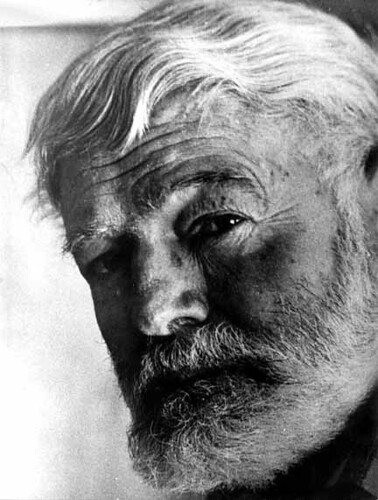
Analysis: James Joyce once said: “Hemingway has reduced the veil between literature and life, which is what every writer strives to do. Have you read “A Clean Well-Lighted Place”? It is masterly. Indeed, it is one of the best short stories ever written.”
It would be difficult to argue with Joyce.
“A Clean, Well-Lighted Place” is an intake of breath. It fills your lungs with icy air, expanding, the sharpness prickling your chest, and then it emerges as a sigh -- a lonely, forlorn sound of utter despair.
“A Clean, Well-Lighted Place” is about the fear of death – our collective terror at the shadows that surround the edges of life. It is about loneliness and emptiness and feeling like no one understands you or even cares to understand you. It is about the inability of human beings to connect with each other.
Hemingway’s critics – and there are many – fail to separate the man from the artist. Hemingway the man became a buffoon; a performer on the world stage who at the end of his life became a parody of himself. But Hemingway the artist was genius, but you need to remove the myth of the man from the beauty of his prose.
Hemingway wrote about a dozen novels, but his short stories are where his concise, economical style shone through. He was a master of the unspoken – evoking powerful emotions from what was being said between the lines. “A Clean, Well-Lighted Place” is just such a work. On the surface, the story is about two waiters and an old man; a simple, even mundane, portrait of a few hours at a café along a dirt road.
But there is so much more lingering at the edges, crackling in the dialogue, and in the way Hemingway captures the humanity of his characters. The stage is set in the opening lines of “A Clean, Well-Lighted Place.”
“It was late and every one had left the café except an old man who sat in the shadow the leaves of the tree made against the electric light. In the day time the street was dusty, but at night the dew settled the dust and the old man like to sit late because he was deaf and now at night it was quiet and he felt the difference.”
The young waiter is impatient – a cocky young man with a job, a wife, and a lot of confidence. He is frustrated that the old man sits at the café drinking all night long; keeping him at his post when he’d rather be sleeping next to his wife. He fails to understand that the old man comes to café for solace – it is a safe haven against the cruelties of life and his pending death.
The older waiter understands it perfectly. He is the old man’s kindred spirit. “You do not understand,” he tells the younger waiter. “This is a clean and pleasant café. It is well lighted. The light is very good and also, now, there are shadows of the leaves.”
Yes, the older waiter is saying, here is life and safety, but even here we will be reminded of death.
Hemingway takes “A Clean, Well-Lighted Place” a step further as the older waiter goes to a bar for a night cap. He recites the “Lord’s Prayer” to himself and replaces all the nouns with the Spanish word “nada” – nothing. It is a kick in the teeth to religion – an acknowledgement by Hemingway that there is no great beyond – no clean, well-lighted place after life ends.
There is only nothingness.
The story ends like a heart-wrenching melody: “Now, without thinking further, he would go home o his room. He would lie in the bed and finally, with daylight, he would go to sleep. After all, he said, to himself, it is probably only insomnia. Many must have it.”
Read our literary sketch of Hemingway’s “Indian Camp”
Labels: Hemingway, literary criticism, literature
StumbleUpon |
Digg |
del.icio.us |
Reddit |
Technorati |
E-mail
Analysis: Frank R. Stockton’s “The Lady, or the Tiger?” always conjures up the Grateful Dead song “Terrapin Station.” In the song, a lady tosses her fan into a lion’s den. She bids a sailor and a soldier to fetch it; promising her eternal love to the one who succeeds. The soldier declines, but the sailor boldly retrieves the fan and the lady leaps into his arms. The song narrator asks the listeners to decide if the sailor made the wise choice.
“The story teller makes no choice. Soon you will not hear his voice.
His job is to shed light, and not to master.
Since the end is never told, we pay the teller off in gold,
In hopes he will return, but he cannot be bought or sold.”
Obviously, the song reflects the short story, which was written in 1882. But the song asks the reader to make the final moral judgment and that’s exactly what 
There is one word of dialog in the story: “Which?”
This is the question asked by the suitor to the princess as he stands before the two doors in the arena. It is this question that forms the foundation of
On the surface, the story hinges on the princess and her horrible situation (a “Catch-22” before Joseph Heller was even born). She can tell her suitor to pick the door with the tiger and watch him get torn to shreds and devoured or she can picked the door with the lady and watch her true love be wed to one of the women of her court. In either case, she never gets to see him again.
The princess is acquainted with the lady behind the door – a beauty from her court. We know that the princess is a jealous woman and in the past has “seen, or imagined that she had seen, this fair creature throwing glances of admiration upon the person of her lover, and sometimes she thought these glances were perceived and even returned.” She also “hated the woman who blushed and trembled behind that silent door.”
Yet, she also loves her suitor and the thought of him being mauled by a starving tiger makes her mad with despair. “How often, in her waking hours and in her dreams, had she started in wild horror, and covered her face with her hands, as she thought of her lover opening the door on the other side of which waited the cruel fangs of the tiger!”
Her suitor knows instantly that the princess has discovered the secret of this particular test and that’s when he mutters:
“Which?”
“Her right arm lay on the cushioned parapet before her. She raised her hand, and made a slight, quick movement toward the right. No one but her lover saw her. Every eye but his was fixed on the man in the arena. He turned, and, with a firm and rapid step he walked across the empty space. Every heart stopped beating, every breath was held, every eye was fixed immovably upon that man. Without the slightest hesitation, he went to the door on the right, and opened it.”
But the reader never learns the answer. Instead, 
Are we cynic or optimist? Are we glass half full or glass half empty? Are we romantics or melancholy pessimists? Do we believe human beings are inherently good or evil?
This is why the short story has become a staple in high school literature classes. The answer is at once intimate and a telling gauge of our own public perspective. It can open up lively classroom discussions and reveal the power of the written word. But the real magic of
And that’s why I see the trusting lad opening the door and…
Well, let me turn to the Grateful Dead for my answer: “A door within the fire creaks; suddenly flies open, and a girl is standing there.”
Read our literary criticism of Robert Louis Stevenson's "Dr. Jekyll & Mr. Hyde"
Labels: Frank Stockton, literary criticism, literature
StumbleUpon |
Digg |
del.icio.us |
Reddit |
Technorati |
E-mail
 Summary: Aurelio Escovar, an unlicensed dentist in a small Columbian village, arrives early to work one morning. He sits down at his table and methodically polishes a set of false teeth. His 11-year-old son tells him that the village mayor is in the lobby and wants to have an infected tooth pulled. Aurelio orders his son to tell the mayor he is not in, but the mayor has heard him. The mayor threatens to shoot Aurelio if he doesn’t see him. Making sure his own pistol is within reach, he acquiesces. Aurelio tells the mayor his tooth must be removed without anesthesia. Using hot forceps, Aurelio grips the tooth and mutters: “Now you’ll pay for our twenty dead men.” He removes the tooth and the mayor orders him to send the bill to the town.
Analysis: Gabriel Garcia Marquez is best known for the novels “One Hundred Years of Solitude” and “Love in a Time of Cholera,” where he introduced the world to magical realism. Magical realism is a literary genre in which magic or fantastical creatures appear in an otherwise realistic setting.
I’ve never been a fan of magical realism, but there is no arguing that Marquez is a masterful writer. His ability to paint pictures and create rich characters with an economy of words makes him worthy of his 1982 Nobel Prize for Literature.
His short story “One of These Days” isn’t magical realism. In fact, its brutal realism – the short – very short, in fact – story of the consequences of political corruption that lead to a massacre.
The story opens on a warm and rainless Monday morning. Aurelio Escovar, a dentist with no formal education, arrives at work and begins his mediocre tasks for the day. His tranquility is interrupted by the arrival of the village mayor. A light exchange with his son follows with a threat of violence if Escovar doesn’t see the mayor, who wants a decayed tooth pulled. The readers experience this exchange:
“Papa.”
“What?”
He still hadn’t changed his expression.
“He says if you don’t take out his tooth, he’ll shoot you.”
Without hurry, with an extremely tranquil movement, he stopped pedaling the drill, pushed it away from the chair, and pulled the lower drawer of the table all the way out. There was a revolver. “O.K.,” he said. “Tell him to come and shoot me.”
Suddenly, the mood has shifted. What could have been a funny exchange between two old friends – village dentist and the old mayor – turns into something with teeth; something unpleasant.
The tension when the disheveled mayor makes his appearance is thick. Clearly, these are two men who despise each other. The mayor is here only because his face is swollen and he’s in agony.
The dentist inspects the tooth and declares that he must remove it without anesthesia because it is an abscess. The mayor senses that this is a lie, but he stoically gives his consent. Then out comes the tooth:
It was a lower wisdom tooth. The dentist spread his feet and grasped the tooth with the hot forceps. The mayor seized the arms of the chair, braced his feet with all his strength, and felt an icy void in his kidneys, but didn’t make a sound. The dentist moved only his wrist. Without rancor, rather with a bitter tenderness, he said:
“Now you’ll pay for our twenty dead men.”
The Mayor felt the crunch of bones in his jaw, and his eyes filled with tears. But he didn’t breathe until he felt the tooth come out.
The story ends with the dentist asking where to send the bill – to the town or the mayor. The mayor answers: “It’s the same damn thing.”
“One of These Days” is beautifully written and some of the images are as stark and real as photographs. Marquez’s command of language and his confidence in giving the reader just enough information to form the pictures, ideas, and characters – are top-notch.
The story, however, simply lacks an emotional and philosophical impact. Marquez is telling the readers that power corrupts. Is this news? Was it necessary to beat the reader over the head with that unsophisticated premise by having the mayor tell us that he and the town are the “same damn thing?”
Less would be more here.
Yet even despite this enormous flaw – the story does seem to work. And it’s because of the writing. One only wishes that Marquez’s premise was as sophisticated and as light as his words.
Read our literary criticism of Richard Matheson's "I Am Legend" hereLabels: Gabriel Garcia Marquez, literary criticism, literature
StumbleUpon |
Digg |
del.icio.us |
Reddit |
Technorati |
E-mail

Summary: While talking a stroll about
Analysis: Poor Robert Louis Stevenson.
He’s often dismissed as a second-rate scribbler of horror stories and adventure tales for children. He suffered greatly under the withering gaze of literary icon Virginia Woolf – who publicly disparaged his works during the height of her fame.
But there’s been a reconsideration of Stevenson as a master of the neo-romanticism movement that sprung up in
But despite the movies, comic books, plays, parodies and TV melodramas (even the children’s show “Arthur” had an episode based on the story), the novella amazingly retains its freshness.
Stevenson is a beautiful writer – much to Woolf’s chagrin. He isn’t flowery, however, preferring a concise, direct style and relying on good old fashioned verbs and nouns to tell the story. The results, while too straight-forward for the esoteric Woolf, are vivid portraits and strong characterizations. Take this narrative from Mr. Enfield:
“Street after street, and all the folks asleep – street after street, all lighted up as if for a procession and all as empty as a church – till at last I got into that state of mind when a man listens and listens and begins to long for the sight of a policeman. All at once, I saw two figures: one little man who was stumping along eastward at a good walk, and the other a girl of maybe eight or ten who was running as hard as she was able down a cross street. Well, sire the two ran into one another naturally enough at the corner: and then cam the horrible part of the thing; for the man trampled calmly over the child’s body and left here screaming on the ground.”
This “little man,” of course, is Mr. Hyde. That may be the biggest surprise in the story: the crafty, evil doppelganger known as Mr. Hyde is a dwarf. A twisted and deformed dwarf, but nothing like the lurching giant that he is often portrayed as in film.
While disguised as a supernatural horror story, “Dr. Jekyll and Mr. Hyde” is actually an indictment on Victorian morals. We told from the point of view of his close-friend, Mr. Utterson, that Dr. Jekyll is an intelligent, kind-hearted man who is well-respected as he moves into middle age. But in actuality, Dr. Jekyll is bored, frustrated, and exhausted by his propriety.
And that leads the good doctor to his basement laboratory to experiment with mind-altering chemicals, powders, and potions. There he discovers not only a way to unleash his primal urges, but in way that protects his reputation and identity. He has the perfect alibi because he has become another person – Mr. Hyde.
Stevenson, of course, was prevented from telling his readers in detail what Mr. Hyde did on his midnight excursions to the seedy parts of London – but one imagines lots of alcohol, opium, gambling, and sex with prostitutes. Dr. Jekyll is seduced by this lifestyle, until it overcomes him and his urges become so debased that he turns to brutality and murder.
Stevenson’s truly a delight, but often overlooked by serious readers. “The Strange Case of Dr. Jekyll and Mr. Hyde” is certainly worth the investment of time – because at about 75 pages it reads more like a short story than a novella. You’ve seen the movies, experienced the legend, so why not get the story from the original source? Especially when it’s so much fun.
Labels: literary criticism, literature, Robert Louis Stevenson
StumbleUpon |
Digg |
del.icio.us |
Reddit |
Technorati |
E-mail
 Summary: Mary Mahoney, six months pregnant, knits in her parlor waiting for her husband, Patrick, to get home from work. Patrick, a dour, unfriendly police detective, returns in a foul mood. After drinking glasses of whiskey, Patrick tells Mary he is leaving her. Shocked, Mary prepares dinner – fetching a frozen leg of lamb from the freezer. When her husband tells her not to bother, she crushes the back of his skull with the lamb. Mary proceeds to get her alibi prepared by putting the lamb in the oven and then heading to the butcher’s. Returning, she puts the lamb in the oven and pretends to have discovered her murdered husband. She calls the police and her husband’s colleague come in investigate. In the end, she offers them the leg of lamb and they eat the murder weapon.

Analysis: Roald Dahl may have one of the most unusual writing careers in history. He’s famous for authoring some of the most beloved children’s novels of all time – “Charlie and the Chocolate Factory,” “James and the Giant Peach,” and “Matilda.”
But Dahl had a dark side. He was a combat veteran of World War II, flying for the British Royal Air Force, and later in life became an admitted anti-Semite. This must have been the part of his personality that fueled his parallel career of writing macabre adult fiction, mostly short stories.
“Lamb to the Slaughter” is an example of the dark humor Dahl incorporated in his adult work. The story, first published in 1953, starts as a pleasant tale of domestic bliss, but quickly descends into a tale of domestic violence and murder. Despite the dark subject matter, the tone of the story is written with a sly smile and a wink, wink, nudge, nudge approach. The reader is kept slightly off-balance by it all -- is this a murder story or a dark comedy?
Turns out, it's both.
Mary Mahoney, ripe with child, knits in her parlor as she patiently awaits for her husband’s return from work. The reader learns later that she is deeply delusional about her relationship with Patrick Mahoney, a police detective of few words and a sour, even cruel, disposition:
“Now and again she would glance up at the clock, but without anxiety, merely to
please herself with the thought that each minute gone by made it nearer the time
when he would come.”
When Patrick does get home, he is sullen and anti-social. He begins to drink several glasses of whiskey. Mary tries to pacify him, by doting, but he rebuffs her efforts to fetch is slippers and fix him a pre-dinner snack. Th reader begins to realize that Mary isn't all that bright -- and in deep denial. Patrick orders his wife to sit and then breaks the news to her that he’s seeing another woman.
“`So there it is,’ he added. `And I know it’s kind of a bad time to be
telling you, but there simply wasn’t any other way. Of course I’ll give
you money and see you’re looked after. But there needn’t really be any
fuss. I hope not anyway. It wouldn’t be very good for my job.’”
Patrick is a heartless bastard. Mary, in a kind of shock, goes to prepare dinner and when she can’t take his platitudes anymore, she uses a frozen leg of lamb to cave in the back of his skull. According to legend, Dahl came up with the murder weapon during dinner with author Ian Fleming (creator of James Bond). The two British writers were discussing what object in Dahl’s newly acquired freezer would make the best murder weapon.
Mary may be delusional about her relationship with her husband, but being married to a cop makes her smart enough to realize she needs a plan. She puts the lamb in the oven and heads to the butcher shop where she sets up the scene: Patrick is tired and wants to stay in, so unprepared for fixing dinner, she needs some potatoes and vegetables.
Heading home, she pretends to discover her husband murdered. She calls the police and her husband’s comrades from the station flood her house. They other detectives believe Patrick has been killed by a steel pole to the head and they search for the murder weapon.
The detectives remain suspicious of Mary, but she says all the right things and provides them with weepy hysterics. Yet they head to the butcher shop to interview the butcher and he tells them she acted completely natural.
In the end, the lamb finishes cooking and she convinces the investigators – as a favor to her and in memory of Patrick – to sit down and eat dinner. They are reluctant at first, but then acquiesce and end up eating the murder weapon.
The story concludes with Mary, in the other room, giggling.
Dahl has a wonderful time with “Lamb to the Slaughter” (even the title is humorously horrific). The writing is fresh, active, and moves at a lightning pace. Dahl uses dialogue effectively and a large part of the story is told through conversation (establishing character and pushing the plot forward).
One can’t help rooting for Mary Mahoney, even as one suspects that she might be a bit crazy.
If you’ve only experienced the “light” Dahl, I recommend you try some of his macabre fare and “Lamb to the Slaughter” is a good place to start – especially this close to Halloween.
Read our literary criticism of Robert Louis Stevenson's Dr. Jekyll & Mr. Hyde
Labels: literary criticism, literature, Roald Dahl
StumbleUpon |
Digg |
del.icio.us |
Reddit |
Technorati |
E-mail

 RSS Feed
]saddlebrown]tan]maroon](],](])us.st11.yimg.com/us.st.yimg.com/I/getfishy_1912_2002960]Fishboy]black],]1]10]3]1]1]1]1]1]1]1]1]1],](](]papayawhip])])]DaRK^20PaRTY^20ReVIEW]^3A^3ALiterate^20Blather^3A^3A],](](],](]maroon](](](]brown](],](]maroon](](](],]60]10],](](]^23F5ECE1])])]maroon]0.5]0],](](]^23F5ECE1])])]maroon]^23F5ECE1])])]^23666]16]maroon]maroon],](](]maroon](],](]^23333]^238C4614]tan],](](]^23F5ECE1])])],](](]^23F5ECE1])])],](](]^23F5ECE1])])],](]maroon]maroon]15]3]23]18]maroon],](](],](],](](],](]black](](](],](](](],]black](](](],](](]^23333](](](](](],]^2336F]^23333](],](]Posted^20by^20^24AUTH^20at^20^24TIME.]36],](](]black])])]^23F5ECE1])])]^23666]16]maroon]maroon],](](]maroon](],](]^23333]^238C4614]tan]Contributors]]]^24PROFILE]]]DaRK^20PaRTY^20LiNKS]]]The^20Ambrose^20Bierce^20Site])donswaim.com/]Ambrose^20Bierce]Ironic^20Times])www.ironictimes.com/index.html]Ironic^20Times]Gallery^20Voyer])www.voy-art.com/]Gallery^20Voyer]Tintinologist])www.tintinologist.org/]Tintin]Arcanum^20Cafe])www.arcanumcafe.com/]Arcanum^20Cafe]LADA^20-^20Protect^20our^20Kids])da.co.la.ca.us/pok/poklist.htm]POK^20List]Tom^20Caron^20-^20Boston.com])www.boston.com/sports/nesn/aboutus/onair/tomcaron/]TC]The^20Captain^20Humphreys^20Project])www.captainhumphreys.com/]Captain^20Humphreys]Torpedo^20Design])www.torpedodesign.com/]Torpedo^20Design]^3Cimg^20src^3D^22)us.st11.yimg.com/us.st.yimg.com/I/getfishy_1912_2002960^22^20alt^3D^22Fishboy^22^20style^3D^22border^3A^201px^20none^20black^3B^22^20/^3E])www.fishboy.com/]Fishboy]Etc]]]^3Cimg^20src^3D^22)psyc.horm.org/barimg/bar_psycho.png^22^20width^3D^2280^22^20height^3D^2215^22^20alt^3D^22PsycHo^3A^20Free^20Template^20Generator^22^20style^3D^22border^3A^200px^20solid^20black^22^20/^3E]^24PSYCHO]PsycHo^3A^20Free^20Template^20Generator]^3Cimg^20src^3D^22)psyc.horm.org/barimg/bar_firefox.png^22^20width^3D^2280^22^20height^3D^2215^22^20alt^3D^22Get^20FireFox^21^22^20style^3D^22border^3A^200px^20solid^20black^22^20/^3E])www.mozilla.org/products/firefox/]Get^20Firefox^21]^3Cimg^20src^3D^22)psyc.horm.org/barimg/bar_xhtml.png^22^20width^3D^2280^22^20height^3D^2215^22^20alt^3D^22XHTML^20Validator^22^20style^3D^22border^3A^200px^20solid^20black^22^20/^3E])validator.w3.org/check/referer]XHTML^20Validator]Recent^20Posts]]]^24RECENT]^20]]Archive]]]^24ARCHIVE]^20]]ADVERTISEMENTS]]]^20]]^26^2361470^3BPsycHo})


This work is licensed under a Creative Commons Attribution-No Derivative Works 3.0 License.
The Template is generated via PsycHo and is Licensed.