
Poem: Sunrise Over Worcester
5 Questions About: Jason Pinter
12 Signs That You Might Be A Banker
The 9 Worst Movies to Win Oscars
Book Review: Narrow Miss for "Above the Law"
5 Questions About: Screaming Blue Messiahs
What's Up With All the Fat, Naked Guys?
Thoughts from the Shadows: The Craziness of Publis...
How to Make a Damn Good Horror Movie
Literary Criticism
Fantastically Bad Cinema
Essays
Under God's Right Arm
June 2006
July 2006
August 2006
September 2006
October 2006
November 2006
December 2006
January 2007
February 2007
March 2007
April 2007
May 2007
June 2007
July 2007
August 2007
September 2007
October 2007
November 2007
December 2007
January 2008
February 2008
March 2008
April 2008
May 2008
June 2008
July 2008
August 2008
September 2008
October 2008
November 2008
December 2008
January 2009
February 2009
March 2009
Alcoholic Poet
Baby Got Books
Beaman's World
BiblioAddict
Biblio Brat
Bill Crider's Pop Cultural Magazine
The Bleeding Tree
Blog Cabins: Movie Reviews
A Book Blogger's Diary
BookClover
Bookgasm
Bookgirl's Nightstand
Books I Done Read
Book Stack
The Book Trib
Cold Hard Football Facts
Creator of Circumstance
D-Movie Critic
The Dark Phantom Review
The Dark Sublime
Darque Reviews
Dave's Movie Reviews
Dane of War
David H. Schleicher
Devourer of Books
A Dribble of Ink
The Drunken Severed Head
Editorial Ass
Emerging Emma
Enter the Octopus
Fatally Yours
Flickhead
The Genre Files
The Gravel Pit
Gravetapping
Hello! Yoshi
HighTalk
Highway 62
The Horrors Of It All
In No Particular Order
It's A Blog Eat Blog World
Killer Kittens From Beyond the Grave
The Lair of the Evil DM
Loose Leafs From a Commonplace
Lost in the Frame
Little Black Duck
Madam Miaow Says
McSweeney's
Metaxucafe
Mike Snider on Poetry
The Millions
Moon in the Gutter
New Movie Cynics Reviews
Naked Without Books
A Newbie's Guide to Publishing
New & Improved Ed Gorman
9 to 5 Poet
No Smoking in the Skull Cave
Orpheus Sings the Guitar Electric
Polly Frost's Blog
Pop Sensation
Raincoaster
R.A. Salvatore
Reading is My Superpower
Richard Gibson
SciFi Chick
She Is Too Fond Of Books
The Short Review
Small Crimes
So Many Books
The Soulless Machine Review
Sunset Gun
That Shakesperherian Rag
Thorne's World
The Toasted Scrimitar
This Distracted Globe
Tomb It May Concern
2 Blowhards
Under God's Right Arm
A Variety of Words
The Vault of Horrr
Ward 6
When the Dead Walk the Earth
The World in the Satin Bag
Zoe's Fantasy
Zombo's Closet of Horror
Bookaholic Blogring
Power By Ringsurf
DaRK PaRTY became intrigued by the idea of writing riveting literature with such economy. The goal is to present a premise that lives beyond the six words and gives the reader something to ponder. In Hemingway's piece, a reader is immediately struck by the amazing possibilities. Are we dealing with a couple who lost their baby before it was born and are no longer together? Are they now selling off the nursery? Or is this an old lady who bought the shoes as an impulse in her youth and now she discovers them dusty and forgotten in a cabinet? Must she sell them to wipe away the pain of unfulfilled dreams?
By any measure, it's a powerful and riveting piece of fiction for just six words.
So in the spirit of Hemingway (and brevity in general) -- we present you with our own efforts at composing six-word stories (with varying degrees of success -- please feel free to leave your own story in our comments section):
Wake up in coffin, already buried.
Tough, old coach; watches players shower.
Writes vegetarian cookbook while eating hamburgers.
Talking trees take revenge on lumberjacks.
God dies, war erupts, enlightenment follows.
Baby dies, anguished parents mourn separately.
Cynical professor wins lottery, can't cope.
Time traveler saves Lincoln, Confederates win.
Siblings feign love for sick mother.
Wizard saves elves from his apprentice.
Beached whale galvanizes remote Scottish village.
Scientist cures cancer; Bono wins Nobel.
Terminal businessman finds enemies, makes amends.
Poisoned boss; married his rich wife.
Playboy seduces girl; marries her mother.
Poet plagiarizes dead student, wins Pulitzer.
Grandfather dies, leaves family treasure map.
Plague kills everyone, zombies hunt survivors.
Killed father, hunted by his son.
Jazz drummer falls for pop princess.
Read L. Kenyon's short story "Susan Spelling B" here
Read our 5 Questions interview about Ernest Hemingway here
Labels: Fiction, Hemingway, Writing
 StumbleUpon |
 Digg |
 del.icio.us |
 Reddit |
 Technorati |
 E-mail

(DaRK PaRTY has been known to get into knock-down-drag out literary brawls about Ernest Hemingway. We are enormous fans of Papa – and believe that many people misunderstand the man and his work. So it was with a great sigh of relief when we stumbled upon Bill Newmiller, an English professor at the
DaRK PaRTY: It's often difficult to sift fact from fiction when discussing Ernest Hemingway. What do you think is the most common misunderstanding about him?
Bill: Many mistakenly believe that Hemingway truly was such an insensitive macho man. He did have a lot to do with that kind of commercial branding, but in reality he was much more sensitive, more deeply intellectual than that public image. A lot of harm has come out of that: people, who haven’t even read him, know him but as an icon rather than as a man.
The best way to understand Hemingway is to read all of him—not just “The Old Man and the Sea” (1952). Stay away from the biographies until you have read him first. Then, read Michael Reynolds and Carlos Baker both. Also, we are in the process of publishing the complete letters collections; read them as they come out as well.
DP: Hemingway remains a larger than life figure. Why do you think people remain fascinated by him?
Bill: Largely because he wrote so keenly about how modernity was so changing life and traditions and human spiritually so rapidly. Hemingway on many occasions tried to re-authenticate some of those lost special occasions in life, such as the fiesta of Saint Fermin in
DP: What three Hemingway novels are your favorites and why?
Bill: “In Our Time” (1925) was a remarkable accomplishment for a writer of any age, but Hemingway was only 25 when it was published. It’s a novel about war, but the war remains off-stage. Instead we learn about war from its effects. And it’s about a different kind of war, one where the winners were also the losers. As one reads “In Our Time” within its historical context, one can feel the ground shifting: modernity has taken over and human culture will never be as it once was. That the book arrives at its truths episodically, in a series of inter-related but loosely woven strands distinguishes as a new way of story-telling, one that reflects modern art and imagination.
In “A Farewell to Arms” (1929) lies the tragedy of modernity. Frederick, the story’s protagonist, learns the ugly nature of war. As the book ends and he’s lost everything, we realize that modern man can turn only to an inner fortitude to light his way through an ever-darkening modern world.
“The Sun Also Rises” (1926). There is a no more poignant depiction of seeking the unobtainable. Jake’s unspeakable war injury has destroyed his future in ways both metaphoric and real. Still, he moves on, with unfathomable courage.
DP: Hemingway was a prolific short story writer. What story do think best encompasses his work and why?
Bill: As good as Hemingway was as a novelist, he was that much better as a short story writer. In fact, he may be the best in the English language. His greatest work is his collected short fiction. My favorite short story is the “Short and Happy Life of Francis Macomber.” In it Hemingway distills the complexity of gender, masculinity, femininity, love, lust, and violence, and creates a penetrating analysis of the human condition. His second best work may be the nonfiction, “A Moveable Feast” (1964), which offers great insight into his life.
DP: What is the Hemingway Society and what are its primary goals?
Bill: We are actually The Hemingway Foundation and Society. We wear two hats. The foundation was established in 1964 by Mary W. Hemingway, his fourth and last wife, and we are chartered to promote Hemingway and modern fiction. As such, we present the Hemingway Foundation/PEN award annually at the John F. Kennedy Library. As a society, we promote Hemingway scholarship. For one thing, we meet biennially at a global location that meant something to Hemingway and his work. For example, we are going to
Read our review of Hemingway's short story "A Clean, Well Lighted Place" here
Read our 5 Questions interview about Dorothy Parker here
Labels: 5 Questions, Bill Newmiller, Hemingway, interview, literature
StumbleUpon |
Digg |
del.icio.us |
Reddit |
Technorati |
E-mail
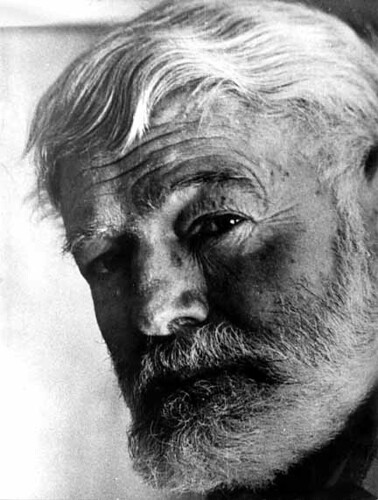
Analysis: James Joyce once said: “Hemingway has reduced the veil between literature and life, which is what every writer strives to do. Have you read “A Clean Well-Lighted Place”? It is masterly. Indeed, it is one of the best short stories ever written.”
It would be difficult to argue with Joyce.
“A Clean, Well-Lighted Place” is an intake of breath. It fills your lungs with icy air, expanding, the sharpness prickling your chest, and then it emerges as a sigh -- a lonely, forlorn sound of utter despair.
“A Clean, Well-Lighted Place” is about the fear of death – our collective terror at the shadows that surround the edges of life. It is about loneliness and emptiness and feeling like no one understands you or even cares to understand you. It is about the inability of human beings to connect with each other.
Hemingway’s critics – and there are many – fail to separate the man from the artist. Hemingway the man became a buffoon; a performer on the world stage who at the end of his life became a parody of himself. But Hemingway the artist was genius, but you need to remove the myth of the man from the beauty of his prose.
Hemingway wrote about a dozen novels, but his short stories are where his concise, economical style shone through. He was a master of the unspoken – evoking powerful emotions from what was being said between the lines. “A Clean, Well-Lighted Place” is just such a work. On the surface, the story is about two waiters and an old man; a simple, even mundane, portrait of a few hours at a café along a dirt road.
But there is so much more lingering at the edges, crackling in the dialogue, and in the way Hemingway captures the humanity of his characters. The stage is set in the opening lines of “A Clean, Well-Lighted Place.”
“It was late and every one had left the café except an old man who sat in the shadow the leaves of the tree made against the electric light. In the day time the street was dusty, but at night the dew settled the dust and the old man like to sit late because he was deaf and now at night it was quiet and he felt the difference.”
The young waiter is impatient – a cocky young man with a job, a wife, and a lot of confidence. He is frustrated that the old man sits at the café drinking all night long; keeping him at his post when he’d rather be sleeping next to his wife. He fails to understand that the old man comes to café for solace – it is a safe haven against the cruelties of life and his pending death.
The older waiter understands it perfectly. He is the old man’s kindred spirit. “You do not understand,” he tells the younger waiter. “This is a clean and pleasant café. It is well lighted. The light is very good and also, now, there are shadows of the leaves.”
Yes, the older waiter is saying, here is life and safety, but even here we will be reminded of death.
Hemingway takes “A Clean, Well-Lighted Place” a step further as the older waiter goes to a bar for a night cap. He recites the “Lord’s Prayer” to himself and replaces all the nouns with the Spanish word “nada” – nothing. It is a kick in the teeth to religion – an acknowledgement by Hemingway that there is no great beyond – no clean, well-lighted place after life ends.
There is only nothingness.
The story ends like a heart-wrenching melody: “Now, without thinking further, he would go home o his room. He would lie in the bed and finally, with daylight, he would go to sleep. After all, he said, to himself, it is probably only insomnia. Many must have it.”
Read our literary sketch of Hemingway’s “Indian Camp”
Labels: Hemingway, literary criticism, literature
StumbleUpon |
Digg |
del.icio.us |
Reddit |
Technorati |
E-mail

 RSS Feed
]saddlebrown]tan]maroon](],](])us.st11.yimg.com/us.st.yimg.com/I/getfishy_1912_2002960]Fishboy]black],]1]10]3]1]1]1]1]1]1]1]1]1],](](]papayawhip])])]DaRK^20PaRTY^20ReVIEW]^3A^3ALiterate^20Blather^3A^3A],](](],](]maroon](](](]brown](],](]maroon](](](],]60]10],](](]^23F5ECE1])])]maroon]0.5]0],](](]^23F5ECE1])])]maroon]^23F5ECE1])])]^23666]16]maroon]maroon],](](]maroon](],](]^23333]^238C4614]tan],](](]^23F5ECE1])])],](](]^23F5ECE1])])],](](]^23F5ECE1])])],](]maroon]maroon]15]3]23]18]maroon],](](],](],](](],](]black](](](],](](](],]black](](](],](](]^23333](](](](](],]^2336F]^23333](],](]Posted^20by^20^24AUTH^20at^20^24TIME.]36],](](]black])])]^23F5ECE1])])]^23666]16]maroon]maroon],](](]maroon](],](]^23333]^238C4614]tan]Contributors]]]^24PROFILE]]]DaRK^20PaRTY^20LiNKS]]]The^20Ambrose^20Bierce^20Site])donswaim.com/]Ambrose^20Bierce]Ironic^20Times])www.ironictimes.com/index.html]Ironic^20Times]Gallery^20Voyer])www.voy-art.com/]Gallery^20Voyer]Tintinologist])www.tintinologist.org/]Tintin]Arcanum^20Cafe])www.arcanumcafe.com/]Arcanum^20Cafe]LADA^20-^20Protect^20our^20Kids])da.co.la.ca.us/pok/poklist.htm]POK^20List]Tom^20Caron^20-^20Boston.com])www.boston.com/sports/nesn/aboutus/onair/tomcaron/]TC]The^20Captain^20Humphreys^20Project])www.captainhumphreys.com/]Captain^20Humphreys]Torpedo^20Design])www.torpedodesign.com/]Torpedo^20Design]^3Cimg^20src^3D^22)us.st11.yimg.com/us.st.yimg.com/I/getfishy_1912_2002960^22^20alt^3D^22Fishboy^22^20style^3D^22border^3A^201px^20none^20black^3B^22^20/^3E])www.fishboy.com/]Fishboy]Etc]]]^3Cimg^20src^3D^22)psyc.horm.org/barimg/bar_psycho.png^22^20width^3D^2280^22^20height^3D^2215^22^20alt^3D^22PsycHo^3A^20Free^20Template^20Generator^22^20style^3D^22border^3A^200px^20solid^20black^22^20/^3E]^24PSYCHO]PsycHo^3A^20Free^20Template^20Generator]^3Cimg^20src^3D^22)psyc.horm.org/barimg/bar_firefox.png^22^20width^3D^2280^22^20height^3D^2215^22^20alt^3D^22Get^20FireFox^21^22^20style^3D^22border^3A^200px^20solid^20black^22^20/^3E])www.mozilla.org/products/firefox/]Get^20Firefox^21]^3Cimg^20src^3D^22)psyc.horm.org/barimg/bar_xhtml.png^22^20width^3D^2280^22^20height^3D^2215^22^20alt^3D^22XHTML^20Validator^22^20style^3D^22border^3A^200px^20solid^20black^22^20/^3E])validator.w3.org/check/referer]XHTML^20Validator]Recent^20Posts]]]^24RECENT]^20]]Archive]]]^24ARCHIVE]^20]]ADVERTISEMENTS]]]^20]]^26^2361470^3BPsycHo})


This work is licensed under a Creative Commons Attribution-No Derivative Works 3.0 License.
The Template is generated via PsycHo and is Licensed.