Poem: Sunrise Over Worcester
5 Questions About: Jason Pinter
12 Signs That You Might Be A Banker
The 9 Worst Movies to Win Oscars
Book Review: Narrow Miss for "Above the Law"
5 Questions About: Screaming Blue Messiahs
What's Up With All the Fat, Naked Guys?
Thoughts from the Shadows: The Craziness of Publis...
How to Make a Damn Good Horror Movie
Literary Criticism
Fantastically Bad Cinema
Essays
Under God's Right Arm
June 2006
July 2006
August 2006
September 2006
October 2006
November 2006
December 2006
January 2007
February 2007
March 2007
April 2007
May 2007
June 2007
July 2007
August 2007
September 2007
October 2007
November 2007
December 2007
January 2008
February 2008
March 2008
April 2008
May 2008
June 2008
July 2008
August 2008
September 2008
October 2008
November 2008
December 2008
January 2009
February 2009
March 2009
Alcoholic Poet
Baby Got Books
Beaman's World
BiblioAddict
Biblio Brat
Bill Crider's Pop Cultural Magazine
The Bleeding Tree
Blog Cabins: Movie Reviews
A Book Blogger's Diary
BookClover
Bookgasm
Bookgirl's Nightstand
Books I Done Read
Book Stack
The Book Trib
Cold Hard Football Facts
Creator of Circumstance
D-Movie Critic
The Dark Phantom Review
The Dark Sublime
Darque Reviews
Dave's Movie Reviews
Dane of War
David H. Schleicher
Devourer of Books
A Dribble of Ink
The Drunken Severed Head
Editorial Ass
Emerging Emma
Enter the Octopus
Fatally Yours
Flickhead
The Genre Files
The Gravel Pit
Gravetapping
Hello! Yoshi
HighTalk
Highway 62
The Horrors Of It All
In No Particular Order
It's A Blog Eat Blog World
Killer Kittens From Beyond the Grave
The Lair of the Evil DM
Loose Leafs From a Commonplace
Lost in the Frame
Little Black Duck
Madam Miaow Says
McSweeney's
Metaxucafe
Mike Snider on Poetry
The Millions
Moon in the Gutter
New Movie Cynics Reviews
Naked Without Books
A Newbie's Guide to Publishing
New & Improved Ed Gorman
9 to 5 Poet
No Smoking in the Skull Cave
Orpheus Sings the Guitar Electric
Polly Frost's Blog
Pop Sensation
Raincoaster
R.A. Salvatore
Reading is My Superpower
Richard Gibson
SciFi Chick
She Is Too Fond Of Books
The Short Review
Small Crimes
So Many Books
The Soulless Machine Review
Sunset Gun
That Shakesperherian Rag
Thorne's World
The Toasted Scrimitar
This Distracted Globe
Tomb It May Concern
2 Blowhards
Under God's Right Arm
A Variety of Words
The Vault of Horrr
Ward 6
When the Dead Walk the Earth
The World in the Satin Bag
Zoe's Fantasy
Zombo's Closet of Horror
Bookaholic Blogring
Power By Ringsurf
Commentary from Crime Writer Dave Zeltserman
Everyone who's been paying attention knows that many, if not all, of the large publishing houses are struggling badly right now. The numbers show that there has been a gradual decline in readers, and the explanation usually given is blaming things like shifts in technology (people spending their reading time surfing the web as instead of reading books) and more entertainment choices; such as video games and more TV and film options.
You can't argue with numbers, but I don't believe these reasons cited is why readership is down. J.K. Rowling and her Harry Potter books show that readers will flock to compelling books. Instead I'm blaming it on several seismic changes that I've witnessed to the publishing landscape since the early 90s when I started writing, and I believe these events have more to do with the current state of publishing than anything else.
My next few columns here on DaRK PaRTY will be looking at these seismic events and how they affected publishing.
 Major seismic event: The Cheap PC.
When I finished my first novel “Fast Lane” in 1992, personal computers (PCs) had been around for a while but they weren't cheap, and most families didn't have them. They were mostly for hobbyists and computer professionals. So back in 1992 when I sent query to editors at many of the major New York publishing houses, most of them responded, with around 10 of them requesting the manuscript.
When I finished my next novel “Bad Thoughts” in 1997, one editor at Warner Books responded to my query letter. The difference: PCs had become cheap, and as a result publishing houses were being flooded with manuscripts and these houses responded by slamming the doors shut and making literary agents the gatekeepers. Writing a book in longhand or pecking away with a typewriter takes work and serious commitment. Using a PC makes it ridiculously easier, and really makes it so that anyone can write 300 pages, and a lot of people were doing exactly that.
Publishers shutting their doors to first-time writers was a big event, as was making literary agents the de-facto gatekeepers. It removes the editors from one step in the process, and puts more emphasis on commercial feasibility as opposed to literary merit and developing talent. But that was only one effect of cheap PCs and the sea of manuscripts, which they had unleashed.
Of course, another obvious one was that it made it a lot easier for serious writers to get lost in this unrelenting tidal wave of manuscripts. If an agency was now getting hundreds of manuscripts sent to them each week instead of tens, less time was going to be spent evaluating any of them, making it harder for these better books to surface.
Then you had new technologies and businesses that needed to be developed to sop up the demand that these new writers had to be published. Publishing on Demand (POD) technology and quick, easy self-publishing businesses came out of this. iUniverse alone has more than 20,000 mystery novels that have been self-published. Let me repeat that. 20,000 mystery novels from just one of these self-publishing outfits.
With POD technology, anyone can become a publisher with little investment. This may make publishing a more democratic endeavor, but it's not a good thing.
But let's go back to maybe the most critical effect this had on the more legitimate publishing houses. As literary agents were wading through manuscripts it was only natural for them to spend less time with any one manuscript and to quicker toss a submission, as well as looking for patterns to spot the more formulaic books that have higher perceived "commercial viability".
But again, this was only one of the major seismic events that have led houses to care more about "relentlessly commercial" writing than the value of the book, and I'll be discussing more of these in future weeks.
 (Dave Zeltserman lives and writes in Massachusetts. His crime novel “Small Crimes” was called a “thing of beauty” by the Washington Post and National Public Radio named “Small Crimes” one of its five best mystery novels of 2008. Dave also publishes his own blog, Small Crimes. He publishes the column Thoughts from the Shadows for DaRK PaRTY.)
Check out Dave Zeltserman on Amazon.com
Thoughts from the Shadows: The Thompson Question
The Diary of Jimmy Cronkle: Unpublished Novelist
5 Questions About: Crime Noir
Labels: Dave Zeltserman, Publishing, Thoughts from the Shadows, Writing
 StumbleUpon |
 Digg |
 del.icio.us |
 Reddit |
 Technorati |
 E-mail

An Interview with Author J.A. Konrath
About Getting Your Novel Published
(Everyone wants to be a published author these days. In fact, anyone who has scribbled more than 75,000 words often feels like they are entitled to be published. Well, Author J.A. (Joe) Konrath has a bucket of cold water for aspiring novelists: it takes really hard work to get published. Joe is the author of several thrillers featuring protagonist Lt. Jack Daniels. He also pens a writing blog called A Newbie’s Guide to Publishing. Writers can also download Joe’s free e-book on publishing tips from his Web site. DaRK PaRTY talked with Joe about getting published and here’s what he told us. Get ready for a reality check!)
 DaRK PaRTY: Is the publishing industry in the United States broken?
Joe: Not yet. But it's damaged. The amount of waste, the return policy, and the blockbuster mentality all keep the industry in the 20th, if not the 19th, century. And the rise of digital media isn't helping any.
But so far, it's the only game in town.
DP: What is the biggest mistake that new writers make when trying to get published?
Joe: They don't hone their craft, and seek the gratification of seeing their words in print before their words may be good enough to be in print. It's hard to get published, yes. But there's a learning curve, and the vetting process produces better writers.
I don't know of any other profession where someone does something and automatically expects to be recognized, paid, and lauded for it. I can play "What I Like About You" on the harmonica, but I don't expect the Boston Pops to come calling. Yet most writers think that just because they were able to string 90k words together someone owes them a contract. Make sure those are 90k good words first.
Will a complete stranger pay $25 for you book? Will 20,000 complete strangers? If not, try something else.
DP: How can a new writer increase their odds of getting published?
Joe: Write more. Submit more. Learn everything they can about how the biz works.

DP: What is an agent/publisher looking for in a query letter?
Joe: A reason to read the book.
Queries don't sell writing. Writing sells the writing. If the right book gets in front of the right agent at the right time, she'll want to represent the author.
DP: You write the popular Lt. Jack Daniels thrillers (most new writers could use a shot of JD!). Can you share with us your own road to publication?
Joe: Five hundred rejections, nine unsold novels. The secret is perseverance. And a large, healthy liver.
But seriously, there's a word for a writer who never gives up. Published. This business is all about luck, but the harder you work, the luckier you get.
5 Questions About: Chick Lit
Tony Hillerman and the Power of Setting
Great Openings: The First Sentences of 12 Classic Novels
Labels: 5 Questions, interview, J.A. Konrath, Writing
StumbleUpon |
Digg |
del.icio.us |
Reddit |
Technorati |
E-mail
(DaRK PaRTY is tickled pink – and blue and red – to have cajoled and begged Crime Writer Extraordinaire Dave Zeltserman to become a regular contributor to the DaRTY PaRTY ReVIEW. Dave will be authoring an occasional column about crime writing and publishing called “Thoughts from the Shadows.” This is his first commentary! Enjoy!)
"Jim Thompson is the best suspense writer going, bar none."
-- New York Times
"A blistering imaginative crime novelist… a classic American writer."
-- Kirkus Reviews
 Between 1952 and 1964 Jim Thompson wrote what are arguably his most famous crime noir novels, including "Killer Inside Me", "Savage Night", "A Swell-Looking Babe", "A Hell of a Woman", "The Getaway", "The Grifters" and "Pop. 1280". All in all, Thompson wrote 26 novels, a number of which have been made into movies, including "The Getaway" twice, with recent word that a new version of "Killer Inside Me" starring Casey Affleck as Lou Ford is currently being planned.
Thompson is considered not only one of the great crime writers of American literature, but one of the great American writers period. You can see his influence in a whole generation of current crime writers, from James Ellroy to the Galway born writer, Ken Bruen. Outside of maybe Hammett, Chandler and James M. Cain, it's hard to think of a writer who has had a greater influence on American crime fiction.
So the question is: Could Jim Thompson be published today?
Well, yes, I have little doubt that some of the Independent houses in the United Kingdom, like Serpent's Tail, No Exit Press and Bitter Lemon Press, where the quality of the book is more important than the perceived "commercial value" would jump at the chance of publishing these books. Perhaps also some of the small U.S. houses.
 So let's refine the question. Would any of the large New York houses publish Thompson today?
No. At least I don't think so.
I have little doubt that editors reading his manuscripts would fall in love with them and want to buy them, but then fear would come into play. The fear that someone along the way in the decision process would complain about the books being too dark. Or too edgy. Or that there was an unlikable protagonist—or worse even, a protagonist who's a full-blown crazy. They would be too afraid that somewhere along the line the book would be shot down, that someone would feel their time was wasted. Ultimately they would be afraid that their career would be irreparably damaged because they recommended a book that fell outside the lines, a book that was too different, that wasn't written in a "relentlessly commercial" style.
These editors would probably tell Thompson how much they loved his writing, but they that need something more mainstream from him. Something safer, something more commercial. And maybe after having a half dozen or so of his books rejected for not being safe enough, Thompson might've quit writing. Or worse, give up his brilliant and unique noir vision to write "relentlessly commercial" thrillers.
At least that would be my guess.
 (Dave Zeltserman lives and writes in Massachusetts. His crime novel “Small Crimes” was called a “thing of beauty” by the Washington Post and National Public Radio named “Small Crimes” one of its five best mystery novels of 2008. Dave also publishes his own blog, Small Crimes.)
 10 Bizarre Serial Killers in History
Our Interview with Dave Zeltserman
Our Review of "Small Crimes"
Labels: Dave Zeltserman, Jim Thompson, mysteries, Thoughts from the Shadows, Writing
StumbleUpon |
Digg |
del.icio.us |
Reddit |
Technorati |
E-mail
An Interview with Bethany Keeley - the
"Quotation Marks" Girl
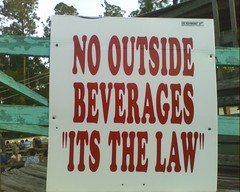
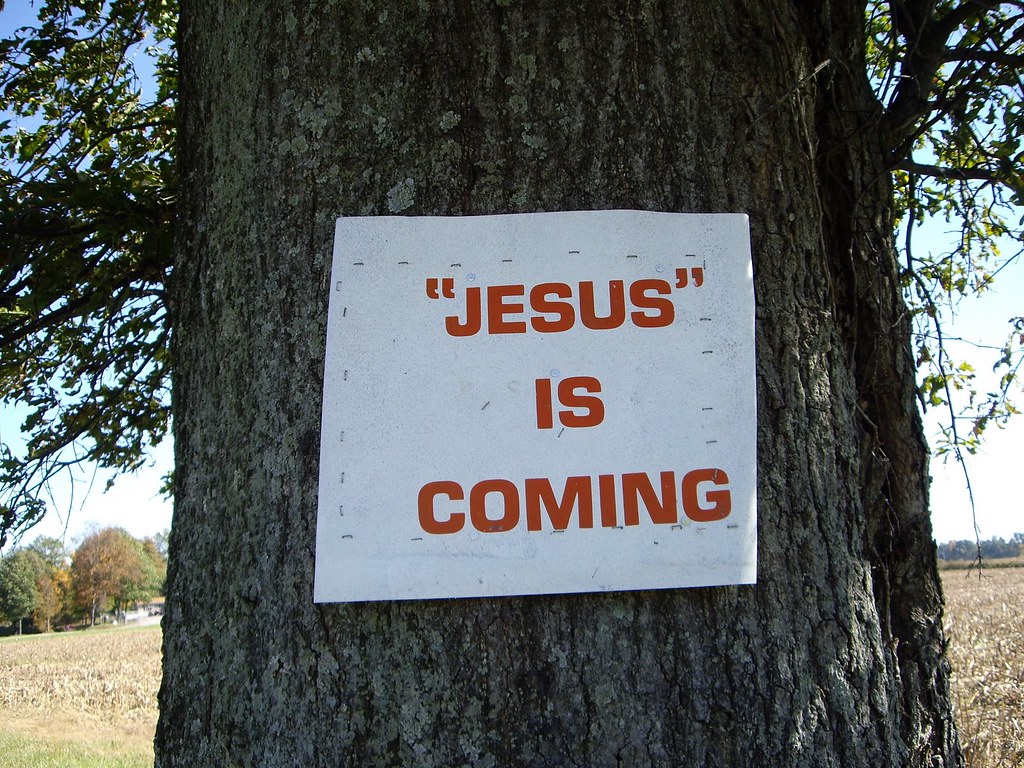 (DaRK PaRTY isn’t a stickler about “punctuation.” Hell, just read our entries! But we “try.” We think proper grammar is important to clear communication. We frown on the shortcuts people take when sending “emails” and using “IM.” Capitalization is important. Periods and comma are crucial. Misplaced or misused punctuation can change the meaning or tone of an entire “sentence.” But we aren’t as crazy about punctuation as Bethany Keeley, whom some people might point at and call a “nut job.” We’re not that “crass,” of course. We believe Bethany is providing a much needed service. Bethany, you see, publishes a blog called “The Blog of Unnecessary Quotation Marks” and if you want hilarious – well, look no further. Here’s our “interview” with Bethany.)
DaRK PaRTY: Can you explain to Dark Party readers the goal of "The Blog of Unnecessary Quotation Marks?"
Bethany: I would say that the goal is to have fun by intentionally misinterpreting things that are within quotation marks. As a side effect, I hope to encourage clear, precise writing.
DP: Now can you tell us how to use "quotation marks" correctly? (Did I just blow it?)
 Bethany: I will first clarify that my blog is much more concerned with good and bad, clear and unclear writing rather than what is "correct" or “proper.” A lot of times these rules are arbitrary or ambiguous, and I'm more interested in getting across a message or having fun than following the rules. However, quotation marks usually mark one of the following: a direct, attributed quotation, a title, sarcasm or distancing from the term being used or an innuendo. People have argued that they are appropriate to mark a pun, but I would say that any pun needing its own punctuation is not a good one.
DP: Why does the misuse use of quotation marks irritate/amuse you?
Bethany: It amuses me because often you can take the quotation marks to mean the opposite of what was probably intended. And come on, that's funny. I try very hard, though, to keep the tone of my site light and not hostile. I mean, its just punctuation.
DP: Why do you think “sign writers” (oh, boy, I can't stop) use so many quotation marks?
Bethany: People don't think carefully about writing. They throw in extra punctuation because they feel like something should go there or because they want to emphasize things. I'm guilty too: I love commas that don't make sense. Just ask my professors!
DP: Your blog has gotten a lot of publicity lately because of an AP story on you last year. What are the most amusing reactions that you've been getting?
 Bethany: When the AP story came out about a year ago I got some hostile emails and comments about how I should have better things to do with my time or something. Of course, this person apparently has enough time to police what I do with mine. I've also seen a fair amount of other kinds of sites spring up inspired by mine, and I'm never sure if I should be proud or horrified with the sheer volume of snarkiness attributed to my inspiration. I'm sure if it wasn't me it would be somebody else, the Internet is conducive to extreme specificity and weird ironic humor.
I've also had strangers get excited to have met the quotation mark girl, sometimes when I'm with people who I consider far more impressive. It definitely makes good cocktail chatter.
5 Writers Every Man Should Read
5 Questions About: Erotica
Overlooked Albums By Some Great Bands
Labels: 5 Questions, Bethany Keeley, interview, quotation marks, Writing
StumbleUpon |
Digg |
del.icio.us |
Reddit |
Technorati |
E-mail
 (Chick lit, chick flicks, chick this, chick that. DaRK PaRTY is a rugged he-man type (feel that bicep!) and is quite confused by it all. But the fate of literature is in the hands of women these days. Women, my friends, read. Men? They play computer games and watch comic book movies. There’s a reason why author Ian McEwan said in 2007: “When women stop reading, the novel will be dead.” Literature is in a bad place – considering that last year one in four Americans didn’t read a single book. Not one. The genre that seems to be helping book sales an awful lot goes by the hideous – and probably not very accurate – label of “Chick Lit.” So manly as we are, DP decided to get to the bottom of this Chick Lit thing and who better than author Malena Lott to fill us in? Lott, believe it or not, has been accused of writing Chick Lit. She was kind enough to educate us about all things Chick Lit – be ready to be surprised!)
DaRK PaRTY: How do you define Chick Lit?
Malena: I think in the broadest term chick lit is light women's fiction - the literary equivalent of "chick flicks", which usually have a comedic edge to them. When the genre first became big (after the success of Bridget Jones' Diary), there was an onslaught of a very particular type of book - single woman goes to big city in search of self and love and luxury brands, and was told in a snarky, first person point of view very similar to what we were watching on TV's “Sex and the City.”
So then publishers said, "no more chick lit," but they didn't mean no more in the broadest term - books with meaningful messages about women's journeys that could have a level of humor between light to heavy- but about that "type" that they were seeing too much of - stories with perhaps thinner plots.
These days - chick lit has morphed (grown up as it were) into mommy lit, lady lit (older protagonists) and very mainstream stories about women. The term isn't used as much because the perception that it hasn't recovered from – one-note-itis disease persists (even though I think it's been cured or at least is in a great recovery.) As far as tone goes, I do think readers of chick lit expect to laugh (or smile often) and feel good at the usually happy/satisfying ending.
Publishers are very selective now about what is published that could be coined "chick lit" so the result is that you have great multi-layered, well-written stories about women that the authors, publishers, readers are proud of.
DP: Is Chick Lit a good thing or a bad thing for literature and why?

Malena: I think "labeling" can be bad for readership for all genres, but definitely not "bad" for literature. Bad for readership only in that it can limit your audience even though the purpose of putting it "somewhere" is to assist with marketing and shelving it in the bookstores. Just this morning a friend was telling me about a historical author who had once been labeled in the romance department and due to popularity was moved to mainstream and my friend said they were so well-written I should give them a try - and that not all of her stories have heavy romance in them.
Same goes for chick lit. If you call it that, someone might go, "Oh I don't read those," unless enough good word-of-mouth happens and the reluctant reader tries it, likes it, and the change in perception happens. But that goes for any genre.
I think a lot of readers (myself included) like to read books that we find entertaining and relevant for that particular point in our lives. The point of literature is to tell a well-told story - no matter the structure, style and tone of the novel. Vampire books are big right now. Are they "bad" for literature? I don't think so. Reading tastes vary wildly, which means you want to give readers a big buffet to choose from. Dark and paranormal have been big, but perhaps readers will crave more hopeful stories and reading tastes may lighten up to more humorous stories again, too. Things are cyclical.
DP: Curtis Sittenfeld said in the New York Times: "To suggest that another woman's ostensibly literary novel is chick lit feels catty, not unlike calling another woman a slut -- doesn't the term basically bring down all of us?" Why does Chick Lit get a bad rap in a lot of literary circles?
Malena: Her quote says if the author felt the book was an "ostensibly literary novel," but what if the reader didn't? Can't it be subjective? A publisher may believe something is literary and try to market it a certain way, but that doesn't mean the reader will perceive it that way. If the person called the book chick lit in a dismissive, nose-in-the-air sort of way, then yeah, you'd think it was a put down. But if the person meant it only in trying to describe that broader term about a woman's journey (and not meaning it wasn't well-written, because I've found most of the new chick lit I've read has been well-written) then I'd say it's the author who decides to be offended or not based on how she/he feels about the genre they've been lumped into.
Is it a put-down to say that Nora Ephron has directed a lot of chick flicks? Or fair to say that Stephen King isn't a "real author" because he writes pop fiction, and horror, at that? She's real. He's real. Authors are all creative people that are using the written word to express themselves and get a particular story out of his/her head and onto paper. I feel about "labels" the same as I do about "genres". Don't let them define you. I think more of the "bad rap", again comparing it to the movie/TV industry, is like comedies not getting as much credit for being "good" as what dramas do. Or that it's somehow easier to pull off making someone laugh than to cry. They are both actually difficult. You're tapping into deep emotional reservoirs. Ultimately, if readers like your writing (if they find out about you in the first place) no matter what you call it, they'll stick around and tell others good things about you.
DP: You just published your second novel, “Dating Da Vinci,” which we'd love to hear about. And would y
 ou consider this novel Chick Lit?
Malena: I refer to my writing as women's fiction (as several reviewers and bloggers have), because my stories deal with some serious, poignant issues, but they are also punctuated with humor, so if someone wants to call it chick lit (or more accurately mommy lit since my protagonists in both of my novels have been moms), that's fine with me! Actually, the publisher is marketing “Dating da Vinci” a romance, and there is a romantic story line in it, so that might be fair, too. Which leads me to, "Call me what you want, as long as you call me."
Since it's being marketed as a romance, you'll most likely find it in the romance section of your bookstore, though it's a trade paperback instead of mass market paperback, a distinction that associates it more with the women's fiction versus traditional romance. The truth is, like most mainstream novels, it's a blend.
“Dating da Vinci” is a multi-layered plot about a grieving widow and mother, Ramona Elise, searching for la vita allegro (joyful living), on the two-year anniversary of her husband's sudden death. She's ready to face the suspicions about her late husband's fidelity head on and move on to a wholly new life. She completes a list of action items she believes will help her to be happy again, all the while dealing with her friends' and family's dramas, to boot.
The book also contains some non-fiction, educational aspects about the history and biology of love, and facts about the real da Vinci. The handsome younger man in the book, a 25-year-old Italian immigrant named Leonardo da Vinci, is really the catalyst to Ramona's renaissance versus a "hero" label that is typical in the romance genre. But does she hook up with him? End up with him? That, my dear reader, is for me to know, and for you to read all about. You can read excerpts of the novel on Amazon and my web site.
DP: What Chick Lit authors do you read? Can you recommend three of your favorite writers and their books?
Melena: That's like asking me to pick which of my children I like best! So you're gonna get a few more than you asked for; I like Emily Giffin, though I haven't read her latest (“Love the One You're With”), and adore Beth Harbison (“Shoe Addicts Anonymous”) and Jane Green does a nice job of fast-moving women's fiction. Jane Porter is great (“Mrs. Perfect”) and her “Flirting with Forty” novel is being made into a Lifetime movie that will air Dec. 6th starring Heather Locklear and the hunky guy from “Lipstick Jungle,” which brings me to Lipstick's author Candace Bushnell and then also Jennifer Weiner (liked “Little Earthquakes” the best.)
And there are some amazing new authors who write with a lot of humor and heart: Jess Riley (“Driving Sideways”), Jenny Gardiner (“Sleeping with Ward Cleaver”), Julie Buxbaum (“The Opposite of Love”), Bridget Asher (“My Husband's Sweethearts”).
Whew. And I'm just getting warmed up. Lots of very talented authors out there. For more recommendations on women's fiction - light and serious, check out my reviews at Athena's Bookshelf.
An Interview with Mystery Writer Ed Gorman
Great Openings in Literature
Fairy Tales for Unpublished Writers
Labels: 5 Questions, Chick Lit, interview, Melena Lott, Writing
StumbleUpon |
Digg |
del.icio.us |
Reddit |
Technorati |
E-mail
How Tony Hillerman Captured the Essence of the American Southwest
We rolled out of Farmington, New Mexico on Route 64 west toward Shiprock. I kept a close eye on the temperature gauge on the rental car. The sun – a blazing smear of yellow overhead – was torching the highway. Ripples of heat swept up off the asphalt like transparent ghosts. The air conditioner felt like the warm breath of a large mammal.

Halfway to Shiprock, we pulled over on a desolate stretch of lonely highway. I stepped out of the car and the sun bore down on me like a weight. My shoulders actually sagged and I felt my sweat turn to vapor as soon as it squeezed out of my pores. The high desert stretched out before me in all directions.
I had never seen so much sky. So much space. I was a New England native – from a region cramped with various topographies within short spans: rocky coasts, sand dunes, lakes, pine forests, swamps, mountains, rolling hills, apple orchards, valleys, and rivers. A land filled with indecision.
Not here.
Sandy, rutted mesas and plateaus seemed as expansive as the moon. There were dips and divots, rock formations, and a long, low flatness. And everything – except the blue, blue sky – was a dullish, dun color.
I stood and looked around. It was just as I imagined. It was just as Tony Hillerman had been telling me for years in his Leaphorn and Chee detective novels. I was in the Four Corners because of Hillerman. His prose – his telling, detailed descriptions of the Four Corners – had brought me here on vacation.
He made me want to see it for myself.
Tony Hillerman, the acclaimed mystery writer, died of pulmonary failure on Sunday, October 26. He was 83. There have been a lot of tributes to Hillerman lately – mostly about how his 18 novels about Navajo Police Officers Joe Leaphorn and Jim Chee broke through cultural barriers of mystery fiction. Very true.
Hillerman was a natural storyteller – and his two protagonists opened the eyes of many Americans to the rich culture and history of the Navajo people. As the Chicago Sun-Times noted:
“Each [novel] is characterized by an unadorned writing style, intricate plotting, memorable characterization and vivid descriptions of Indian rituals and of the vast plateau of the Navajo reservation in the Four Corners region of the Southwest. The most acclaimed of them, including "Talking God" and "The Coyote Waits," are subtle explorations of human nature and the conflict between cultural assimilation and the pull of the old ways.”
The New York Times wrote:
“In the world of mystery fiction, Mr. Hillerman was that rare figure: a best-selling author who was adored by fans, admired by fellow authors and respected by critics. Though the themes of his books were not overtly political, he wrote with an avowed purpose: to instill in his readers a respect for Native American culture.”
But one aspect of Hillerman’s novels that often gets overlooked was his command of setting. The Four Corners region of the American Southwest became a major character in his fiction. Many other detective writers are associated
 with a setting (Robert B. Parker with Boston, Michael Connolly with L.A.), but none of them captured place with the power of Hillerman.
One could argue that without setting, Hillerman’s mysteries would simply be run of the mill trade paperbacks. It was the sense of place – it was the Navajo part of America – that made his books special. You could smell the hot dust, feel the sand beneath your toes, see the rock formations on the horizon. Hillerman cared deeply about the Southwest – understood it – and really saw it. And he was talented enough to make his readers feel and see it with him.
And that’s why, almost 10 years ago now, I traveled to the Four Corners. I wanted to experience the setting of “Talking God” (1989), “Coyote Waits” (1990), and “A Thief of Time” (1988). I wanted to feel the desert.
Hillerman will be missed – and the American Southwest will never be described the same way again.
Fiction and the Catholic Church
Movie vs. Book -- 10 Movies Adaptations That Are Better than Fiction
Fiction: Everyone is Dead
Labels: Fiction, mysteries, Tony Hillerman, Writing
StumbleUpon |
Digg |
del.icio.us |
Reddit |
Technorati |
E-mail
DaRK PaRTY asked writers and authors a simple question: “What literary character do you find most compelling and why?”
Here are the answers we got:
Mark Bauerlein, author of “The Dumbest Generation”
“Let me go back a few decades and recall a character from my first year of college: Ivan Karamazov. I read the book for a first-year humanities course at UCLA, and it stuck. No doubt much of the psychology and historical context of the book escaped me, but the plight of the middle brother hit home hard. Ivan is young, smart, talented, handsome, a journalist/writer, and an atheist. I, too, was an atheist, having just come out of a conversion experience that left me without any spiritual beliefs at all. An ominous and lonely feeling hovered all the time, and I wondered what life was for, what nobility was possible for clever little animals wandering a speck of rock in a vast, cold, empty universe.
Ivan gave that condition dramatic form. Yes, his fate is a sad one, but on the way toward it he manages to make his metaphysical discomforts into something with a dignity all their own. That’s all I wanted. Not a return of faith, which I knew would never happen, but a casting of atheism as meaningful and wise and noble. I no longer believe that atheism is any more moral or intellectual than faith is (though I’m stuck with it), but Ivan´s example lingers as a special remembrance.”
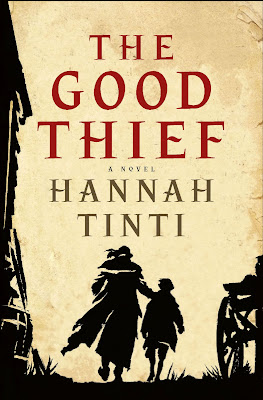
Hannah Tiniti, author of “The Good Thief”
“I have to say that my favorite literary character has always been Jane Eyre. I think this is because the book is divided into three distinct parts—childhood, romantic love, and God. As a little girl, I read about Jane and sympathized with her feelings of injustice and marveled at the way she talked back to grownups. When I was a teenager, I envied how Jane maintained her own identity, throughout her love affair with
Otto Penzler, editor of “The Black Lizard Big Book of Pulps”
“I've always (well, for 50 years, anyway) had tremendous affection of A.J. Raffles, the gentleman jewel thief created by Arthur Conan Doyle's brother-in-law, E.W. Hornung. The portrayal (however inaccurate and romanticized it may have been) of the serene life of mahogany-leather-etched glass clubs, weekends at country houses, and tuxedos at dinner parties has a deep appeal, but most interesting is Raffles himself. His odd code of ethics and the thoughts that went into his decision-making brought me back to the short stories frequently. This is really true of the first two books only (The Amateur Cracksman and Raffles, which was titled The Black Mask in the U.K.) because he almost functioned as a detective in the third collection, A Thief in the Night, while the novel, Mr. Justice Raffles, is excruciatingly dull.
Virtually every story showed Raffles committing a burglary to help someone else, not unlike the malignant Robin Hood paradigm in which it is implicit that the commandment ordering "Thou Shalt Not Steal" can be ignored, as long as you're stealing from the wealthy— not unlike the Democratic party's message. Raffles wanted to relieve the terrible situations of those to whom he was close, surely a noble inclination, yet was able to do so only by resorting to its ignoble opposite— theft. His greatest dilemma occurs when he contemplates stealing from the host who has invited him for a lovely weekend in the country, with a glamorous party to boot— the epitome of breaking the gentleman's code of honor.”
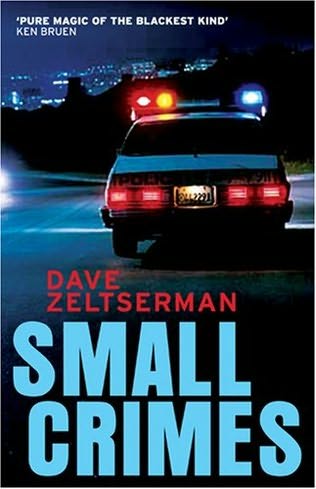
Dave Zeltserman, author of “Small Crimes”
“The Continental Op. This nameless, short, overweight, and not particularly good-looking op from the Dain Curse, Red Harvest, and several volumes of short stories, is probably one of the most dogged and persistent PIs in crime fiction. He's also a tough SOB who can take a beating, is smart enough to make the connections he should, and is willing to steal a crutch from a cripple if it means getting the job done. How can you not find a guy like that compelling?”
Polly Frost, author of “Deep Inside”
“I'm going to answer with the fictional character who I've most recently found compelling: Auntie Mame from Patrick Dennis' book of the same name.
I know this is hardly a stop-the-presses answer. Many people found Auntie Mame to be one of the most compelling characters they've ever encountered in fiction. Camille Paglia has even called "Auntie Mame" an important, overlooked book. I'm with her on that. And who hasn't heard someone – usually a carefree, madcap, willfully charming woman who behaves younger than her years – described as an "Auntie Mame?” She's such a familiar archetype that for years I didn't really feel I needed to read the book. Now that I have, though, I really-really understand what's so great about her as a creation.
Lightweight though some self-important people may feel the book to be – and don't get me started on how undervalued comic novels are! – Auntie Mame really is one of literature's most compelling characters. The secret, it seems to me, is that she's archetypal – the madcap free spirit larger than life aunt – but she isn't just archetypal.
Whether instinctively or consciously, Patrick Dennis understood that compelling characters can't just be resonant archetypes. They need to be living and breathing. Think about what's involved in 1) nailing a larger-than-life archetype, and then 2) bringing her to life. That takes a lot of daring and talent.
And there's no question that Auntie Mame is alive for the reader. She's full of contradictions: she's self-centered, self-interested, and yet admirable for her resilience. She uses people, yet she's egalitarian. She's a neglectful parent towards her orphan ward, yet she also sets him free in ways a traditionally caring mother never could. She's crude yet fine-spirited, embarrassing yet glorious.
For all that I thought I already knew Auntie Mame and how she would behave in the novel, I was constantly surprised by the fictional reality of her. She was far more outrageous than I'd imagined she would be, far more self-serving, and yet also far more touching.
And that brings up a fiction-topic that seems to me to be 'way under-discussed: the importance – the challenge, the technique, all that – of creating a supporting cast that sets your main character off. Divas are so outsized that we often overlook their setting. In my experience, it's just as hard to create these supporting characters. They can't compete, yet they can't be boring. The reader needs to identify with them and their perspective on the compelling character, yet not lose respect for them.
In "Auntie Mame," Patrick Dennis pulls this stunt off in a way all writers could learn from. His narrator character – Auntie Mame's conventional-souled nephew – has real conflicts in the face of Mame's seductive bohemianism. He longs for middle class security, yet knows he'll always be entranced by his Aunt. He loves her, yet he needs to escape her. Yet he always comes back to her too. We believe in him as much as in her – we know how it is that she gives his life a kind of meaning it wouldn't have had otherwise.
"Auntie Mame" should be required reading for all writing students.”

Ken Bruen, author of “
“The sheriff, Ford, in Jim Thompson's, The Killer Inside Me, what a voice, chilling yet almost chatty, lethal yet oddly convincing, and with a very dry sense of humour, almost un-noticable and he sucks you in, you start to see the world like this stone cold psycho does and to understand his maddness, a real feat of masterly narrative and the more you read it, the more you realise how incredibly plotted, crafted it is and so simply written, it seems ...easy.”
Emily Benedek, author of “
“I have always loved the character of Konstantin Levin from Anna Karenina. He was a farmer and a good soul who cleaved to nature. He withdrew from what he perceived as the falseness of Russian society life to live at his country estate, where he tried to develop modern farming techniques, treat his serfs well, and mused about issues of rationality and faith. I very much relate to his interest in science and religion--and their sometimes fraught relationship, and also his ability to appreciate pure goodness when it appeared in his midst.”
The Most Memorial Dickens' Supporting Characters
5 Writers Every Man Should Read
Labels: Dave Zeltserman, Emily Benedek, Hannah Tinti, Ken Bruen, literature, Mark Bauerlein, Otto Penzler, Polly Frost, Writing
StumbleUpon |
Digg |
del.icio.us |
Reddit |
Technorati |
E-mail
The First Sentences of 12 Classics of Literature

Oliver Twist
By Charles Dickens
“Among other public buildings in a certain town, which for many reasons it will be
prudent to refrain from mentioning, and to which I will assign no fictitious name,
there is one anciently common to most towns, great or small: to wit, a
workhouse; and in this workhouse was born; on a day and date which I need not
trouble myself to repeat, inasmuch as it can be of no possible consequence to
the reader, in this stage of the business at all events; the item of mortality
whose name is prefixed to the head of this chapter.”
Pride and Prejudice
By Jane Austen
“It is a truth universally acknowledged that a single man in possession of a good fortune, must be in want of a wife.”
The Adventures of Huckleberry Finn
By Mark Twain
“You don’t know about me, without you have read a book by the name of “The Adventures of Tom Sawyer,” but that ain’t no matter.”
Jane Eyre
By Charlotte Bronte
“There was no possibility of taking a walk that day.”
For Whom the
By Ernest Hemingway
“He lay on the brown, pine-needled floor of the forest, his chin on his folded arms, and the high overhead the wind blew in the tops of the pine trees.”
The Scarlett Letter
By Nathaniel Hawthorne
“A throng of bearded men, in sad-colored garments and grey steeple-crowned
hats, inter-mixed with women, some wearing hoods, and others bareheaded,
was assembled in front of a wooden edifice, the door of which was heavily
timbered with oak, and studded with iron spikes.”
Portrait of a LadyBy Henry James“Under certain circumstances there are few hours in life more agreeable than
the hour dedicated to the ceremony known as afternoon tea."
Ethan FromeBy Edith Wharton“I had the story, bit by bit, from various people, and, as generally happens in
such cases, each time it was a different story.”
Heart of DarknessBy Joseph Conrad“The Nellie, a cruising yawl, swung to her anchor without a flutter of the sails,
and was at rest.” Of Human Bondage
By
“The day broke gray and dull.” Light in AugustBy William Faulkner“Sitting beside the road, watching the wagon mount the hill toward her, Lena thinks,
‘I have come from Alabama
I, Claudius
By Robert Graves
“Tiberius Claudius Drusus Nero Germanicus This-that-and-the-other (for I shall not trouble you yet with all my titles) who was once, and not so long ago either, known to my friends and relatives and associates as "Claudius the Idiot", or "That Claudius", or "Claudius the Stammere", or "Clau-Clau-Claudius" or at best as "Poor Uncle Claudius", am now about to write this strange history of my life; starting from my earliest childhood and continuing year by year until I reach the fateful point of change where, some eight years ago, at the age of fifty-one, I suddenly found myself caught in what I may call the "golden predicament" from which I have never since become disentangled.”
The Most Memorable Minor Characters in Charles Dickens
Poetry Smells Like Talcum Powder
10 Things John Wayne Would Never Do
Labels: books, Great Openings, literature, Writing
StumbleUpon |
Digg |
del.icio.us |
Reddit |
Technorati |
E-mail
An Interview with Writer Hannah Tinti About her Debut Novel "The Good Thief"
(One of the hot books of the season is the debut novel “The Good Thief” by Hannah Tiniti. The novel features a 12-year-old boy named Ren, who is missing his left hand (and has no idea how he lost it). Benjamin Nab, Ren’s alleged long-lost brother, shows up to claim him from an orphanage. That’s when the adventure begins. Tinti has been compared to Robert Louis Stevenson and Charles Dickens in the dozens of blurbs and reviews the book has received. That’s some heady comparisons. Hannah Tinti grew up in Salem, Massachusetts. Her short story collection “Animal Crackers” was a runner up for the PEN/Hemingway award. She is also the co-founder and editor-in-chief of One Story Magazine. Hannah, as a fellow New Englander, knew DaRK PaRTY was a huge fan of the New England Patriots so finally decided to grant us an interview about her sudden literary fame and how she views fiction writing.)

DaRK PaRTY: When did you know you wanted to be a novelist?
Hannah: My mother was a librarian, so I’ve always been surrounded by books. I think I was 19 when I took my first writing class, and after that, I was hooked. But I never thought I’d be a novelist. I was comfortable in the world of short stories. Then I came across this word, “Resurrection Men”. It’s what they used to call thieves who would dig up bodies and sell them to medical schools. I cut out the definition and pasted it into my journal. I thought of a scene, and I wrote it down. Then I thought of another, and I realized that it was going to be a novel, not a short story. And I was terrified.
DP: Can you tell us about the process of writing "The Good Thief?" Where did the initial spark of the idea originate?
Hannah: It was a strange and mysterious process. I wrote the middle of the book first. Then I wrote the beginning, then I wrote the end. I went through many, many drafts. Whole sections were sketched out and never used. Three characters merged into one. My first draft of the book was over 500 pages. The second was about 230. I’m an intuitive writer, and this may not have been the best way to go about writing a novel. I know other writers who use diagrams and note cards. I just try and follow the sentences, and sometimes they lead me to strange places.
DP: The novel has been compared to Dickens and other Victorian novelists. Are you a Dickens fan? What authors are your influences?

Hannah: I am a Dickens fan. He wrote his novels serially in magazines and newspapers, each chapter having its own kind of arc, and I definitely was inspired by that as a way of making my way from one end of the book to the other. Other influences would be the Brontës, James Fenimore Cooper, Robert Louis Stevenson, but also more modern writers like Flannery O’Connor.
DP: Can you describe your writing philosophy? How do you approach a project?
Hannah: Most of the real work for me is done in the editing process. I sketch out scenes and characters and try and push them as far as I can, and then I print the pages out, and rework the language, and try and see the patterns and what I’m trying to say. Often I don’t know what is missing, but I’ll put a big X on the page, or a double-headed arrow, which means: this needs to be opened up and explored, or there is a scene missing here, or a step has been skipped. Then I go back to the computer, and start adding and subtracting and shaping the story. When I’m exhausted and can’t look at it anymore, I print it out and start all over again with the editing.
DP: "The Good Thief" has been getting excellent reviews. How does it feel to be a "hot young" writer on the rise?
Hannah: I don’t really consider myself “hot” or particularly “young”. I’m 35, and I’ve been a part of this literary community for a while. I am extremely appreciative of reviews, whether they are good or bad. The fact that anyone has read my book and taken the time to respond is incredibly humbling. It took me six years to write, and there were many late nights at three am where I came close to chucking the whole thing. I tried to write a book that I would like to read. In the end, I think I accomplished that. If anyone else enjoys it, that is just an amazing bonus.
Literature, Inc.
The Boys at Murphy's Taproom Figure Out Why Broads Dig Jane Austen
5 Questions About: Sherlock Holmes
Labels: 5 Questions, Hannah Tinti, interview, The Good Thief, Writing
StumbleUpon |
Digg |
del.icio.us |
Reddit |
Technorati |
E-mail

(Perhaps it was destiny that Duane Swierczynski became a writer – his name contains just about every letter in the English alphabet. Duane is the author of several sizzling fast thrillers – including the high-octane “Severance Package” (which was recently optioned by Lionsgate for a

DaRK PaRTY: What's the deal all of a sudden with comic book writers turned novelists? Are you all serious writers struggling to get discovered?
Duane: If I wanted to get discovered, I'd come up with a cure for static cling (I'm close, damnit... so, so close...). But I was a novelist first, and the comic book writing thing was a happy surprise. To
me, it's a way to satisfy my storytelling urges in two very different ways. Novel writing is a long, solitary enterprise; comic scriptwriting is collaborative and deadline-oriented. I like having both.
DP: You're also a former journalist. Is writing for a newspaper a good training ground for writing fiction?
Duane: I think so -- look at James M. Cain, Laura Lippman, Michael Connelly, and the other dozens of crime writers who started out as newspaper reporters or columnists. If you're lucky, you'll encounter some editors who will help you beat a lot of the bad writing out of your system. There's nothing like seeing a page of your writing covered in red ink.
DP: You recently decided to stop working a full-time salaried job to dedicate yourself to your own writing. Was it a difficult decision? Isn't it kind of like tightrope walking without a net?
Duane: Actually, I have a net -- an exclusive contract with Marvel Comics. That said quitting my job wasn't exactly an easy decision. But I'm glad I did it.
DP: Your latest novel "Severance Package" is a full throttle thriller with lots of gore. A lot of reviewers have compared it to a movie. Did you visualize it as a film or a comic book first? What was the writing pr ocess like for this book?
Duane: It was always meant to be a novel. And it followed my usual pattern: I started out with a situation, then kicked around some characters who would be ideal for that situation, then came up with a vague goal in mind -- where I thought I wanted the characters to end up. But most of the writing was improvised; I plotted very little in advance; which is essential for me. Nothing worse than being bored by your own story.
DP: Who are your favorite fiction writers and which writers of the past have inspired you?
Duane: There are too many living novelists to include, and I wouldn't want to leave someone important out. But as far as dead ones -- aside from the usual suspects? Fredric Brown was a huge influence, because he knew how to inject humor into a story like nobody else. And James M. Cain for his economy and muscle. I read a lot of their work early on, and I keep coming back to them.
5 Questions for the Author of "The Stupidest Generation"
An Interview with Best-Selling Author Kim Harrison5 Writers Every Man Should Read
Labels: 5 Questions, Duane Swierczynski, interview, thrillers, Writing
StumbleUpon |
Digg |
del.icio.us |
Reddit |
Technorati |
E-mail
An Interview with Erotic Writer Polly Frost
(DaRK PaRTY can be a bit of a prude. As a result, we don’t read much erotica – a fancy word for “dirty sex books.” Remember when “erotica” used to be sneaking a look at the topless natives in National Geographic? Well, it’s evolved. But curious as we are DP wanted to learn more about erotic. Help us, you know, stop being so damn repressed. So we turned to Polly Frost, a writer who recently published a collection of erotic tales called “Deep Inside.” Polly and her husband, Ray Sawhill, co-wrote and produced the comic and, well, raunchy Web series “The Fold” (due for release this summer). Also with her hubby, Polly co-wrote the X-rated and funny radio play “Sex Scenes.” Polly and Ray are working on two horror movie projects. Recently, Polly was kind enough to give DP a tutorial on all things erotic.)

DaRK PaRTY: How do you personally distinguish between erotica and pornography?
Polly: The usual joke is that erotica is what arouses me and porn is what arouses you. I like the way it points out what porn and erotica share in common, which is an intention to arouse the audience. Me, I really like art that's arousing, and I respect and enjoy the intention to arouse. Arousing-ness is a big part of why I love the arts generally. Speaking purely personally, though, I tend to take "porn" to mean arousing art that's blunt where "erotica" tends to imply arousing art that's fancier and more veiled.
As for my own work: While I love to turn my readers on, I really think of myself as a satirist who writes subversive, x-rated comedy. And I don't see how you can write satire without writing about sex! I mean, how can you live in this country and not write about the conflicted, crazy attitudes Americans have about sex?
When I first started out as a writer, I wrote humor pieces, for The New Yorker and for other publications. I loved writing humor, but I also found writing humor pieces for mainstream publications very limiting because I couldn't write explicitly about sex.
When it comes to the term "porn," I'm not offended if that's what some people call what I write. I don't think it's the case, but that's just me being picky. Besides, I'm a fan of a lot of porn filmmakers and stars. When Tor, the publisher of "Deep Inside," asked for me to get blurbs for my book, the first person I sent my book to was Ron Jeremy, who's famous as the porn star "The Hedgehog."
I think Ron is incredibly smart and witty, and an important pop-culture figure. People in their twenties all know Ron Jeremy. He's like a rock star or a comedian to them. So I was thrilled when Ron loved "Deep Inside" and praised it in porn terms. He said it gave him a boner. That's high praise, and from an expert source!
There's always been a connection between porn and cutting edge entertainment and art -- whether it's the stand-up comedy of Lenny Bruce, or the art of Jeff Koons, or the current thriving burlesque scene as practiced by artists like Dita Von Teese, Nasty Canasta, and Julie Atlas Muz, or the sex satire in "
DP: What writers do you think write excellent erotic fiction?
Polly: I think the best erotic fiction is written from within the characters, and therefore isn't moral (or romantic or uplifting) about the characters. The scheming couple that Choderlos de Laclos wrote about in "Dangerous Liaisons" is a delicious and riveting creation. That story has remained popular because Laclos doesn't shy away from the differences between men and women when it comes to sex, love, and affairs. It's cold, it's objective, and it's true.
Some others ... Junichiro Tanizaki wrote some of the best erotic fiction. I love his sly masterpiece about masochism, "Naomi." My husband and I -- we often co-write together -- are both huge fans of Terry Southern, who wrote the exuberant sexual satires "Blue Movie" and "Candy," as well as ribald scripts for some of Hollywood's best movies of the '60's.
"The Story of O" by Pauline Reage is essential erotic fiction reading because it captures a female archetype: the modern independent woman who longs to be dominated. Reage doesn't excuse her character's drive, or romanticize it, or turn it into something "sex positive." It's just there, and she puts it on paper once and for all. I also think that "The Story of O" is a deeply religious book about a woman who's on a spiritual quest. I'm a fan of Erica Jong's "Fear of Flying." If you think of it as a dated piece of '70's feminist ranting, read it again! It holds up beautifully and it's hilarious.
I also think some of the best erotic fiction writing was done by bestselling authors of the '60's and '70's: Jacqueline Susann, Harold Robbins, people like that. They wrote about sexually ruthless characters in frank and powerful ways.
There's a big reason they were popular: Their characters resonate. I love it that Robbins and Susann don't soften their characters or try to make them likable. The preoccupation with "likableness" in today's popular-culture world drives me crazy. And it's not very sexy. Since when do you have to like someone to be turned on by them?
Among the contemporary erotic fiction writers: Maxim Jakubowski writes amazingly hot and smart novels himself, and he edits the indispensable "Mammoth" series of erotica anthologies too.
I'm also looking forward to reading "Diana: A Diary in the Second Person" by the Canadian writer, Russell Smith. I love "Lie With Me" by another Canadian writer, Tamara Faith Berger. I think Zane is a wonderfully hot writer, and enjoyed Anne Rice's "Beauty."
In
DP: How do you judge what makes a good erotic story when writing your own fiction?
Polly: I'm hoping that what turns me on will also turn on some of my readers. It's a gamble but what else are you going to do? Besides, part of what I love about erotic fiction is the subjectivity factor. People generally can't fool themselves about what turns them on, while in higher-minded art they can lose themselves in fantasies about worthwhileness or "art." They can talk themselves into thinking they love something that they don't really love.
Meanwhile, in erotica, a book or painting or film either works for you personally or it doesn't. While I know that some people see the subjectivity factor as a reason to look down on erotic fiction, I take it to mean that erotic fiction is like suspense fiction: it's the ultimate artistic high-wire act.
I do a few things to keep myself tuned in to other people's minds and desires, though. I like to have actors read whatever I write, for instance. I'm lucky to know some of the best actors in 
I worked with lots of actors, in lots of different venues, in front of all kinds of audiences. I think that was one of the most important things I ever did for my writing because it gave me the chance to experience audience reactions. Honestly, I think all fiction writers should spend five years giving readings. It's hard to put into words what you get out of seeing your work performed live, but it certainly sharpens your audience sense. Too many writers live purely in their heads, it seems to me.
And the actors themselves are fantastic resources. Any really good actor knows if a character is working or not. They know if the moment is true or not.
My favorite response as a writer is laughter accompanied by arousal, which I'm happy to say we got a lot of at our readings! But we've also had couples make out during readings, and we've had people talk back to the stage. There was this one moment we really cherished when one of our actresses was reading a passage in praise of anal sex, and a guy in the audience kind of groaned and moaned and said, "Oh, it's a beautiful thing, baby!" Our actress was very quick and said right back to him, "You know it is." It was a great moment. That was a real highlight of our writing lives!
DP: What are the biggest public misconceptions about erotica?
Polly: The biggest misconception is that erotic fiction is somehow a different creature than fiction-fiction, and that it should be shelved away from the rest of "literature." In book publishing, if you write something with a lot of sex in it, there are two main ways they'll market your book today: either as "sex positive" fiction or as "spicy romance." "Literature" itself has become something that's written -- as my poet friend, Michele Madigan Somerville says -- "from the neck up."
It's really annoying that mainstream publishing views erotic fiction in this way.
The "sex positive" thing is a small peeve of mine. "Sex positive" books are meant to make readers feel good about their sexual desires, whether it's S and M, or for a polyamory lifestyle, or for being whipped. I don't want to sound unfeeling, and it's not as though I don't care if my readers feel good about themselves sexually.
Of course I do. But honestly, that's something for them to take up with a therapist. I'm a fiction writer and my task is to write about the world as I actually see it. And the world -- and sex, and sexual experiences -- often have dark and even negative sides to them. Sometimes those dark and negative sides are even a big part of what's sexy.
The "sex positive" movement has also had the effect of genderizing erotic writing, which is too bad. Erotica books have become largely written by women for women. Guys -- who used to be enthusiastic readers of dirty books -- are barely catered to at all these days. When was the last time you heard a man say he needed to feel positive about his sex drive?
And I like writing for men as well as women. In fact, the audience for my writing has turned out to be largely male. Guys are the biggest fans of what I write. I'm thrilled!
But it's sad that book publishing and bookstores do such a lousy job of appealing to men. Hey, book-publishing people: Men love reading fiction with sex in it. But they do not want to venture into the romance section to find a book!
One of the reasons that "erotic" books are sequestered is that bookstores are terrified of complaints from the damn soccer moms and librarians. God forbid that teenagers should pick up a book with a sex passage in it, become engrossed in reading, and develop a taste for books. I don't know that I'd be much of a reader myself -- let alone a writer -- had I not started off my reading life looking for dirty books, and for the dirty passages inside mainstream books.
I'll give a personal example. Have you ever heard of the spy novel "Lotta Drum and the 69 Pleasures?" I didn't think so, but I found it instead of a Gideon bible in a hotel room once when I was twelve and couldn't stop reading it. I'd never read anything like the lesbian bamboo torture scenes in it. They also got me reading anything else that had the aura of sex around it, and that includes some great literature, like Henry Miller and Philip Roth. So many thanks to the author of "Lotta Drum" -- whoever you were under that obvious pseudonym -- for turning me into a reader!
DP: You recently published "Deep Inside" that you define as supernatural erotica. Can you describe that concept and what you were trying to accomplish with the book?
Polly: I wanted to write stories that were like the '60's and '70's horror movies that I love: movies like "Barbarella" and the Italian "giallo" films, or like such Japanese movies as "Onibaba" and "Woman in the Dunes." I wanted to write dark and disturbingly arousing stories with dangerous women at the center of them. Another was to develop genuine story lines. In other words, I wanted to create living-breathing characters and put them in highly-charged situations, and I wanted the sex to both create and grow out of those situations.
I wanted each 20 page story to feel like a complete little movie, in other words. I also hoped they'd make people laugh.
As it turns out I've been really pleased by the way people have responded to "Deep Inside." I've heard over and over from readers who have said the stories in "Deep Inside" affected their fantasies, or that they found themselves having dreams about the stories weeks after finishing the book.
I'm also pleased when people write me and say they didn't think they'd ever be interested in erotic fiction until they read it, but that the situations and characters resonate with them.
I never mind if a reader writes me an angry email or pans "Deep Inside." I've had readers say they were disturbed and upset by the book. That's okay with me. I like strong reactions.
Read more of our 5 Questions About:
The Great WarLabels: 5 Questions, Erotica, interview, Polly Frost, Writing
StumbleUpon |
Digg |
del.icio.us |
Reddit |
Technorati |
E-mail

 RSS Feed
]saddlebrown]tan]maroon](],](])us.st11.yimg.com/us.st.yimg.com/I/getfishy_1912_2002960]Fishboy]black],]1]10]3]1]1]1]1]1]1]1]1]1],](](]papayawhip])])]DaRK^20PaRTY^20ReVIEW]^3A^3ALiterate^20Blather^3A^3A],](](],](]maroon](](](]brown](],](]maroon](](](],]60]10],](](]^23F5ECE1])])]maroon]0.5]0],](](]^23F5ECE1])])]maroon]^23F5ECE1])])]^23666]16]maroon]maroon],](](]maroon](],](]^23333]^238C4614]tan],](](]^23F5ECE1])])],](](]^23F5ECE1])])],](](]^23F5ECE1])])],](]maroon]maroon]15]3]23]18]maroon],](](],](],](](],](]black](](](],](](](],]black](](](],](](]^23333](](](](](],]^2336F]^23333](],](]Posted^20by^20^24AUTH^20at^20^24TIME.]36],](](]black])])]^23F5ECE1])])]^23666]16]maroon]maroon],](](]maroon](],](]^23333]^238C4614]tan]Contributors]]]^24PROFILE]]]DaRK^20PaRTY^20LiNKS]]]The^20Ambrose^20Bierce^20Site])donswaim.com/]Ambrose^20Bierce]Ironic^20Times])www.ironictimes.com/index.html]Ironic^20Times]Gallery^20Voyer])www.voy-art.com/]Gallery^20Voyer]Tintinologist])www.tintinologist.org/]Tintin]Arcanum^20Cafe])www.arcanumcafe.com/]Arcanum^20Cafe]LADA^20-^20Protect^20our^20Kids])da.co.la.ca.us/pok/poklist.htm]POK^20List]Tom^20Caron^20-^20Boston.com])www.boston.com/sports/nesn/aboutus/onair/tomcaron/]TC]The^20Captain^20Humphreys^20Project])www.captainhumphreys.com/]Captain^20Humphreys]Torpedo^20Design])www.torpedodesign.com/]Torpedo^20Design]^3Cimg^20src^3D^22)us.st11.yimg.com/us.st.yimg.com/I/getfishy_1912_2002960^22^20alt^3D^22Fishboy^22^20style^3D^22border^3A^201px^20none^20black^3B^22^20/^3E])www.fishboy.com/]Fishboy]Etc]]]^3Cimg^20src^3D^22)psyc.horm.org/barimg/bar_psycho.png^22^20width^3D^2280^22^20height^3D^2215^22^20alt^3D^22PsycHo^3A^20Free^20Template^20Generator^22^20style^3D^22border^3A^200px^20solid^20black^22^20/^3E]^24PSYCHO]PsycHo^3A^20Free^20Template^20Generator]^3Cimg^20src^3D^22)psyc.horm.org/barimg/bar_firefox.png^22^20width^3D^2280^22^20height^3D^2215^22^20alt^3D^22Get^20FireFox^21^22^20style^3D^22border^3A^200px^20solid^20black^22^20/^3E])www.mozilla.org/products/firefox/]Get^20Firefox^21]^3Cimg^20src^3D^22)psyc.horm.org/barimg/bar_xhtml.png^22^20width^3D^2280^22^20height^3D^2215^22^20alt^3D^22XHTML^20Validator^22^20style^3D^22border^3A^200px^20solid^20black^22^20/^3E])validator.w3.org/check/referer]XHTML^20Validator]Recent^20Posts]]]^24RECENT]^20]]Archive]]]^24ARCHIVE]^20]]ADVERTISEMENTS]]]^20]]^26^2361470^3BPsycHo})


This work is licensed under a Creative Commons Attribution-No Derivative Works 3.0 License.
The Template is generated via PsycHo and is Licensed.