Poem: Sunrise Over Worcester
5 Questions About: Jason Pinter
12 Signs That You Might Be A Banker
The 9 Worst Movies to Win Oscars
Book Review: Narrow Miss for "Above the Law"
5 Questions About: Screaming Blue Messiahs
What's Up With All the Fat, Naked Guys?
Thoughts from the Shadows: The Craziness of Publis...
How to Make a Damn Good Horror Movie
Literary Criticism
Fantastically Bad Cinema
Essays
Under God's Right Arm
June 2006
July 2006
August 2006
September 2006
October 2006
November 2006
December 2006
January 2007
February 2007
March 2007
April 2007
May 2007
June 2007
July 2007
August 2007
September 2007
October 2007
November 2007
December 2007
January 2008
February 2008
March 2008
April 2008
May 2008
June 2008
July 2008
August 2008
September 2008
October 2008
November 2008
December 2008
January 2009
February 2009
March 2009
Alcoholic Poet
Baby Got Books
Beaman's World
BiblioAddict
Biblio Brat
Bill Crider's Pop Cultural Magazine
The Bleeding Tree
Blog Cabins: Movie Reviews
A Book Blogger's Diary
BookClover
Bookgasm
Bookgirl's Nightstand
Books I Done Read
Book Stack
The Book Trib
Cold Hard Football Facts
Creator of Circumstance
D-Movie Critic
The Dark Phantom Review
The Dark Sublime
Darque Reviews
Dave's Movie Reviews
Dane of War
David H. Schleicher
Devourer of Books
A Dribble of Ink
The Drunken Severed Head
Editorial Ass
Emerging Emma
Enter the Octopus
Fatally Yours
Flickhead
The Genre Files
The Gravel Pit
Gravetapping
Hello! Yoshi
HighTalk
Highway 62
The Horrors Of It All
In No Particular Order
It's A Blog Eat Blog World
Killer Kittens From Beyond the Grave
The Lair of the Evil DM
Loose Leafs From a Commonplace
Lost in the Frame
Little Black Duck
Madam Miaow Says
McSweeney's
Metaxucafe
Mike Snider on Poetry
The Millions
Moon in the Gutter
New Movie Cynics Reviews
Naked Without Books
A Newbie's Guide to Publishing
New & Improved Ed Gorman
9 to 5 Poet
No Smoking in the Skull Cave
Orpheus Sings the Guitar Electric
Polly Frost's Blog
Pop Sensation
Raincoaster
R.A. Salvatore
Reading is My Superpower
Richard Gibson
SciFi Chick
She Is Too Fond Of Books
The Short Review
Small Crimes
So Many Books
The Soulless Machine Review
Sunset Gun
That Shakesperherian Rag
Thorne's World
The Toasted Scrimitar
This Distracted Globe
Tomb It May Concern
2 Blowhards
Under God's Right Arm
A Variety of Words
The Vault of Horrr
Ward 6
When the Dead Walk the Earth
The World in the Satin Bag
Zoe's Fantasy
Zombo's Closet of Horror
Bookaholic Blogring
Power By Ringsurf
The second part of our Yuletide feature. We asked our distinguished panel a simple question: "What is your favorite Christmas movie and why?" Click here to see Part 1.
We received some remarkable answers!
Dave Zeltserman, author of “Small Crimes”
“My selection is Christmas Time for the Jews, originally airing on Saturday Night Live as part of TV Funhouse. While not a movie, and only 2 minutes and 24 seconds long, my wife and I probably watched this a few dozen times when it first came out (thank you YouTube!), and it perfectly captures the sense of alienation of Jews feel at Christmas -- and yes, we use the days as way to get into popular movies without waiting in line, and usually end up at Chinese restaurants drinking their sweet-ass wine!”
 Bill Crider, author of “Of All Sad Words”
“My favorite Christmas movie? That’s an easy one. A Christmas Story, no question. Why? Let me count the ways.
1. Jean Shepherd. I love the narration, but it’s more than just that. I love it because years before I ever saw the movie, I read Shepherd’s wonderful childhood reminiscences in Playboy (after I looked at the pictures, of course). Later, I bought the collection called In God We Trust, All Others Pay Cash and read the stories again. I never dreamed that anybody would mine them for movie gold, but Bob Clark did just that and came up with the film that runs for 24 hours on TBS every Christmas and for almost that many hours on the TV set in our den. Sure, I have the DVD, but the whole family likes to have that movie running on Christmas day. It’s become a family tradition.
2. The setting. I didn’t grow up in the same era Ralphie did, but nothing much had changed by the time I came along. Everything in the movie hits home with me, from the flat tire to the school classroom to the way the kids dressed.
3. The Red Ryder BB Gun. I had one just like the one in the movie, and it was a wonderful thing. Also, like every kid in that day and age, I heard the bit about “you’ll put your eye out” more than once.
4. The Little Orphan Annie Decoder. I sent away for many a radio-show premium. Most of them were just as disappointing as the decoder Ralphie got. I still have my Lone Ranger Silver Saddle Ring. It still glows in the dark.
5. Mouth washed out with soap. Been there, had that done to me.
6. The cast. Darren McGavin is great as the Old Man. The profanity. “Frah-gee-lay.” A major award. Melinda Dillon is the mom every kid wanted to have. And all the kids get it right. If you don’t believe me, watch the sequel, done with a (mostly) different cast. Shepherd is the narrator again, but it just doesn’t work.
7. There’s just too much more to go into. For me, this is it, the one, THE Christmas movie.
Second choice: Bad Santa.
 Casey Hopkins, blogger, TheCabinet.com
“A Christmas Story! Not only hilarious and one of the true Christmas classics, but also directed by the same Bob Clark who got his start with Black Christmas and Dead of Night. Got to stand by them horror directors!”
Hannah Tinti, author of “The Good Thief”
“Usually my family watches the old black and white version of A Christmas Carol, with Alastair Sim as Scrooge. I think it’s still a great movie—very dark and interesting, and some of those images, like the hooded spirit pointing at Scrooge’s grave, and the moment where Scrooge’s sister walks through him, like a ghost, have stayed with me, over the years.”

Malena Lott, author of “Dating da Vinci”
“Love Actually. It's a romantic comedy with a huge, stellar cast, multiple story lines and feel good holiday trimming. Perfect movie to watch while snuggled up next to your sweetie.”
"My Favorite Christmas Movie Is..." (Part 1)
Labels: Bill Crider, Casey Hopkins, Christmas, Dark Party, Dave Zeltserman, Hannah Tinti, Malena Lott, Movies
 StumbleUpon |
 Digg |
 del.icio.us |
 Reddit |
 Technorati |
 E-mail

DaRK PaRTY asked writers and authors a simple question: “What literary character do you find most compelling and why?”
Here are the answers we got:
Mark Bauerlein, author of “The Dumbest Generation”
“Let me go back a few decades and recall a character from my first year of college: Ivan Karamazov. I read the book for a first-year humanities course at UCLA, and it stuck. No doubt much of the psychology and historical context of the book escaped me, but the plight of the middle brother hit home hard. Ivan is young, smart, talented, handsome, a journalist/writer, and an atheist. I, too, was an atheist, having just come out of a conversion experience that left me without any spiritual beliefs at all. An ominous and lonely feeling hovered all the time, and I wondered what life was for, what nobility was possible for clever little animals wandering a speck of rock in a vast, cold, empty universe.
Ivan gave that condition dramatic form. Yes, his fate is a sad one, but on the way toward it he manages to make his metaphysical discomforts into something with a dignity all their own. That’s all I wanted. Not a return of faith, which I knew would never happen, but a casting of atheism as meaningful and wise and noble. I no longer believe that atheism is any more moral or intellectual than faith is (though I’m stuck with it), but Ivan´s example lingers as a special remembrance.”
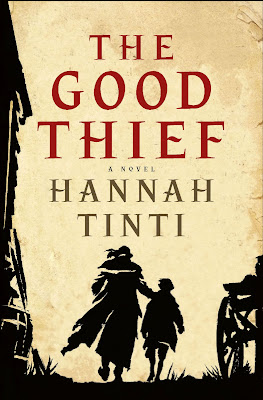
Hannah Tiniti, author of “The Good Thief”
“I have to say that my favorite literary character has always been Jane Eyre. I think this is because the book is divided into three distinct parts—childhood, romantic love, and God. As a little girl, I read about Jane and sympathized with her feelings of injustice and marveled at the way she talked back to grownups. When I was a teenager, I envied how Jane maintained her own identity, throughout her love affair with
Otto Penzler, editor of “The Black Lizard Big Book of Pulps”
“I've always (well, for 50 years, anyway) had tremendous affection of A.J. Raffles, the gentleman jewel thief created by Arthur Conan Doyle's brother-in-law, E.W. Hornung. The portrayal (however inaccurate and romanticized it may have been) of the serene life of mahogany-leather-etched glass clubs, weekends at country houses, and tuxedos at dinner parties has a deep appeal, but most interesting is Raffles himself. His odd code of ethics and the thoughts that went into his decision-making brought me back to the short stories frequently. This is really true of the first two books only (The Amateur Cracksman and Raffles, which was titled The Black Mask in the U.K.) because he almost functioned as a detective in the third collection, A Thief in the Night, while the novel, Mr. Justice Raffles, is excruciatingly dull.
Virtually every story showed Raffles committing a burglary to help someone else, not unlike the malignant Robin Hood paradigm in which it is implicit that the commandment ordering "Thou Shalt Not Steal" can be ignored, as long as you're stealing from the wealthy— not unlike the Democratic party's message. Raffles wanted to relieve the terrible situations of those to whom he was close, surely a noble inclination, yet was able to do so only by resorting to its ignoble opposite— theft. His greatest dilemma occurs when he contemplates stealing from the host who has invited him for a lovely weekend in the country, with a glamorous party to boot— the epitome of breaking the gentleman's code of honor.”
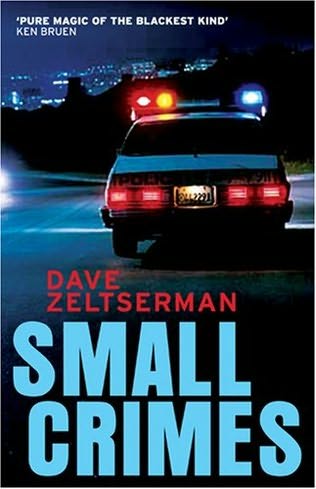
Dave Zeltserman, author of “Small Crimes”
“The Continental Op. This nameless, short, overweight, and not particularly good-looking op from the Dain Curse, Red Harvest, and several volumes of short stories, is probably one of the most dogged and persistent PIs in crime fiction. He's also a tough SOB who can take a beating, is smart enough to make the connections he should, and is willing to steal a crutch from a cripple if it means getting the job done. How can you not find a guy like that compelling?”
Polly Frost, author of “Deep Inside”
“I'm going to answer with the fictional character who I've most recently found compelling: Auntie Mame from Patrick Dennis' book of the same name.
I know this is hardly a stop-the-presses answer. Many people found Auntie Mame to be one of the most compelling characters they've ever encountered in fiction. Camille Paglia has even called "Auntie Mame" an important, overlooked book. I'm with her on that. And who hasn't heard someone – usually a carefree, madcap, willfully charming woman who behaves younger than her years – described as an "Auntie Mame?” She's such a familiar archetype that for years I didn't really feel I needed to read the book. Now that I have, though, I really-really understand what's so great about her as a creation.
Lightweight though some self-important people may feel the book to be – and don't get me started on how undervalued comic novels are! – Auntie Mame really is one of literature's most compelling characters. The secret, it seems to me, is that she's archetypal – the madcap free spirit larger than life aunt – but she isn't just archetypal.
Whether instinctively or consciously, Patrick Dennis understood that compelling characters can't just be resonant archetypes. They need to be living and breathing. Think about what's involved in 1) nailing a larger-than-life archetype, and then 2) bringing her to life. That takes a lot of daring and talent.
And there's no question that Auntie Mame is alive for the reader. She's full of contradictions: she's self-centered, self-interested, and yet admirable for her resilience. She uses people, yet she's egalitarian. She's a neglectful parent towards her orphan ward, yet she also sets him free in ways a traditionally caring mother never could. She's crude yet fine-spirited, embarrassing yet glorious.
For all that I thought I already knew Auntie Mame and how she would behave in the novel, I was constantly surprised by the fictional reality of her. She was far more outrageous than I'd imagined she would be, far more self-serving, and yet also far more touching.
And that brings up a fiction-topic that seems to me to be 'way under-discussed: the importance – the challenge, the technique, all that – of creating a supporting cast that sets your main character off. Divas are so outsized that we often overlook their setting. In my experience, it's just as hard to create these supporting characters. They can't compete, yet they can't be boring. The reader needs to identify with them and their perspective on the compelling character, yet not lose respect for them.
In "Auntie Mame," Patrick Dennis pulls this stunt off in a way all writers could learn from. His narrator character – Auntie Mame's conventional-souled nephew – has real conflicts in the face of Mame's seductive bohemianism. He longs for middle class security, yet knows he'll always be entranced by his Aunt. He loves her, yet he needs to escape her. Yet he always comes back to her too. We believe in him as much as in her – we know how it is that she gives his life a kind of meaning it wouldn't have had otherwise.
"Auntie Mame" should be required reading for all writing students.”

Ken Bruen, author of “
“The sheriff, Ford, in Jim Thompson's, The Killer Inside Me, what a voice, chilling yet almost chatty, lethal yet oddly convincing, and with a very dry sense of humour, almost un-noticable and he sucks you in, you start to see the world like this stone cold psycho does and to understand his maddness, a real feat of masterly narrative and the more you read it, the more you realise how incredibly plotted, crafted it is and so simply written, it seems ...easy.”
Emily Benedek, author of “
“I have always loved the character of Konstantin Levin from Anna Karenina. He was a farmer and a good soul who cleaved to nature. He withdrew from what he perceived as the falseness of Russian society life to live at his country estate, where he tried to develop modern farming techniques, treat his serfs well, and mused about issues of rationality and faith. I very much relate to his interest in science and religion--and their sometimes fraught relationship, and also his ability to appreciate pure goodness when it appeared in his midst.”
The Most Memorial Dickens' Supporting Characters
5 Writers Every Man Should Read
Labels: Dave Zeltserman, Emily Benedek, Hannah Tinti, Ken Bruen, literature, Mark Bauerlein, Otto Penzler, Polly Frost, Writing
StumbleUpon |
Digg |
del.icio.us |
Reddit |
Technorati |
E-mail
An Interview with Writer Hannah Tinti About her Debut Novel "The Good Thief"
(One of the hot books of the season is the debut novel “The Good Thief” by Hannah Tiniti. The novel features a 12-year-old boy named Ren, who is missing his left hand (and has no idea how he lost it). Benjamin Nab, Ren’s alleged long-lost brother, shows up to claim him from an orphanage. That’s when the adventure begins. Tinti has been compared to Robert Louis Stevenson and Charles Dickens in the dozens of blurbs and reviews the book has received. That’s some heady comparisons. Hannah Tinti grew up in Salem, Massachusetts. Her short story collection “Animal Crackers” was a runner up for the PEN/Hemingway award. She is also the co-founder and editor-in-chief of One Story Magazine. Hannah, as a fellow New Englander, knew DaRK PaRTY was a huge fan of the New England Patriots so finally decided to grant us an interview about her sudden literary fame and how she views fiction writing.)

DaRK PaRTY: When did you know you wanted to be a novelist?
Hannah: My mother was a librarian, so I’ve always been surrounded by books. I think I was 19 when I took my first writing class, and after that, I was hooked. But I never thought I’d be a novelist. I was comfortable in the world of short stories. Then I came across this word, “Resurrection Men”. It’s what they used to call thieves who would dig up bodies and sell them to medical schools. I cut out the definition and pasted it into my journal. I thought of a scene, and I wrote it down. Then I thought of another, and I realized that it was going to be a novel, not a short story. And I was terrified.
DP: Can you tell us about the process of writing "The Good Thief?" Where did the initial spark of the idea originate?
Hannah: It was a strange and mysterious process. I wrote the middle of the book first. Then I wrote the beginning, then I wrote the end. I went through many, many drafts. Whole sections were sketched out and never used. Three characters merged into one. My first draft of the book was over 500 pages. The second was about 230. I’m an intuitive writer, and this may not have been the best way to go about writing a novel. I know other writers who use diagrams and note cards. I just try and follow the sentences, and sometimes they lead me to strange places.
DP: The novel has been compared to Dickens and other Victorian novelists. Are you a Dickens fan? What authors are your influences?

Hannah: I am a Dickens fan. He wrote his novels serially in magazines and newspapers, each chapter having its own kind of arc, and I definitely was inspired by that as a way of making my way from one end of the book to the other. Other influences would be the Brontës, James Fenimore Cooper, Robert Louis Stevenson, but also more modern writers like Flannery O’Connor.
DP: Can you describe your writing philosophy? How do you approach a project?
Hannah: Most of the real work for me is done in the editing process. I sketch out scenes and characters and try and push them as far as I can, and then I print the pages out, and rework the language, and try and see the patterns and what I’m trying to say. Often I don’t know what is missing, but I’ll put a big X on the page, or a double-headed arrow, which means: this needs to be opened up and explored, or there is a scene missing here, or a step has been skipped. Then I go back to the computer, and start adding and subtracting and shaping the story. When I’m exhausted and can’t look at it anymore, I print it out and start all over again with the editing.
DP: "The Good Thief" has been getting excellent reviews. How does it feel to be a "hot young" writer on the rise?
Hannah: I don’t really consider myself “hot” or particularly “young”. I’m 35, and I’ve been a part of this literary community for a while. I am extremely appreciative of reviews, whether they are good or bad. The fact that anyone has read my book and taken the time to respond is incredibly humbling. It took me six years to write, and there were many late nights at three am where I came close to chucking the whole thing. I tried to write a book that I would like to read. In the end, I think I accomplished that. If anyone else enjoys it, that is just an amazing bonus.
Literature, Inc.
The Boys at Murphy's Taproom Figure Out Why Broads Dig Jane Austen
5 Questions About: Sherlock Holmes
Labels: 5 Questions, Hannah Tinti, interview, The Good Thief, Writing
StumbleUpon |
Digg |
del.icio.us |
Reddit |
Technorati |
E-mail

 RSS Feed
]saddlebrown]tan]maroon](],](])us.st11.yimg.com/us.st.yimg.com/I/getfishy_1912_2002960]Fishboy]black],]1]10]3]1]1]1]1]1]1]1]1]1],](](]papayawhip])])]DaRK^20PaRTY^20ReVIEW]^3A^3ALiterate^20Blather^3A^3A],](](],](]maroon](](](]brown](],](]maroon](](](],]60]10],](](]^23F5ECE1])])]maroon]0.5]0],](](]^23F5ECE1])])]maroon]^23F5ECE1])])]^23666]16]maroon]maroon],](](]maroon](],](]^23333]^238C4614]tan],](](]^23F5ECE1])])],](](]^23F5ECE1])])],](](]^23F5ECE1])])],](]maroon]maroon]15]3]23]18]maroon],](](],](],](](],](]black](](](],](](](],]black](](](],](](]^23333](](](](](],]^2336F]^23333](],](]Posted^20by^20^24AUTH^20at^20^24TIME.]36],](](]black])])]^23F5ECE1])])]^23666]16]maroon]maroon],](](]maroon](],](]^23333]^238C4614]tan]Contributors]]]^24PROFILE]]]DaRK^20PaRTY^20LiNKS]]]The^20Ambrose^20Bierce^20Site])donswaim.com/]Ambrose^20Bierce]Ironic^20Times])www.ironictimes.com/index.html]Ironic^20Times]Gallery^20Voyer])www.voy-art.com/]Gallery^20Voyer]Tintinologist])www.tintinologist.org/]Tintin]Arcanum^20Cafe])www.arcanumcafe.com/]Arcanum^20Cafe]LADA^20-^20Protect^20our^20Kids])da.co.la.ca.us/pok/poklist.htm]POK^20List]Tom^20Caron^20-^20Boston.com])www.boston.com/sports/nesn/aboutus/onair/tomcaron/]TC]The^20Captain^20Humphreys^20Project])www.captainhumphreys.com/]Captain^20Humphreys]Torpedo^20Design])www.torpedodesign.com/]Torpedo^20Design]^3Cimg^20src^3D^22)us.st11.yimg.com/us.st.yimg.com/I/getfishy_1912_2002960^22^20alt^3D^22Fishboy^22^20style^3D^22border^3A^201px^20none^20black^3B^22^20/^3E])www.fishboy.com/]Fishboy]Etc]]]^3Cimg^20src^3D^22)psyc.horm.org/barimg/bar_psycho.png^22^20width^3D^2280^22^20height^3D^2215^22^20alt^3D^22PsycHo^3A^20Free^20Template^20Generator^22^20style^3D^22border^3A^200px^20solid^20black^22^20/^3E]^24PSYCHO]PsycHo^3A^20Free^20Template^20Generator]^3Cimg^20src^3D^22)psyc.horm.org/barimg/bar_firefox.png^22^20width^3D^2280^22^20height^3D^2215^22^20alt^3D^22Get^20FireFox^21^22^20style^3D^22border^3A^200px^20solid^20black^22^20/^3E])www.mozilla.org/products/firefox/]Get^20Firefox^21]^3Cimg^20src^3D^22)psyc.horm.org/barimg/bar_xhtml.png^22^20width^3D^2280^22^20height^3D^2215^22^20alt^3D^22XHTML^20Validator^22^20style^3D^22border^3A^200px^20solid^20black^22^20/^3E])validator.w3.org/check/referer]XHTML^20Validator]Recent^20Posts]]]^24RECENT]^20]]Archive]]]^24ARCHIVE]^20]]ADVERTISEMENTS]]]^20]]^26^2361470^3BPsycHo})


This work is licensed under a Creative Commons Attribution-No Derivative Works 3.0 License.
The Template is generated via PsycHo and is Licensed.