Poem: Sunrise Over Worcester
5 Questions About: Jason Pinter
12 Signs That You Might Be A Banker
The 9 Worst Movies to Win Oscars
Book Review: Narrow Miss for "Above the Law"
5 Questions About: Screaming Blue Messiahs
What's Up With All the Fat, Naked Guys?
Thoughts from the Shadows: The Craziness of Publis...
How to Make a Damn Good Horror Movie
Literary Criticism
Fantastically Bad Cinema
Essays
Under God's Right Arm
June 2006
July 2006
August 2006
September 2006
October 2006
November 2006
December 2006
January 2007
February 2007
March 2007
April 2007
May 2007
June 2007
July 2007
August 2007
September 2007
October 2007
November 2007
December 2007
January 2008
February 2008
March 2008
April 2008
May 2008
June 2008
July 2008
August 2008
September 2008
October 2008
November 2008
December 2008
January 2009
February 2009
March 2009
Alcoholic Poet
Baby Got Books
Beaman's World
BiblioAddict
Biblio Brat
Bill Crider's Pop Cultural Magazine
The Bleeding Tree
Blog Cabins: Movie Reviews
A Book Blogger's Diary
BookClover
Bookgasm
Bookgirl's Nightstand
Books I Done Read
Book Stack
The Book Trib
Cold Hard Football Facts
Creator of Circumstance
D-Movie Critic
The Dark Phantom Review
The Dark Sublime
Darque Reviews
Dave's Movie Reviews
Dane of War
David H. Schleicher
Devourer of Books
A Dribble of Ink
The Drunken Severed Head
Editorial Ass
Emerging Emma
Enter the Octopus
Fatally Yours
Flickhead
The Genre Files
The Gravel Pit
Gravetapping
Hello! Yoshi
HighTalk
Highway 62
The Horrors Of It All
In No Particular Order
It's A Blog Eat Blog World
Killer Kittens From Beyond the Grave
The Lair of the Evil DM
Loose Leafs From a Commonplace
Lost in the Frame
Little Black Duck
Madam Miaow Says
McSweeney's
Metaxucafe
Mike Snider on Poetry
The Millions
Moon in the Gutter
New Movie Cynics Reviews
Naked Without Books
A Newbie's Guide to Publishing
New & Improved Ed Gorman
9 to 5 Poet
No Smoking in the Skull Cave
Orpheus Sings the Guitar Electric
Polly Frost's Blog
Pop Sensation
Raincoaster
R.A. Salvatore
Reading is My Superpower
Richard Gibson
SciFi Chick
She Is Too Fond Of Books
The Short Review
Small Crimes
So Many Books
The Soulless Machine Review
Sunset Gun
That Shakesperherian Rag
Thorne's World
The Toasted Scrimitar
This Distracted Globe
Tomb It May Concern
2 Blowhards
Under God's Right Arm
A Variety of Words
The Vault of Horrr
Ward 6
When the Dead Walk the Earth
The World in the Satin Bag
Zoe's Fantasy
Zombo's Closet of Horror
Bookaholic Blogring
Power By Ringsurf
But I digress.
I want to instead write about a film option I just sold and how it relates to the problems with publishing. The film option sold is for an unpublished book titled “28 Minutes.” I originally wrote this book in 2004, with the title then as “Outsourced.”
The book was about a group of software engineers who were made basically unemployable due to the industry's push to outsourcing (the process of moving American job overseas to places like India). Desperate as they see their middle class lives crumbling apart, they come up with an almost brilliant plan to rob a bank. Almost brilliant, since things don't quite work out as planned.
In 2005 my literary at that time started shopping the book around and there was initially a lot of interest with editors in New York digging the book, but ultimately none of them could get it through their editorial boards, and the feedback I got from one of the publishing houses was that the board was worried whether outsourcing would still be relevant by the time the book was published (it would've been published in '06 or 07, yeah, right, outsourcing was really about to disappear from the public consciousness by then!).
Early in 2006 a top film agent, Steve Fisher at APA, read the book and decided he was going to get this made into a movie. He started pitching it then, and there was a lot of interest in Hollywood, and over the last three years there have been a lot of false starts with different players.
On Tuesday, I signed a contract selling the film option for this unpublished book to Constantin Film Development and Impact Pictures with John Tomko (“Ocean's 11,” “Falling Down”) and Jeremy Bolt (“Resident Evil,” “Death Race”) to produce. Here's the difference between how Hollywood looked at the book and how the publishing industry looked it—Hollywood looked at it as a great story that would make a great movie, and while deals along the way fell apart due to scheduling conflicts, it never changed the excitement that they had for this book. The New York publishing houses, on the other hand, looked for excuses not to publish it. I think in a nutshell that points out what's wrong with the New York publishing industry.
So where does this book stand now? Well, last year I stripped out the outsourcing angle, making the software engineers more as people out of work because of time and technology passing them by, and have a deal in place for the UK rights and am now working out the US rights. Can the New York houses still find an excuse not to publish it? I doubt it, but they can be a creative bunch, so we'll see.
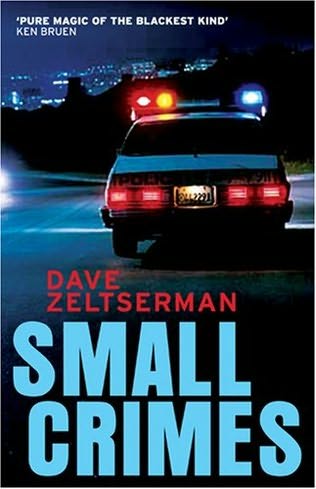 (Dave Zeltserman lives and writes in Massachusetts. His crime novel “Small Crimes” was called a “thing of beauty” by the Washington Post and National Public Radio named “Small Crimes” one of its five best mystery novels of 2008. Dave also publishes his own blog, Small Crimes. He publishes the column Thoughts from the Shadows for DaRK PaRTY.)
Dave Zeltserman at Amazon.com
Thoughts from the Shadows: Seismic Changes in the Publishing World
12 Signs You Might Be a Literary Agent
An Interview with Crime Noir Writer Scott Phillips ("The Ice Harvest")
Labels: Dave Zeltserman, Publishing, Thoughts from the Shadows
 StumbleUpon |
 Digg |
 del.icio.us |
 Reddit |
 Technorati |
 E-mail

Commentary from Crime Writer Dave Zeltserman
Everyone who's been paying attention knows that many, if not all, of the large publishing houses are struggling badly right now. The numbers show that there has been a gradual decline in readers, and the explanation usually given is blaming things like shifts in technology (people spending their reading time surfing the web as instead of reading books) and more entertainment choices; such as video games and more TV and film options.
You can't argue with numbers, but I don't believe these reasons cited is why readership is down. J.K. Rowling and her Harry Potter books show that readers will flock to compelling books. Instead I'm blaming it on several seismic changes that I've witnessed to the publishing landscape since the early 90s when I started writing, and I believe these events have more to do with the current state of publishing than anything else.
My next few columns here on DaRK PaRTY will be looking at these seismic events and how they affected publishing.
 Major seismic event: The Cheap PC.
When I finished my first novel “Fast Lane” in 1992, personal computers (PCs) had been around for a while but they weren't cheap, and most families didn't have them. They were mostly for hobbyists and computer professionals. So back in 1992 when I sent query to editors at many of the major New York publishing houses, most of them responded, with around 10 of them requesting the manuscript.
When I finished my next novel “Bad Thoughts” in 1997, one editor at Warner Books responded to my query letter. The difference: PCs had become cheap, and as a result publishing houses were being flooded with manuscripts and these houses responded by slamming the doors shut and making literary agents the gatekeepers. Writing a book in longhand or pecking away with a typewriter takes work and serious commitment. Using a PC makes it ridiculously easier, and really makes it so that anyone can write 300 pages, and a lot of people were doing exactly that.
Publishers shutting their doors to first-time writers was a big event, as was making literary agents the de-facto gatekeepers. It removes the editors from one step in the process, and puts more emphasis on commercial feasibility as opposed to literary merit and developing talent. But that was only one effect of cheap PCs and the sea of manuscripts, which they had unleashed.
Of course, another obvious one was that it made it a lot easier for serious writers to get lost in this unrelenting tidal wave of manuscripts. If an agency was now getting hundreds of manuscripts sent to them each week instead of tens, less time was going to be spent evaluating any of them, making it harder for these better books to surface.
Then you had new technologies and businesses that needed to be developed to sop up the demand that these new writers had to be published. Publishing on Demand (POD) technology and quick, easy self-publishing businesses came out of this. iUniverse alone has more than 20,000 mystery novels that have been self-published. Let me repeat that. 20,000 mystery novels from just one of these self-publishing outfits.
With POD technology, anyone can become a publisher with little investment. This may make publishing a more democratic endeavor, but it's not a good thing.
But let's go back to maybe the most critical effect this had on the more legitimate publishing houses. As literary agents were wading through manuscripts it was only natural for them to spend less time with any one manuscript and to quicker toss a submission, as well as looking for patterns to spot the more formulaic books that have higher perceived "commercial viability".
But again, this was only one of the major seismic events that have led houses to care more about "relentlessly commercial" writing than the value of the book, and I'll be discussing more of these in future weeks.
 (Dave Zeltserman lives and writes in Massachusetts. His crime novel “Small Crimes” was called a “thing of beauty” by the Washington Post and National Public Radio named “Small Crimes” one of its five best mystery novels of 2008. Dave also publishes his own blog, Small Crimes. He publishes the column Thoughts from the Shadows for DaRK PaRTY.)
Check out Dave Zeltserman on Amazon.com
Thoughts from the Shadows: The Thompson Question
The Diary of Jimmy Cronkle: Unpublished Novelist
5 Questions About: Crime Noir
Labels: Dave Zeltserman, Publishing, Thoughts from the Shadows, Writing
StumbleUpon |
Digg |
del.icio.us |
Reddit |
Technorati |
E-mail
The second part of our Yuletide feature. We asked our distinguished panel a simple question: "What is your favorite Christmas movie and why?" Click here to see Part 1.
We received some remarkable answers!
Dave Zeltserman, author of “Small Crimes”
“My selection is Christmas Time for the Jews, originally airing on Saturday Night Live as part of TV Funhouse. While not a movie, and only 2 minutes and 24 seconds long, my wife and I probably watched this a few dozen times when it first came out (thank you YouTube!), and it perfectly captures the sense of alienation of Jews feel at Christmas -- and yes, we use the days as way to get into popular movies without waiting in line, and usually end up at Chinese restaurants drinking their sweet-ass wine!”
 Bill Crider, author of “Of All Sad Words”
“My favorite Christmas movie? That’s an easy one. A Christmas Story, no question. Why? Let me count the ways.
1. Jean Shepherd. I love the narration, but it’s more than just that. I love it because years before I ever saw the movie, I read Shepherd’s wonderful childhood reminiscences in Playboy (after I looked at the pictures, of course). Later, I bought the collection called In God We Trust, All Others Pay Cash and read the stories again. I never dreamed that anybody would mine them for movie gold, but Bob Clark did just that and came up with the film that runs for 24 hours on TBS every Christmas and for almost that many hours on the TV set in our den. Sure, I have the DVD, but the whole family likes to have that movie running on Christmas day. It’s become a family tradition.
2. The setting. I didn’t grow up in the same era Ralphie did, but nothing much had changed by the time I came along. Everything in the movie hits home with me, from the flat tire to the school classroom to the way the kids dressed.
3. The Red Ryder BB Gun. I had one just like the one in the movie, and it was a wonderful thing. Also, like every kid in that day and age, I heard the bit about “you’ll put your eye out” more than once.
4. The Little Orphan Annie Decoder. I sent away for many a radio-show premium. Most of them were just as disappointing as the decoder Ralphie got. I still have my Lone Ranger Silver Saddle Ring. It still glows in the dark.
5. Mouth washed out with soap. Been there, had that done to me.
6. The cast. Darren McGavin is great as the Old Man. The profanity. “Frah-gee-lay.” A major award. Melinda Dillon is the mom every kid wanted to have. And all the kids get it right. If you don’t believe me, watch the sequel, done with a (mostly) different cast. Shepherd is the narrator again, but it just doesn’t work.
7. There’s just too much more to go into. For me, this is it, the one, THE Christmas movie.
Second choice: Bad Santa.
 Casey Hopkins, blogger, TheCabinet.com
“A Christmas Story! Not only hilarious and one of the true Christmas classics, but also directed by the same Bob Clark who got his start with Black Christmas and Dead of Night. Got to stand by them horror directors!”
Hannah Tinti, author of “The Good Thief”
“Usually my family watches the old black and white version of A Christmas Carol, with Alastair Sim as Scrooge. I think it’s still a great movie—very dark and interesting, and some of those images, like the hooded spirit pointing at Scrooge’s grave, and the moment where Scrooge’s sister walks through him, like a ghost, have stayed with me, over the years.”

Malena Lott, author of “Dating da Vinci”
“Love Actually. It's a romantic comedy with a huge, stellar cast, multiple story lines and feel good holiday trimming. Perfect movie to watch while snuggled up next to your sweetie.”
"My Favorite Christmas Movie Is..." (Part 1)
Labels: Bill Crider, Casey Hopkins, Christmas, Dark Party, Dave Zeltserman, Hannah Tinti, Malena Lott, Movies
StumbleUpon |
Digg |
del.icio.us |
Reddit |
Technorati |
E-mail
(DaRK PaRTY is tickled pink – and blue and red – to have cajoled and begged Crime Writer Extraordinaire Dave Zeltserman to become a regular contributor to the DaRTY PaRTY ReVIEW. Dave will be authoring an occasional column about crime writing and publishing called “Thoughts from the Shadows.” This is his first commentary! Enjoy!)
"Jim Thompson is the best suspense writer going, bar none."
-- New York Times
"A blistering imaginative crime novelist… a classic American writer."
-- Kirkus Reviews
 Between 1952 and 1964 Jim Thompson wrote what are arguably his most famous crime noir novels, including "Killer Inside Me", "Savage Night", "A Swell-Looking Babe", "A Hell of a Woman", "The Getaway", "The Grifters" and "Pop. 1280". All in all, Thompson wrote 26 novels, a number of which have been made into movies, including "The Getaway" twice, with recent word that a new version of "Killer Inside Me" starring Casey Affleck as Lou Ford is currently being planned.
Thompson is considered not only one of the great crime writers of American literature, but one of the great American writers period. You can see his influence in a whole generation of current crime writers, from James Ellroy to the Galway born writer, Ken Bruen. Outside of maybe Hammett, Chandler and James M. Cain, it's hard to think of a writer who has had a greater influence on American crime fiction.
So the question is: Could Jim Thompson be published today?
Well, yes, I have little doubt that some of the Independent houses in the United Kingdom, like Serpent's Tail, No Exit Press and Bitter Lemon Press, where the quality of the book is more important than the perceived "commercial value" would jump at the chance of publishing these books. Perhaps also some of the small U.S. houses.
 So let's refine the question. Would any of the large New York houses publish Thompson today?
No. At least I don't think so.
I have little doubt that editors reading his manuscripts would fall in love with them and want to buy them, but then fear would come into play. The fear that someone along the way in the decision process would complain about the books being too dark. Or too edgy. Or that there was an unlikable protagonist—or worse even, a protagonist who's a full-blown crazy. They would be too afraid that somewhere along the line the book would be shot down, that someone would feel their time was wasted. Ultimately they would be afraid that their career would be irreparably damaged because they recommended a book that fell outside the lines, a book that was too different, that wasn't written in a "relentlessly commercial" style.
These editors would probably tell Thompson how much they loved his writing, but they that need something more mainstream from him. Something safer, something more commercial. And maybe after having a half dozen or so of his books rejected for not being safe enough, Thompson might've quit writing. Or worse, give up his brilliant and unique noir vision to write "relentlessly commercial" thrillers.
At least that would be my guess.
 (Dave Zeltserman lives and writes in Massachusetts. His crime novel “Small Crimes” was called a “thing of beauty” by the Washington Post and National Public Radio named “Small Crimes” one of its five best mystery novels of 2008. Dave also publishes his own blog, Small Crimes.)
 10 Bizarre Serial Killers in History
Our Interview with Dave Zeltserman
Our Review of "Small Crimes"
Labels: Dave Zeltserman, Jim Thompson, mysteries, Thoughts from the Shadows, Writing
StumbleUpon |
Digg |
del.icio.us |
Reddit |
Technorati |
E-mail
DaRK PaRTY asked writers and authors a simple question: “What literary character do you find most compelling and why?”
Here are the answers we got:
Mark Bauerlein, author of “The Dumbest Generation”
“Let me go back a few decades and recall a character from my first year of college: Ivan Karamazov. I read the book for a first-year humanities course at UCLA, and it stuck. No doubt much of the psychology and historical context of the book escaped me, but the plight of the middle brother hit home hard. Ivan is young, smart, talented, handsome, a journalist/writer, and an atheist. I, too, was an atheist, having just come out of a conversion experience that left me without any spiritual beliefs at all. An ominous and lonely feeling hovered all the time, and I wondered what life was for, what nobility was possible for clever little animals wandering a speck of rock in a vast, cold, empty universe.
Ivan gave that condition dramatic form. Yes, his fate is a sad one, but on the way toward it he manages to make his metaphysical discomforts into something with a dignity all their own. That’s all I wanted. Not a return of faith, which I knew would never happen, but a casting of atheism as meaningful and wise and noble. I no longer believe that atheism is any more moral or intellectual than faith is (though I’m stuck with it), but Ivan´s example lingers as a special remembrance.”
Hannah Tiniti, author of “The Good Thief”
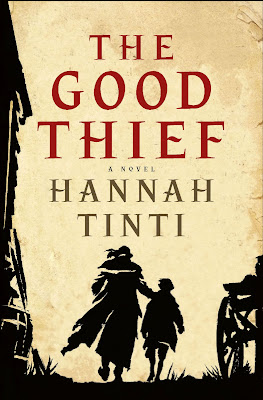
“I have to say that my favorite literary character has always been Jane Eyre. I think this is because the book is divided into three distinct parts—childhood, romantic love, and God. As a little girl, I read about Jane and sympathized with her feelings of injustice and marveled at the way she talked back to grownups. When I was a teenager, I envied how Jane maintained her own identity, throughout her love affair with
Otto Penzler, editor of “The Black Lizard Big Book of Pulps”
“I've always (well, for 50 years, anyway) had tremendous affection of A.J. Raffles, the gentleman jewel thief created by Arthur Conan Doyle's brother-in-law, E.W. Hornung. The portrayal (however inaccurate and romanticized it may have been) of the serene life of mahogany-leather-etched glass clubs, weekends at country houses, and tuxedos at dinner parties has a deep appeal, but most interesting is Raffles himself. His odd code of ethics and the thoughts that went into his decision-making brought me back to the short stories frequently. This is really true of the first two books only (The Amateur Cracksman and Raffles, which was titled The Black Mask in the U.K.) because he almost functioned as a detective in the third collection, A Thief in the Night, while the novel, Mr. Justice Raffles, is excruciatingly dull.
Virtually every story showed Raffles committing a burglary to help someone else, not unlike the malignant Robin Hood paradigm in which it is implicit that the commandment ordering "Thou Shalt Not Steal" can be ignored, as long as you're stealing from the wealthy— not unlike the Democratic party's message. Raffles wanted to relieve the terrible situations of those to whom he was close, surely a noble inclination, yet was able to do so only by resorting to its ignoble opposite— theft. His greatest dilemma occurs when he contemplates stealing from the host who has invited him for a lovely weekend in the country, with a glamorous party to boot— the epitome of breaking the gentleman's code of honor.”
Dave Zeltserman, author of “Small Crimes”
“The Continental Op. This nameless, short, overweight, and not particularly good-looking op from the Dain Curse, Red Harvest, and several volumes of short stories, is probably one of the most dogged and persistent PIs in crime fiction. He's also a tough SOB who can take a beating, is smart enough to make the connections he should, and is willing to steal a crutch from a cripple if it means getting the job done. How can you not find a guy like that compelling?”
Polly Frost, author of “Deep Inside”
“I'm going to answer with the fictional character who I've most recently found compelling: Auntie Mame from Patrick Dennis' book of the same name.
I know this is hardly a stop-the-presses answer. Many people found Auntie Mame to be one of the most compelling characters they've ever encountered in fiction. Camille Paglia has even called "Auntie Mame" an important, overlooked book. I'm with her on that. And who hasn't heard someone – usually a carefree, madcap, willfully charming woman who behaves younger than her years – described as an "Auntie Mame?” She's such a familiar archetype that for years I didn't really feel I needed to read the book. Now that I have, though, I really-really understand what's so great about her as a creation.
Lightweight though some self-important people may feel the book to be – and don't get me started on how undervalued comic novels are! – Auntie Mame really is one of literature's most compelling characters. The secret, it seems to me, is that she's archetypal – the madcap free spirit larger than life aunt – but she isn't just archetypal.
Whether instinctively or consciously, Patrick Dennis understood that compelling characters can't just be resonant archetypes. They need to be living and breathing. Think about what's involved in 1) nailing a larger-than-life archetype, and then 2) bringing her to life. That takes a lot of daring and talent.
And there's no question that Auntie Mame is alive for the reader. She's full of contradictions: she's self-centered, self-interested, and yet admirable for her resilience. She uses people, yet she's egalitarian. She's a neglectful parent towards her orphan ward, yet she also sets him free in ways a traditionally caring mother never could. She's crude yet fine-spirited, embarrassing yet glorious.
For all that I thought I already knew Auntie Mame and how she would behave in the novel, I was constantly surprised by the fictional reality of her. She was far more outrageous than I'd imagined she would be, far more self-serving, and yet also far more touching.
And that brings up a fiction-topic that seems to me to be 'way under-discussed: the importance – the challenge, the technique, all that – of creating a supporting cast that sets your main character off. Divas are so outsized that we often overlook their setting. In my experience, it's just as hard to create these supporting characters. They can't compete, yet they can't be boring. The reader needs to identify with them and their perspective on the compelling character, yet not lose respect for them.
In "Auntie Mame," Patrick Dennis pulls this stunt off in a way all writers could learn from. His narrator character – Auntie Mame's conventional-souled nephew – has real conflicts in the face of Mame's seductive bohemianism. He longs for middle class security, yet knows he'll always be entranced by his Aunt. He loves her, yet he needs to escape her. Yet he always comes back to her too. We believe in him as much as in her – we know how it is that she gives his life a kind of meaning it wouldn't have had otherwise.
"Auntie Mame" should be required reading for all writing students.”

Ken Bruen, author of “
“The sheriff, Ford, in Jim Thompson's, The Killer Inside Me, what a voice, chilling yet almost chatty, lethal yet oddly convincing, and with a very dry sense of humour, almost un-noticable and he sucks you in, you start to see the world like this stone cold psycho does and to understand his maddness, a real feat of masterly narrative and the more you read it, the more you realise how incredibly plotted, crafted it is and so simply written, it seems ...easy.”
Emily Benedek, author of “
“I have always loved the character of Konstantin Levin from Anna Karenina. He was a farmer and a good soul who cleaved to nature. He withdrew from what he perceived as the falseness of Russian society life to live at his country estate, where he tried to develop modern farming techniques, treat his serfs well, and mused about issues of rationality and faith. I very much relate to his interest in science and religion--and their sometimes fraught relationship, and also his ability to appreciate pure goodness when it appeared in his midst.”
The Most Memorial Dickens' Supporting Characters
5 Writers Every Man Should Read
Labels: Dave Zeltserman, Emily Benedek, Hannah Tinti, Ken Bruen, literature, Mark Bauerlein, Otto Penzler, Polly Frost, Writing
StumbleUpon |
Digg |
del.icio.us |
Reddit |
Technorati |
E-mail
(Everyone has one of those movies in their background. A film that continues to resonate with you even years after you saw it. It might not be your favorite film, but its one that had a profound effect on the way you look at cinema and at life. DaRK PaRTY was curious about these kinds of movies so we posed a simple, yet complicated question:
What film has had a lasting impact on you and why?
We sent this question out to some of our favorite people and we received some very compelling answers. Please feel free to leave your own answer to the question in our comments section).
John J. Michaelczyk, documentary film maker and co-director of the Film Studies Program at 
Marcello Clerici (Jean Louis Tringtignant) appears to do anything to survive in a political storm, and basically sells his soul in a Faustian sense in order to become part of the establishment. The nuances of the film and the allusions to international culture, as well as the non-linear editing, make it a very clever puzzle, very much worth deciphering.
Aesthetically, it is an impressively designed film with its art deco feel and fascist overtones that are visually very stimulating. Vittorio Storaro's cinematography brings alive this aspect of the film. Having met Alberto Moravia who wrote the novel and having interviewed Bertolucci for my book on "Italian Political Film," I appreciated all the more the evolution from novel to film and the poetic imagination in both expressions.
Dave Zeltserman, blogger and author (“Bad Thoughts”): If I had to pick only one, I’d say “The Roaring Twenties” (1939). I saw it for the first time when I was about 13, and it is just such a well-made and powerful movie, with such a tragic and noir-ish ending, although also heroic. In my art I strive for the type of perfection that that movie achieved. I’ll never make it, but I have that goal.
R.A. Salvatore, best-selling fantasy author, co-founder 38 Studios: “The Deerhunter” (1978) and “Apocalypse Now” (1979) both hit me hard. I'm the youngest in my family and was just a kid when

Laurie Foos, author (“Before Elvis There Was Nothing”): I was going to name a foreign film here but thought it important to pay tribute to our American cinema, so I could name any number of Woody Allen films that have stayed with me, but the one that I return to most often, I think, is "Manhattan" (1979). It's a beautiful tribute to a city and to unrequited love -- and Woody Allen does juxtaposition like no one else. I'm thinking in particular of Woody Allen's character calling someone's self-esteem "a notch below Kafka's," and then in the next scene, he's rescuing Diane Keaton's character from an imagined insect in her apartment. The film also renders insecurities and hopes and humor seamlessly. And, of course, it makes me laugh every time. I don't know how you don't fall in love with
Gretchen Rubin, author and blogger (“The Happiness Project”): “The Piano” (1993). I love this movie but find it so intense that I’ve never been able to see it for the second time. I think that at times, we operate on a symbolic level that’s beyond the kind of symbolism that can be put into words (e.g., Billy Budd is a Christ figure, or Dumbledore is a Merlin, wise-old-man figure). It’s very rare to find that. In books, I would point to Flannery O’Connor’s “Wise Blood” or J. M. Barrie’s “Peter Pan.” I’m constantly searching for examples of this kind of work, but it’s very rare.
Billy Conway, musician and former drummer for Morphine and Treat Her Right: “Citizen Kane” (1941). I got stumped on film because the question made me realize that film does not move me in the same way as some other art forms. I take snippets and life imitates art regularly, but as a whole I will have to think some more about the effect that film has on me and how it is and isn't influential.

Jessica Fox-Wilson, poet and blogger (“9 to 5 Poet”): Just as I was beginning high school, I saw the movie "Heathers" for the first time. Without seeing this movie, I don't think I would have survived the first two years of high school. Any time a "friend" was mean to me, I imagined the friend choking on Draino and saying, "Corn-nuts!" Life was easier because of that image alone.
Steve Almond, author of “(Not that You Asked) Rants, Exploits, and Obsessions”: Gotta narrow it down to one? I'll say "Midnight Cowboy" (1969). Real art in a moving picture, real suffering and doomed loyalty. Imagine.
Jess Myers, poet: As far as movies, I think I have to name “To Kill a Mockingbird” (1962). It is one of few films that truly captures the tone and charm of the book. It's just masterfully done, and Gregory Peck's performance is exactly how I imagined Atticus Finch when I read the book. He just blows me away every time.
Elizabeth Miller, scholar and Dracula expert: Perhaps the film that has made the greatest impact on me is “Cry Freedom” (1987) starring Kevin Kline and Denzel Washington. I have watched it numerous times, and am always moved by it. I had read the book on which it was partially based (“Biko”) but in this case, the movie was even better.

Tony Carrillo, cartoonist (F-Minus): The two movies that influenced me the most are “The Jerk” (1979) by Steve Martin, and “Monty Python and the Holy Grail” (1975). I watched these movies over and over growing up, and even though I can probably quote both line for line, I still see something new every time. I still laugh every time I think of Martin screaming "He hates these cans!" These movies prove that something can be completely stupid and absolutely brilliant at the same time.
Nigel Patterson, president of the Elvis Information Network (EIN): “High Noon” (1952) with Gary Cooper. As a young child growing up in
The Horror! The Horror -- 5 Really Scary Films
Labels: Billy Conway, Dave Zeltserman, Elizabeth Miller, Grechen Rubin, Jess Myers, Jessica Fox-Wilson, John Michalczyk, Laurie Foos, Movies, Nigel Patterson, R.A. Salvatore, Steve Almond, Tony Carrillo
StumbleUpon |
Digg |
del.icio.us |
Reddit |
Technorati |
E-mail

Billy Conway, musician and former drummer for Morphine and Treat Her Right: “The Philosophy of Civilization” by Albert Schweitzer. The title is a wee grandiose but it was written in a different cultural time that begged for answers. For one thing he observes that at a certain point after the printing press and wider dissemination of philosophical knowledge was available, the shamanesque nature of philosophy fell prey to endless critique of the other positions and the search for meaning was left unattended while we put faith in the academy of critique.... as if the meaning and purpose were there if one merely read enough. More importantly he digs deep into making the case that happiness and fulfillment occur through satisfying an innate inner urge to be helpful and worthy as a communal citizen. He argues that satisfying your own needs is not a way to achieve happiness, but rather that good ole feeling of doing something for somebody else is where our greatest good lies. Still learning from that book.

Tony Carrillo, cartoonist (F-Minus): The book that changed my view of comedy more than any other is “The Hitchhiker's Guide to the Galaxy” by Douglas Adams. His perspective on the world was unlike anything I had ever read. When describing an army of spaceships about to destroy the Earth,
Laurie Foos, author (“Before Elvis There Was Nothing”): I wouldn't say this book changed my perspective on life, per se, but it certainly changed — irrevocably -- my perspective on literature. And that book is Nikolai Gogol's “The Nose.” The metaphor is brilliantly sustained, both funny and oddly moving in parts, and it taught me what metaphor could accomplish. It completely changed the way I thought about writing, and it's one I re-read once a year.
Judith Wilt, Boston College professor: Let me cite two books: Ayn Rand's “Atlas Shrugged” got me thinking about and fighting with its ideas in my late teens: how could I be so drawn in and yet so resistant? How could her world seem so seamless in the reading and so hard to credit as I looked at my actual world? And Charles Dickens's “Our Mutual Friend” made me commit to graduate student life -- a book read in my mid-twenties that got me out of the “high” vs. “popular” literature dichotomy I had brought from college life and made me feel there could be a place for me in the 'profession.'
Adian Moher, blogger (“A Dribble of Ink”): I hate to sound cliché, but I've got to go with J.R.R. Tolkien's “The Hobbit,” a classic of the genre and the single novel that really set me on the path towards Fantasy. “The Hobbit” helped me realize that sense of adventure that is lurking around any corner as long as you're willing to look for it and take a hold of it yourself.
Bilbo, as a Hobbit, was content to let life come to him, to laze away the days and aspire to nothing more than smoke his pipe weed, quaff some ale and relax. Now, this doesn't sound like a terrible life, in fact, it sounds rather tranquil and perfect, but Bilbo, through Gandalf's insistence, reached out beyond that life and found a whole other world of adventure that existed, just there for the taking.
I live in a place very similar to Hobbiton: a small, sleepy little place that is absolutely perfect for lazing away the days. But Bilbo taught me to look outside, to take a look at what else the world has to offer. Without Bilbo I wonder if perhaps I would have discovered my lust for travel, if I would have seen as much of the world as I have. Travel has taken hold of me and threatens never to let go as I keep looking for a dragon to plunder, a mountain to save and goblins to flee.
Now I just need to gather some good friends for the ride.

Gretchen Rubin, author and blogger (“The Happiness Project”): The first is Wayne Koestenbaum’s “Jackie Under My Skin.” It showed me that a biographer could tackle the study of a life in a completely idiosyncratic way. When I started to write my own biography of Winston Churchill, having read that book made me aware of the possibilities of breaking out of the standard chronological form.
Jess Myers, poet: There have been several books that changed my perspective on life after I read them. I often find myself imitating a style as I'm reading something new. David Sedaris' “Me Talk Pretty One Day” inspired me to change majors in college from vocal performance to creative writing. “To Kill a Mockingbird” (by Harper Lee) was the first book I ever loved and couldn't put down. I kind of skated through English classes before that and never really got much enjoyment out of the books that we were forced to read in junior high. That might have been the one that really opened my eyes to a lifetime of loving words. From there it was “Slaughterhouse Five” (by Kurt Vonnegut) and “East of Eden” and “The Grapes of Wrath” (by John Steinbeck) and there are a handful of women writers that I really enjoy for their wry humor and unique but sort of unfeminine perspectives: Dorothy Parker, Flannery O’Connor, and Joyce Carol Oates. I like the gritty dirty feminine voice.
Dave Zeltserman, blogger and author (“Bad Thoughts”):  I don’t think any single book changed my perspective on life, although I’m sure the thousands of books I’ve read have had some influence on the way I look at things. The one book that probably had the biggest impact on my life since I’m now writing crime novels, was “I, the Jury” by Mickey Spillane, because that book got me hooked on crime fiction.
Kevin C. Fitzpatrick, author and president of the Dorothy Parker Society: This has to be “Here Is New York” by E.B. White. My friend gave it to me as a gift the year I moved to
Rebecca Traquair, poet: This is actually a conversation I've had with any number of people. The answers never cease to interest me. My most influential book is actually a slim volume of aphorisms by an American writer named Jean Toomer. It 's called “Essentials” and was originally published in 1931.
Toomer's most famous book, “Cane,” made his reputation as a Harlem Renaissance writer, but his own spiritual questing led him away from that vein. He lost popularity, but he was true to himself. “Essentials” is a distillation of his ideas and ideals, a rejection of prevailing standards and classifications, an absolutely revolutionary book for his time and for ours. I found the book almost by accident while working on a university project, and this is one of the reasons I am a great believer in the happiness of accidents.
I can't quote directly some of the phrases that grabbed me so completely, as my copy is currently on extended loan to my friend Jadon (I have at least 4 of Jadon's books right now, so this is only fair). I can attempt to paraphrase though... “All our lives, we have been waiting for an event that will gloriously upset us. All our lives, we have been waiting to live.”
Reading “Essentials” gloriously upset my thinking, or at the very least, it gave me a framework for thoughts that I had been formulating but had not yet been able to put into words. More than any other book I have ever read, “Essentials” made me consider exactly what it means to be human, to be an individual, and to be part of something greater than oneself. It is well worth seeking out.
L. Kenyon, writer: When I was 22, I landed a terribly shitty job in a horribly shitty strip mall. I was interviewed by a man who had bad hair and small teeth. He'd driven an hour north from
For the first month I did everything by code, fearful of a few mentioned surprise visits from corporate. Then, as the days began to tick on and the hours grew longer, I broke. I went from rushing an occasional cigarette out the backdoor and rubbing myself down with soap afterward, to lighting up out front beside the window sale signs for Lung Power and C Vitamins. Weeks turned to months. I starting hauling my TV and Playstation in but a little while I gave up the hassle. Friends would come visit and hang around in the back room for hours but I was lonely. I was bored. I was miserable.
Then one afternoon I was doing laundry at my mother's when I noticed a box of books by the door. "Throwing them out," she said. "Why not burn them," I said. "Don't get smart," she said. I'd been avoiding just that for twenty-two years. As I stood there looking down into that box, I realized that I had never read a single book in its entirety.
I had not read "The Cat in the Hat" or even "Green Eggs and Ham." Did not would not read Vonnegut, Salinger, or any text in hand. I faked book reports with lame retorts and silly see-through lies. I'd watch the movie or cheat, and then fail with indignant surprise. No Shakespeare, no Poe, not even Tolkien or B. Potter, No Dick, No Jane, and magazines? Bah, couldn't be bothered.
A friend of mine, Jen, would visit me at home and shake her head saying things like, "I mean you're a smart guy, why don't you read?" "Why?" I'd ask setting down the controller and taking another hit from the bowl, "Why don't you read to me?" And it went on like this until that afternoon at my mother's. Boredom will make a man do strange things. In this case, it led to a whole new everything.
I bent and took the box with me. I brought it to work the next day and sifted through it. I pulled out “Insomnia” by Stephen King and set it down on the desk. I stared at the cover and sighed. "
considering I liked a handful of King book based movies (only but a handful mind you) and it was also a familiar name; it had been hiding the lower half of my mother's face for the greater part of my childhood.
A few hours passed and the book still sat on the desk untouched. So finally giving in with nothing to do and no visitors, I opened the first page. It's been almost eight years, and I've never stopped turning them. Thank you Mom.
I was fired a few months later. I was in the back room in blue jeans with my feet up on the desk and reading “The Catcher in the
Knock Your Socks Off Books - Part 1
Labels: Adian Moher, Billy Conway, books, Dave Zeltserman, Grechen Rubin, Jess Myers, Judith Wilt, Kevin Fitzpatrick, L Kenyon, Laurie Foos, Tony Carrillo
StumbleUpon |
Digg |
del.icio.us |
Reddit |
Technorati |
E-mail
An Interview With Thriller Novelist Dave Zeltserman
(DaRK PaRTY loves a tasty mystery novel (that doesn’t involve protagonists named Dexter). Crime fiction has never been more popular – so we were happy to run into Dave Zeltserman, a crime writer in

DaRK PaRTY: How did you get your start in writing novels?
Dave: I always read a lot, and at times would try writing short stories. The thing was in high school I was more of a math and physics guy, and in college majored in Applied Math and Computer Science, so writing seemed more like a lark than something I should seriously pursue. After college I worked as a software engineer, and still found myself drawn to writing fiction in my spare time.
I was struggling with a private eye story and doing a bad job trying to imitate Ross Macdonald when I discovered Jim Thompson.
DP: What do you find so interesting about crime fiction?
Dave: I like the toughness of it. I also like the psychological aspects of it; all that guilt and desperation and darkness and raw emotion. Good fiction is where you’re constantly upping the ante as far as conflict goes, and crime fiction is a natural for that. That’s almost the definition for noir — characters who just keep making their situation worse until there’s no hope. This is really true with any fiction, but to me the best crime fiction is when it’s written at two or more levels.
“Fast Lane” at one level is a psychotic noir novel, but thematically is also about the damage child abuse causes as it’s passed from generation to generation. My new novel, “Bad Thoughts” is also at one level a crime/horror thriller, and at another about surviving tremendous abuse.
DP: Can you tell us about your new novel "Bad Thoughts"? What's it about and how did the idea for it germinate?
Dave: When I was writing it I thought of it as a metaphysical thriller, but readers and reviewers are calling it instead a mix of horror and crime, and I can see their point. The book focuses on
This is the only book I didn’t have any real inspiration for. I was working with a literary agent at the time who gave me a one paragraph plot for a book to write, that was kind of a “Silence of the Lambs” knockoff. I didn’t want to do that, instead I reworked it into something I was happy with. I was reading some books on metaphysics while I was working on this, and some of the ideas from that were used heavily in the book.
DP: What's the most difficult part about being an emerging novelist today?
Dave: Getting picked up by a major publisher is very hard. The industry has changed from a publishing house nurturing authors and working with them as they develop their skill over several novels to looking at everything as a commercial package. Editors today also have much less say in what they buy — I’ve talked with several editors at some of the large houses who like my works, but what they tell me is they can only buy formula. Books have to be overtly commercial, and these editors have a hard time buying anything that’s different.
I consider myself very fortunate to have my next three books published by one of the top
My advice to beginning crime novelists, if you want to get published by a large house, write something that’s formula. If it’s too dark or different, forget it, the chances are you’re going to have to be published by a small house, which means few reviews and few bookstores other than a handful of independents stocking your book.
DP: What three crime novelists do you read on a regular basis and why?

Dave: In the past I’ve devoured everything that Dashiell Hammett, Jim Thompson, Rex Stout, James M. Cain, and Jonathan Latimer have written, and they’re the crime writers I most admire.
I run a crime fiction web-site, Hardluck Stories, so these days I’m mostly reading what publishers are sending me. Outside of that, I’ve worked my way through half of Charles Willeford’s books, and will be working my way through the other half — he was a brilliant writer, dark, sardonic, with very interesting sensibilities.
I’ll also probably be reading more Gil Brewer after recently reading “The Vengeful Virgin.” Probably the three best crime novels I’ve read recently are “Reasonable Doubts” by Gianrico Carofiglio, “Robbie’s Wife” by Russell Hill and “Cross” by Ken Bruen — where all three are very skillfully written and focus more on the tone and emotion than what you usually see.
Also, while not necessarily a crime novelist since he has only written two books, one crime, one horror, I think Scott Smith is an amazingly talented writer, and the writing in “The Ruins” – while very painful as far as the subject matter – was a real tour de force.
Read our 5 Questions interview with Author Laurie Foos
Read our 5 Questions interview with Writer Gretchen Rubin
Labels: 5 Questions, Dave Zeltserman, Fiction, interview, mysteries
StumbleUpon |
Digg |
del.icio.us |
Reddit |
Technorati |
E-mail

 RSS Feed
]saddlebrown]tan]maroon](],](])us.st11.yimg.com/us.st.yimg.com/I/getfishy_1912_2002960]Fishboy]black],]1]10]3]1]1]1]1]1]1]1]1]1],](](]papayawhip])])]DaRK^20PaRTY^20ReVIEW]^3A^3ALiterate^20Blather^3A^3A],](](],](]maroon](](](]brown](],](]maroon](](](],]60]10],](](]^23F5ECE1])])]maroon]0.5]0],](](]^23F5ECE1])])]maroon]^23F5ECE1])])]^23666]16]maroon]maroon],](](]maroon](],](]^23333]^238C4614]tan],](](]^23F5ECE1])])],](](]^23F5ECE1])])],](](]^23F5ECE1])])],](]maroon]maroon]15]3]23]18]maroon],](](],](],](](],](]black](](](],](](](],]black](](](],](](]^23333](](](](](],]^2336F]^23333](],](]Posted^20by^20^24AUTH^20at^20^24TIME.]36],](](]black])])]^23F5ECE1])])]^23666]16]maroon]maroon],](](]maroon](],](]^23333]^238C4614]tan]Contributors]]]^24PROFILE]]]DaRK^20PaRTY^20LiNKS]]]The^20Ambrose^20Bierce^20Site])donswaim.com/]Ambrose^20Bierce]Ironic^20Times])www.ironictimes.com/index.html]Ironic^20Times]Gallery^20Voyer])www.voy-art.com/]Gallery^20Voyer]Tintinologist])www.tintinologist.org/]Tintin]Arcanum^20Cafe])www.arcanumcafe.com/]Arcanum^20Cafe]LADA^20-^20Protect^20our^20Kids])da.co.la.ca.us/pok/poklist.htm]POK^20List]Tom^20Caron^20-^20Boston.com])www.boston.com/sports/nesn/aboutus/onair/tomcaron/]TC]The^20Captain^20Humphreys^20Project])www.captainhumphreys.com/]Captain^20Humphreys]Torpedo^20Design])www.torpedodesign.com/]Torpedo^20Design]^3Cimg^20src^3D^22)us.st11.yimg.com/us.st.yimg.com/I/getfishy_1912_2002960^22^20alt^3D^22Fishboy^22^20style^3D^22border^3A^201px^20none^20black^3B^22^20/^3E])www.fishboy.com/]Fishboy]Etc]]]^3Cimg^20src^3D^22)psyc.horm.org/barimg/bar_psycho.png^22^20width^3D^2280^22^20height^3D^2215^22^20alt^3D^22PsycHo^3A^20Free^20Template^20Generator^22^20style^3D^22border^3A^200px^20solid^20black^22^20/^3E]^24PSYCHO]PsycHo^3A^20Free^20Template^20Generator]^3Cimg^20src^3D^22)psyc.horm.org/barimg/bar_firefox.png^22^20width^3D^2280^22^20height^3D^2215^22^20alt^3D^22Get^20FireFox^21^22^20style^3D^22border^3A^200px^20solid^20black^22^20/^3E])www.mozilla.org/products/firefox/]Get^20Firefox^21]^3Cimg^20src^3D^22)psyc.horm.org/barimg/bar_xhtml.png^22^20width^3D^2280^22^20height^3D^2215^22^20alt^3D^22XHTML^20Validator^22^20style^3D^22border^3A^200px^20solid^20black^22^20/^3E])validator.w3.org/check/referer]XHTML^20Validator]Recent^20Posts]]]^24RECENT]^20]]Archive]]]^24ARCHIVE]^20]]ADVERTISEMENTS]]]^20]]^26^2361470^3BPsycHo})


This work is licensed under a Creative Commons Attribution-No Derivative Works 3.0 License.
The Template is generated via PsycHo and is Licensed.