
Poem: Sunrise Over Worcester
5 Questions About: Jason Pinter
12 Signs That You Might Be A Banker
The 9 Worst Movies to Win Oscars
Book Review: Narrow Miss for "Above the Law"
5 Questions About: Screaming Blue Messiahs
What's Up With All the Fat, Naked Guys?
Thoughts from the Shadows: The Craziness of Publis...
How to Make a Damn Good Horror Movie
Literary Criticism
Fantastically Bad Cinema
Essays
Under God's Right Arm
June 2006
July 2006
August 2006
September 2006
October 2006
November 2006
December 2006
January 2007
February 2007
March 2007
April 2007
May 2007
June 2007
July 2007
August 2007
September 2007
October 2007
November 2007
December 2007
January 2008
February 2008
March 2008
April 2008
May 2008
June 2008
July 2008
August 2008
September 2008
October 2008
November 2008
December 2008
January 2009
February 2009
March 2009
Alcoholic Poet
Baby Got Books
Beaman's World
BiblioAddict
Biblio Brat
Bill Crider's Pop Cultural Magazine
The Bleeding Tree
Blog Cabins: Movie Reviews
A Book Blogger's Diary
BookClover
Bookgasm
Bookgirl's Nightstand
Books I Done Read
Book Stack
The Book Trib
Cold Hard Football Facts
Creator of Circumstance
D-Movie Critic
The Dark Phantom Review
The Dark Sublime
Darque Reviews
Dave's Movie Reviews
Dane of War
David H. Schleicher
Devourer of Books
A Dribble of Ink
The Drunken Severed Head
Editorial Ass
Emerging Emma
Enter the Octopus
Fatally Yours
Flickhead
The Genre Files
The Gravel Pit
Gravetapping
Hello! Yoshi
HighTalk
Highway 62
The Horrors Of It All
In No Particular Order
It's A Blog Eat Blog World
Killer Kittens From Beyond the Grave
The Lair of the Evil DM
Loose Leafs From a Commonplace
Lost in the Frame
Little Black Duck
Madam Miaow Says
McSweeney's
Metaxucafe
Mike Snider on Poetry
The Millions
Moon in the Gutter
New Movie Cynics Reviews
Naked Without Books
A Newbie's Guide to Publishing
New & Improved Ed Gorman
9 to 5 Poet
No Smoking in the Skull Cave
Orpheus Sings the Guitar Electric
Polly Frost's Blog
Pop Sensation
Raincoaster
R.A. Salvatore
Reading is My Superpower
Richard Gibson
SciFi Chick
She Is Too Fond Of Books
The Short Review
Small Crimes
So Many Books
The Soulless Machine Review
Sunset Gun
That Shakesperherian Rag
Thorne's World
The Toasted Scrimitar
This Distracted Globe
Tomb It May Concern
2 Blowhards
Under God's Right Arm
A Variety of Words
The Vault of Horrr
Ward 6
When the Dead Walk the Earth
The World in the Satin Bag
Zoe's Fantasy
Zombo's Closet of Horror
Bookaholic Blogring
Power By Ringsurf
Here’s the question: Is there anything Tim Green can’t do?

He was a professional football player (first round draft pick for the Atlanta Falcons). After football, he was a football commentator for FOX Sports. He graduated from law school and became a lawyer. And now he’s a bestselling author.
Makes you want to smack the guy – except he’d probably kick your ass.
On Monday, Green’s latest suspense novel “Above the Law” hits bookstores. It’s a hybrid – a legal drama that becomes a revenge thriller. Neither genre works well in “Above the Law,” yet somehow Green manages to put together a compelling piece of fiction that's fun to read despite its flaws.
Green returns to the character of attorney Casey Jordan (first introduced in his 2005 legal thriller “The Letter of the Law”). Jordan now operates a legal clinic for poor women in Texas. She becomes embroiled in helping to prevent a young Mexican mother from being deported after her husband’s accidental slaying.
U.S. Senator Chase, a conservative and staunch anti-immigration advocate, shot the husband during a turkey hunt at the senator’s ranch. But was the shooting an accident – or murder? Is the deportation of the victim’s wife a way to protect the senator?
Jordan, a plucky character with lots of legal smarts, enters into a sly game of legal one-upsmanship with the Senator and law enforcement officials – firmly entrenched in the senator’s camp. This is the best part of the novel. Green does an excellent job showcasing the legal angles and complications in the case.
But just as “Above the Law” starts shaping into what could have been a fascinating legal drama – Green suddenly shifts gears and turns “Above the Law” into an action adventure story – with revenge as the centerpiece. It’s disappointing to watch Jordan – clearly a brilliant lawyer – turn into a middle-aged Nancy Drew.
She’s partnered in this adventure by ex-cop and private eye Jose O’Brien. O’Brien muddles the story because he basically becomes more of a plot device than a well-rounded character. In other words, his actions are dictated by the plot – rather than by his character.
 At this point, the story Green falls back on some rather tired stereotypes – especially around the Mexico mother, who has no personality and serves only as a damsel in distress to be saved over and over again by Jordan and O’Brien.
There’s also the clichés of the Mexican gangbanger in the form of the dead husband’s brother (who can take more punishment than the Terminator) and the angry, racist sheriff who takes the law into his own hands.
But it may be the character of the senator who falls furthest away from reality. Instead of creating a nuanced and complicated villain – Green pulls out no stops in making Chase the embodiment of evil – even having him beat to death several puppies.
Yet even though the story becomes bent on revenge, the ending lacks a satisfying red-meat comeuppance for the evil senator. It’s hard not to feel like Green missed an opportunity here.
Yet despite the flaws in the second half of the novel, “Above the Law” manages to be quite entertaining. The writing is breezy and Green sprinkles the book with interesting legal questions and observations about America’s shameful treatment of illegal immigrants. If you're looking for a solid thriller that reads like a movie - then you won't be disappointed.
This is the first novel I’ve read by Green – and even though it was flawed – I enjoyed it enough that I’ll be returning to Green’s other books. He’s no doubt that he's a good writer and just narrowly missed it on this one.
Buy "Above the Law" by Tim Green at Amazon.com
5 Questions About: Ken Bruen
Literature, Inc.
Reading Moby-Dick
Labels: Above the Law, book review, Tim Green
 StumbleUpon |
 Digg |
 del.icio.us |
 Reddit |
 Technorati |
 E-mail

(Rapid-fire reviews of the books we’ve been cooking in the oven and then eating with a fine red table wine. And, of course, a “cracked-back” is what happens to the spine of a new book once you’ve thoroughly de-boned it. We’re always looking for our next read, so please feel free to make your own recommendations in our comments section. Read on!)
Beat the Reaper
By Josh Bazell
 Josh Bazell, a newly minted doctor, received a seven-figure deal for “Beat the Reaper,” his debut crime novel that he wrote while an intern. Unfortunately, it’s difficult reading “Beat the Reaper” and not dwell on that enormous payday. It’s much like watching an overpaid baseball player – he’s good, but is he that good?
The good news is that “Beat the Reaper” is a nasty, little crime caper. It’s a crime farce with a cynical attitude and a slick style. The best part of the book is the first-person narrative voice of protagonist Dr. Peter Brown, a.k.a. Pietro “Bearclaw” Brnwa. Brown was once a mafia hitman and is currently in the Federal Witness Protection program studying to be an MD.
That’s where the reader lands in the story. One of Brown’s patients recognizes him. The deal is that Brown helps the patient live through his operation or one of his associates rats out Brown to the mafia family looking to take him out. It’s a delicious, wacky journey of cutthroat encounters with Russian gangsters, Italian wise guys, cranky nurses, desperate patients, and even a tank filled with man-eating sharks.
The one unfortunate part of “Beat the Reaper” is the ridiculous ending. It’s so improbable that you’ll find yourself rolling your eyes and groaning. But luckily Bazell has built up enough goodwill through is witty, stabbing style that you’re willing to forgive him for it.
“Beat the Reaper” is a blast (check out the video above) – a guilty pleasure (kind of like eating at a fast food joint). You’ll love it while your reading it (sans the conclusion), but you probably won’t remember reading it in six months.
Grade: B+
Lost River
By David Fulmer
 The fourth book in the Valentin St. Cyr mystery series by David Fulmer (who, as an aside, looks separated from birth from TV ringleader Jerry Springer). The mystery takes place in steamy New Orleans of 1913 in the red-light district called Storyville. Fulmer is a master of creating place – and readers will feel like they’ve been transported back in time. Storyville lifts off the pages and into the reader’s imagination. You can smell the seedy tap houses and jazz joints. You can feel the hot, sticky humidity.
The writing is beautiful. The prose rolls like jazz music and Valentin St. Cyr fans will welcome “Lost River” into the series.
However, there are some stumbling blocks in storyline. The first is the mystery itself. It’s like a street map that can’t be refolded correctly. The traveler tries to retrace the proper steps, but ends up with new creases and folds and finally out of frustration stuffs the map back into the glove box. The mystery – which has to do with a series of murders to take over Storyville – has too many logic lapses to make much sense.
One of the most disappointing details gone wrong is that St. Cyr has his regular pistol (the Iver Johnson) confiscated by the police and is forced to use a backup. Yet at the end of the novel, his regular pistol is back in his hands for the final confrontation. No explanation is ever given (Fulmer should reprimand his editor for the mistake getting into print).
There’s also a sense that Fulmer likes his main character just a bit too much. St. Cyr is a living legend in Storyville and Fulmer is only too happy to show us how he’s worshipped. Yet even with these two challenges, “Lost River” is a solid entry and a good read for anyone who enjoys historical mysteries.
Grade: B-
Too Late To Die
By Bill Crider
 “Too Late To Die” is the first novel in the long-running Sheriff Rhodes mystery series by the delightful Bill Crider (if you haven’t visited his must-read Pop Culture blog – then what are you waiting for?). The Dan Rhodes series is like potato chips – once you have one you can’t stop.
They don’t write mysteries like “Too Late To Die” anymore. This one was published back in 1989 when there was such a thing as the Soviet Union and Milli Vanilli was the “it” pop rock group. “Too Late To Die” is a character driven mystery that takes place in rural Texas. It’s filled with interesting people – quirky, flawed, and always fascinating.
Sheriff Dan Rhodes, a middle-aged widower, is up for re-election in Blacklin County, Texas. And just in time for the campaign comes the murder of a young wife – who appears to have been mighty popular with a lot of men other than her husband. As Dan investigates, the roll of suspects starts to get rather large: a cranky storeowner, a homeless half-wit, a religious zealot, and his rival candidate for sheriff.
The mystery unfolds in rural Texas style – languidly until it gets fast and furious. But really the mystery (which has a satisfying array of twists and turns) is just an excuse to explore the eccentric nature of the characters. It’s these interactions, dialogue, and portraits that bring Blacklin County to life and make “Too Late To Die” so fun to read.
Grade: A-
Cracked-Back Book Reviews: November 2008 (Graphic Novel Special!)
Book Review: "Runner" Will Leave You Breathless
Comic Books for Literature Professors
Labels: Bill Crider, book review, Cracked-Back, David Fulmer, Josh Bazell, mysteries
StumbleUpon |
Digg |
del.icio.us |
Reddit |
Technorati |
E-mail
Thomas Perry Welcomes Back Jane Whitefield in New Thriller
 I read “Runner” by Thomas Perry so fast – What happens next! What happens next! – that the pages started to smolder and smoke. I was forced to read the rest of it wearing fire retardant gloves and with a fire extinguisher within easy reach.
“Runner” hits bookstore shelves on January 14 and, once you’ve fireproofed your favorite reading chair, you should seriously consider adding it to your collection. “Runner” is a marvel, and already in the running for my pick for best suspense novel of 2009.
Thomas Perry has always been an underrated scribe. He came out of the gates strong with his first novel “The Butcher’s Boy,” which won the 1983 Edgar Award for best first mystery novel.
But Perry really didn’t hit his stride until he created Jane Whitefield – a Native American woman who helps desperate people “disappear” – guiding them to new lives while helping them escape their pasts, usually filled with various nasty people with guns.
Jane is hard as dried leather – and smart. Her character – the detail oriented, obsessive perfectionist with little humor and a demeanor as sullen as funeral – centers the novel. She’s a fascinating case study as she plunges the reader into the underground world of forgeries and the act of “vanishing” without a trace.
Jane made her first appearance in “Vanishing Act” in 1995 and appeared in four more novels before Perry retired her in 2000. The series, however, has proven so popular, that Perry has dusted off Jane nine years later.
Lucky us. The result is “Runner.”
Jane is now married to a surgeon in up-state New York and living under the name Jane McKinnon. The action begins immediately as a pregnant teenager named Christine tries to find Jane at the local hospital – where Jane is attending a fundraiser she organized.
There are six professional criminals trailing Christine – and they bomb a wing of the hospital in order to flush Christine out of the building. Christine, however, is fortunate enough to find Jane first.
The rest of “Runner” is a harrowing race to save Christine and her baby from her former boyfriend, a corrupt real estate mogul who needs Christine and his child back to avoid being written out of the family businesses by his demanding father and mother.
“Runner” is relentless – but never allows itself to get away from the characters. Perry gives readers complex characters in Christine and boyfriend Richard Beale (and his complicated family dynamics with his mother and father). There are no stereotypes or casting call characters here, but dynamic human beings.
There are some questionable logic lapses in “Runner” with the hospital bombing front and center (would career criminals in a covert operation really do something that dramatic?). And the relationship between Richard and his criminal friends, led by the enigmatic Steve Demming, fails to hold up under too much scrutiny (and we never get any insight into Demming and his colleagues motivations).
However, “Runner” is just too expertly plotted and burns up the pages like a flamethrower to get too caught up in the trivial complaints. The book is just too good for that. Our recommendation is to just guard against third-degree burns and let Jane Whitefield guide you through “Runner.” You won’t be sorry.
Buy "Runner" at Amazon.com
Book Review: "The Brass Verdict" Plays It Safe
Thoughts From the Shadows: Would Jim Thompson Be Published Today?
The Toughest SOBs in Fantasy Fiction
Labels: Blade Runner, book review, Jane Whitefield, mysteries, Thomas Perry
StumbleUpon |
Digg |
del.icio.us |
Reddit |
Technorati |
E-mail
Michael Connelly is a safe bet. Pick up one of his crime novels and you’re going to get a tight-plotted caper with colorful characters, riveting dialog, and a satisfying conclusion.
That’s why Connelly is a blockbuster author and New York Times bestseller. He’s consistent – consistently good.
But after more than 20 novels, this consistency may be starting to become something worse: predictable. Case in point: “The Brass Verdict.”
“The Brass Verdict” is the second novel in Connelly’s new series about Mickey Haller, a defense lawyer in Los Angeles. Haller is an interesting character – a former addict to painkillers who keeps his emotions tightly contained. He’s a brutal realist, but with a soft spot for certain hard luck cases.
The character (and the series) shows a lot of promise. Connelly has a great eye for criminal case detail and understands how to create courtroom suspense. The best parts of “The Brass Verdict” are all in the courtroom.
It’s unfortunate that Connelly didn’t feel confident enough to allow Haller’s case to unfold. The story is a good one. Haller, recently out of rehab, inherits the caseload of a fellow defense attorney. One of the clients is a rich and powerful movie mogul accused of murdering his wife and her lover.

Walter Elliot is an arrogant, oily tycoon with a likability score of less than zero. But did he shoot and kill two people?
Haller isn’t interested in guilty or innocence – only in building a case that can win. This razor-thin line that Haller walks as he investigates the homicides makes for a fascinating look at his character and at how our criminal justice system works.
This is how Connelly opens the novel: “Everybody lies. Cops lie. Lawyers lie. Witnesses lie. The victim lies. A trial is a contest of lies. And everyone in the courtroom know this.”
If only Connelly let Haller build his case and kept us in the courtroom as he argued and maneuvered. The novel would have been even better.
Unfortunately, “The Brass Verdict” gets the same treatment as Connelly’s first breakout bestseller “The Poet” (1996). There are more twists here than an Olympic high-platform dive – and in the end – there’s just too many to keep the story believable.
Part of the problem is the presence of L.A. Police Detective Harry Bosch. Bosch is Connelly’s primary series character (and if you haven’t read any of the books featuring Bosch – you really should).
Bosch really doesn’t have a role in “The Brass Verdict” – except as a crossover concept (and for a surprise coincidence at the end). Bosch’s investigation into Elliot’s alleged double homicide is more of distraction than an addition. It keeps us out of the courtroom – where the real action is.
But even with Connelly’s decision to use Bosch and play twister at the end – “The Brass Verdict” is better than most of the mainstream crime fiction out there. You have to hand it to Connelly – his formula for consistency keeps him selling books.
It would be nice to see him take some risks and move away from his modus operandi, but then again why mess with success?
Buy "The Brass Verdict" at Amazon.com
Read our Review of Ken Bruen's "The Guards"
The 5 Scariest Stephen King novels
Knock Your Socks Off Good Books
Labels: book review, Michael Connelly, The Brass Verdict
StumbleUpon |
Digg |
del.icio.us |
Reddit |
Technorati |
E-mail
Alan Weisman's "The World Without Us" Paints a Frightening Picture of the Earth's Condition
Here’s the bad news:
The world has probably already ended, but we’re just not perceptive enough to realize it.
Here’s the good news:
You can read all about it in Alan Weisman’s fascinating book “The World Without Us” (2007).
 Be prepared, however. “The World Without Us” is a powerful blow to the kidneys that has the amazing ability to make a reader want to curl into a ball, suck his thumb, and wait for someone – anyone – to swoop in and rescue us.
The premise for Weisman’s book is a simple one: What would happen to the earth if humanity suddenly vanished? But in getting to the answer, Weisman has to explore the current condition of the planet.
And it ain’t pretty.
This explanation from the book on what may have happened to the vanquished Mayan civilization speaks volumes about our modern conundrum:
“Society had evolved too many elites, all demanding exotic baubles… a culture wobbling under the weight of an excess of nobles, all needing quetzal feathers, jade, obsidian, fine chert, custom polychrome, fancy corbelled roofs, and animal furs. Nobility is expensive, nonproductive, and parasitic, siphoning away too much of society’s energy to satisfy its frivolous cravings.”
Hello, kettle!
The book, while sloppily organized, stays pinned to your eyeballs. What horrible thing will I discover next? “The World Without Us” reads like a suspense novel – only its all true. I stopped reading several times in fits of bleary-eyed despair.
One of the most shocking revelations was the existence of a massive floating plastic trash dump in the Pacific Ocean about the size of Texas. Here we have hundreds of miles of ocean thick with bottle caps, plastic bags, six-pack rings, balloons, and sandwich bags. Oceanographers called it the “The Great Pacific Garbage Patch” – the place where all plastic garbage is churned and burped up by the Pacific.
After reading about this I was seized by a desire to purge my house of every plastic item. I wanted to strip naked and live in harmony with nature (eating bark and grass). Sounds crazy, I know, but here are just a few of mind-boggling things you’ll discover reading “The World Without Us.”
- If humans disappeared, the average house would last about 100 years before toppling over due to decay. But if you cut a one-foot diameter hole in the roof, the same house would crumble in about 10 years. This is the power of nature once it gets inside and gets to work.
- Here’s a quote that should make you pause: “Except for a small amount that’s been incinerated… every bit of plastic manufactured in the world for the last 50 years or so still remains. It’s somewhere in the environment.” How much is that? One billion tons.
- If people vanished, the 441 nuclear power plants currently in operation would run on autopilot for several months and then begin to overheat. The resulting deadly radioactive damage to the environment would poison the areas around the plants for a very, very long time – we’re talking geological time of hundreds of thousands of years.
- Mount Rushmore would probably last about 7.2 million years.
- There are about 20 billion birds in North America alone – yet the population is plunging. Two of the strangest mass killers of birds are windows and cats. Birds can’t see windows and they fly into them and snap their own necks at alarming rates. About one billion a year die this way. Domesticated cats – even when well fed – hunt and kill about 28 birds each every year. There are between 30-60 million cats in North America. Do the math.
Read it and then do something – anything – to help save us from, well, ourselves.
The Threat of Bottled Water
Reaching the Point of No Return on the Environment
Book Review: "The Omnivore's Dilemma"
Labels: Alan Weisman, book review, environment, The World Without Us
StumbleUpon |
Digg |
del.icio.us |
Reddit |
Technorati |
E-mail
Ken Bruen's Jack Taylor Debut Packs Many Surprises
“The Guards” (2001) is a genre mystery in much the same way that “Moby-Dick” is a book about whale hunting.
 That’s about as far as I’ll go comparing the monstrous, densely written classic by Herman Melville and the Spartan poetic prose of Ken Bruen.
On the surface, there’s no reason why “The Guards” should work. The novel introduces us to Jack Taylor, who has become Bruen’s series character (now appearing in seven novels). Taylor is a collection of clichés: an ex-cop, a drunk, a hard case, a loner, and a closet bibliophile who reads poetry.
Haven’t we seen this character before? Yes, over and over and over again.
There’s even a scene in “The Guards” where Taylor is brutally pounded on by two burly cops (known as guards in Ireland) and ends up in the hospital. Waking up, and still severely injured, Taylor puts on his clothing and storms out. No hospitals for him!
Yet, Jack Taylor comes across and nothing short of authentic. Bruen skirts over the clichés – seemingly mocking them from the sidelines – and gives us a protagonist that rages against the dying of the light. A character that strides through the pages of “The Guards” like the reincarnation Dashiell Hammett’s Continental Op, but wearing a leprechaun hat.
Like Hammett’s amoral private detective, Jack Taylor has witnessed so much murder and misery that his sense of compassion, his humanity, has been worn down to a nub. Taylor skates along the edge of right and wrong – not quite sure where the boundaries are anymore.
And it works. Jack Taylor lives and breathes. As a reader, you believe in him.
Then there’s the plot – which is a mess for a genre mystery. Allegedly, Taylor is hired by a widow to investigate the alleged suicide of her teenage daughter. Yet, Taylor barely musters up the resolve to mount even a minimal investigation (hey, it might get in the way of his next bender).
But in the end – who cares? The plot is beside the point. The real star of “The Guards” is Bruen’s writing: elegant, stark, brutal, comic, and drenched with emotion. This is hardboiled crime fiction that could make James Joyce stab someone in the eye with a broken whiskey bottle.
And let’s not forget the setting: the coastal Irish city of Galway. Bruen nails it. He gives us Galway: the city streets, the old hotels, the ancient barrooms, the cemeteries, and the undercurrent of Catholicism, and, of course, the dialog. It sings.
There’s a certain satisfaction as a reader discovering your next novelist. Knowing that you’ve found a writer that you’re going to be spending a lot of time with – because you’re going to read everything he’s written. For me, right now, this is Bruen.
Read “The Guards.”
That’s really all that needs to be said.
Read “The Guards.”
5 Questions About: Chick Lit
The World's Scariest Short Story?
Thor: Home Improvement Columnist
Labels: book review, Ken Bruen, literature, The Guards
StumbleUpon |
Digg |
del.icio.us |
Reddit |
Technorati |
E-mail
Thor, Iron Fist, and Batman Soar as Graphic Novels
(Quick fire reviews of the books we’ve been devouring. A “cracked-back” is what happens to the spine of a new book once you’ve thoroughly torn through it. We’re always looking for our next read, so please feel free to make your own recommendations in our comments section. Read on!)
Thor, Vol. 1
By J. Michael Straczynski and Olivier Coipel
 It’s difficult to think about Thor without the Kiss song “God of Thunder” reverberating inside my brain.
“God of thunder and rock and roll
The spell you’re under
Will slowly rob you of your virgin soul.”
But I digress. As a comic connoisseur in my youth, I never connected with Marvel’s comic book version of the Norse God (despite the fact that I’m half Danish). Thor was dull: the stiff in the room (especially when compared to the wisecracking Spiderman and the snarky intensity of Ironman).
Thor spoke like a community theater actor channeling Hamlet. “Thee art my ally! Make peace!” Crap like that.
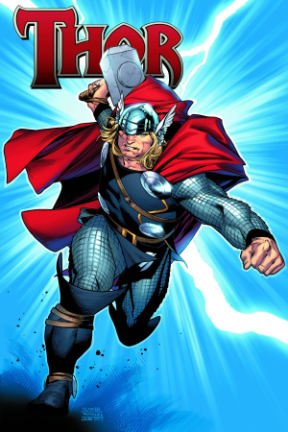
But I have a new appreciation for the Thunder God thanks to J. Michael Straczynski and Olivier Coipel. Thor – who was retired back in 2004 – is brought back to life in a new series as a rebel God – powerful, but brooding – with an angry, seething intensity that hides a broiling compassion for human beings and their troubles.
Gone, thank All-Mighty Odin – is the ridiculous dialog. Thor is given a new sleekier appearance (complete with blue chainmail armor) and a new attitude – and it works like a charm. Olivier’s version of Thor is youthful, but war weary. His illustrations are simply stunning. They may be the best part of the book.
But Straczynski’s storyline has Thor’s first order of business as rebuilding Asgard – the home of the Norse Gods. He makes the Oklahoma desert his base of operations and scans the world for his fellow Gods (although the highlight of Volume One is a crash-bang battle with Ironman). There’s lots of potential to be mined here, although knowledge of the Marvel universe is required as Straczynski does a poor job of providing an adequate back story for those fans reading Thor for the first time. But we’ll be back for Volume Two.
Grade: B+
The Immortal Iron Fist, Vol. 1: The Last Iron Fist Story
By Ed Brubaker, Matt Fraction, David Aja and Travel Foreman

First off, we love Matt Fraction – which is why we interviewed him a while back. Now that we’ve come clean on that:
Iron Fist was always a lame superhero; created by Marvel in response to the Bruce Lee craze in the 1970s. He wore the green pajama bottoms and appeared along side the more complex and always more interesting Luke Cage. Then he’d make rather pathetic guest appearances on Marvel Team-Up. He even died at some point – and then came back to life. Never liked him (and he was even a candidate for our list of lamest superheroes).
Thank Thor, we didn’t make that mistake, because the new series snap kicks major league butt. Iron Fist is finally given the back story that he deserves. In the new series, Iron Fist (Daniel Rand) is the latest of more than 66 Iron Fists than stretch back centuries – each generation getting their own version of the hero. The story introduces readers to Orson Randall, the previous Iron Fist, who broke his bond with the Iron Fist legacy and its leader K’un L’un and is living a life of drug addiction in Thailand.
A terrorist organization working for K’un L’un’s greatest emney – the Crane Mother and her champion, the murderous Steel Serpent, target Randall for death. Randall seeks out Daniel Rand and together they battle the enemy (and to say more would be a crime). But Volume One sets up a show down between Rand and Steel Serpent that is sure to shake the Marvel world to its foundations.
The artwork by Spanish illustrator David Aja using lots of dark inks – using shadows and light to effectively reveal character and give the new series a dark feel (most of the action takes place at night). His action sequences seem to move off the page and readers will find themselves wanting to practice swing kicks between chapters.
Here’s another graphic novel, however, that needs some background before plunging in. Novices to Iron Fist will probably find their heads spinning with all of the information.
Grade: B+
Batman: The Long Halloween
By Jeph Loeb and Tim Sale
 What do you get when you combine crime noir with a superhero comic? You get “The Long Halloween” – one of the most critically acclaimed graphic novels in the genre. Once you start – it’s near impossible to put down.
Batman, a young Jim Gordan, and District Attorney Harvey Dent vow to bring down Mobster Godfather “The Roman.” But they are beaten to the punch by a mysterious serial killer dubbed “Holiday,” who begins to kill The Roman’s family and friends on each major holiday. Holiday kills them with a .22 and places trinkets representing the holiday near the dead bodies.
The story incorporates many of Batman’s most feared and popular villains – from the Joker to Poison Ivy. Even my favorite, Scarecrow, makes an appearance. There are great scenes between Batman and Catwoman – as they try to figure out if their animosity is real or just sexual foreplay.
But at the real center of story is the downfall of Harvey Dent, a respected and honorable DA. The graphic novel shows us his descent into cynicism and finally his transformation into the criminal psychopath Two Face.
The narrative expertly weaves the mystery – throwing up red herrings and giving us a wide range of possible suspects. Batman is a grizzled caped detective (think Mike Hammer in tights) – and one not unwilling to smack the bad guys around.
If you’ve always wanted to experience a graphic novel – then “The Long Halloween” is an excellent place to start. Action packed, compelling, and the art work is visually stunning.
Grade: A-
Best and Worst Superhero Movies
Blistering Barnacles: It's Tintin!
The Legends of Literature: Comic Books
Labels: Batman, book review, comics, Cracked-Back, Iron Fist, Thor
StumbleUpon |
Digg |
del.icio.us |
Reddit |
Technorati |
E-mail
A New Thriller by First-Time Novelist E.A. Benedek Doesn't Quite Pull It Off
 The paradox of “Red Sea,” the new espionage thriller by E.A. Benedek, is best illustrated by its beginning and end. The story starts with three commercial airlines being blown out the sky by terrorists. The explosions kill hundreds of innocent people. Benedek brings readers inside the doomed aircrafts – and the prose packs an emotional punch.
The finish, however, takes place on a slow-moving freight ship chugging up the East Coast of the United States. The novel – already bogged down by a muddled middle – crawls to the rather pedestrian conclusion.
“Red Sea” simply runs out of energy and frustrates readers who pine for the clipped, frantic pace of the set-up. It’s too bad. “Red Sea” has so much potential.
In her preface, Benedek, a journalist who wrote extensively about 9/11 attacks for magazines such as Newsweek, explains that she sat down with one of her sources to discuss airline security. When she put a tape recorder in front of him, he seemed unable to talk. “I snapped off the machine and asked him if it would be easier if I tried to tell the story in a work of fiction. Maybe, he said. Maybe,” Benedek writes.
The result was “Red Sea,” but unfortunately, this might not have been the right call. Benedek excels at explaining: showing readers the inside of a federal investigation. She knows her stuff. Her anecdotes about airline security, the holes in port security, and the challenges investigators have with the mounds of red tape are excellent. Her analysis of what probably happened on board the airliners downed by terrorists on 9/11 is fascinating – and rooted in smart guesswork from an expert. It probably could have made a fascinating non-fiction work in and of itself.
But Benedek struggles putting her expertise into fiction. There are too many loose ends, unlikely coincidences, and too many forays into the minutiae involved in a federal counterintelligence investigation. Who really wants two pages explaining all the necessary paperwork FBI agents are forced to write?

But the downfall of “Red Sea” lies in the characters. First, there are too many, way too many. Minor characters float in and out of the story and its difficult too keep track of them. Second, the main characters are flat – none of them are interesting enough to drive the narrative.
Julian Granot, the mysterious Israeli agent, feels cliché, and journalist Marie Peterssen doesn’t feel real – she feels like a composite character created for a novel.
There are two parts of the plot that illustrate the difficulties with "Red Sea." The first is when Peterssen is kidnapped off the streets of Baghdad and held captive for nearly two days. Yet, FBI Agent Morgan Ensley, her romantic interest, isn't even aware that she’s missing. She’s kidnapped, held hostage, and released and the agent who has been wooing her and protecting her is oblivious that she’s even gone.
Second, when Marie is released and back in America, she calls Ensley and this is how she describes Morgan finding out that Marie was kidnapped:
“Then she called Morgan, who didn’t have too many answers for her about her kidnapping but let her know that her repatriation had been the result of a small miracle of diplomacy, although he wouldn’t tell her a thing about it. He was thrilled that she had made it back home and he hoped to get back soon to see her.”Then Marie goes on the Internet – yes, the Internet – and discovers crucial information that the entire U.S. federal government is unable to locate. She calls Morgan to pass on the information and this is how the conversation starts:
“Morgan,” she said. “It’s Marie.”To make matters worse, the reader already knows about the ship. The reader also knows that Morgan and Marie worked together to discover the threat of the ship. The conversation seems to exist in another world.
“Hey, girl, how are you?”
“Good, good, thanks. Where are you?”
“Closer than you’d think.”
“You in the United States?”
“Something like that.”
Marie was silent, her mind working. “Okay, first thing. Are you trying to stop the ship?”
“How would you come up with an idea like that?” Morgan asked.
“Oh, Morgan. Get over yourself. Get over your secret stuff. We don’t have time for it.”
This is a common problem with “Red Sea.” Information the reader has is revealed again – suspensefully, as if the details being revealed are new. It gives “Red Sea” are plodding, frustrating pace.
There are a couple of nice twists at the end, however, once you get there, it’s too late.
Grade: C-
A Menu of Tasty Books
5 Questions About: Jane Austen
Deeply, Disappointing Dexter
Labels: book review, E.A. Benedek, Red Sea
StumbleUpon |
Digg |
del.icio.us |
Reddit |
Technorati |
E-mail
(Quick fire reviews of the books we’ve been reading. A “cracked-back” is what happens to the spine of a new book once you’ve thoroughly devoured it. Please feel free to add your own list of recommendations in our comments section.)
By Mathias B. Freese
This collection of short stories by Mathias B. Freese gets points for the way the writer insightfully glares into the lives of the characters – a group of troubled (and sometimes mentally ill) people. Freese uses stark and penetrating language to accomplish that task. But the real question is if this collection can really be considered short stories. I’d argue not. There’s nary a plot to be found in the collection – as each of the pieces focuses on character building. These are character sketches – not stories. Most, in fact, are internal monologues. Yet some of the sketches work well. “I’ll Make It, I Think” features the powerful voice of a handicapped boy trapped in his deformed body. “Little Errands” is an amusing take on an anal retentive man obsessed with mailing letters. Yet overall, the collection feels too internal – as if the book is trapped inside a room without any windows. Too much of the action is thinking. There needs to be more external action – interaction with other characters, movement, and fluidity; more setting, description and dialogue. If you’re a fan of character – and bizarre, damaged ones then you’ll want to get a copy of “Down to a
Grade: C
By David McCullough
How on Earth did the 13 Colonies ever win the Revolutionary War against the
Grade: B+
The Worst Hard Time: The Untold Story of Those Who Survived The Great American Dust Bowl
By Timothy Egan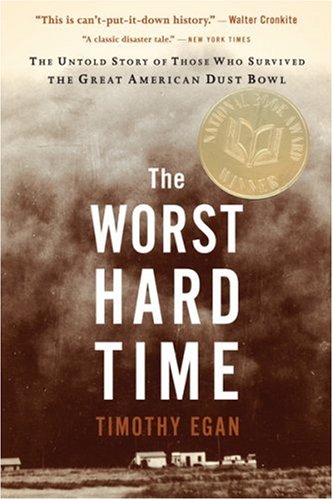
What was the worst environmental disaster of the 20th century? Would you believe the over-farming of the southern
Grade: A-
Labels: book review, Cracked-Back
StumbleUpon |
Digg |
del.icio.us |
Reddit |
Technorati |
E-mail
Revisiting the Breakthrough Graphic Novel 22 Years Later
 Writer Alan Moore created “Watchmen” in 1986 because he wanted to push the comic book beyond adolescence into what he called “a superhero Moby Dick.” The 12 edition comic book series – and later the compilation graphic novel – went on to win the Hugo Award and to be named one of TIME magazine’s 100 Best Novels since 1923.
There is little doubt that “Watchmen” blazed a new path for comics – especially superhero comics. But did it really have the impact of Art Spiegelman’s “Maus,” which was first published in 1973 or even Gil Kane and Archie Goodwin’s “Blackmark” (1971), arguably the first “graphic novel” published in the
And did
First let’s explore the narrative. “Watchmen” is a dark story. It captures the pre-apocalyptic fears of modern American and Western Europe in the mid-to-late 1980s as the Cold War rhetoric between the Soviet Union and
The story centers on a group of masked adventurers in an alternative universe to our own 1980s (one in which Nixon remains president). The “superheroes” are, in fact, regular human beings with no real powers – other than extraordinary physical conditioning and mental acumen. Doctor Manhattan is only character with superhuman skills as a result of a scientific experiment gone wrong.
The novel opens with the murder of the Comedian (Edward Blake), one of the costumed avengers affiliated with the CIA and other secret government agencies. Rorschach, a second costumed hero, who refused to give up his vigilante lifestyle even after the
Through the investigation, the novel enters the lives of the various costumed heroes: Nite Owl (a first and a second version), Ozymandias, Captain Metropolis, Silk Spectre (first a mother, then her daughter), Doctor Manhattan, the Comedian, and Rorschach. The characters are all flawed – some of them grossly so. The Comedian, for example, is a misogynist and rapist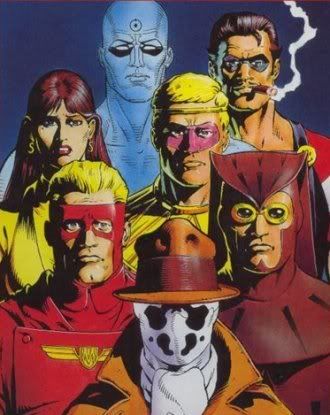 and Rorschach is a sociopath.
Rorschach thinks he has uncovered a plot to murder all of the costumed adventurers and enlists the help of his former partner, Nite Owl, to help him. Meanwhile, the super powerful Doctor Manhattan, who has the ability to restructure reality and to manipulate time and space, continues to struggle with relating to regular human beings. After rumors that being near him causes cancer, he banishes himself to Mars.
The murders end up being the work of the genius Ozymandias, who has concocted an elaborate scheme to bring the world’s nations together: a fake alien invasion that kills thousands of people. His costumed friend figure out his plot, but are unable to stop it. And, in the end, it turns out Ozymandias is right.
The weakest part of “Watchmen” is the plot, especially the comic book ending. There are so many holes in the logic and execution of Ozymandias’ scheme that it’s difficult to follow or understand. But the plot isn’t really the driver in “Watchmen” – it’s the characters and
The novel is heavy on symbolism (lots of watches and clocks, for example) and mood – but differs from comic books from the time period by providing a straight forward and objective point of view. It’s up to the readers – not Moore as the author – to figure out how to react to the action on the page.
Another interesting device is 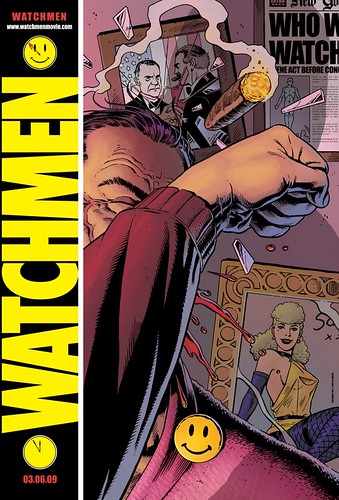
The artwork in “Watchmen” feels like a throwback to the Golden Age of comics in the 1950s and 1960s (in fact, primary artist Dave Gibbons credits Norman Rockwell as an inspiration for “Watchmen”). There’s a cinematic feel to the artwork – especially of noir films with the shadows and darkness. But there’s surprising little movement to the graphics and sometimes the panels feel a bit inert.
So how influential was “Watchmen”? It is generally credited with taking superhero comics from low-brow kid’s entertainment and catapulting into high-brow art. That’s no minor achievement. “Watchmen” also ushered in an era of dark and bleak story lines around comic book superheroes (can we blame “Watchmen” for the death of Superman and Captain
But
Influential?
Yes.
But a hallmark of great literature?
No.
Maus Revisited
The 5 Most Addictive Arcade Games
Labels: Alan Moore, book review, comics, superheroes, Watchmen
StumbleUpon |
Digg |
del.icio.us |
Reddit |
Technorati |
E-mail
(Machine-gun quick reviews of the tomes that have occupied our time during the last few weeks. A “cracked-back” is what happens to the spine of a new book once you’ve thoroughly devoured it. Please feel free to add your own list of recommendations in our comments section.)
Severance Package
By Duane Swierczynski

I read “Severance Package” on a high-speed train to New York City. The train couldn’t keep up. The novel is one of those vicious, high-octane thrillers that are high on concept, packed with nail-biting action, and a damn pleasure to read. Is it literature? Hell, no and it doesn’t want to be. Here’s the gist: a group of corporate suits are forced by their boss to work on a grueling hot Saturday in August. When they get there, the boss tells them that he’s going to kill them all. Then, of course, all hell breaks loose. It turns out the “financial services” company is a front for a top-secret, anti-terrorist government agency. There are lots of blood, twists and turns, and some plot devices about undercover agents and rivalries within the network of lettered law-enforcement agencies in the United States. None of this really matters. What matters is the smart language, the mile a minute thrills and chills, and some dialog and situations that will make you laugh out loud (try not to be drinking milk at the time). It’s like buying a sack of buttered popcorn and a wastebasket size Coke and settling down for B-movie action on a Saturday night at the drive-in. Fun, fun, fun.
Grade: A-
The History of Love
By Nicole Krauss

“The History of Love” is beautiful. It’s a work of fiction so elegantly written, so fully realized and executed that it has quickly landed on my heap of books that I declare my favorites of all time. Reading Nicole Krauss, one can only marvel at her talent – writing with such detail and precision that it is as if you are living the story. On the surface “The History of Love” is about a 14-year-old girl, Alma, mourning her dead father and trying to connect with her devastated mother, who has retreated to her work as a book editor. When her mother begins to translate an obscure novel called “The History of Love,” Alma sets out to find the author. Meanwhile, an elderly Polish Jew named Leo Gursky is at the end of his life living in a tenement and pining for all of the missed opportunities of his life – including the biggest – losing his true love. The story brings these two people together as they struggle to make sense of the lives they have built. The story is terribly sad, hilariously funny, and a reminder of why we read great fiction: to connect with that part of ourselves that touches other people. “The History of Love” should not be missed.
Grade: A+
The Dumbest Generation: How the Digital Age Stupefies Young Americans and Jeopardizes Our Future (Or, Don’t Trust Anyone Under 30)
By Mark Bauerlein
The title is an unfortunate mistake. Blame the publishers because Mark Bauerlein, a professor of English at Emory University, has written a fascinating book about the cause and effects of our dumbed-down popular culture. It’s packed with facts (how test scores, reading comprehension, and writing skills have plummeted in the last two decades) – but it turns into a cautionary essay about the death of culture in a society that has turned its back on the notion of its young people growing up into adults. Bauerlein makes some compelling connections with society’s embracing of adolescence and rejection of adulthood with the rise of technology, especially the Web. He pulls the rug from under the notion that the Internet was supposed to be the dawn of a renaissance in learning and knowledge. In fact, Bauerlein paints a gloomy picture of how kids have used the Web to amp up the volume on youth culture – and tighten the circle and increase the pressure of their own peers. Kids aren’t using the Web to download images from the museums of the world or to read the classics in literature – they’re updating Facebook pages, skimming Hollywood gossip blogs, and bitching about each other on Twitter. “The Dumbest Generation” is a book every parent – every young person – should read, but won’t.
Grade: A-
Stuart Little
By E.B. White

Written in 1945, “Stuart Little” is a children’s book about a mouse born to human parents. Stuart is adventurous, gentlemanly, polite, helpful, and, at times, a bit arrogant. But one can forgive the little fellow for his faults because of his resourcefulness and forbearance. Readers get to join Stuart in all kinds of adventures – getting caught in a window shade, sailing toy boats at Central Park, getting tossed out with the garbage, and saving the life of a pretty young songbird. All of it written in the delightful, matter-of-fact style of E.B. White. This a throwback book that will immediately transport adults back to their childhood – when kid’s books weren’t about lessons and learning. Instead, E.B. White focused on telling a grand tale with the nuance and detail of a classic. I read this a chapter at a time with my daughter and she loved it – but not as much as her father. Tough to go wrong with revisiting “Stuart Little.”
Grade: B+
In Search of City Lights: A Bookstore Quest
5 Writers Every Man Should Read
Labels: book review, Cracked-Back, Duane Swierczynski, E.B. White, Mark Bauerlein, Nicole Krauss
StumbleUpon |
Digg |
del.icio.us |
Reddit |
Technorati |
E-mail
The Age of Innocence
By Edith Wharton
This one is a crier. But it is also a scathing rip at upper crust society -- particularly New Yorkers of the 1870s. Make no mistake about “The Age of Innocence” -- its a masterpiece and a joy to read. It's one of those books perfect for curling up on the couch with a warm cup of tea. In fact, it demands it. It is the story of how the narrow minds and strict protocols of
Archer is firmly entrenched in high society, yet experiences flashes of rebellion at its fastidious rules about appearance and reputation. He becomes engaged to May
Yet his love for the countess never falters. He he remains trapped in a marriage to May until her death 25 years later. When he has a chance to see the countess again in Paris, the widowed Archer decides against it. The reader can decide if it is because his memory of the countess is better than his reality or if he now embarks on a love affair with her if he's admitting to his own weakness at having failed to pursue her 25 years earlier. “The Age of Innocence” is a powerful and heart-wrenching story – and one that every bibliophile should devour.
Grade: A
Strangeways: Murder Moon
By Matt Maxwell and Luis Guaragna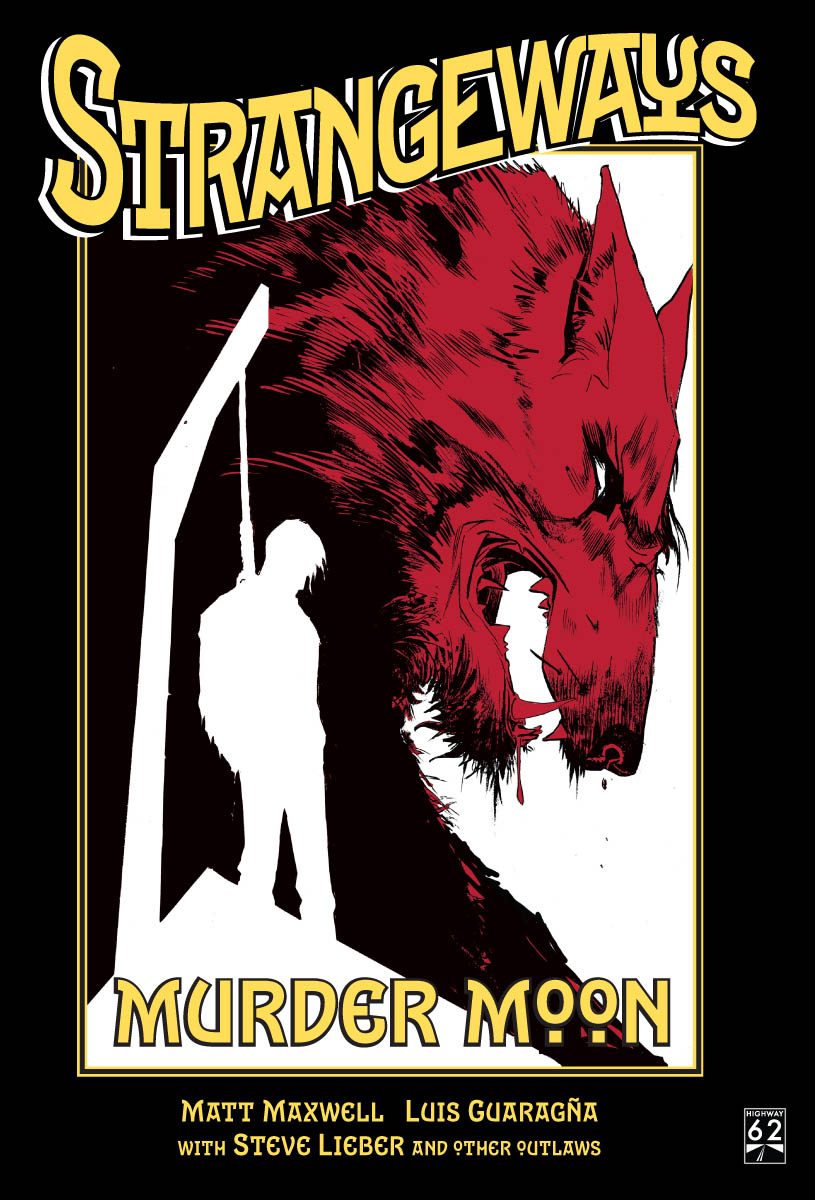
Fangs and fast guns. This is Matt Maxwell's great idea for a mash-up – combine a Western with a werewolf story. Think about "High Noon" superimposed on "American Werewolf in London."
The result is “Strangeways: Murder Moon,” a rip-roaring graphic novel that delivers scares and shoot-outs. The story features Seth Collins – a Western arch-type (the quiet loner with a quick gun). Collins ventures out West to meet up with his estranged sister and gets attacked by a werewolf while riding shotgun on a stage coach. When his best friend Webster is accused of being the werewolf, Collins sets out to capture the real monster.
There are lots of subplots and hidden agendas in “Strangeways” and some of them can be difficult to navigate. The character of Collins is also a problem as he often seems more like a conduit and plot device rather than a strong central character. But for the most part “Strangeways” delivers on its promise. The art is dark and moody – and there’s plenty of fast action to keep readers turning the pages. The graphic novel also contains an extra at the end – an excellent origin story for the werewolf, which puts an entire new spin on the main story.
If you’re into lycanthropy and six-shooters – you may have entered Nirvana.
(Full Disclosure: Matt Maxwell runs a blog called “Highway 62” that DaRK PaRTY links with)
Grade: B
Yellow Medicine
By Anthony Neil Smith
You are not going to like Deputy Sheriff Billy Lafitte. Why? Because he's a bastard.
“Yellow Medicine” is a rocket ride of a thriller set in plains of rural
Yet the strength of the novel is the voice of Lafitte – and watching how he adapts and changes when confronted with the difficult situations he falls into. Deep down, Lafitte has a soul, but unfortunately it rarely manifests itself. The plot stumbles a bit (how the terrorists get to the flatlands of
Grade: B
All Quiet on the Western Front
By Erich Maria Remarque
“All Quiet on the Western Front” is one of the greatest anti-war novels ever written. It’s vivid portrayal of the horrendous conditions and life threatening dangers of trench warfare during the Great War. Paul Baumer is a young, enthusiastic student who joins the German Army at the outbreak of the war with
Grade: A
Read our last Cracked-Back Reviews, includes "World War Z" and "99 Coffins"
Read our apology to Novelist Cormac McCarthy
Labels: Anthony Neil Smith, book review, books, Cracked-Back, Edith Wharton, Erich Maria Remarque, Matt Maxwell
StumbleUpon |
Digg |
del.icio.us |
Reddit |
Technorati |
E-mail

 RSS Feed
]saddlebrown]tan]maroon](],](])us.st11.yimg.com/us.st.yimg.com/I/getfishy_1912_2002960]Fishboy]black],]1]10]3]1]1]1]1]1]1]1]1]1],](](]papayawhip])])]DaRK^20PaRTY^20ReVIEW]^3A^3ALiterate^20Blather^3A^3A],](](],](]maroon](](](]brown](],](]maroon](](](],]60]10],](](]^23F5ECE1])])]maroon]0.5]0],](](]^23F5ECE1])])]maroon]^23F5ECE1])])]^23666]16]maroon]maroon],](](]maroon](],](]^23333]^238C4614]tan],](](]^23F5ECE1])])],](](]^23F5ECE1])])],](](]^23F5ECE1])])],](]maroon]maroon]15]3]23]18]maroon],](](],](],](](],](]black](](](],](](](],]black](](](],](](]^23333](](](](](],]^2336F]^23333](],](]Posted^20by^20^24AUTH^20at^20^24TIME.]36],](](]black])])]^23F5ECE1])])]^23666]16]maroon]maroon],](](]maroon](],](]^23333]^238C4614]tan]Contributors]]]^24PROFILE]]]DaRK^20PaRTY^20LiNKS]]]The^20Ambrose^20Bierce^20Site])donswaim.com/]Ambrose^20Bierce]Ironic^20Times])www.ironictimes.com/index.html]Ironic^20Times]Gallery^20Voyer])www.voy-art.com/]Gallery^20Voyer]Tintinologist])www.tintinologist.org/]Tintin]Arcanum^20Cafe])www.arcanumcafe.com/]Arcanum^20Cafe]LADA^20-^20Protect^20our^20Kids])da.co.la.ca.us/pok/poklist.htm]POK^20List]Tom^20Caron^20-^20Boston.com])www.boston.com/sports/nesn/aboutus/onair/tomcaron/]TC]The^20Captain^20Humphreys^20Project])www.captainhumphreys.com/]Captain^20Humphreys]Torpedo^20Design])www.torpedodesign.com/]Torpedo^20Design]^3Cimg^20src^3D^22)us.st11.yimg.com/us.st.yimg.com/I/getfishy_1912_2002960^22^20alt^3D^22Fishboy^22^20style^3D^22border^3A^201px^20none^20black^3B^22^20/^3E])www.fishboy.com/]Fishboy]Etc]]]^3Cimg^20src^3D^22)psyc.horm.org/barimg/bar_psycho.png^22^20width^3D^2280^22^20height^3D^2215^22^20alt^3D^22PsycHo^3A^20Free^20Template^20Generator^22^20style^3D^22border^3A^200px^20solid^20black^22^20/^3E]^24PSYCHO]PsycHo^3A^20Free^20Template^20Generator]^3Cimg^20src^3D^22)psyc.horm.org/barimg/bar_firefox.png^22^20width^3D^2280^22^20height^3D^2215^22^20alt^3D^22Get^20FireFox^21^22^20style^3D^22border^3A^200px^20solid^20black^22^20/^3E])www.mozilla.org/products/firefox/]Get^20Firefox^21]^3Cimg^20src^3D^22)psyc.horm.org/barimg/bar_xhtml.png^22^20width^3D^2280^22^20height^3D^2215^22^20alt^3D^22XHTML^20Validator^22^20style^3D^22border^3A^200px^20solid^20black^22^20/^3E])validator.w3.org/check/referer]XHTML^20Validator]Recent^20Posts]]]^24RECENT]^20]]Archive]]]^24ARCHIVE]^20]]ADVERTISEMENTS]]]^20]]^26^2361470^3BPsycHo})


This work is licensed under a Creative Commons Attribution-No Derivative Works 3.0 License.
The Template is generated via PsycHo and is Licensed.