
Poem: Sunrise Over Worcester
5 Questions About: Jason Pinter
12 Signs That You Might Be A Banker
The 9 Worst Movies to Win Oscars
Book Review: Narrow Miss for "Above the Law"
5 Questions About: Screaming Blue Messiahs
What's Up With All the Fat, Naked Guys?
Thoughts from the Shadows: The Craziness of Publis...
How to Make a Damn Good Horror Movie
Literary Criticism
Fantastically Bad Cinema
Essays
Under God's Right Arm
June 2006
July 2006
August 2006
September 2006
October 2006
November 2006
December 2006
January 2007
February 2007
March 2007
April 2007
May 2007
June 2007
July 2007
August 2007
September 2007
October 2007
November 2007
December 2007
January 2008
February 2008
March 2008
April 2008
May 2008
June 2008
July 2008
August 2008
September 2008
October 2008
November 2008
December 2008
January 2009
February 2009
March 2009
Alcoholic Poet
Baby Got Books
Beaman's World
BiblioAddict
Biblio Brat
Bill Crider's Pop Cultural Magazine
The Bleeding Tree
Blog Cabins: Movie Reviews
A Book Blogger's Diary
BookClover
Bookgasm
Bookgirl's Nightstand
Books I Done Read
Book Stack
The Book Trib
Cold Hard Football Facts
Creator of Circumstance
D-Movie Critic
The Dark Phantom Review
The Dark Sublime
Darque Reviews
Dave's Movie Reviews
Dane of War
David H. Schleicher
Devourer of Books
A Dribble of Ink
The Drunken Severed Head
Editorial Ass
Emerging Emma
Enter the Octopus
Fatally Yours
Flickhead
The Genre Files
The Gravel Pit
Gravetapping
Hello! Yoshi
HighTalk
Highway 62
The Horrors Of It All
In No Particular Order
It's A Blog Eat Blog World
Killer Kittens From Beyond the Grave
The Lair of the Evil DM
Loose Leafs From a Commonplace
Lost in the Frame
Little Black Duck
Madam Miaow Says
McSweeney's
Metaxucafe
Mike Snider on Poetry
The Millions
Moon in the Gutter
New Movie Cynics Reviews
Naked Without Books
A Newbie's Guide to Publishing
New & Improved Ed Gorman
9 to 5 Poet
No Smoking in the Skull Cave
Orpheus Sings the Guitar Electric
Polly Frost's Blog
Pop Sensation
Raincoaster
R.A. Salvatore
Reading is My Superpower
Richard Gibson
SciFi Chick
She Is Too Fond Of Books
The Short Review
Small Crimes
So Many Books
The Soulless Machine Review
Sunset Gun
That Shakesperherian Rag
Thorne's World
The Toasted Scrimitar
This Distracted Globe
Tomb It May Concern
2 Blowhards
Under God's Right Arm
A Variety of Words
The Vault of Horrr
Ward 6
When the Dead Walk the Earth
The World in the Satin Bag
Zoe's Fantasy
Zombo's Closet of Horror
Bookaholic Blogring
Power By Ringsurf
In Marvel Team-Up #48, Spiderman teams up with Ironman to fight the mysterious Wraith. Befuddled by who is randomly bombing targets in New York, Spiderman and Ironman join forces with Police Captain Jean DeWolff. As DeWolff discusses the case, Spiderman mutters:
“Curiouser and curiouser.”
This, of course, is a quotation from Alice uttered in the classic novel “Alice’s Adventures in Wonderland.”
It’s moments like this when fans of comic books chuckle. Comic books have always referenced classic works of fiction. In fact, many comic heroes and villains have been directly inspired by literature and mythology.
There are the obvious ones: Thor, Hercules and Conan the Barbarian come immediately to mind. Then came “The League of Extraordinary Gentlemen,” the graphic novel that combined the mythology of superhero comics with literary characters (watch a clip from the movie above). The mash-up featured Captain Nemo, Dr. Jekyll & Mr. Hyde, the Invisible Man and even Tom Sawyer.
But there are a lot of comic books characters that are lifted directly from mythology and literature that are a little less familiar. Here is DaRK PaRTY’s list of our 10 favorite comic book heroes stolen from the pages of your college literary textbook.
Icarus

Publisher: Marvel Comics
First Comic Appearance: Rom Annual #3
The Comic Character: Icarus is a human mutant with the power of flight. He does, after all, have red bird-like wings growing out of his back. He can fly and has an extensive regenerative powers to heal from normally fatal injuries.
Literary Inspiration: The Greek myth of Icarus is that he the son of Daedalus. Father and son try to escape from exile from the island of Crete by fashioning bird wings made of feathers and wax. Daedalus warns Icarus not to fly too close to the sun or the wax would melt his wings. Caught in the exhilaration of flight, Icarus ignores his father’s warning and plummets to his death.
Literary Origin: From the poem in Pseudo-Apollodorus, but made popular by Ovid in the 15th century.
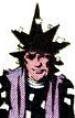 Tar Baby
Publisher: Marvel Comics
First Comic Appearance: Power Pack vol. 1 #12 (1985)
The Comic Character: Tar Baby is a human mutant that could secrete a tar-like substance from his skin. This allowed Tar Baby the ability to stack to anything that came in contact with him. The character wore raggedy purple trousers with patches and a rope belt and had black skin.
Literary Inspiration: The story of Tar Baby comes from African-American folklore. The tale has Br’er Fox and Br’er Bear build a doll out of tar (dressed in old rags) to capture Br’er Rabbit. When Br’er Rabbit talks to Tar Baby and it doesn’t answer he gets angry and starts to hit and kick it – only to become enmeshed in the sticky tar. He is caught and pleads with Br’er Fox not to be thrown in the briar patch. So Br’er Fox does and, of course, Br’er Rabbit is at home in the thicket and escapes.
Literary Origin: African-American folklore. First published in “Harper’s Weekly” by Robert Roosevelt. But it was Joel Chandler Harris’ Uncle Remus stories published in 1904 that made Tar Baby famous.
Mad Hatter
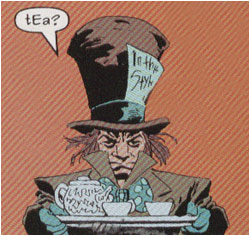
Publisher: DC Comics
First Comic Appearance: Batman #49 (1948)
The Comic Character: The Mad Hatter is a paranoid schizophrenic obsessed with hats of all sizes. He’s also a genius fond of quoting from Lewis Carroll. He’s a criminal mastermind and a nemesis of Batman. While he has no superpowers, the Mad Hatter is a technologist and scientist who specializes in mind control.
Literary Inspiration: The Hatter from Lewis Carroll’s “Alice’s Adventures in Wonderland” (commonly called the Mad Hatter. However, he is never referred by this name in Carroll’s Alice books. He appears with the March Hare at a tea party – which never ends. In “Alice’s Adventures in Wonderland,” the Hatter asks the riddle “Why is a raven like a writing desk?” The Hatter doesn’t have an answer and the riddle remains just that: a riddle.
Literary Origin: “Alice’s Adventures in Wonderland” for published in 1865.
 Valkyrie
Publisher: Marvel Comics
First Comic Appearance: Avengers vol. 1 #83 (1970)
The Comic Character: The Valkyrie is a member of the Defenders. She has superhuman strength, slowed aging, hundreds of years of combat experience (especially with a sword) and the ability to speak with the spirits of the dead. She can also see death coming when a person begins to glow.
Literary Inspiration: The Valkyries in Norse mythology are winged female deities who carry off the spirits of slain warriors off the battlefield to Valhalla, the Norse underworld.
Literary Origin: Norse and Germanic mythology. First appearance is the poem Voluspa.
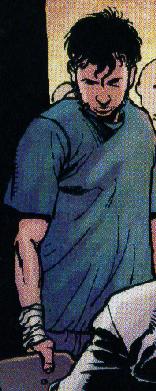 Fagin
FaginPublisher: Marvel Comics
First Comic Appearance: The Brotherhood #1 (2001)
The Comic Character: Fagin is a human mutant with the ability to transform into a purple humanoid with spikes and enhanced strength. He resides (surprise!) in London and lists his occupation as terrorist. He recruits another young mutant to join the terrorist organization The Brotherhood by sweet talking him.
Literary Inspiration: Charles Dickens villain Fagin – a “receiver of stolen goods” and a “merry old gentleman” who is described as disgusting to look at. He is the leader of a group of children he recruited to pick pockets and steal goods. He sweet talks the children while he collects their stolen goods and hordes the profits for himself.
Literary Origin: “Oliver Twist” (1838)
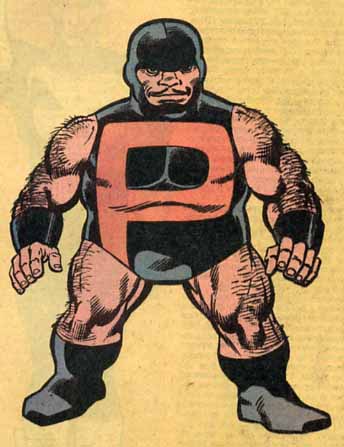 Puck
PuckPublisher: Marvel Comics
First Comic Appearance: Alpha Flight #1 (1983)
The Comic Character: A dwarf with super strength, stamina, and speed. He was a member of the superhero team Alpha Flight. He was born Eugene Milton Judd in Canada and was a soldier, bouncer and secret agent before joining Alpha Flight. Marvel later created a second “Puck” who was the daughter of Eugene, but the comic did poorly.
Literary Inspiration: Puck is a fairy – really a mischievous faun – who also goes by the name of Robin Goodfellow. Puck is Oberon’s (the fairy king’s) servant and causes all kinds of problems when he gives a love potion to the wrong people.
Literary Origin: “A Midsummer Night’s Dream” by William Shakespeare
Morlocks

Publisher: Marvel Comics
First Comic Appearance: Uncanny X-Men #169 (1983)
The Comic Characters: The Morlocks are a group of mutants. They are considered “extreme” mutants that are unable to pass as humans due to their appearance. They lived in a series of underground tunnels beneath New York City. The members include mutants like Skid, who can create a force field around her; Feral, a cat-like human with fangs and claws; and the deformed Caliban, who can sense and track other mutants.
Literary Inspiration: A species of humanoid creatures from A.D. 802,701 who live underground and are described as resembling ants (although they have fur). They hunt in groups at night because they are extremely sensitive to daylight. They feed on a human like species known as Eloi (whom they reference to as “cattle”).
Literary Origin: “The Time Machine” by H.G. Wells (1895)
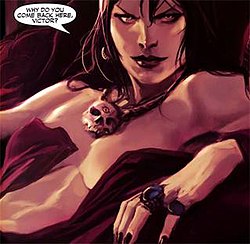 Morgane le Fay
Publisher: DC Comics
First Comic Appearance: The Demon (Vol. 1) #1 (1983)
The Comic Character: She is a sorceress skilled in black magic. She has the ability to travel to other dimensions. She was an enemy of Wonder Woman. In order to keep being immortal, she needs to steal the life force from other living beings. She wears golden armor to hide her withered and aging body.
Literary Inspiration: Morgan Le Fay was a powerful sorceress and the enemy of King Arthur in medieval England. She is also King Arthur’s half-sister. Originally, she may have been a fairy before being portrayed as a human woman.
Literary Origin: She appears in Arthurian legends in Welsh mythology.
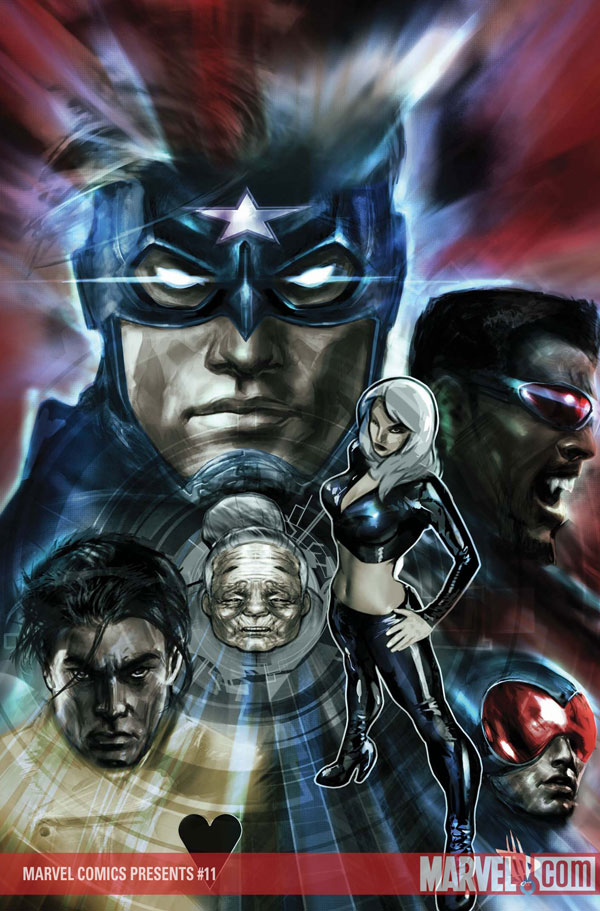 Horsemen of the Apocalypse
Publisher: Marvel Comics
First Comic Appearance: X-Factor #15 (1987)
The Comic Characters: A team of super villains called Death, Famine, Pestilence, and War. Many different mutants and superheroes have filled the various roles of the Apoclaypse including the Hulk (War), Gambit (Death), Polaris (Pestilence), and Sunfire (Famine).
Literary Inspiration: The four horsemen of the apocalypse appear in the Book of Revelations. Only Death is given a name, but the other three are described and known as Strife, War, and Famine. Strife rides a white horse and carries a bow. War rides a red horse and holds a sword. Famine rides a black horse and carries a weight balance. Death rides a pale green horse and is followed by Hades (or Pluto).
Literary Origin: The Bible
 Solomon Grundy
Publisher: DC Comics
First Comic Appearance: All-American Comics #61 (1944)
The Comic Character: A monstrous, simple-minded zombie made up up of swamp matter who is an enemy of Green Lantern and Batman. He has super strength and endurance and can return from the dead.
Literary Inspiration: A nursery rhyme character that was a riddle. Solomon Grundy lives his entire life in a week. The poem starts: “Solomon Grundy/ Born on a Monday” and ends with “Buried on Sunday/ That was the end of/ Solomon Grundy.” The name Solomon Grundy is supposedly from the English food Salmagundi (a salad made from cooked meats, seafood, fruit, and nuts).
Literary Origin: A 19th century nursery rhyme that was made mainstream by James Orchard Halliwell-Phillipps in 1842.
Labels: comics, literature, superheroes
 StumbleUpon |
 Digg |
 del.icio.us |
 Reddit |
 Technorati |
 E-mail

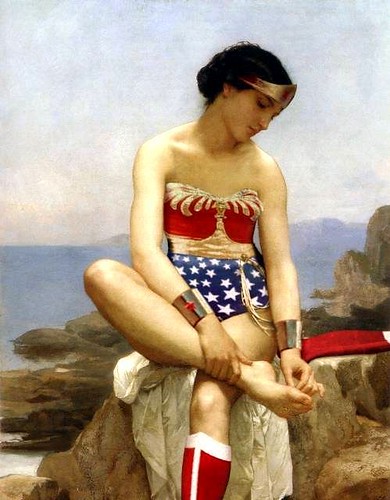
1. Lifts the couch off the floor with one hand while vacuuming.
2. Shouts “Avengers Assemble” to get the kids upstairs at bedtime.
3. There’s a skin-tight cat suit in the back of her closet.
4. Some guy named Peter Parker keeps calling.
5. Strange packages from “Stark Industries.”
6. Won’t let you buy a Krypton lock for your bike.
7. Gets mad when you make disparaging remarks about mutants.
8. Likes bats.
9. She keeps saying: “Don’t make me angry. You won’t like me when I’m angry.”
10. Reads the “Daily Planet.”
11. Her “book group” members are Mister Fantastic, Thing, and Human Torch.
12. When you came home late from work last week, she grilled you about your whereabouts after tying you up with the “Lasso of Truth.”
12 Signs Your Boss Might Be a Zombie
Labels: 12 Signs, comics, Humor, superheroes
StumbleUpon |
Digg |
del.icio.us |
Reddit |
Technorati |
E-mail
Thor, Iron Fist, and Batman Soar as Graphic Novels
(Quick fire reviews of the books we’ve been devouring. A “cracked-back” is what happens to the spine of a new book once you’ve thoroughly torn through it. We’re always looking for our next read, so please feel free to make your own recommendations in our comments section. Read on!)
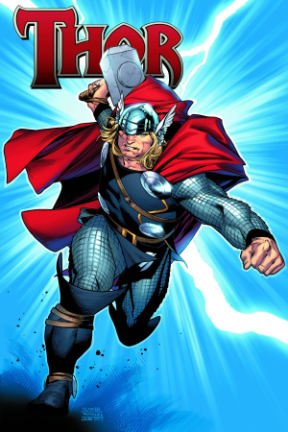
Thor, Vol. 1
By J. Michael Straczynski and Olivier Coipel
 It’s difficult to think about Thor without the Kiss song “God of Thunder” reverberating inside my brain.
“God of thunder and rock and roll
The spell you’re under
Will slowly rob you of your virgin soul.”
But I digress. As a comic connoisseur in my youth, I never connected with Marvel’s comic book version of the Norse God (despite the fact that I’m half Danish). Thor was dull: the stiff in the room (especially when compared to the wisecracking Spiderman and the snarky intensity of Ironman).
Thor spoke like a community theater actor channeling Hamlet. “Thee art my ally! Make peace!” Crap like that.
But I have a new appreciation for the Thunder God thanks to J. Michael Straczynski and Olivier Coipel. Thor – who was retired back in 2004 – is brought back to life in a new series as a rebel God – powerful, but brooding – with an angry, seething intensity that hides a broiling compassion for human beings and their troubles.
Gone, thank All-Mighty Odin – is the ridiculous dialog. Thor is given a new sleekier appearance (complete with blue chainmail armor) and a new attitude – and it works like a charm. Olivier’s version of Thor is youthful, but war weary. His illustrations are simply stunning. They may be the best part of the book.
But Straczynski’s storyline has Thor’s first order of business as rebuilding Asgard – the home of the Norse Gods. He makes the Oklahoma desert his base of operations and scans the world for his fellow Gods (although the highlight of Volume One is a crash-bang battle with Ironman). There’s lots of potential to be mined here, although knowledge of the Marvel universe is required as Straczynski does a poor job of providing an adequate back story for those fans reading Thor for the first time. But we’ll be back for Volume Two.
Grade: B+
The Immortal Iron Fist, Vol. 1: The Last Iron Fist Story
By Ed Brubaker, Matt Fraction, David Aja and Travel Foreman

First off, we love Matt Fraction – which is why we interviewed him a while back. Now that we’ve come clean on that:
Iron Fist was always a lame superhero; created by Marvel in response to the Bruce Lee craze in the 1970s. He wore the green pajama bottoms and appeared along side the more complex and always more interesting Luke Cage. Then he’d make rather pathetic guest appearances on Marvel Team-Up. He even died at some point – and then came back to life. Never liked him (and he was even a candidate for our list of lamest superheroes).
Thank Thor, we didn’t make that mistake, because the new series snap kicks major league butt. Iron Fist is finally given the back story that he deserves. In the new series, Iron Fist (Daniel Rand) is the latest of more than 66 Iron Fists than stretch back centuries – each generation getting their own version of the hero. The story introduces readers to Orson Randall, the previous Iron Fist, who broke his bond with the Iron Fist legacy and its leader K’un L’un and is living a life of drug addiction in Thailand.
A terrorist organization working for K’un L’un’s greatest emney – the Crane Mother and her champion, the murderous Steel Serpent, target Randall for death. Randall seeks out Daniel Rand and together they battle the enemy (and to say more would be a crime). But Volume One sets up a show down between Rand and Steel Serpent that is sure to shake the Marvel world to its foundations.
The artwork by Spanish illustrator David Aja using lots of dark inks – using shadows and light to effectively reveal character and give the new series a dark feel (most of the action takes place at night). His action sequences seem to move off the page and readers will find themselves wanting to practice swing kicks between chapters.
Here’s another graphic novel, however, that needs some background before plunging in. Novices to Iron Fist will probably find their heads spinning with all of the information.
Grade: B+
Batman: The Long Halloween
By Jeph Loeb and Tim Sale
 What do you get when you combine crime noir with a superhero comic? You get “The Long Halloween” – one of the most critically acclaimed graphic novels in the genre. Once you start – it’s near impossible to put down.
Batman, a young Jim Gordan, and District Attorney Harvey Dent vow to bring down Mobster Godfather “The Roman.” But they are beaten to the punch by a mysterious serial killer dubbed “Holiday,” who begins to kill The Roman’s family and friends on each major holiday. Holiday kills them with a .22 and places trinkets representing the holiday near the dead bodies.
The story incorporates many of Batman’s most feared and popular villains – from the Joker to Poison Ivy. Even my favorite, Scarecrow, makes an appearance. There are great scenes between Batman and Catwoman – as they try to figure out if their animosity is real or just sexual foreplay.
But at the real center of story is the downfall of Harvey Dent, a respected and honorable DA. The graphic novel shows us his descent into cynicism and finally his transformation into the criminal psychopath Two Face.
The narrative expertly weaves the mystery – throwing up red herrings and giving us a wide range of possible suspects. Batman is a grizzled caped detective (think Mike Hammer in tights) – and one not unwilling to smack the bad guys around.
If you’ve always wanted to experience a graphic novel – then “The Long Halloween” is an excellent place to start. Action packed, compelling, and the art work is visually stunning.
Grade: A-
Best and Worst Superhero Movies
Blistering Barnacles: It's Tintin!
The Legends of Literature: Comic Books
Labels: Batman, book review, comics, Cracked-Back, Iron Fist, Thor
StumbleUpon |
Digg |
del.icio.us |
Reddit |
Technorati |
E-mail
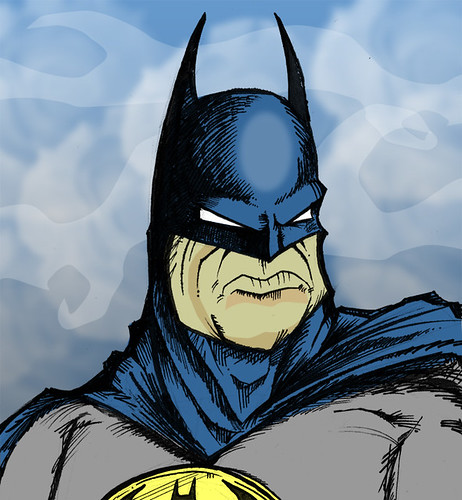
AQUAMAN: Hey, thanks for agreeing to meet with me, Batman.
BATMAN: Yeah, yeah. (To the waitress) Gimme a scotch and make it a double, sweetheart. (Watching the waitress leave) Is she new?
AQUAMAN: I don’t know.
BATMAN: Christ, she’s got a tighter ass than Catwoman. And, dude, you can bounce a bat-a-rang on that bootie. Have you seen the latest
AQUAMAN: Ah, no.
(The waitress delivers Batman’s drink. He winks at her and she rolls her eyes.)
BATMAN: $440 million gross for “The Dark Knight.” Can you believe that shit? They fucking love me.
AQUAMAN: Wow.
BATMAN (Slurping his drink): Wow? Wow? Who are you to judge? When’s the last time they made a movie about Aquaman?
AQUAMAN: Two years ago!
BATMAN: Two years… Wait a minute! You’re not counting that piece of shit made for TV movie? I’m talking about
AQUAMAN: Hey, come on. The lead actor Justin Hartley wasn’t half bad.
BATMAN (Laughing): He was better playing Green Arrow in “Smallville.” Way better. “The Dark Knight” is my sixth movie since 1989. George Clooney played me! Fucking Val Kilmer.
AQUAMAN: You’ve made your point.
BATMAN: I’m the balls. Who’s bigger than me?
AQUAMAN: Spiderman?
BATMAN: Spiderman? Bug boy? Robin could kick his skinny, whiny ass.
AQUAMAN: All right. You’re hot. Bigger than Superman.
BATMAN (Snickering): I know. It kills him. Man of Steel. Did you watch “Superman Returns?” Holy shit did that suck! Is there a more boring villain than Lex Luthor? Come on, people! Lex Luthor?
AQUAMAN: Listen this is kind of what I wanted to talk to you about.
BATMAN: What? Movies?
AQUAMAN: Well, you know, image.
BATMAN: You mean like being the Dark Knight or the King of the Sea?
AQUAMAN: What’s wrong with King of the Sea?
BATMAN (Laughing): It sounds like a bargain brand of tuna fish. Look at yourself! For Christ sake you’re wearing a yellow shirt with scales and lime green pants.
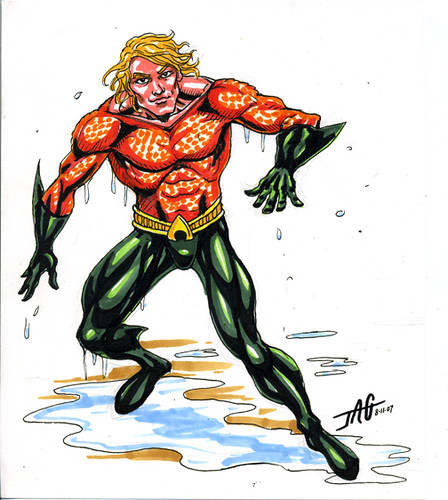 AQUAMAN: Hey, Robin wears yellow.
BATMAN: You see Robin here? Huh? Has Robin been in any of my movies lately? The freak. You think he gets any tail wearing those stupid shorts? Yellow? What kind of superhero wears goddamn yellow? Not even the broads wear yellow.
AQUAMAN: Wonder Woman has a golden lasso.
BATMAN: Wonder Woman has gravity defying tits. And she doesn’t wear yellow, douche bag.
AQUAMAN: Is that kind of language necessary?
BATMAN: You just don’t get it. You’re vanilla, man, totally vanilla.
AQUAMAN: So I should wear black then?
BATMAN: Did I tell you to copy me? Why not silver? Silver is cool. Or even like a deep purple.
AQUAMAN: That’s it then? I’ll get a movie if I wear purple?
BATMAN: I didn’t say that. Dude, you talk to fish.
AQUAMAN: So? Telepathy is one of my powers. I’ve got enhanced strength and speed. I can breathe underwater and dehydrate people. That’s pretty cool.
BATMAN: Big deal.
AQUAMAN: Hey, you don’t even have super powers! You’re just a guy.
BATMAN (Shrugs): It’s about attitude. Style.
AQUAMAN: Style?
BATMAN: Water just isn’t cool. Aquaman? Please! Your name sounds like some kind of yuppie water filter. You hear what I’m saying? Now Batman! Jesus, I get chills!
AQUAMAN: So a silver costume and a new name?
BATMAN: Yeah. How about Water Demon? Or Sea Fury?
AQUAMAN: I don’t know.
BATMAN: Or Liquid Lord. Makes you sound like a fucking Greek God.
AQUAMAN: Aquaman has history though.
BATMAN (Standing): Whatever. Keep your stupid name and your ballerina outfit. I’ve got a date with Poison Ivy and I’m late. Swim home to your goldfish and try not to “dehydrate” anyone on the way.
AQUAMAN: Ah… all right. We still on for poker Monday night with Green Lantern and the Flash?
BATMAN: Maybe. I’ll call you.
10 Superheroes with the Coolest Powers
The Best and Worst of Superhero Movies
Labels: Aquaman, Batman, comics, Humor, Parody, superheroes
StumbleUpon |
Digg |
del.icio.us |
Reddit |
Technorati |
E-mail
Revisiting the Breakthrough Graphic Novel 22 Years Later
 Writer Alan Moore created “Watchmen” in 1986 because he wanted to push the comic book beyond adolescence into what he called “a superhero Moby Dick.” The 12 edition comic book series – and later the compilation graphic novel – went on to win the Hugo Award and to be named one of TIME magazine’s 100 Best Novels since 1923.
There is little doubt that “Watchmen” blazed a new path for comics – especially superhero comics. But did it really have the impact of Art Spiegelman’s “Maus,” which was first published in 1973 or even Gil Kane and Archie Goodwin’s “Blackmark” (1971), arguably the first “graphic novel” published in the
And did
First let’s explore the narrative. “Watchmen” is a dark story. It captures the pre-apocalyptic fears of modern American and Western Europe in the mid-to-late 1980s as the Cold War rhetoric between the Soviet Union and
The story centers on a group of masked adventurers in an alternative universe to our own 1980s (one in which Nixon remains president). The “superheroes” are, in fact, regular human beings with no real powers – other than extraordinary physical conditioning and mental acumen. Doctor Manhattan is only character with superhuman skills as a result of a scientific experiment gone wrong.
The novel opens with the murder of the Comedian (Edward Blake), one of the costumed avengers affiliated with the CIA and other secret government agencies. Rorschach, a second costumed hero, who refused to give up his vigilante lifestyle even after the
Through the investigation, the novel enters the lives of the various costumed heroes: Nite Owl (a first and a second version), Ozymandias, Captain Metropolis, Silk Spectre (first a mother, then her daughter), Doctor Manhattan, the Comedian, and Rorschach. The characters are all flawed – some of them grossly so. The Comedian, for example, is a misogynist and rapist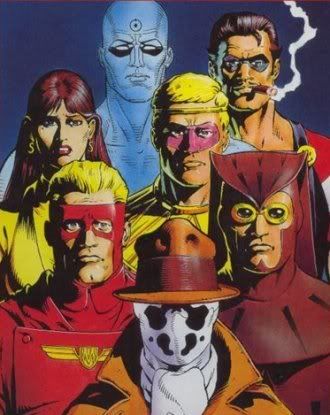 and Rorschach is a sociopath.
Rorschach thinks he has uncovered a plot to murder all of the costumed adventurers and enlists the help of his former partner, Nite Owl, to help him. Meanwhile, the super powerful Doctor Manhattan, who has the ability to restructure reality and to manipulate time and space, continues to struggle with relating to regular human beings. After rumors that being near him causes cancer, he banishes himself to Mars.
The murders end up being the work of the genius Ozymandias, who has concocted an elaborate scheme to bring the world’s nations together: a fake alien invasion that kills thousands of people. His costumed friend figure out his plot, but are unable to stop it. And, in the end, it turns out Ozymandias is right.
The weakest part of “Watchmen” is the plot, especially the comic book ending. There are so many holes in the logic and execution of Ozymandias’ scheme that it’s difficult to follow or understand. But the plot isn’t really the driver in “Watchmen” – it’s the characters and
The novel is heavy on symbolism (lots of watches and clocks, for example) and mood – but differs from comic books from the time period by providing a straight forward and objective point of view. It’s up to the readers – not Moore as the author – to figure out how to react to the action on the page.
Another interesting device is 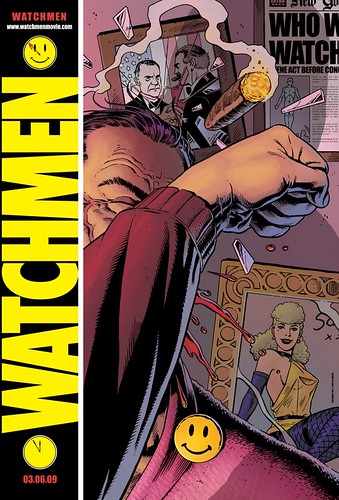
The artwork in “Watchmen” feels like a throwback to the Golden Age of comics in the 1950s and 1960s (in fact, primary artist Dave Gibbons credits Norman Rockwell as an inspiration for “Watchmen”). There’s a cinematic feel to the artwork – especially of noir films with the shadows and darkness. But there’s surprising little movement to the graphics and sometimes the panels feel a bit inert.
So how influential was “Watchmen”? It is generally credited with taking superhero comics from low-brow kid’s entertainment and catapulting into high-brow art. That’s no minor achievement. “Watchmen” also ushered in an era of dark and bleak story lines around comic book superheroes (can we blame “Watchmen” for the death of Superman and Captain
But
Influential?
Yes.
But a hallmark of great literature?
No.
Maus Revisited
The 5 Most Addictive Arcade Games
Labels: Alan Moore, book review, comics, superheroes, Watchmen
StumbleUpon |
Digg |
del.icio.us |
Reddit |
Technorati |
E-mail
The Super Abilities that Would Enhance
Your Everyday Life
 It’s obviously a burning question. If you could be any superhero – who would you choose to be?
Unfortunately, that’s not the right question.
Superheroes like Batman, for example, technically don’t have any powers. They are normal human beings – with exaggerated skill sets. So it’s easy for DC Comics to conveniently forget that Batman is just a guy – and have him do impossible feats anyway.
There are also those superheroes whose powers come with a lot of baggage (i.e. negative intangibles). For example, The Thing has superhuman strength, but who wants to be trapped inside his hard-as-granite body? The concept of the Hulk might be fun, but losing your temper would be out of the question. And some of those X-Men mutants would be out the question (hello, Beast).
We want powers – powers that we can utilize in everyday life (and powers that don’t make us a freak). So the real question should be: Which superhero has the coolest powers?
Lucky for you DaRK PaRTY has the answers:
(And for sake of argument – we’re not going to include Superman – who seems to have every damn power imaginable. And let’s face the facts: who really wants to be one of those heroes with super insect abilities like Spiderman and Ant-Man? Isn’t that kind of disgusting?)
The Vision
Secret Identity: Victor Shade
Creator: Timely Comics (later bought by Marvel Comics)
Origin: The android Vision was created by the robot Ultron from an android of the Human Torch (yeah, it’s complicated). Vision rebelled against his creator and joined the Avengers – later marrying Scarlet Witch.
Costume: Green and yellow tights with a flowing yellow cape. Vision has an orange face and a bald dome.
First Appeared: Marvel Mystery Comics #13 (November, 1940). First appeared as an android and a member of the Avengers in Avengers #57 (October, 1968)
Cool Powers: Vision can control the density and mass of his body – becoming as vaporous as steam to as indestructible as iron. As a result of this power, he can move through walls and fly. He possesses superhuman strength and the ability to shoot beams of energy from his eyes and a jewel fastened to his forehead. Vision is also a computer expert and certified genius.
Cool Factor: What’s not to love about changing the density of your body? Think about the bully wanting to punch you out and you get to change your body so it’s as hard as a diamond and he breaks his hand on your face. How about flying? How about never needing IT support? How about tackling that New York Times crossword puzzle? How about mixing with the steam in the girl’s locker room?
The Flash
Secret Identity: Jay Garrick (he was the first Flash, but there have been three others Barry Allen, Wally West, and Bart Allen)
Creator: DC Comics
Origin: Jay Garrick inhaled hard vapors to gain his powers, but there are three other origin stories. The best is probably for Barry Allen, a police scientist who accidentally bathed in chemicals and then was struck by lightning.
Costume: Red tights with a yellow lightning bolt on his chest, yellow boots, and yellow gloves. A face covering with small wings hides his eyes and forehead.
First Appeared: Flash Comics #1 (January, 1940)
Cool Powers: Flash is the fastest human being in the world (and lately even travels faster than Superman). He has the ability to run, move, and react at superhuman speeds. He can vibrate his molecules to walk through solid matter (like walls or bank vaults) and can even run so fast as to move backward in time.
Cool Factor: No more being late for meetings. And even if you do miss one you can simply run back in time. Besides, wouldn’t it be fun to run so fast that you can move across water (and even step across clouds)? Who needs a plane ticket to
Green Lantern
Secret Identity: Hal
Creator: DC Comics
Origin: There are also various origin stories. But the Green Lantern is a member of an intergalactic protection squad known as the Green Lantern Corps – basically guardians of the universe. The Green Lanterns all have a power ring that gives them their powers. Sticking with Hal
Costume: Green and black tights – with the torso in green and the black as the extremities. The Green Lantern logo adorns the chest. He also wears an eye mask.
First Appeared: All-American Comics #16 (1940)
Cool Powers: The power ring is the ultimate weapon and can give the bearer some amazing powers: flight (even at the speed of light), time travel, telepathic powers, language translation, force fields, become invisible, and firing plasma bolts. Basically the ring’s powers are only limited by the imagination of the user.
Cool Factor: The ring has to recharge on occasion and has limited abilities against yellow objects. But, hey, this is one cool piece of jewelry. Using its telepathic powers makes being a couch potato so much easier (and the ability to turn yourself invisible is handy when the wife walks into the living room looking for you to mow the lawn). And who wouldn’t want a force field to keep off the rain, walk across puddles, and tune out the boss at work?

Wonder Man
Secret Identity: Simon Williams
Creator: Marvel Comics
Origin: Originally a villain, Wonder Man was created by Simon Williams, a rich industrialist, tries to embezzle money from his failed company and ends up in prison. He blames Tony Stark (Ironman) and lets a super villain Baron Zemo transform him into an ion-powered superhero. In the end, Wonder Man turns on Zemo and becomes a member of the Avengers.
Costume: Red sunglasses, red and black tank top, and gray tights
First Appeared: Avengers #9 (October, 1964)
Cool Powers: Wonder Man is one tough customer with incredible superhuman strength, speed, stamina, and reflexes. But even better is that he has self-regenerating ionic energy that gives him immortality and the ability to live without needing to sleep, eat, or even breathe. Bonus – he can fly.
Cool Factor: In this age of 24/7 everything – who wouldn’t want to the ability not to sleep or eat? Think of how productive you’d be at work and at home without needing eight hours of forced interruption (known as sleep). Without sleeping and eating, you could finally finish reading “Moby Dick.”
Starfox
Secret Identity: Eros (we’ll get to this!)
Creator: Marvel Comics
Origin: Eros is an Eternal, a super subset of humanity that left Earth and settled on Titan, a moon of Saturn, many centuries ago. Starfox is a laid-back adventurer with a thing for the ladies.
Costume: Red tights with a white triangle breast plate, golden metal wrist bands, and white calf-high boots.
First Appeared: Iron Man #55 (February, 1973)
Cool Powers: Starfox has superhuman strength, speed, and stamina. He can also fly. But we’re saving the best for last – his ability to slow aging and heal faster than normal are very cool, but his real showstopper is his psychic charm. Starfox can stimulate the pleasure centers in other people’s minds – making them very susceptible to his charms. He can make women become infatuated with him.
Cool Factor: High school would have been a breeze as Starfox. Think how fun it would have been to date the entire cheerleading squad. Think of how easy work would be as you convince your co-workers to do all your work for you as you charm your boss into giving you promotions, raises, and bonuses. Tax audit? No worries! Pulled over for speeding? Hello, officer! Feel like dating Kirsten Dunst or Winona Ryder? Good evening, ladies!

Echo (aka Ronin)
Secret Identity: Maya Lopez
Creator: Marvel Comics
Origin: Her father is killed by the super villain Kingpin – but ends up being raised by Kingpin (her father leaves a bloody handprint on her face – thus the below explanation for her odd costume).
Costume: Black jumpsuit with long leather gloves and white hand print on her face
First Appeared: Daredevil Vol. 2 #9 (December, 1999)
Cool Powers: While an amazingly gifted athlete, Echo has the very cool ability to perfectly mimic other people’s movements and skills. By simple observation, Echo can become a concert-level violinist, a black-belt in martial arts, paint a portrait worthy of Van Gogh, operate any kind of equipment, and even become a baseball pitching ace.
Cool Factor: Talk about impressing your friends! There would be no skill and no endeavor that you wouldn’t be able to master completely. Want to become a fencing champion? How about an Oscar winning actress? Feel the need to win the Indy 500? Maybe you can pen a bestseller in your spare time. And how saving boatloads of cash on contractors? No more plumbers, carpenters or electricians. You’ll be able to do it all.
Multiple Man
Secret Identity: James Madrox
Creator: Marvel Comics
Origin: He is a mutant and was born with his abilities.
Costume: Dark green tights with a cool atom like logo on his chest.
First Appeared: Giant Size Fantastic Four #4 (February, 1975)
Cool Powers: By harnessing kinetic energy (like clapping his hands or banging his feet), Multiple Man can create unlimited duplicates of himself (and even the duplicates can make duplicates). Multiple Man can also duplicate anything he is holding. Each of his copies can think on their own and have independent experiences. Once he reabsorbs the duplicates those experiences become that of Multiple Man.
Cool Factor: You could get a lot done as Multiple Man. Send one duplicate to work, have another mow the lawn, send a third to the grocery store, a fourth will mind the kids, a fifth can do volunteer work at the soup kitchen, the sixth can study and take classes for your MBA, and a seventh can watch cartoons on TV. There are really no limits to how many different lives and experiences you could have.
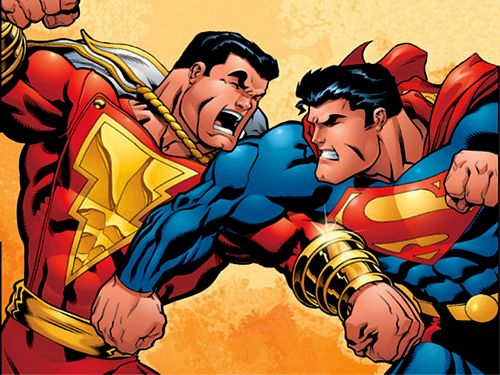
Captain Marvel
Secret Identity: William Batson
Creator: Fawcett Comics (later DC Comics)
Origin: Radio reporter Billy Batson was given the power to transform himself into a superhero by uttering the word “Shazam!” by the good wizard of the same name.
Costume: Red tights with a lightning bolt across the chest and a short white cape trimmed in gold.
First Appeared: Whiz Comics #2 (February, 1940)
Cool Powers: Captain Marvel may possess the coolest of powers – especially if you’re fond of Greek mythology. He has the wisdom of Solomon, the strength of Hercules, the stamina of Atlas, the power of Zeus, the courage of Achilles, and the speed of Mercury (spell it out and you get SHAZAM). And, yes, he can fly, too.
Cool Factor: Tapping into the collective power of Greek gods and heroes at will would be a boon to anyone. Captain Marvel has great wisdom (which allows him to hypnotize people), his stamina means he doesn’t have to eat or sleep or breathe. He can lift anything. Hell, he even has the ability to use magic. What’s not to like?
The Phantom Stranger
Secret Identity: Unknown
Creator: DC Comics
Origin: DC has never revealed The Phantom Stranger’s origin, but has hinted at possibilities such as: he is a fallen angel, a citizen spared God’s wrath in biblical days, that he was a soldier who helped kill Jesus and now he helps society, and that he may be a being from another universe.
Costume: He looks a bit like the Phantom of the Opera. He wears a dark suit, a cloak, and a fedora that continually shades his face.
First Appeared: Phantom Stranger #1 (August/September 1952)
Cool Powers: The full extent of the Phantom Stranger’s powers is unknown, but he is immortal. He can travel great distances in short periods of time and can travel to realms such as heaven and hell. He’s also been known to time travel, dispel magic and illusions, and look into the future. He can also fire bolts of energy.
Cool Factor: The Phantom Stranger is basically a bad ass. His powers would be essential for any business man – zipping to and from meetings on both coasts, visiting colleagues and clients in hell, traveling back in time to make sure that this time you zip up your fly for those prom photos. And why not give the guy who cut you off this morning a burst of energy bolt?
Thor
Secret Identity: Thor has several identities: Donald Blake, Sigurd Jarlson, Jake Olsen and the bizarre Donar the Mighty
Creator: Marvel Comics
Origin: He is a Norse God – Thor the God of Thunder (how’s that for a cool sounding moniker?)
Costume: Ancient armor garbed with a steel helmet with wings, red cloak, and a really, really large war hammer.
First Appeared: Journey into Mystery #83 (August, 1962)
Cool Powers: Well, Thor is the Norse god of Thunder and Lightning. So he’s not to be trifled with. He’s not immortal, but close to it having lived for thousands of years. He’s the strongest Norse god and when he’s in combat his battle rage can increase his strength by a factor of 10x. His magic hammer, Mjolnir, helps him control weather, fly, and send out blasts of energy known as: The God Blast.
Cool Factor: How about showing up for a board meeting and howling “I AM THOR GOD OF THUNDER!” We bet that would shorten the question and answer period a tad. And really can there be a better pick-up line than telling a woman that you’re a Norse God?
5 Questions About: Comic Books
The 5 Best and 5 Worst Movies about Superheroes
Labels: comics, superheroes
StumbleUpon |
Digg |
del.icio.us |
Reddit |
Technorati |
E-mail
With the new Ironman movie scheduled to premiere in May (see the trailer above), DaRK PaRTY decided it was time to set some limits. Not every superhero and villain is worthy of celluloid fame.
So far we’ve gotten films about Batman, Superman, X-Men, the Fantastic Four, Spiderman, Punisher, Swamp Thing, Teenage Mutant Ninja Turtles, Dick Tracy, Hulk, Daredevil, Captain
But the film industry is beginning to run out of A-list superheroes. We want to make sure that we don’t dig too deep into the annals of superhero comics. It could be dangerous – if not downright embarrassing.
That’s why we’ve compiled a list of 12 superheroes and villains that no one in their right mind would opt for the
Editor’s Note: We aren’t including Robin on the list. Robin is the king of lame superheroes and therefore is automatically including in any list of lame-ass superheroes – even if he isn’t officially listed.

The Whizzer
Secret Identity: Robert L. Frank
Origin: In
Powers: He’s very, very fast.
Appearance: With the name The Whizzer it may have been a mistake to put him in a bright yellow costume.
Lame Factor: I guess the name The Flash was taken, but, my God, the Whizzer?
Creator: Timely Comics (later Marvel Comics)
First Appeared: 1941
Snide Comment: The
Beak
Secret Identity: Barnell Bohusk
Origin: Barnell was born a mutant that gave him birdlike qualities – except, amazingly, the power to fly.
Powers: He can glide for short distances, has enhanced eyesight, and his hands are talons. Oh, he’s got feathers, too.
Appearance: A plucked chicken clad in X-Men leather.
Lame Factor: These are powers? Poor bastard should hunt down the folks at Purdue.
Creator: Marvel Comics (a minor mutant character in the X-Men series)
First Appeared: 2001
Snide Comment: We wonder if he tastes like chicken. Believe it or not, but Beak has become a fan favorite and even has a fan site dedicated to him.

The Gay Ghost
Secret Identity: Keith Everet
Origin: Everet is the Earl of Strethmere (in
Powers: He can possess other people’s bodies and is an expert, ahem, swordsman.
Appearance: An 18th century Earl – who happens to have long, luscious hair, is transparent, and ghostly.
Lame Factor: He’s called the Gay Ghost – which is an enormous liability.
Creator: DC Comics
First Appeared: 1942
Snide Comment: Clearly, the gay movement hadn’t happened when Gay Ghost was created – and yet the character seems to be, well, gay.
Wallflower
Secret Identity: Laurie Collins
Origin: Collins grew up in a single-parent home before becoming a student at the Xavier Institute (famous as home of the X-Men).
Powers: She can manipulate the emotions of other people with pheromones.
Appearance: She looks like a pouty, blond cheerleader.
Lame Factor: She also acts like a pouty, blond cheerleader. And her major power seems to be the ability to make people cry at whim.
Creator: Marvel Comics (one of the more ridiculous mutants)
First Appeared: 2003
Snide Comment: Clearly, the folks at Marvel were having trouble with their teenage daughters. Yet here’s another minor superhero with a fan site.

Power Girl
Secret Identity: Kara Zor-L
Origin: Okay, she was blasted into space after the planet Krypton exploded. If this sounds familiar – it is. This is exactly the same origin as Superman. Superman, in fact, is her cousin.
Powers: Exactly the same as Superman (enormous strength, X-ray vision, blah, blah, blah).
Appearance: White spandex bathing suit with an amazing push-up bra.
Lame Factor: She’s Superman with Jennifer Aniston’s hair and gravity defying breasts.
Creator: DC Comics (apparently developed during a very bad brainstorm session).
First Appeared: 1976
Snide Comment: This is what Superman would look like if he was a stripper.

Hawkman
Secret Identity: Carter Hall
Origin: Hall is the reincarnation of Prince Khufu who died centuries ago while in combat with an Egyptian wizard.
Powers: He can fly using artificial wings made of Nth mental from the Planet Thanagar.
Appearance: A guy in a hawk outfit – generally not wearing a shirt.
Lame Factor: He’s got wings and uses spears and maces as weapons. One gets the sense that even Green Arrow could take him.
Creator: DC Comics
First Appeared: 1940
Snide Comment: Could not come up with a better name than Hawkman?
Brother Voodoo
Secret Identity:
Origin: Amazingly, Drumm is from
Powers: Drumm taps the power of Loa to create smoke, control fire, and command living things – mostly animals such as snakes, alligators and dogs. He can boost his strength by summoning the spirit of his dead brother.
Appearance: Think of all the racist stereotypes of a black man as a voodoo priest and, well, that’s Brother Voodoo.
Lame Factor: It feels like Brother Voodoo may have been a rejected villain for a James Bond movie. Also, one of Brother Voodoo’s aliases is “He-Who-Has-Died-Twice.”
Creator: Marvel Comics
First Appeared: 1973
Snide Comment: Brother Voodoo could only have been created in the 1970s.
Green Arrow
Secret Identity: Oliver Queen
Origin: Queen, a millionaire playboy, tumbles off a yacht and washes onto the shore of a tropical island with a movie prop – a green longbow. Stranded for months on the island, Queen hones his skills as an archer before tricking smugglers to taking him back home to
Powers: Queen – mind you after only months of practice! – is the world’s greatest archer. He uses his money to develop all kinds of gimmick arrows to help him fight crime (like arrows with grappling hooks!).
Appearance: A green Robin Hood with a blond goatee
Lame Factor: This man has no super powers at all.
Creator: DC Comics
First Appeared: 1941
Snide Comment: Thank god he wasn’t washed up on the island with a slingshot.

Animal Man
Secret Identity: Buddy Baker
Origin: While hunting, Baker is zapped by aliens with a laser. His body is reconstructed with “morphogenetic grafts” that allow him to temporarily mimic any animal that has ever existed by tapping into “the unseen web of energy that links and shapes all animal life.”
Powers: He can fly like an eagle, run like a cheetah, and absorb the strength of a lion.
Appearance: Red and blue spandex with (get this) a black leather jacket.
Lame Factor: We wonder: when he’s feeling sensitive does he absorb the abilities of pink flamingos?
Creator: DC Comics (he actually had his own comic book)
First Appeared: 1965
Snide Comment: Shape of a chipmunk!
Kangaroo
Secret Identity: Frank Oliver
Origin: Oliver, shockingly a native of
Powers: He can box and jump just like a kangaroo!
Appearance: A muscular Crocodile Dundee.
Lame Factor: One can only imagine what life in the Outback must have been like for Oliver and his kangaroo pals as the skipped, hopped, and dined together.
Creator: Marvel Comics (first appeared as an enemy to Spiderman)
First Appeared: 1970
Snide Factor: May be the lamest origin story ever.

Mole Man
Secret Identity: Harvey Rupert Elder
Origin: A genius, but very ugly, Elder was shunned for his looks. He spent his life searching for a legendary underground kingdom. Finally, after washing up on the shores of
Powers: He’s blind, but all his other senses are razor sharp. He has the radar of a bat (but apparently the name Bat Man was taken). He invents all kinds of weird weaponry that he uses in combat.
Appearance: Think Danny DeVito with thick glasses.
Lame Factor: He’s a mole. Need we say anymore?
Creator: Marvel Comics (originally a villain to The Fantastic Four)
First Appeared: 1961
Snide Comment: Mole Man was created by Stan Lee – even the king can have an off day.

Matter-Eater Lad
Secret Identity: Tenzil Kem
Origin: Born on the planet Bismoll, Kem was injected with microbes like the rest of the population because it helped them eat their food. As a result, Kem is able to eat anything and well, unfortunately, he does.
Powers: He can eat any substance.
Appearance: A teenage boy in a green and yellow outfit of his superhero group – Legion of Super-Heroes.
Lame Factor: Matter-Eater Lad is proof that even comic book writers get desperate.
Creator: DC Comics
First Appeared: 1963
Snide Comment: No one wants to follow Matter-Eater Lad into the restroom.
Read our picks for the best and worst superhero movies
Read why the Rev. Colson Crosslick thinks comic books are evilLabels: comics, superheroes
StumbleUpon |
Digg |
del.icio.us |
Reddit |
Technorati |
E-mail

 RSS Feed
]saddlebrown]tan]maroon](],](])us.st11.yimg.com/us.st.yimg.com/I/getfishy_1912_2002960]Fishboy]black],]1]10]3]1]1]1]1]1]1]1]1]1],](](]papayawhip])])]DaRK^20PaRTY^20ReVIEW]^3A^3ALiterate^20Blather^3A^3A],](](],](]maroon](](](]brown](],](]maroon](](](],]60]10],](](]^23F5ECE1])])]maroon]0.5]0],](](]^23F5ECE1])])]maroon]^23F5ECE1])])]^23666]16]maroon]maroon],](](]maroon](],](]^23333]^238C4614]tan],](](]^23F5ECE1])])],](](]^23F5ECE1])])],](](]^23F5ECE1])])],](]maroon]maroon]15]3]23]18]maroon],](](],](],](](],](]black](](](],](](](],]black](](](],](](]^23333](](](](](],]^2336F]^23333](],](]Posted^20by^20^24AUTH^20at^20^24TIME.]36],](](]black])])]^23F5ECE1])])]^23666]16]maroon]maroon],](](]maroon](],](]^23333]^238C4614]tan]Contributors]]]^24PROFILE]]]DaRK^20PaRTY^20LiNKS]]]The^20Ambrose^20Bierce^20Site])donswaim.com/]Ambrose^20Bierce]Ironic^20Times])www.ironictimes.com/index.html]Ironic^20Times]Gallery^20Voyer])www.voy-art.com/]Gallery^20Voyer]Tintinologist])www.tintinologist.org/]Tintin]Arcanum^20Cafe])www.arcanumcafe.com/]Arcanum^20Cafe]LADA^20-^20Protect^20our^20Kids])da.co.la.ca.us/pok/poklist.htm]POK^20List]Tom^20Caron^20-^20Boston.com])www.boston.com/sports/nesn/aboutus/onair/tomcaron/]TC]The^20Captain^20Humphreys^20Project])www.captainhumphreys.com/]Captain^20Humphreys]Torpedo^20Design])www.torpedodesign.com/]Torpedo^20Design]^3Cimg^20src^3D^22)us.st11.yimg.com/us.st.yimg.com/I/getfishy_1912_2002960^22^20alt^3D^22Fishboy^22^20style^3D^22border^3A^201px^20none^20black^3B^22^20/^3E])www.fishboy.com/]Fishboy]Etc]]]^3Cimg^20src^3D^22)psyc.horm.org/barimg/bar_psycho.png^22^20width^3D^2280^22^20height^3D^2215^22^20alt^3D^22PsycHo^3A^20Free^20Template^20Generator^22^20style^3D^22border^3A^200px^20solid^20black^22^20/^3E]^24PSYCHO]PsycHo^3A^20Free^20Template^20Generator]^3Cimg^20src^3D^22)psyc.horm.org/barimg/bar_firefox.png^22^20width^3D^2280^22^20height^3D^2215^22^20alt^3D^22Get^20FireFox^21^22^20style^3D^22border^3A^200px^20solid^20black^22^20/^3E])www.mozilla.org/products/firefox/]Get^20Firefox^21]^3Cimg^20src^3D^22)psyc.horm.org/barimg/bar_xhtml.png^22^20width^3D^2280^22^20height^3D^2215^22^20alt^3D^22XHTML^20Validator^22^20style^3D^22border^3A^200px^20solid^20black^22^20/^3E])validator.w3.org/check/referer]XHTML^20Validator]Recent^20Posts]]]^24RECENT]^20]]Archive]]]^24ARCHIVE]^20]]ADVERTISEMENTS]]]^20]]^26^2361470^3BPsycHo})


This work is licensed under a Creative Commons Attribution-No Derivative Works 3.0 License.
The Template is generated via PsycHo and is Licensed.