
Poem: Sunrise Over Worcester
5 Questions About: Jason Pinter
12 Signs That You Might Be A Banker
The 9 Worst Movies to Win Oscars
Book Review: Narrow Miss for "Above the Law"
5 Questions About: Screaming Blue Messiahs
What's Up With All the Fat, Naked Guys?
Thoughts from the Shadows: The Craziness of Publis...
How to Make a Damn Good Horror Movie
Literary Criticism
Fantastically Bad Cinema
Essays
Under God's Right Arm
June 2006
July 2006
August 2006
September 2006
October 2006
November 2006
December 2006
January 2007
February 2007
March 2007
April 2007
May 2007
June 2007
July 2007
August 2007
September 2007
October 2007
November 2007
December 2007
January 2008
February 2008
March 2008
April 2008
May 2008
June 2008
July 2008
August 2008
September 2008
October 2008
November 2008
December 2008
January 2009
February 2009
March 2009
Alcoholic Poet
Baby Got Books
Beaman's World
BiblioAddict
Biblio Brat
Bill Crider's Pop Cultural Magazine
The Bleeding Tree
Blog Cabins: Movie Reviews
A Book Blogger's Diary
BookClover
Bookgasm
Bookgirl's Nightstand
Books I Done Read
Book Stack
The Book Trib
Cold Hard Football Facts
Creator of Circumstance
D-Movie Critic
The Dark Phantom Review
The Dark Sublime
Darque Reviews
Dave's Movie Reviews
Dane of War
David H. Schleicher
Devourer of Books
A Dribble of Ink
The Drunken Severed Head
Editorial Ass
Emerging Emma
Enter the Octopus
Fatally Yours
Flickhead
The Genre Files
The Gravel Pit
Gravetapping
Hello! Yoshi
HighTalk
Highway 62
The Horrors Of It All
In No Particular Order
It's A Blog Eat Blog World
Killer Kittens From Beyond the Grave
The Lair of the Evil DM
Loose Leafs From a Commonplace
Lost in the Frame
Little Black Duck
Madam Miaow Says
McSweeney's
Metaxucafe
Mike Snider on Poetry
The Millions
Moon in the Gutter
New Movie Cynics Reviews
Naked Without Books
A Newbie's Guide to Publishing
New & Improved Ed Gorman
9 to 5 Poet
No Smoking in the Skull Cave
Orpheus Sings the Guitar Electric
Polly Frost's Blog
Pop Sensation
Raincoaster
R.A. Salvatore
Reading is My Superpower
Richard Gibson
SciFi Chick
She Is Too Fond Of Books
The Short Review
Small Crimes
So Many Books
The Soulless Machine Review
Sunset Gun
That Shakesperherian Rag
Thorne's World
The Toasted Scrimitar
This Distracted Globe
Tomb It May Concern
2 Blowhards
Under God's Right Arm
A Variety of Words
The Vault of Horrr
Ward 6
When the Dead Walk the Earth
The World in the Satin Bag
Zoe's Fantasy
Zombo's Closet of Horror
Bookaholic Blogring
Power By Ringsurf
(Rapid-fire reviews of the books we’ve been cooking in the oven and then eating with a fine red table wine. And, of course, a “cracked-back” is what happens to the spine of a new book once you’ve thoroughly de-boned it. We’re always looking for our next read, so please feel free to make your own recommendations in our comments section. Read on!)
Beat the Reaper
By Josh Bazell
 Josh Bazell, a newly minted doctor, received a seven-figure deal for “Beat the Reaper,” his debut crime novel that he wrote while an intern. Unfortunately, it’s difficult reading “Beat the Reaper” and not dwell on that enormous payday. It’s much like watching an overpaid baseball player – he’s good, but is he that good?
The good news is that “Beat the Reaper” is a nasty, little crime caper. It’s a crime farce with a cynical attitude and a slick style. The best part of the book is the first-person narrative voice of protagonist Dr. Peter Brown, a.k.a. Pietro “Bearclaw” Brnwa. Brown was once a mafia hitman and is currently in the Federal Witness Protection program studying to be an MD.
That’s where the reader lands in the story. One of Brown’s patients recognizes him. The deal is that Brown helps the patient live through his operation or one of his associates rats out Brown to the mafia family looking to take him out. It’s a delicious, wacky journey of cutthroat encounters with Russian gangsters, Italian wise guys, cranky nurses, desperate patients, and even a tank filled with man-eating sharks.
The one unfortunate part of “Beat the Reaper” is the ridiculous ending. It’s so improbable that you’ll find yourself rolling your eyes and groaning. But luckily Bazell has built up enough goodwill through is witty, stabbing style that you’re willing to forgive him for it.
“Beat the Reaper” is a blast (check out the video above) – a guilty pleasure (kind of like eating at a fast food joint). You’ll love it while your reading it (sans the conclusion), but you probably won’t remember reading it in six months.
Grade: B+
Lost River
By David Fulmer
 The fourth book in the Valentin St. Cyr mystery series by David Fulmer (who, as an aside, looks separated from birth from TV ringleader Jerry Springer). The mystery takes place in steamy New Orleans of 1913 in the red-light district called Storyville. Fulmer is a master of creating place – and readers will feel like they’ve been transported back in time. Storyville lifts off the pages and into the reader’s imagination. You can smell the seedy tap houses and jazz joints. You can feel the hot, sticky humidity.
The writing is beautiful. The prose rolls like jazz music and Valentin St. Cyr fans will welcome “Lost River” into the series.
However, there are some stumbling blocks in storyline. The first is the mystery itself. It’s like a street map that can’t be refolded correctly. The traveler tries to retrace the proper steps, but ends up with new creases and folds and finally out of frustration stuffs the map back into the glove box. The mystery – which has to do with a series of murders to take over Storyville – has too many logic lapses to make much sense.
One of the most disappointing details gone wrong is that St. Cyr has his regular pistol (the Iver Johnson) confiscated by the police and is forced to use a backup. Yet at the end of the novel, his regular pistol is back in his hands for the final confrontation. No explanation is ever given (Fulmer should reprimand his editor for the mistake getting into print).
There’s also a sense that Fulmer likes his main character just a bit too much. St. Cyr is a living legend in Storyville and Fulmer is only too happy to show us how he’s worshipped. Yet even with these two challenges, “Lost River” is a solid entry and a good read for anyone who enjoys historical mysteries.
Grade: B-
Too Late To Die
By Bill Crider
 “Too Late To Die” is the first novel in the long-running Sheriff Rhodes mystery series by the delightful Bill Crider (if you haven’t visited his must-read Pop Culture blog – then what are you waiting for?). The Dan Rhodes series is like potato chips – once you have one you can’t stop.
They don’t write mysteries like “Too Late To Die” anymore. This one was published back in 1989 when there was such a thing as the Soviet Union and Milli Vanilli was the “it” pop rock group. “Too Late To Die” is a character driven mystery that takes place in rural Texas. It’s filled with interesting people – quirky, flawed, and always fascinating.
Sheriff Dan Rhodes, a middle-aged widower, is up for re-election in Blacklin County, Texas. And just in time for the campaign comes the murder of a young wife – who appears to have been mighty popular with a lot of men other than her husband. As Dan investigates, the roll of suspects starts to get rather large: a cranky storeowner, a homeless half-wit, a religious zealot, and his rival candidate for sheriff.
The mystery unfolds in rural Texas style – languidly until it gets fast and furious. But really the mystery (which has a satisfying array of twists and turns) is just an excuse to explore the eccentric nature of the characters. It’s these interactions, dialogue, and portraits that bring Blacklin County to life and make “Too Late To Die” so fun to read.
Grade: A-
Cracked-Back Book Reviews: November 2008 (Graphic Novel Special!)
Book Review: "Runner" Will Leave You Breathless
Comic Books for Literature Professors
Labels: Bill Crider, book review, Cracked-Back, David Fulmer, Josh Bazell, mysteries
 StumbleUpon |
 Digg |
 del.icio.us |
 Reddit |
 Technorati |
 E-mail

Thor, Iron Fist, and Batman Soar as Graphic Novels
(Quick fire reviews of the books we’ve been devouring. A “cracked-back” is what happens to the spine of a new book once you’ve thoroughly torn through it. We’re always looking for our next read, so please feel free to make your own recommendations in our comments section. Read on!)
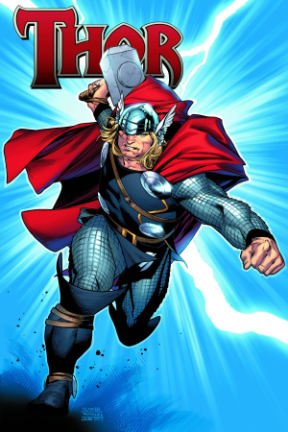
Thor, Vol. 1
By J. Michael Straczynski and Olivier Coipel
 It’s difficult to think about Thor without the Kiss song “God of Thunder” reverberating inside my brain.
“God of thunder and rock and roll
The spell you’re under
Will slowly rob you of your virgin soul.”
But I digress. As a comic connoisseur in my youth, I never connected with Marvel’s comic book version of the Norse God (despite the fact that I’m half Danish). Thor was dull: the stiff in the room (especially when compared to the wisecracking Spiderman and the snarky intensity of Ironman).
Thor spoke like a community theater actor channeling Hamlet. “Thee art my ally! Make peace!” Crap like that.
But I have a new appreciation for the Thunder God thanks to J. Michael Straczynski and Olivier Coipel. Thor – who was retired back in 2004 – is brought back to life in a new series as a rebel God – powerful, but brooding – with an angry, seething intensity that hides a broiling compassion for human beings and their troubles.
Gone, thank All-Mighty Odin – is the ridiculous dialog. Thor is given a new sleekier appearance (complete with blue chainmail armor) and a new attitude – and it works like a charm. Olivier’s version of Thor is youthful, but war weary. His illustrations are simply stunning. They may be the best part of the book.
But Straczynski’s storyline has Thor’s first order of business as rebuilding Asgard – the home of the Norse Gods. He makes the Oklahoma desert his base of operations and scans the world for his fellow Gods (although the highlight of Volume One is a crash-bang battle with Ironman). There’s lots of potential to be mined here, although knowledge of the Marvel universe is required as Straczynski does a poor job of providing an adequate back story for those fans reading Thor for the first time. But we’ll be back for Volume Two.
Grade: B+
The Immortal Iron Fist, Vol. 1: The Last Iron Fist Story
By Ed Brubaker, Matt Fraction, David Aja and Travel Foreman

First off, we love Matt Fraction – which is why we interviewed him a while back. Now that we’ve come clean on that:
Iron Fist was always a lame superhero; created by Marvel in response to the Bruce Lee craze in the 1970s. He wore the green pajama bottoms and appeared along side the more complex and always more interesting Luke Cage. Then he’d make rather pathetic guest appearances on Marvel Team-Up. He even died at some point – and then came back to life. Never liked him (and he was even a candidate for our list of lamest superheroes).
Thank Thor, we didn’t make that mistake, because the new series snap kicks major league butt. Iron Fist is finally given the back story that he deserves. In the new series, Iron Fist (Daniel Rand) is the latest of more than 66 Iron Fists than stretch back centuries – each generation getting their own version of the hero. The story introduces readers to Orson Randall, the previous Iron Fist, who broke his bond with the Iron Fist legacy and its leader K’un L’un and is living a life of drug addiction in Thailand.
A terrorist organization working for K’un L’un’s greatest emney – the Crane Mother and her champion, the murderous Steel Serpent, target Randall for death. Randall seeks out Daniel Rand and together they battle the enemy (and to say more would be a crime). But Volume One sets up a show down between Rand and Steel Serpent that is sure to shake the Marvel world to its foundations.
The artwork by Spanish illustrator David Aja using lots of dark inks – using shadows and light to effectively reveal character and give the new series a dark feel (most of the action takes place at night). His action sequences seem to move off the page and readers will find themselves wanting to practice swing kicks between chapters.
Here’s another graphic novel, however, that needs some background before plunging in. Novices to Iron Fist will probably find their heads spinning with all of the information.
Grade: B+
Batman: The Long Halloween
By Jeph Loeb and Tim Sale
 What do you get when you combine crime noir with a superhero comic? You get “The Long Halloween” – one of the most critically acclaimed graphic novels in the genre. Once you start – it’s near impossible to put down.
Batman, a young Jim Gordan, and District Attorney Harvey Dent vow to bring down Mobster Godfather “The Roman.” But they are beaten to the punch by a mysterious serial killer dubbed “Holiday,” who begins to kill The Roman’s family and friends on each major holiday. Holiday kills them with a .22 and places trinkets representing the holiday near the dead bodies.
The story incorporates many of Batman’s most feared and popular villains – from the Joker to Poison Ivy. Even my favorite, Scarecrow, makes an appearance. There are great scenes between Batman and Catwoman – as they try to figure out if their animosity is real or just sexual foreplay.
But at the real center of story is the downfall of Harvey Dent, a respected and honorable DA. The graphic novel shows us his descent into cynicism and finally his transformation into the criminal psychopath Two Face.
The narrative expertly weaves the mystery – throwing up red herrings and giving us a wide range of possible suspects. Batman is a grizzled caped detective (think Mike Hammer in tights) – and one not unwilling to smack the bad guys around.
If you’ve always wanted to experience a graphic novel – then “The Long Halloween” is an excellent place to start. Action packed, compelling, and the art work is visually stunning.
Grade: A-
Best and Worst Superhero Movies
Blistering Barnacles: It's Tintin!
The Legends of Literature: Comic Books
Labels: Batman, book review, comics, Cracked-Back, Iron Fist, Thor
StumbleUpon |
Digg |
del.icio.us |
Reddit |
Technorati |
E-mail
(Quick fire reviews of the books we’ve been reading. A “cracked-back” is what happens to the spine of a new book once you’ve thoroughly devoured it. Please feel free to add your own list of recommendations in our comments section.)
By Mathias B. Freese
This collection of short stories by Mathias B. Freese gets points for the way the writer insightfully glares into the lives of the characters – a group of troubled (and sometimes mentally ill) people. Freese uses stark and penetrating language to accomplish that task. But the real question is if this collection can really be considered short stories. I’d argue not. There’s nary a plot to be found in the collection – as each of the pieces focuses on character building. These are character sketches – not stories. Most, in fact, are internal monologues. Yet some of the sketches work well. “I’ll Make It, I Think” features the powerful voice of a handicapped boy trapped in his deformed body. “Little Errands” is an amusing take on an anal retentive man obsessed with mailing letters. Yet overall, the collection feels too internal – as if the book is trapped inside a room without any windows. Too much of the action is thinking. There needs to be more external action – interaction with other characters, movement, and fluidity; more setting, description and dialogue. If you’re a fan of character – and bizarre, damaged ones then you’ll want to get a copy of “Down to a
Grade: C
By David McCullough
How on Earth did the 13 Colonies ever win the Revolutionary War against the
Grade: B+
The Worst Hard Time: The Untold Story of Those Who Survived The Great American Dust Bowl
By Timothy Egan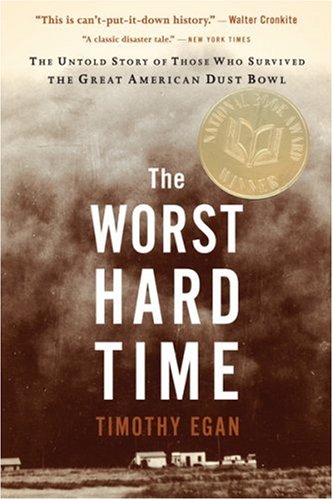
What was the worst environmental disaster of the 20th century? Would you believe the over-farming of the southern
Grade: A-
Labels: book review, Cracked-Back
StumbleUpon |
Digg |
del.icio.us |
Reddit |
Technorati |
E-mail
(Machine-gun quick reviews of the tomes that have occupied our time during the last few weeks. A “cracked-back” is what happens to the spine of a new book once you’ve thoroughly devoured it. Please feel free to add your own list of recommendations in our comments section.)
Severance Package
By Duane Swierczynski

I read “Severance Package” on a high-speed train to New York City. The train couldn’t keep up. The novel is one of those vicious, high-octane thrillers that are high on concept, packed with nail-biting action, and a damn pleasure to read. Is it literature? Hell, no and it doesn’t want to be. Here’s the gist: a group of corporate suits are forced by their boss to work on a grueling hot Saturday in August. When they get there, the boss tells them that he’s going to kill them all. Then, of course, all hell breaks loose. It turns out the “financial services” company is a front for a top-secret, anti-terrorist government agency. There are lots of blood, twists and turns, and some plot devices about undercover agents and rivalries within the network of lettered law-enforcement agencies in the United States. None of this really matters. What matters is the smart language, the mile a minute thrills and chills, and some dialog and situations that will make you laugh out loud (try not to be drinking milk at the time). It’s like buying a sack of buttered popcorn and a wastebasket size Coke and settling down for B-movie action on a Saturday night at the drive-in. Fun, fun, fun.
Grade: A-
The History of Love
By Nicole Krauss

“The History of Love” is beautiful. It’s a work of fiction so elegantly written, so fully realized and executed that it has quickly landed on my heap of books that I declare my favorites of all time. Reading Nicole Krauss, one can only marvel at her talent – writing with such detail and precision that it is as if you are living the story. On the surface “The History of Love” is about a 14-year-old girl, Alma, mourning her dead father and trying to connect with her devastated mother, who has retreated to her work as a book editor. When her mother begins to translate an obscure novel called “The History of Love,” Alma sets out to find the author. Meanwhile, an elderly Polish Jew named Leo Gursky is at the end of his life living in a tenement and pining for all of the missed opportunities of his life – including the biggest – losing his true love. The story brings these two people together as they struggle to make sense of the lives they have built. The story is terribly sad, hilariously funny, and a reminder of why we read great fiction: to connect with that part of ourselves that touches other people. “The History of Love” should not be missed.
Grade: A+
The Dumbest Generation: How the Digital Age Stupefies Young Americans and Jeopardizes Our Future (Or, Don’t Trust Anyone Under 30)
By Mark Bauerlein
The title is an unfortunate mistake. Blame the publishers because Mark Bauerlein, a professor of English at Emory University, has written a fascinating book about the cause and effects of our dumbed-down popular culture. It’s packed with facts (how test scores, reading comprehension, and writing skills have plummeted in the last two decades) – but it turns into a cautionary essay about the death of culture in a society that has turned its back on the notion of its young people growing up into adults. Bauerlein makes some compelling connections with society’s embracing of adolescence and rejection of adulthood with the rise of technology, especially the Web. He pulls the rug from under the notion that the Internet was supposed to be the dawn of a renaissance in learning and knowledge. In fact, Bauerlein paints a gloomy picture of how kids have used the Web to amp up the volume on youth culture – and tighten the circle and increase the pressure of their own peers. Kids aren’t using the Web to download images from the museums of the world or to read the classics in literature – they’re updating Facebook pages, skimming Hollywood gossip blogs, and bitching about each other on Twitter. “The Dumbest Generation” is a book every parent – every young person – should read, but won’t.
Grade: A-
Stuart Little
By E.B. White

Written in 1945, “Stuart Little” is a children’s book about a mouse born to human parents. Stuart is adventurous, gentlemanly, polite, helpful, and, at times, a bit arrogant. But one can forgive the little fellow for his faults because of his resourcefulness and forbearance. Readers get to join Stuart in all kinds of adventures – getting caught in a window shade, sailing toy boats at Central Park, getting tossed out with the garbage, and saving the life of a pretty young songbird. All of it written in the delightful, matter-of-fact style of E.B. White. This a throwback book that will immediately transport adults back to their childhood – when kid’s books weren’t about lessons and learning. Instead, E.B. White focused on telling a grand tale with the nuance and detail of a classic. I read this a chapter at a time with my daughter and she loved it – but not as much as her father. Tough to go wrong with revisiting “Stuart Little.”
Grade: B+
In Search of City Lights: A Bookstore Quest
5 Writers Every Man Should Read
Labels: book review, Cracked-Back, Duane Swierczynski, E.B. White, Mark Bauerlein, Nicole Krauss
StumbleUpon |
Digg |
del.icio.us |
Reddit |
Technorati |
E-mail
The Age of Innocence
By Edith Wharton
This one is a crier. But it is also a scathing rip at upper crust society -- particularly New Yorkers of the 1870s. Make no mistake about “The Age of Innocence” -- its a masterpiece and a joy to read. It's one of those books perfect for curling up on the couch with a warm cup of tea. In fact, it demands it. It is the story of how the narrow minds and strict protocols of
Archer is firmly entrenched in high society, yet experiences flashes of rebellion at its fastidious rules about appearance and reputation. He becomes engaged to May
Yet his love for the countess never falters. He he remains trapped in a marriage to May until her death 25 years later. When he has a chance to see the countess again in Paris, the widowed Archer decides against it. The reader can decide if it is because his memory of the countess is better than his reality or if he now embarks on a love affair with her if he's admitting to his own weakness at having failed to pursue her 25 years earlier. “The Age of Innocence” is a powerful and heart-wrenching story – and one that every bibliophile should devour.
Grade: A
Strangeways: Murder Moon
By Matt Maxwell and Luis Guaragna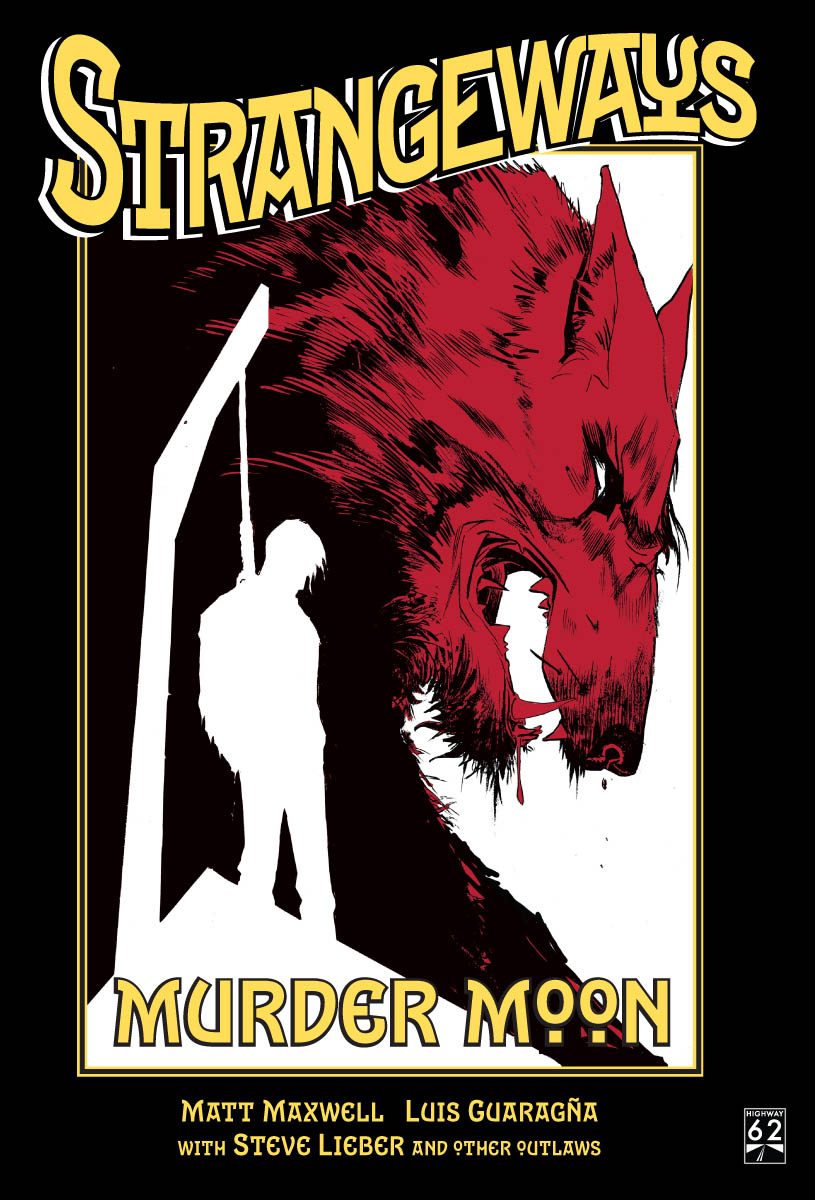
Fangs and fast guns. This is Matt Maxwell's great idea for a mash-up – combine a Western with a werewolf story. Think about "High Noon" superimposed on "American Werewolf in London."
The result is “Strangeways: Murder Moon,” a rip-roaring graphic novel that delivers scares and shoot-outs. The story features Seth Collins – a Western arch-type (the quiet loner with a quick gun). Collins ventures out West to meet up with his estranged sister and gets attacked by a werewolf while riding shotgun on a stage coach. When his best friend Webster is accused of being the werewolf, Collins sets out to capture the real monster.
There are lots of subplots and hidden agendas in “Strangeways” and some of them can be difficult to navigate. The character of Collins is also a problem as he often seems more like a conduit and plot device rather than a strong central character. But for the most part “Strangeways” delivers on its promise. The art is dark and moody – and there’s plenty of fast action to keep readers turning the pages. The graphic novel also contains an extra at the end – an excellent origin story for the werewolf, which puts an entire new spin on the main story.
If you’re into lycanthropy and six-shooters – you may have entered Nirvana.
(Full Disclosure: Matt Maxwell runs a blog called “Highway 62” that DaRK PaRTY links with)
Grade: B
Yellow Medicine
By Anthony Neil Smith
You are not going to like Deputy Sheriff Billy Lafitte. Why? Because he's a bastard.
“Yellow Medicine” is a rocket ride of a thriller set in plains of rural
Yet the strength of the novel is the voice of Lafitte – and watching how he adapts and changes when confronted with the difficult situations he falls into. Deep down, Lafitte has a soul, but unfortunately it rarely manifests itself. The plot stumbles a bit (how the terrorists get to the flatlands of
Grade: B
All Quiet on the Western Front
By Erich Maria Remarque
“All Quiet on the Western Front” is one of the greatest anti-war novels ever written. It’s vivid portrayal of the horrendous conditions and life threatening dangers of trench warfare during the Great War. Paul Baumer is a young, enthusiastic student who joins the German Army at the outbreak of the war with
Grade: A
Read our last Cracked-Back Reviews, includes "World War Z" and "99 Coffins"
Read our apology to Novelist Cormac McCarthy
Labels: Anthony Neil Smith, book review, books, Cracked-Back, Edith Wharton, Erich Maria Remarque, Matt Maxwell
StumbleUpon |
Digg |
del.icio.us |
Reddit |
Technorati |
E-mail
(A quick glance at the books we’ve been reading over the last several weeks. A “cracked-back” is what happens to the spine of a new book once you’ve thoroughly read it. Please feel free to add your own list of recommendations by leaving behind a comment.)

The Good Father: On Men, Masculinity, and Life in the Family
By Mark O’Connell
Usually we’re not fond of self-help books or the latest pop psychology tomes, but O’Connell’s book was surprisingly free of those sugary-feel-good-moments that generally come with this type of fare. O’Connell, a
Grade: C+
World War Z: An Oral History of the Zombie War
By Max Brooks
The only weakness is this remarkable novel is that it may read too much like a history. The story takes place 10 years after a plague renders the dead into flesh-eating zombies and takes us around the globe for first-hand accounts of the action. It’s this premise that makes Brooks’ novel seem so realistic, but it’s also the weakness as there are no central characters to watch, see develop, and continually root for. But there’s lots to like in the compelling and often horrifying vignettes crafted by Brooks (who may have found a niche as the zombie fiction king of the
Grade: A-
99 Coffins
By David Wellington
“99 Coffins” falls on the other end of the pulp spectrum from “World War Z.” It has none of the sophistication or literary aspirations of the latter novel. “99 Coffins” simply wants to scare people – and it finds mixed success in that endeavor. Give
Grade: C-

DEMO: The Collected Edition
By Brian Wood and Becky Cloonan
“DEMO” is a graphic novel set up like a series of 12 short stories (it’s taken from the independent comic of the same name). The strength of this collection is Becky Cloonan’s amazing artwork that captures magnificently the alienation of young adulthood through shifting angels and perspectives and the heavy black-and-white line work. The stories by Brian Wood aren’t as powerful as the drawings. Some of the tales, which focus on young people forced into making crucial decisions in their lives, feel cliché. Yet Wood does manage to tap into the darkness and the struggle of many young people who feel alienated by their peers. Many of the stories feature characters with disturbing superpowers – such as being able to kill people with a word or living forever. So give Wood credit for creativity, but only a B for pulling it through all of the stories. “DEMO” has high expectations for itself and it pushes the graphic novel into places that it hasn’t often gone. So if you’re a fan of the genre – this is a must read. It’s also a good place for people who want to read graphic novels to start.
Grade: B+
Read about our favorite gunslingers from the Old West
Read our picks for some of the best books of the last few years
Read our last Cracked-Back column
Labels: Becky Cloonan, book review, books, Brian Wood, Cracked-Back, David Wellington, Mark O'Connell, Max Brooks
StumbleUpon |
Digg |
del.icio.us |
Reddit |
Technorati |
E-mail
(Quick reviews on the books we’ve been reading. A “cracked-back” is what happens to the spine of a new book once you’ve thoroughly read it. Please feel free to add your own list of recommendations by leaving behind a comment.)
As I Lay Dying
By William Faulkner
Faulkner is always a challenging read, but worth the effort. “As I Lay Dying” is no exception. In fact, it’s one of his best. The novel is broken into short chapters narrated in the first person by numerous characters – most of them members of the Bundren family. The clan is transporting its dead matriarch, Addie, to her hometown for burial. The family, crowded onto a mule-drawn wagon, experiences several disasters and semi-comic tragedies as they make the arduous sojourn. Faulkner’s stream-of-conscious writing is difficult to wade through at first as the point of view shifts rapidly with each chapter. The characters narrate in the moment and without much historical context. But that’s the brilliance of Faulkner. The story becomes that much richer and complex as nuggets of information reveal themselves. “As I Lay Dying” is a great place for readers who have never read Faulkner to start. The plot is relatively simple (although the characters are complex) and after the first part the style becomes part of the charm of the novel.
Grade: A
Alex
By Mark Kalesniko

“Alex” is a graphic novel about a frustrated animation artist who burns out working at a large
Grade: A-
Breaking the Spell: Religion as a Natural Phenomenon
By Danie l C. Dennett
This is one in a long list of books exploring religion and atheism. Dennett, a philosophy professor at
Grade: B-
By Robert Louis Stevenson
Robert Louis Stevenson deserves more credit as a novelist. He is rarely held up as one of the greatest writers in literature, but he should be. After all, this is the writer who introduced some of the most compelling and popular characters in literature: Dr. Jekyll and Mr. Hyde and Long John Silver. The latter, of course, stalks through the pages of “
Grade: A-
Labels: books, Cracked-Back, Daniel C Dennett, literature, Mark Kalesniko, Robert Louis Stevenson, William Faulkner
StumbleUpon |
Digg |
del.icio.us |
Reddit |
Technorati |
E-mail
Madam Bovary
By Gustave Faulbert
Fiction
“Madam Bovary” remains a must-read classic and may be one of the most beautifully written novels ever penned. Flaubert’s impeccable eye for details can be breathtaking. He manages to capture setting by evoking the small, telling details of a room. He expertly punctuates character through dress, movement, and dialogue. What is so impressive about “Madam Bovary” is that the subject matter – a woman’s futile attempt to attain happiness through materialism and adultery – still resonates today in our celebrity obsessed culture. The ugliness of the characters – their flaws, prejudices, pettiness, and self-centeredness – can be found today in any suburb of the
Grade: A

The Road
By Cormac McCarthy
Fiction
Let me be upfront about my general dismissal of most of Cormac McCarthy’s work. I’ve never found the pretentious, awkward language he uses in “All the Pretty Horses” and “The Crossing” all that compelling. I found myself distracted by his style, tone, and refusal to use proper punctuation. I may have to revisit McCarthy after reading “The Road.” This is a savage, heart-wrenchingly beautiful novel about the love of a man and his son set in the post-apocalyptic devastation of the
Grade: A

A Man Without A Country
By Kurt Vonnegut
Non-fiction
This series of essays by the master of wit is fun and insightful most of the time. This isn’t Vonnegut at his best, but he wrote the book at age 82 and most of the essays feel like they come from a very bitter and angry old man. The good news is that it is Vonnegut so you can mine lots of nuggets from it. He takes a lot of joy in pounding the President Bush and his staff of buffoons, but it doesn’t take much effort to take potshots at a president with a less than 30 percent approval rating. The book is scary short and can be read from cover to cover on a short airplane ride. One wonders what could have been if Vonnegut spent more time and effort to really flesh out these essays. Instead, they have the feel of a rant rather than a thought out criticism.
Grade: C+

Moonraker
By Ian Fleming
Fiction
I’ve been slowly reading the original James Bond novels by Ian Fleming and enjoying them thoroughly. This is the third novel in the series and so far the weakest of the lot. Although, “Moonraker” did hit new highs for drama and tension during the first 100 pages when Bond is asked to catch a card cheat named Hugo Drax at M’s upper-crust social club. How Bond catches Drax and then cons him into betting more than he can handle is the best part of the book. The second half slides into a standard action book fare. The plot – about Drax trying to blow up
Grade: C
Read out first "Cracked-Back" Book Reviews here
Labels: book review, Cormac McCarthy, Cracked-Back, Gustave Faulbert, Ian Fleming, Kurt Vonnegut, literature
StumbleUpon |
Digg |
del.icio.us |
Reddit |
Technorati |
E-mail
(Welcome to Cracked-Back, a new monthly DaRK PaRTY feature about the books we’ve recently read. A “cracked-back” is what happens to the spine of a new book once you’ve thoroughly read it. Please feel free to add your own list of recommendations by leaving behind a comment.)
Deep Survival: Who Lives, Who Dies, and Why
By Laurence Gonzales
Nonfiction
Only 10 percent of people confronted by a life or death situation remain level-headed – cool, calm and collected. The remaining 90 percent panic – and those are usually the ones who die. Laurence Gonzales, an adventure writer for National Geographic, delves into the psyche of those 10 percent. What makes them survivors? He theorizes that the key to surviving mountain climbing accidents, boating accidents, being lost in the wilderness, and other calamities is the ability to surrounded to the circumstances and adapt (which is why many Type-A personalities fair poorly when confronted by disaster). Gonzales uses real-life examples of people faced with death to put together a compelling and fast-paced book. It starts slow, but once you get through the first chapter, you won’t be able to put it down.
Strange Piece of
By Terri Jentz
Non-fiction
More than 20 years after being attacked by an axe-welding assailant during a bike trip through
Grade: A-
One Shot
By Lee Child
Fiction
Jack Reacher novels are escapist fun and “One Shot” is one of Child’s better efforts. Reacher is a one-man wrecking ball and the series is the most fun when Reacher is up against hard, evil protagonists that show little mercy for their victims. Then Reacher shows up and puts these bastards in their place. “One Shot” features some nice twists and turns as Reacher shows up in a small mid-western city to investigate the sniper deaths of several people allegedly killed by a sniper Reacher once arrested when he was an Army MP. Things get a bit complicated and Reacher has to kill a lot of bad guys. What more can you ask for?
Grade: B+
By Harold Bloom
Non-fiction
Literary critic and old-school snob, Harold Bloom weighs in on the character of Jesus and the Jewish God – basing his analysis on the Bible and the Torah. He dissects both Jesus and Yahweh like they were Hamlet and Macbeth. There’s been a lot written about Christianity lately and add this often disjointed essay to the list. Bloom is usually an interesting read, but “Jesus and Yahweh” suffers from Bloom’s habit of literary name dropping – the man simply can’t write a book without genuflecting to Shakespeare at some point. While you can give Bloom credit for his boldness and his fearless approach, there’s little no ground here.
Grade: C+
By Daniel Gilbert
Non-fiction
Harvard psychologist Daniel Gilbert presents a fascinating premise: human beings are bad at predicting what will make them happy. We spend most of our time trying to make ourselves happy, yet because of the way our minds our structured you screw it up all the time. As a result we often make poor decision now about what will make us happy later. For example, Gilbert gives us brides left at the altar. As a coping mechanism, most women end up thinking this extremely humiliating experience was the best thing that ever happened to them. That’s how our minds help protect us from harmful emotional episodes. This sugarcoating makes us often forget how much we dislike bad things and on the flip side often exaggerate the things that make us happy. Thus, we’re lousy at predicting what will make us happy in the future. Gilbert makes complicated ideas easy to digest and the result is a funny and charming book.
Grade: B
Click here to see our observations and impressions of the classic "Moby-Dick"
Labels: book review, Cracked-Back, Daniel Gilbert, Harold Bloom, Laurence Gonzales, Lee Child, literature, Terri Jentz
StumbleUpon |
Digg |
del.icio.us |
Reddit |
Technorati |
E-mail

 RSS Feed
]saddlebrown]tan]maroon](],](])us.st11.yimg.com/us.st.yimg.com/I/getfishy_1912_2002960]Fishboy]black],]1]10]3]1]1]1]1]1]1]1]1]1],](](]papayawhip])])]DaRK^20PaRTY^20ReVIEW]^3A^3ALiterate^20Blather^3A^3A],](](],](]maroon](](](]brown](],](]maroon](](](],]60]10],](](]^23F5ECE1])])]maroon]0.5]0],](](]^23F5ECE1])])]maroon]^23F5ECE1])])]^23666]16]maroon]maroon],](](]maroon](],](]^23333]^238C4614]tan],](](]^23F5ECE1])])],](](]^23F5ECE1])])],](](]^23F5ECE1])])],](]maroon]maroon]15]3]23]18]maroon],](](],](],](](],](]black](](](],](](](],]black](](](],](](]^23333](](](](](],]^2336F]^23333](],](]Posted^20by^20^24AUTH^20at^20^24TIME.]36],](](]black])])]^23F5ECE1])])]^23666]16]maroon]maroon],](](]maroon](],](]^23333]^238C4614]tan]Contributors]]]^24PROFILE]]]DaRK^20PaRTY^20LiNKS]]]The^20Ambrose^20Bierce^20Site])donswaim.com/]Ambrose^20Bierce]Ironic^20Times])www.ironictimes.com/index.html]Ironic^20Times]Gallery^20Voyer])www.voy-art.com/]Gallery^20Voyer]Tintinologist])www.tintinologist.org/]Tintin]Arcanum^20Cafe])www.arcanumcafe.com/]Arcanum^20Cafe]LADA^20-^20Protect^20our^20Kids])da.co.la.ca.us/pok/poklist.htm]POK^20List]Tom^20Caron^20-^20Boston.com])www.boston.com/sports/nesn/aboutus/onair/tomcaron/]TC]The^20Captain^20Humphreys^20Project])www.captainhumphreys.com/]Captain^20Humphreys]Torpedo^20Design])www.torpedodesign.com/]Torpedo^20Design]^3Cimg^20src^3D^22)us.st11.yimg.com/us.st.yimg.com/I/getfishy_1912_2002960^22^20alt^3D^22Fishboy^22^20style^3D^22border^3A^201px^20none^20black^3B^22^20/^3E])www.fishboy.com/]Fishboy]Etc]]]^3Cimg^20src^3D^22)psyc.horm.org/barimg/bar_psycho.png^22^20width^3D^2280^22^20height^3D^2215^22^20alt^3D^22PsycHo^3A^20Free^20Template^20Generator^22^20style^3D^22border^3A^200px^20solid^20black^22^20/^3E]^24PSYCHO]PsycHo^3A^20Free^20Template^20Generator]^3Cimg^20src^3D^22)psyc.horm.org/barimg/bar_firefox.png^22^20width^3D^2280^22^20height^3D^2215^22^20alt^3D^22Get^20FireFox^21^22^20style^3D^22border^3A^200px^20solid^20black^22^20/^3E])www.mozilla.org/products/firefox/]Get^20Firefox^21]^3Cimg^20src^3D^22)psyc.horm.org/barimg/bar_xhtml.png^22^20width^3D^2280^22^20height^3D^2215^22^20alt^3D^22XHTML^20Validator^22^20style^3D^22border^3A^200px^20solid^20black^22^20/^3E])validator.w3.org/check/referer]XHTML^20Validator]Recent^20Posts]]]^24RECENT]^20]]Archive]]]^24ARCHIVE]^20]]ADVERTISEMENTS]]]^20]]^26^2361470^3BPsycHo})


This work is licensed under a Creative Commons Attribution-No Derivative Works 3.0 License.
The Template is generated via PsycHo and is Licensed.