Poem: Sunrise Over Worcester
5 Questions About: Jason Pinter
12 Signs That You Might Be A Banker
The 9 Worst Movies to Win Oscars
Book Review: Narrow Miss for "Above the Law"
5 Questions About: Screaming Blue Messiahs
What's Up With All the Fat, Naked Guys?
Thoughts from the Shadows: The Craziness of Publis...
How to Make a Damn Good Horror Movie
Literary Criticism
Fantastically Bad Cinema
Essays
Under God's Right Arm
June 2006
July 2006
August 2006
September 2006
October 2006
November 2006
December 2006
January 2007
February 2007
March 2007
April 2007
May 2007
June 2007
July 2007
August 2007
September 2007
October 2007
November 2007
December 2007
January 2008
February 2008
March 2008
April 2008
May 2008
June 2008
July 2008
August 2008
September 2008
October 2008
November 2008
December 2008
January 2009
February 2009
March 2009
Alcoholic Poet
Baby Got Books
Beaman's World
BiblioAddict
Biblio Brat
Bill Crider's Pop Cultural Magazine
The Bleeding Tree
Blog Cabins: Movie Reviews
A Book Blogger's Diary
BookClover
Bookgasm
Bookgirl's Nightstand
Books I Done Read
Book Stack
The Book Trib
Cold Hard Football Facts
Creator of Circumstance
D-Movie Critic
The Dark Phantom Review
The Dark Sublime
Darque Reviews
Dave's Movie Reviews
Dane of War
David H. Schleicher
Devourer of Books
A Dribble of Ink
The Drunken Severed Head
Editorial Ass
Emerging Emma
Enter the Octopus
Fatally Yours
Flickhead
The Genre Files
The Gravel Pit
Gravetapping
Hello! Yoshi
HighTalk
Highway 62
The Horrors Of It All
In No Particular Order
It's A Blog Eat Blog World
Killer Kittens From Beyond the Grave
The Lair of the Evil DM
Loose Leafs From a Commonplace
Lost in the Frame
Little Black Duck
Madam Miaow Says
McSweeney's
Metaxucafe
Mike Snider on Poetry
The Millions
Moon in the Gutter
New Movie Cynics Reviews
Naked Without Books
A Newbie's Guide to Publishing
New & Improved Ed Gorman
9 to 5 Poet
No Smoking in the Skull Cave
Orpheus Sings the Guitar Electric
Polly Frost's Blog
Pop Sensation
Raincoaster
R.A. Salvatore
Reading is My Superpower
Richard Gibson
SciFi Chick
She Is Too Fond Of Books
The Short Review
Small Crimes
So Many Books
The Soulless Machine Review
Sunset Gun
That Shakesperherian Rag
Thorne's World
The Toasted Scrimitar
This Distracted Globe
Tomb It May Concern
2 Blowhards
Under God's Right Arm
A Variety of Words
The Vault of Horrr
Ward 6
When the Dead Walk the Earth
The World in the Satin Bag
Zoe's Fantasy
Zombo's Closet of Horror
Bookaholic Blogring
Power By Ringsurf
(A quick glance at the books we’ve been reading over the last several weeks. A “cracked-back” is what happens to the spine of a new book once you’ve thoroughly read it. Please feel free to add your own list of recommendations by leaving behind a comment.)

The Good Father: On Men, Masculinity, and Life in the Family
By Mark O’Connell
Usually we’re not fond of self-help books or the latest pop psychology tomes, but O’Connell’s book was surprisingly free of those sugary-feel-good-moments that generally come with this type of fare. O’Connell, a
Grade: C+
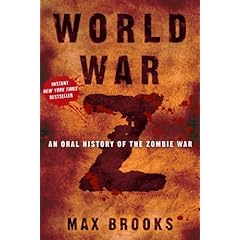
World War Z: An Oral History of the Zombie War
By Max Brooks
The only weakness is this remarkable novel is that it may read too much like a history. The story takes place 10 years after a plague renders the dead into flesh-eating zombies and takes us around the globe for first-hand accounts of the action. It’s this premise that makes Brooks’ novel seem so realistic, but it’s also the weakness as there are no central characters to watch, see develop, and continually root for. But there’s lots to like in the compelling and often horrifying vignettes crafted by Brooks (who may have found a niche as the zombie fiction king of the
Grade: A-
99 Coffins
By David Wellington
“99 Coffins” falls on the other end of the pulp spectrum from “World War Z.” It has none of the sophistication or literary aspirations of the latter novel. “99 Coffins” simply wants to scare people – and it finds mixed success in that endeavor. Give
Grade: C-

DEMO: The Collected Edition
By Brian Wood and Becky Cloonan
“DEMO” is a graphic novel set up like a series of 12 short stories (it’s taken from the independent comic of the same name). The strength of this collection is Becky Cloonan’s amazing artwork that captures magnificently the alienation of young adulthood through shifting angels and perspectives and the heavy black-and-white line work. The stories by Brian Wood aren’t as powerful as the drawings. Some of the tales, which focus on young people forced into making crucial decisions in their lives, feel cliché. Yet Wood does manage to tap into the darkness and the struggle of many young people who feel alienated by their peers. Many of the stories feature characters with disturbing superpowers – such as being able to kill people with a word or living forever. So give Wood credit for creativity, but only a B for pulling it through all of the stories. “DEMO” has high expectations for itself and it pushes the graphic novel into places that it hasn’t often gone. So if you’re a fan of the genre – this is a must read. It’s also a good place for people who want to read graphic novels to start.
Grade: B+
Read about our favorite gunslingers from the Old West
Read our picks for some of the best books of the last few years
Read our last Cracked-Back column
Labels: Becky Cloonan, book review, books, Brian Wood, Cracked-Back, David Wellington, Mark O'Connell, Max Brooks
 StumbleUpon |
 Digg |
 del.icio.us |
 Reddit |
 Technorati |
 E-mail

An Interview with Horror Novelist David Wellington
(DaRK PaRTY is devouring David Wellington’s new vampire novel “99 Coffins.” It’s a lot of fun – and it’s packed with some damn creepy moments. We won’t give it away, but it delightfully mixes in Civil War history and vampire hunting. We love writers like David because he busted his hump getting a book deal by posting his fiction online and developing an audience first. What’s not to love about that? Especially when it turns into a book deal for said hard-working scribe? David is now the author of five novels, including a zombie trilogy – “

DaRK PaRTY: What is your attraction to the horror genre -- especially zombies and vampires?
David: I grew up on horror. I grew up in
u can't read this, but I don't think you should. They'll give you nightmares." Well, of course anything your mother tells you not to do is the first thing you're going to try. So I got hooked at an early age. I don't have a special love for zombies and vampires as opposed to any other kind of monsters – I've also written a werewolf book, for instance – just for monsters in general. Monsters are interesting to me because they break the rules. That's what makes them monsters. They don't fit in.
DP: You break some of the traditional rules with your "monsters." Take vampires for example. How do your vampires differ from the traditional vampires most readers are used to?
David: The typical vampire you read about today wears fluffy lace shirts and drinks wine while he's out on a date with his vampire-hunter girlfriend. I wanted to get back to what made vampires scary. My vampires don't want to read you bad poetry. They want to rip your head off and drink blood out of the stump of your neck. They're predators, pure and simple. Stronger than us, faster than us, more often than not smarter than us. To me, that's scary.
DP: You broke into published writing through the internet. Can you tell us about how you got your start?
David: I started by writing my first novel, “

DP: Did your internet publications help or hinder you when you tried to break into traditional print books?
David: Well, without the online readers I would never have gotten a book deal. It's very tough to break into the publishing world right now unless you can prove people want to read your work. The internet let me prove that. I had to do a lot of work with no pay and no real hope of accomplishing anything, but it definitely paid off.
DP: What projects are you working on now and do you plan to revisit zombies again?
David: I'm working on a third vampire book – there will be at least four of them before I'm done. The next one is called “Vampire Zero” and it's a direct sequel to “99 Coffins.” I went back to zombies last year with a serial called “Plague Zone,” completely unrelated to my
Read our picks for the best werewolf movies ever laid to film
Read our picks for the scariest horror movies made since 2000
Novelist Kim Harrison writes scary detective books. Read her interview here
Labels: 5 Questions, David Wellington, Horror, interview, Writing
StumbleUpon |
Digg |
del.icio.us |
Reddit |
Technorati |
E-mail

 RSS Feed
]saddlebrown]tan]maroon](],](])us.st11.yimg.com/us.st.yimg.com/I/getfishy_1912_2002960]Fishboy]black],]1]10]3]1]1]1]1]1]1]1]1]1],](](]papayawhip])])]DaRK^20PaRTY^20ReVIEW]^3A^3ALiterate^20Blather^3A^3A],](](],](]maroon](](](]brown](],](]maroon](](](],]60]10],](](]^23F5ECE1])])]maroon]0.5]0],](](]^23F5ECE1])])]maroon]^23F5ECE1])])]^23666]16]maroon]maroon],](](]maroon](],](]^23333]^238C4614]tan],](](]^23F5ECE1])])],](](]^23F5ECE1])])],](](]^23F5ECE1])])],](]maroon]maroon]15]3]23]18]maroon],](](],](],](](],](]black](](](],](](](],]black](](](],](](]^23333](](](](](],]^2336F]^23333](],](]Posted^20by^20^24AUTH^20at^20^24TIME.]36],](](]black])])]^23F5ECE1])])]^23666]16]maroon]maroon],](](]maroon](],](]^23333]^238C4614]tan]Contributors]]]^24PROFILE]]]DaRK^20PaRTY^20LiNKS]]]The^20Ambrose^20Bierce^20Site])donswaim.com/]Ambrose^20Bierce]Ironic^20Times])www.ironictimes.com/index.html]Ironic^20Times]Gallery^20Voyer])www.voy-art.com/]Gallery^20Voyer]Tintinologist])www.tintinologist.org/]Tintin]Arcanum^20Cafe])www.arcanumcafe.com/]Arcanum^20Cafe]LADA^20-^20Protect^20our^20Kids])da.co.la.ca.us/pok/poklist.htm]POK^20List]Tom^20Caron^20-^20Boston.com])www.boston.com/sports/nesn/aboutus/onair/tomcaron/]TC]The^20Captain^20Humphreys^20Project])www.captainhumphreys.com/]Captain^20Humphreys]Torpedo^20Design])www.torpedodesign.com/]Torpedo^20Design]^3Cimg^20src^3D^22)us.st11.yimg.com/us.st.yimg.com/I/getfishy_1912_2002960^22^20alt^3D^22Fishboy^22^20style^3D^22border^3A^201px^20none^20black^3B^22^20/^3E])www.fishboy.com/]Fishboy]Etc]]]^3Cimg^20src^3D^22)psyc.horm.org/barimg/bar_psycho.png^22^20width^3D^2280^22^20height^3D^2215^22^20alt^3D^22PsycHo^3A^20Free^20Template^20Generator^22^20style^3D^22border^3A^200px^20solid^20black^22^20/^3E]^24PSYCHO]PsycHo^3A^20Free^20Template^20Generator]^3Cimg^20src^3D^22)psyc.horm.org/barimg/bar_firefox.png^22^20width^3D^2280^22^20height^3D^2215^22^20alt^3D^22Get^20FireFox^21^22^20style^3D^22border^3A^200px^20solid^20black^22^20/^3E])www.mozilla.org/products/firefox/]Get^20Firefox^21]^3Cimg^20src^3D^22)psyc.horm.org/barimg/bar_xhtml.png^22^20width^3D^2280^22^20height^3D^2215^22^20alt^3D^22XHTML^20Validator^22^20style^3D^22border^3A^200px^20solid^20black^22^20/^3E])validator.w3.org/check/referer]XHTML^20Validator]Recent^20Posts]]]^24RECENT]^20]]Archive]]]^24ARCHIVE]^20]]ADVERTISEMENTS]]]^20]]^26^2361470^3BPsycHo})


This work is licensed under a Creative Commons Attribution-No Derivative Works 3.0 License.
The Template is generated via PsycHo and is Licensed.