
Poem: Sunrise Over Worcester
5 Questions About: Jason Pinter
12 Signs That You Might Be A Banker
The 9 Worst Movies to Win Oscars
Book Review: Narrow Miss for "Above the Law"
5 Questions About: Screaming Blue Messiahs
What's Up With All the Fat, Naked Guys?
Thoughts from the Shadows: The Craziness of Publis...
How to Make a Damn Good Horror Movie
Literary Criticism
Fantastically Bad Cinema
Essays
Under God's Right Arm
June 2006
July 2006
August 2006
September 2006
October 2006
November 2006
December 2006
January 2007
February 2007
March 2007
April 2007
May 2007
June 2007
July 2007
August 2007
September 2007
October 2007
November 2007
December 2007
January 2008
February 2008
March 2008
April 2008
May 2008
June 2008
July 2008
August 2008
September 2008
October 2008
November 2008
December 2008
January 2009
February 2009
March 2009
Alcoholic Poet
Baby Got Books
Beaman's World
BiblioAddict
Biblio Brat
Bill Crider's Pop Cultural Magazine
The Bleeding Tree
Blog Cabins: Movie Reviews
A Book Blogger's Diary
BookClover
Bookgasm
Bookgirl's Nightstand
Books I Done Read
Book Stack
The Book Trib
Cold Hard Football Facts
Creator of Circumstance
D-Movie Critic
The Dark Phantom Review
The Dark Sublime
Darque Reviews
Dave's Movie Reviews
Dane of War
David H. Schleicher
Devourer of Books
A Dribble of Ink
The Drunken Severed Head
Editorial Ass
Emerging Emma
Enter the Octopus
Fatally Yours
Flickhead
The Genre Files
The Gravel Pit
Gravetapping
Hello! Yoshi
HighTalk
Highway 62
The Horrors Of It All
In No Particular Order
It's A Blog Eat Blog World
Killer Kittens From Beyond the Grave
The Lair of the Evil DM
Loose Leafs From a Commonplace
Lost in the Frame
Little Black Duck
Madam Miaow Says
McSweeney's
Metaxucafe
Mike Snider on Poetry
The Millions
Moon in the Gutter
New Movie Cynics Reviews
Naked Without Books
A Newbie's Guide to Publishing
New & Improved Ed Gorman
9 to 5 Poet
No Smoking in the Skull Cave
Orpheus Sings the Guitar Electric
Polly Frost's Blog
Pop Sensation
Raincoaster
R.A. Salvatore
Reading is My Superpower
Richard Gibson
SciFi Chick
She Is Too Fond Of Books
The Short Review
Small Crimes
So Many Books
The Soulless Machine Review
Sunset Gun
That Shakesperherian Rag
Thorne's World
The Toasted Scrimitar
This Distracted Globe
Tomb It May Concern
2 Blowhards
Under God's Right Arm
A Variety of Words
The Vault of Horrr
Ward 6
When the Dead Walk the Earth
The World in the Satin Bag
Zoe's Fantasy
Zombo's Closet of Horror
Bookaholic Blogring
Power By Ringsurf
Alan Weisman's "The World Without Us" Paints a Frightening Picture of the Earth's Condition
Here’s the bad news:
The world has probably already ended, but we’re just not perceptive enough to realize it.
Here’s the good news:
You can read all about it in Alan Weisman’s fascinating book “The World Without Us” (2007).
 Be prepared, however. “The World Without Us” is a powerful blow to the kidneys that has the amazing ability to make a reader want to curl into a ball, suck his thumb, and wait for someone – anyone – to swoop in and rescue us.
The premise for Weisman’s book is a simple one: What would happen to the earth if humanity suddenly vanished? But in getting to the answer, Weisman has to explore the current condition of the planet.
And it ain’t pretty.
This explanation from the book on what may have happened to the vanquished Mayan civilization speaks volumes about our modern conundrum:
“Society had evolved too many elites, all demanding exotic baubles… a culture wobbling under the weight of an excess of nobles, all needing quetzal feathers, jade, obsidian, fine chert, custom polychrome, fancy corbelled roofs, and animal furs. Nobility is expensive, nonproductive, and parasitic, siphoning away too much of society’s energy to satisfy its frivolous cravings.”
Hello, kettle!
The book, while sloppily organized, stays pinned to your eyeballs. What horrible thing will I discover next? “The World Without Us” reads like a suspense novel – only its all true. I stopped reading several times in fits of bleary-eyed despair.
One of the most shocking revelations was the existence of a massive floating plastic trash dump in the Pacific Ocean about the size of Texas. Here we have hundreds of miles of ocean thick with bottle caps, plastic bags, six-pack rings, balloons, and sandwich bags. Oceanographers called it the “The Great Pacific Garbage Patch” – the place where all plastic garbage is churned and burped up by the Pacific.
After reading about this I was seized by a desire to purge my house of every plastic item. I wanted to strip naked and live in harmony with nature (eating bark and grass). Sounds crazy, I know, but here are just a few of mind-boggling things you’ll discover reading “The World Without Us.”
- If humans disappeared, the average house would last about 100 years before toppling over due to decay. But if you cut a one-foot diameter hole in the roof, the same house would crumble in about 10 years. This is the power of nature once it gets inside and gets to work.
- Here’s a quote that should make you pause: “Except for a small amount that’s been incinerated… every bit of plastic manufactured in the world for the last 50 years or so still remains. It’s somewhere in the environment.” How much is that? One billion tons.
- If people vanished, the 441 nuclear power plants currently in operation would run on autopilot for several months and then begin to overheat. The resulting deadly radioactive damage to the environment would poison the areas around the plants for a very, very long time – we’re talking geological time of hundreds of thousands of years.
- Mount Rushmore would probably last about 7.2 million years.
- There are about 20 billion birds in North America alone – yet the population is plunging. Two of the strangest mass killers of birds are windows and cats. Birds can’t see windows and they fly into them and snap their own necks at alarming rates. About one billion a year die this way. Domesticated cats – even when well fed – hunt and kill about 28 birds each every year. There are between 30-60 million cats in North America. Do the math.
Read it and then do something – anything – to help save us from, well, ourselves.
The Threat of Bottled Water
Reaching the Point of No Return on the Environment
Book Review: "The Omnivore's Dilemma"
Labels: Alan Weisman, book review, environment, The World Without Us
 StumbleUpon |
 Digg |
 del.icio.us |
 Reddit |
 Technorati |
 E-mail


In the sci-fi classic “The Matrix,” a software program that tracks and eliminates rogue humans called Agent Smith shares his low opinion of the human race, which, he admits, disgust him:
“I'd like to share a revelation that I've had during my time here. It came to me when I tried to classify your species and I realized that you're not actually mammals. Every mammal on this planet instinctively develops a natural equilibrium with the surrounding environment but you humans do not. You move to an area and you multiply and multiply until every natural resource is consumed and the only way you can survive is to spread to another area. There is another organism on this planet that follows the same pattern. Do you know what it is? A virus. Human beings are a disease, a cancer of this planet.”
It’s a disturbing image – and one that might be difficult to refute these days. Conventional wisdom suggests that we’ve entered a tipping point on the environment. Our culture of modern conveniences, technologies, and machines has knocked the natural order of the planet, well, into orbit.
Our sins are many from increases in industrial farming (requiring chemical fertilizers, ever-increasingly potent pesticides, and overuse of antibiotics on cattle and chickens) to an overabundance of smog-clogging automobiles causing air pollution and ozone depletion.
But a careful review of the mounting evidence seems to show that we aren’t heading for a major crisis – but that we’re already knee-deep in one. Just take a glimpse at the recent news headlines:
- Honeybees are dying by the millions – up to 90 percent of hives in some regions. Biologists call the unknown killer “colony collapse disorder” – a colorless government term for labeling this fierce and mysterious plague. Honeybees are crucial to pollinating flowers and fruits (apples and oranges, for example, can’t grow without them). In fact, the U.S. Department of Agriculture says honeybees pollinate about $15 billion worth of crops in the
- Thousands of bats in the Northeast are dying from a mysterious disease and biologists are worried that tens of thousands of bats could die this year. Many bat caves have seen 100 percent mortality rates. Scientists are speculating that that toxins and pesticides have weakened the bats and destroyed a lot of their food supplies in the last few years – making them susceptible to disease. There has also been speculation that the electromagnetic radiation emitted by cell phones is responsible. Bats are crucial to controlling insect populations – especially mosquitoes.
- Climate change, caused by carbon dioxide emissions, continue unabated. The number of category 4 and 5 hurricanes has doubled in the last 30 years, Malaria has spread to higher altitudes, ice flow from glaciers in Greenland has more than doubled in the last 10 years, and 279 species of plants and animals are moving closer to the poles, according Al Gore’s movie “An Inconvenient Truth.”
- The dead zone in the Gulf of Mexico at the mouth of the Mississippi River has become as large as the state of
If these four examples don’t convince you that human activity is changing the environment then perhaps reports from the World Health Organization that global cancer rates may increase by as much as 50 percent by 2020 will.
Yet, the conversation on how to turn back – to save what we haven’t yet destroyed – continues to be a backburner issue, especially in the United States.
Perhaps one reason is our arrogance and unfounded confidence that the technologies that brought us to this precipice will ultimately save us. This is ironic since these technologies (automobiles, air conditioning, plastics, radiation, etc.) are what have led us here in the first place.
We have a tendency to embrace new technologies before we fully understand how they will affect us in the long term. Isn’t that why we painted our homes with lead paint and used asbestos to insulate our pipes? Recently, we’re learning that plastic water bottles – already owned by most American families – may increase the risk of cancer.
As Agent Smith might have observed, human beings think they can improve Mother Nature. We believe that we can do it better – despite a history of shoddy results.
That’s why we end in situations like this one: We force feed our cattle corn – when they evolved to eat grass. By forcing them to eat corn, the majority become sick, so we treat the corn with antibiotics to keep the cattle alive and healthy long enough to slaughter them. As a result, we dine on sick, drug-infused beef while overusing antibiotics to a point that they’re becoming less effective.
Or why we end up pouring tons of chemicals on our lawns – forcing grass to grow lush and green in environments unnatural to the species. Believe it or not, but Arizona isn’t supposed to have grass. It’s a desert.
It’s time for the environment to become a top and urgent priority in the
Read some of our other essays:
How Leaf Blowers Are Causing Too Much Air PollutionThe Trouble with the Mormon Religion
Labels: environment, Essay, Global Warming, water
StumbleUpon |
Digg |
del.icio.us |
Reddit |
Technorati |
E-mail

While in the cashier line at Whole Foods last week, I watched a gray-haired gentleman in a cashmere sweater and expensive slacks place two heavy cases of San Pellegrino water on the conveyor belt. The sparkling mineral water from
But it may shock some people to learn that this high-end water supplier is owned by Nestle, the same company that manufactures Hot Pockets and Butterfinger candy bars. Nestle also owns 26 other brands of bottled water included Perrier and Poland Spring.
Americans spent more than $15 billion on bottled water last year – more than we spent on iPods or movie tickets, according to Fast Company magazine. This was clearly evident at Whole Foods as I watched the gray-haired gentleman shell out about $60 for his purchase.
Has there ever been an advertising and marketing triumph quite like bottled water? We have allowed ourselves to be duped into believing in luxury brands of water – that spring or glacial water is somehow a premium worth shelling out money for. This despite the fact that water flows for free out of most people’s kitchen and bathroom taps.
San Pellegrino is a perfect example of this charade. The Italian water isn’t naturally sparkling. It is mineral water infused with carbonation. Analysis shows that the water quality is about the same as water that flows from the average sink.
Some bottle water, in fact, really is municipal tap water. It may be as much as 25 percent of all bottled water, according to a report on ABC News. Pepsi Colas’ Aquafina and Coca-Cola’s Dasani brands have admitted that they are simply filtering tap water.
“Whether bottled water is better than tap water, and justifies its expense, remains under debate,” according to the U.S. Food and Drug Administration.
This fact has done little to hinder the success of the bottled water industry:
- In 2004, more than 41 billion gallons of bottled water was consumed. The
- It takes about 17 million barrels of oil to manufacture the plastic bottles for water, according to the Pacific Institute. This caused more than 2.5 million tons of carbon dioxide to be released into the atmosphere.
- Approximately 80 percent of the plastic bottles used for water end up in landfills – only 20 percent are recycled.
- In the
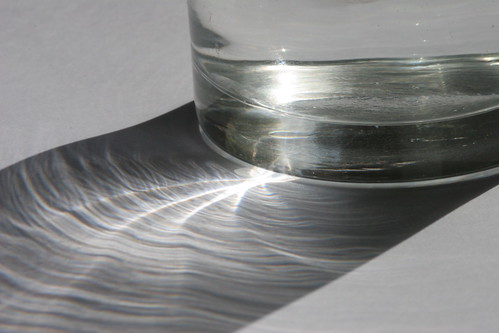
Marketing and advertising, of course, play an enormous role. We’ve been fooled into thinking that bottled water tastes better and is safer than tap water. But we’re also turning water into a valuable commodity that is enriching corporations and forcing a privatization of what was once a public resource: water. With the well-off consuming bottled water are we in danger of ignoring or letting public water supplies deteriorate?
Water is too valuable – too necessary – to our public health to hand over to corporations. Water needs to remain a public resource for the world – and not a luxury for the rich.
The good news is that there is a developing backlash against the dangers posed by bottled water. What can you do? I’ve vowed to stop buying bottled water (and save myself a lot of money). I’ve purchased a water pitcher with a filter that I keep in the refrigerator. Rather than buy bottled water, I now use a refillable plastic bottle that can be washed and reused over and over again.
Now if we can only convince well-to-do gray-haired gentlemen to do the same.
Read our essay on slowing down to the speed of life
Read our essay on global warming
Labels: environment, Essay, water
StumbleUpon |
Digg |
del.icio.us |
Reddit |
Technorati |
E-mail
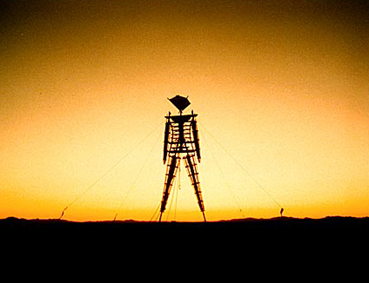
The alarming statistics in Al Gore’s movie “An Inconvenient Truth” readily provide some insight into the effects of global warming:
- The number of Category 4 and 5 hurricanes has almost doubled in the last 30 years
- Malaria has spread to higher altitudes in places like the Colombian Andes (7,000 feet above sea level)
- The flow of ice from glaciers in Greenland has more than doubled over the past decade
- At least 279 species of plants and animals are already responding to global warming, moving closer to the poles
But you don’t have to watch Gore’s documentary or head to North Pole to see melting glaciers to know that global warming is real.
All you have to do is vacation in Maine.
My family has owned a small pine cabin nestled in a hemlock forest on the shore of a small lake in Maine since 1978. The joke used to be that Maine had two seasons: Winter and the Fourth of July. That’s because Maine is a cold state – vicious, snowy winters that begin in October and stretch out until late April. It’s a rugged state Maine – rocky, moss-laden terrain, jagged hills, thick dark forests, and a coastline battered by a cold ocean.
It used to be that Maine never really shook winter. Its icy grip clutched to summer through the fireworks on Independence Day and the dog days of August. An average summer day had temperatures in the high 70s and early 80s with a drop of a few degrees when you wandered into the shade. At night going to the drive-in required long pants, a sweatshirt, and socks to keep away the chill. Stargazing was best done under a blanket. And then there were those cloudy days when the temperature fell into the 50s (the average low in July and August in Portland, Maine is 56 degrees).
And, of course, the lake never lost the cold – especially when you dove down a few feet and the icy water bit your skin.
Packing for vacation was always difficult – because you needed to be prepared for two seasons – daytime at the beach and night time everywhere else. But this was the beauty of a vacation in Maine. Vacationers got relief from the heat and pollution of the city for the crisp, clean air of northern New England.
Not anymore.
Summer in Maine has shaken off the bully winter. In fact, summer has knocked off winter’s hat and pushed it into a mud puddle. Summer has taken lessons from Charles Atlas and is now the one kicking sand. My suitcase for my weeklong vacation this year didn’t include any long pants, only running socks, and one sweatshirt (which I never used). It’s was warm enough to keep the windows open and on two nights it was uncomfortably humid.
Some of the changes are manmade. Our cabin shares a windy, tar roadway with 20 other cabins – but most of these cabins have been upgraded by the owners. New floors and additions have been added, foundations built and garages and bunkhouses constructed. As a result, many (too many) conifers have been cut down to make room for this “progress.” This has caused an increase in sunlight – which used to be blocked by the thick pine canopy.
As a result – our specific area is hotter because there’s not as much shade. Amazingly, some of the new owners have installed central air conditioning and my nights on the screened porch, which used to be filled with the peaceful sound of crickets and the haunting cries of loons, are now interrupted by the drone of air conditioners. These owners, who have cabins just a few feet from the lake, now sit in their temperature-controlled cabins with every window and door sealed tight. They might as well live in a plastic sandwich bag.
But the removal of the trees and the resulting increase of open space is only part of the story. The lake temperature has spiked considerably. The water can feel like a bathtub and even diving deep gets you only a minor difference in temperature. The day time temperatures are regularly in the high 80s and even the 90s. At night, you don't need the extra layers.
It’s hot.
And that may be why Gore’s movie was such a success this summer. Global warming can no longer be ignored . People, regular folks, are beginning to experience its effects first hand. You don’t need to be a scientist to realize that you used to have to wear a jacket to the drive-in when you were 13 and now your only need a t-shirt and shorts. You don’t have to be a climate control specialist to notice the temperature is consistently creeping up to the 90s. You don't need to be an environmentalist to realize that the water is warmer.
All you have to do is summer in Maine.
Read our essay on slowing down
Labels: environment, Essay, Global Warming, Politics
StumbleUpon |
Digg |
del.icio.us |
Reddit |
Technorati |
E-mail

 RSS Feed
]saddlebrown]tan]maroon](],](])us.st11.yimg.com/us.st.yimg.com/I/getfishy_1912_2002960]Fishboy]black],]1]10]3]1]1]1]1]1]1]1]1]1],](](]papayawhip])])]DaRK^20PaRTY^20ReVIEW]^3A^3ALiterate^20Blather^3A^3A],](](],](]maroon](](](]brown](],](]maroon](](](],]60]10],](](]^23F5ECE1])])]maroon]0.5]0],](](]^23F5ECE1])])]maroon]^23F5ECE1])])]^23666]16]maroon]maroon],](](]maroon](],](]^23333]^238C4614]tan],](](]^23F5ECE1])])],](](]^23F5ECE1])])],](](]^23F5ECE1])])],](]maroon]maroon]15]3]23]18]maroon],](](],](],](](],](]black](](](],](](](],]black](](](],](](]^23333](](](](](],]^2336F]^23333](],](]Posted^20by^20^24AUTH^20at^20^24TIME.]36],](](]black])])]^23F5ECE1])])]^23666]16]maroon]maroon],](](]maroon](],](]^23333]^238C4614]tan]Contributors]]]^24PROFILE]]]DaRK^20PaRTY^20LiNKS]]]The^20Ambrose^20Bierce^20Site])donswaim.com/]Ambrose^20Bierce]Ironic^20Times])www.ironictimes.com/index.html]Ironic^20Times]Gallery^20Voyer])www.voy-art.com/]Gallery^20Voyer]Tintinologist])www.tintinologist.org/]Tintin]Arcanum^20Cafe])www.arcanumcafe.com/]Arcanum^20Cafe]LADA^20-^20Protect^20our^20Kids])da.co.la.ca.us/pok/poklist.htm]POK^20List]Tom^20Caron^20-^20Boston.com])www.boston.com/sports/nesn/aboutus/onair/tomcaron/]TC]The^20Captain^20Humphreys^20Project])www.captainhumphreys.com/]Captain^20Humphreys]Torpedo^20Design])www.torpedodesign.com/]Torpedo^20Design]^3Cimg^20src^3D^22)us.st11.yimg.com/us.st.yimg.com/I/getfishy_1912_2002960^22^20alt^3D^22Fishboy^22^20style^3D^22border^3A^201px^20none^20black^3B^22^20/^3E])www.fishboy.com/]Fishboy]Etc]]]^3Cimg^20src^3D^22)psyc.horm.org/barimg/bar_psycho.png^22^20width^3D^2280^22^20height^3D^2215^22^20alt^3D^22PsycHo^3A^20Free^20Template^20Generator^22^20style^3D^22border^3A^200px^20solid^20black^22^20/^3E]^24PSYCHO]PsycHo^3A^20Free^20Template^20Generator]^3Cimg^20src^3D^22)psyc.horm.org/barimg/bar_firefox.png^22^20width^3D^2280^22^20height^3D^2215^22^20alt^3D^22Get^20FireFox^21^22^20style^3D^22border^3A^200px^20solid^20black^22^20/^3E])www.mozilla.org/products/firefox/]Get^20Firefox^21]^3Cimg^20src^3D^22)psyc.horm.org/barimg/bar_xhtml.png^22^20width^3D^2280^22^20height^3D^2215^22^20alt^3D^22XHTML^20Validator^22^20style^3D^22border^3A^200px^20solid^20black^22^20/^3E])validator.w3.org/check/referer]XHTML^20Validator]Recent^20Posts]]]^24RECENT]^20]]Archive]]]^24ARCHIVE]^20]]ADVERTISEMENTS]]]^20]]^26^2361470^3BPsycHo})


This work is licensed under a Creative Commons Attribution-No Derivative Works 3.0 License.
The Template is generated via PsycHo and is Licensed.