
Poem: Sunrise Over Worcester
5 Questions About: Jason Pinter
12 Signs That You Might Be A Banker
The 9 Worst Movies to Win Oscars
Book Review: Narrow Miss for "Above the Law"
5 Questions About: Screaming Blue Messiahs
What's Up With All the Fat, Naked Guys?
Thoughts from the Shadows: The Craziness of Publis...
How to Make a Damn Good Horror Movie
Literary Criticism
Fantastically Bad Cinema
Essays
Under God's Right Arm
June 2006
July 2006
August 2006
September 2006
October 2006
November 2006
December 2006
January 2007
February 2007
March 2007
April 2007
May 2007
June 2007
July 2007
August 2007
September 2007
October 2007
November 2007
December 2007
January 2008
February 2008
March 2008
April 2008
May 2008
June 2008
July 2008
August 2008
September 2008
October 2008
November 2008
December 2008
January 2009
February 2009
March 2009
Alcoholic Poet
Baby Got Books
Beaman's World
BiblioAddict
Biblio Brat
Bill Crider's Pop Cultural Magazine
The Bleeding Tree
Blog Cabins: Movie Reviews
A Book Blogger's Diary
BookClover
Bookgasm
Bookgirl's Nightstand
Books I Done Read
Book Stack
The Book Trib
Cold Hard Football Facts
Creator of Circumstance
D-Movie Critic
The Dark Phantom Review
The Dark Sublime
Darque Reviews
Dave's Movie Reviews
Dane of War
David H. Schleicher
Devourer of Books
A Dribble of Ink
The Drunken Severed Head
Editorial Ass
Emerging Emma
Enter the Octopus
Fatally Yours
Flickhead
The Genre Files
The Gravel Pit
Gravetapping
Hello! Yoshi
HighTalk
Highway 62
The Horrors Of It All
In No Particular Order
It's A Blog Eat Blog World
Killer Kittens From Beyond the Grave
The Lair of the Evil DM
Loose Leafs From a Commonplace
Lost in the Frame
Little Black Duck
Madam Miaow Says
McSweeney's
Metaxucafe
Mike Snider on Poetry
The Millions
Moon in the Gutter
New Movie Cynics Reviews
Naked Without Books
A Newbie's Guide to Publishing
New & Improved Ed Gorman
9 to 5 Poet
No Smoking in the Skull Cave
Orpheus Sings the Guitar Electric
Polly Frost's Blog
Pop Sensation
Raincoaster
R.A. Salvatore
Reading is My Superpower
Richard Gibson
SciFi Chick
She Is Too Fond Of Books
The Short Review
Small Crimes
So Many Books
The Soulless Machine Review
Sunset Gun
That Shakesperherian Rag
Thorne's World
The Toasted Scrimitar
This Distracted Globe
Tomb It May Concern
2 Blowhards
Under God's Right Arm
A Variety of Words
The Vault of Horrr
Ward 6
When the Dead Walk the Earth
The World in the Satin Bag
Zoe's Fantasy
Zombo's Closet of Horror
Bookaholic Blogring
Power By Ringsurf
“Jaws” ruined me.
Whenever I swim in deep water, the theme song reverberates through my skull. That heavy drumming bass line that builds to crescendo and ends in some poor bastard being devoured alive.
It doesn’t matter if I’m in a lake or a pond either. Deep water = shark attack. It’s not logical, but that’s what happens when you see a movie like “Jaws” when you are an impressionable 13 years old.
There are many bad ways to die, but I can’t imagine anything worse than being eaten alive by a shark – that you can’t see. You can only feel its scaly hide and its jagged teeth sinking into the meat of your thigh.
Yet it’s more than just that.
Water is scary. Think about it. You can only see its surface. Yet you know there are things – some of them living things – below. When you swim in deep water you can’t see the rest of your body as your head bobs on the surface.

It’s a disconcerting feeling – all this liquid surrounding you and completely blind to what happening around your body. There could be a waterlogged piece of driftwood just inches from your toes or a clump of seaweed floating near the nape of your back.
In the ocean there can be hundreds, if not thousands of feet between you and the bottom. Anything can be down there. Sunken boats, dropped key chains, sea urchins, body parts…
Sharks.
See? I’m getting uptight just thinking about it. So while I go rent a cabin in the mountains – far away from the seashore – you can go rent one of these movies – which prove my point. Water is scary.
Jaws
Year: 1975
Tagline: Amity Island had everything. Clear skies. Gentle surf. Warm water. People flocked there every summer. It was the perfect feeding ground.
Plot Synopsis: A gigantic man-eating shark invades the waters around a tourist island and begins to eat the swimmers. It’s up to the police chief, an old fisherman, and an oceanographer to put an end to this beast’s reign of terror.
Body of Water: Ocean
Water Related Terror: Well, there’s this really large shark and really small fishing boat…
Water Related Death: The worst death in the movie might be the opening one. A young couple heads to the shore after drinking at a party. As the man falls asleep, the woman strips and goes skinny-dipping in the surf. As she treads water in the moonlight, the shark tears off her leg and then proceeds to eat her alive. It’s chilling.
Notable Water Quote: “Y'all know me. Know how I earn a livin'. I'll catch this bird for you, but it ain't gonna be easy. Bad fish. Not like going down to the pond and chasing bluegills and tommycocks. This shark, swallow you whole. No shakin', no tenderizin', down you go. And we gotta do it quick, that'll bring back your tourists, put all your businesses on a payin' basis. But it's not gonna be pleasant. I value my neck a lot more than three thousand bucks, chief. I'll find him for three, but I'll catch him, and kill him, for ten. But you've gotta make up your minds. If you want to stay alive, then ante up. If you want to play it cheap, be on welfare the whole winter. I don't want no volunteers, I don't want no mates, there's too many captains on this island. Ten thousand dollars for me by myself. For that you get the head, the tail, the whole damn thing.”
The Abyss
Year: 1989
Tagline: There’s everything you’ve ever known about adventure, and then there’s The Abyss.
Plot Synopsis: A team of expert divers is called in to help find a lost nuclear submarine. They make their base in an underwater research station and as they search they encounter an alien species.
Body of Water: Ocean
Water Related Terror: Bud Brigman (Ed Harris) and his wife Lindsey (Mary Elizabeth Mastrantonio) only have enough oxygen in a tank for one of them. Lindsey agrees to drown so that Bud can carry her underwater to another station and then he can revive her. It’s a powerful and frightening scene to watch her drown and then Bud to run as fast as he can – underwater – to save her.
Water Related Death: A Navy SEAL played by Michael Biehn goes bonkers and decides to start offing members of the crew. There’s nothing more dangerous at the bottom of the ocean that a crazed, psycho-SEAL.
Notable Water Quote: “Well, hell, son. You better get a line down to us. We're in moderately poor shape down here. We've lost seven people, including Bud. And we're about out of O2, so whatever you're gonna do, you better do it fast.”

Deep Blue Sea
Year: 1999
Tagline: Bigger. Smarter. Faster. Meaner.
Plot Synopsis: A group of scientists searching for a cure to Alzheimer’s disease ends up at an abandoned research facility that has been doing experimental research on sharks – developing three super sharks that decide that they’re hungry – for scientists.
Body of Water: Ocean
Water Related Terror: A sinking research station and three super intelligent genetically alter sharks decide that they want dinner.
Water Related Death: Being eaten by sharks – but “Deep Blue Sea” sneaks the attacks up on you. So be prepared.
Notable Water Quote: “You think water moves fast? You should see ice. It moves like it has a mind. Like it knows it killed the world once and got a taste for murder.”
Below
Year: 2002
Tagline: Six hundred feet beneath the surface terror runs deep.
Plot Synopsis: A submarine crew in World War II is asked to pick up the survivors of a ship sunk by a Nazi destroyer. Weird things begin to happen after the three survivors are brought on board.
Body of Water: Ocean
Water Related Terror: A haunted submarine stranded on the bottom of the ocean can be a scary place.
Water Related Death: The captain of the ship is smashed on the head and plunges into the water where he drowns and become enmeshed in some rigging on the side of the U-boat.
Notable Water Quote: “It used to feel like a big ocean, didn't it?”
Open Water
Year: 2003
Tagline: Don’t get left behind.
Plot Synopsis: A couple goes scuba diving on a tourist boat and the crew mis-counts the number of people on board. The couple, late back to the boat, is left behind in miles from their island resort. The current takes them into open ocean and then the sharks come.
Body of Water: Ocean
Water Related Terror: Drifting for hours in the hot sun, and literally dying of thirst, a group of sharks begin to bump and grind against the two scuba divers. Then one of them takes a bites and bloodies up the water.
Water Related Death: Her husband already eaten alive by sharks, Susan (Blanchard Ryan) decides to drown herself as she watches the fins gather around her. Heart wrenching doesn’t begin to describe it.
Notable Water Quote: “Where's the boat. Daniel. Where's the boat?”
The Perfect Storm

Year: 2000
Tagline: In the Fall of 1991, the “Andrea Gail” left Gloucester, Mass. And headed for the fishing grounds of the North Atlantic. Two weeks later, an event took place that had never occurred in recorded history.
Plot Synopsis: A fishing boat with a crew of misfits gets stuck in a massive hurricane like storm and is capsized by an enormous wave.
Body of Water: Ocean
Water Related Terror: Being on a small, rickety fishing boat with waves the height of football stadiums bashing down on it.
Water Related Death: Drowning
Notable Water Quote: “I always find the fish. Always!”
Lake Placid
Year: 1999
Tagline: You’ll never know what bit you.
Plot Synopsis: A quiet lake for tourists is thrown into a panic when a very large and very hungry crocodile decides to move in and start eating people. Can the sheriff and a local paleontologist save the day?
Body of Water: Lake
Water Related Terror: The only thing worse than being eaten alive by a shark may be being eaten alive by a crocodile.
Water Related Death: A game warden is checking out a beaver dam in the lake when he is snatched by the giant crocodile and dragged across the lake in his jaws.
Notable Water Quote: “I’m rooting for the crocodile. I hope he swallows your friends whole.”
The 10 Greatest Drunks in Cinema History
Unintentionally Gay Moments in Cinema
Big Movie, Bad Movie
Labels: Below, Deep Blue Sea, Horror, Jaws, Lake Placid, Movies, Open Water, The Abyss, The Perfect Storm, water
 StumbleUpon |
 Digg |
 del.icio.us |
 Reddit |
 Technorati |
 E-mail


In the sci-fi classic “The Matrix,” a software program that tracks and eliminates rogue humans called Agent Smith shares his low opinion of the human race, which, he admits, disgust him:
“I'd like to share a revelation that I've had during my time here. It came to me when I tried to classify your species and I realized that you're not actually mammals. Every mammal on this planet instinctively develops a natural equilibrium with the surrounding environment but you humans do not. You move to an area and you multiply and multiply until every natural resource is consumed and the only way you can survive is to spread to another area. There is another organism on this planet that follows the same pattern. Do you know what it is? A virus. Human beings are a disease, a cancer of this planet.”
It’s a disturbing image – and one that might be difficult to refute these days. Conventional wisdom suggests that we’ve entered a tipping point on the environment. Our culture of modern conveniences, technologies, and machines has knocked the natural order of the planet, well, into orbit.
Our sins are many from increases in industrial farming (requiring chemical fertilizers, ever-increasingly potent pesticides, and overuse of antibiotics on cattle and chickens) to an overabundance of smog-clogging automobiles causing air pollution and ozone depletion.
But a careful review of the mounting evidence seems to show that we aren’t heading for a major crisis – but that we’re already knee-deep in one. Just take a glimpse at the recent news headlines:
- Honeybees are dying by the millions – up to 90 percent of hives in some regions. Biologists call the unknown killer “colony collapse disorder” – a colorless government term for labeling this fierce and mysterious plague. Honeybees are crucial to pollinating flowers and fruits (apples and oranges, for example, can’t grow without them). In fact, the U.S. Department of Agriculture says honeybees pollinate about $15 billion worth of crops in the
- Thousands of bats in the Northeast are dying from a mysterious disease and biologists are worried that tens of thousands of bats could die this year. Many bat caves have seen 100 percent mortality rates. Scientists are speculating that that toxins and pesticides have weakened the bats and destroyed a lot of their food supplies in the last few years – making them susceptible to disease. There has also been speculation that the electromagnetic radiation emitted by cell phones is responsible. Bats are crucial to controlling insect populations – especially mosquitoes.
- Climate change, caused by carbon dioxide emissions, continue unabated. The number of category 4 and 5 hurricanes has doubled in the last 30 years, Malaria has spread to higher altitudes, ice flow from glaciers in Greenland has more than doubled in the last 10 years, and 279 species of plants and animals are moving closer to the poles, according Al Gore’s movie “An Inconvenient Truth.”
- The dead zone in the Gulf of Mexico at the mouth of the Mississippi River has become as large as the state of
If these four examples don’t convince you that human activity is changing the environment then perhaps reports from the World Health Organization that global cancer rates may increase by as much as 50 percent by 2020 will.
Yet, the conversation on how to turn back – to save what we haven’t yet destroyed – continues to be a backburner issue, especially in the United States.
Perhaps one reason is our arrogance and unfounded confidence that the technologies that brought us to this precipice will ultimately save us. This is ironic since these technologies (automobiles, air conditioning, plastics, radiation, etc.) are what have led us here in the first place.
We have a tendency to embrace new technologies before we fully understand how they will affect us in the long term. Isn’t that why we painted our homes with lead paint and used asbestos to insulate our pipes? Recently, we’re learning that plastic water bottles – already owned by most American families – may increase the risk of cancer.
As Agent Smith might have observed, human beings think they can improve Mother Nature. We believe that we can do it better – despite a history of shoddy results.
That’s why we end in situations like this one: We force feed our cattle corn – when they evolved to eat grass. By forcing them to eat corn, the majority become sick, so we treat the corn with antibiotics to keep the cattle alive and healthy long enough to slaughter them. As a result, we dine on sick, drug-infused beef while overusing antibiotics to a point that they’re becoming less effective.
Or why we end up pouring tons of chemicals on our lawns – forcing grass to grow lush and green in environments unnatural to the species. Believe it or not, but Arizona isn’t supposed to have grass. It’s a desert.
It’s time for the environment to become a top and urgent priority in the
Read some of our other essays:
How Leaf Blowers Are Causing Too Much Air PollutionThe Trouble with the Mormon Religion
Labels: environment, Essay, Global Warming, water
StumbleUpon |
Digg |
del.icio.us |
Reddit |
Technorati |
E-mail

While in the cashier line at Whole Foods last week, I watched a gray-haired gentleman in a cashmere sweater and expensive slacks place two heavy cases of San Pellegrino water on the conveyor belt. The sparkling mineral water from
But it may shock some people to learn that this high-end water supplier is owned by Nestle, the same company that manufactures Hot Pockets and Butterfinger candy bars. Nestle also owns 26 other brands of bottled water included Perrier and Poland Spring.
Americans spent more than $15 billion on bottled water last year – more than we spent on iPods or movie tickets, according to Fast Company magazine. This was clearly evident at Whole Foods as I watched the gray-haired gentleman shell out about $60 for his purchase.
Has there ever been an advertising and marketing triumph quite like bottled water? We have allowed ourselves to be duped into believing in luxury brands of water – that spring or glacial water is somehow a premium worth shelling out money for. This despite the fact that water flows for free out of most people’s kitchen and bathroom taps.
San Pellegrino is a perfect example of this charade. The Italian water isn’t naturally sparkling. It is mineral water infused with carbonation. Analysis shows that the water quality is about the same as water that flows from the average sink.
Some bottle water, in fact, really is municipal tap water. It may be as much as 25 percent of all bottled water, according to a report on ABC News. Pepsi Colas’ Aquafina and Coca-Cola’s Dasani brands have admitted that they are simply filtering tap water.
“Whether bottled water is better than tap water, and justifies its expense, remains under debate,” according to the U.S. Food and Drug Administration.
This fact has done little to hinder the success of the bottled water industry:
- In 2004, more than 41 billion gallons of bottled water was consumed. The
- It takes about 17 million barrels of oil to manufacture the plastic bottles for water, according to the Pacific Institute. This caused more than 2.5 million tons of carbon dioxide to be released into the atmosphere.
- Approximately 80 percent of the plastic bottles used for water end up in landfills – only 20 percent are recycled.
- In the
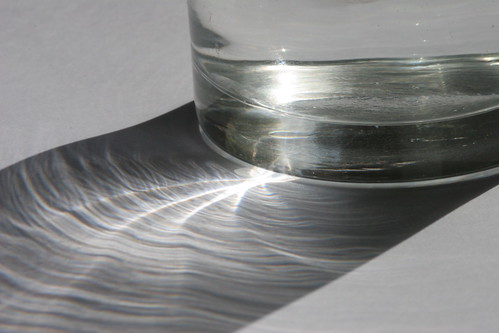
Marketing and advertising, of course, play an enormous role. We’ve been fooled into thinking that bottled water tastes better and is safer than tap water. But we’re also turning water into a valuable commodity that is enriching corporations and forcing a privatization of what was once a public resource: water. With the well-off consuming bottled water are we in danger of ignoring or letting public water supplies deteriorate?
Water is too valuable – too necessary – to our public health to hand over to corporations. Water needs to remain a public resource for the world – and not a luxury for the rich.
The good news is that there is a developing backlash against the dangers posed by bottled water. What can you do? I’ve vowed to stop buying bottled water (and save myself a lot of money). I’ve purchased a water pitcher with a filter that I keep in the refrigerator. Rather than buy bottled water, I now use a refillable plastic bottle that can be washed and reused over and over again.
Now if we can only convince well-to-do gray-haired gentlemen to do the same.
Read our essay on slowing down to the speed of life
Read our essay on global warming
Labels: environment, Essay, water
StumbleUpon |
Digg |
del.icio.us |
Reddit |
Technorati |
E-mail

 RSS Feed
]saddlebrown]tan]maroon](],](])us.st11.yimg.com/us.st.yimg.com/I/getfishy_1912_2002960]Fishboy]black],]1]10]3]1]1]1]1]1]1]1]1]1],](](]papayawhip])])]DaRK^20PaRTY^20ReVIEW]^3A^3ALiterate^20Blather^3A^3A],](](],](]maroon](](](]brown](],](]maroon](](](],]60]10],](](]^23F5ECE1])])]maroon]0.5]0],](](]^23F5ECE1])])]maroon]^23F5ECE1])])]^23666]16]maroon]maroon],](](]maroon](],](]^23333]^238C4614]tan],](](]^23F5ECE1])])],](](]^23F5ECE1])])],](](]^23F5ECE1])])],](]maroon]maroon]15]3]23]18]maroon],](](],](],](](],](]black](](](],](](](],]black](](](],](](]^23333](](](](](],]^2336F]^23333](],](]Posted^20by^20^24AUTH^20at^20^24TIME.]36],](](]black])])]^23F5ECE1])])]^23666]16]maroon]maroon],](](]maroon](],](]^23333]^238C4614]tan]Contributors]]]^24PROFILE]]]DaRK^20PaRTY^20LiNKS]]]The^20Ambrose^20Bierce^20Site])donswaim.com/]Ambrose^20Bierce]Ironic^20Times])www.ironictimes.com/index.html]Ironic^20Times]Gallery^20Voyer])www.voy-art.com/]Gallery^20Voyer]Tintinologist])www.tintinologist.org/]Tintin]Arcanum^20Cafe])www.arcanumcafe.com/]Arcanum^20Cafe]LADA^20-^20Protect^20our^20Kids])da.co.la.ca.us/pok/poklist.htm]POK^20List]Tom^20Caron^20-^20Boston.com])www.boston.com/sports/nesn/aboutus/onair/tomcaron/]TC]The^20Captain^20Humphreys^20Project])www.captainhumphreys.com/]Captain^20Humphreys]Torpedo^20Design])www.torpedodesign.com/]Torpedo^20Design]^3Cimg^20src^3D^22)us.st11.yimg.com/us.st.yimg.com/I/getfishy_1912_2002960^22^20alt^3D^22Fishboy^22^20style^3D^22border^3A^201px^20none^20black^3B^22^20/^3E])www.fishboy.com/]Fishboy]Etc]]]^3Cimg^20src^3D^22)psyc.horm.org/barimg/bar_psycho.png^22^20width^3D^2280^22^20height^3D^2215^22^20alt^3D^22PsycHo^3A^20Free^20Template^20Generator^22^20style^3D^22border^3A^200px^20solid^20black^22^20/^3E]^24PSYCHO]PsycHo^3A^20Free^20Template^20Generator]^3Cimg^20src^3D^22)psyc.horm.org/barimg/bar_firefox.png^22^20width^3D^2280^22^20height^3D^2215^22^20alt^3D^22Get^20FireFox^21^22^20style^3D^22border^3A^200px^20solid^20black^22^20/^3E])www.mozilla.org/products/firefox/]Get^20Firefox^21]^3Cimg^20src^3D^22)psyc.horm.org/barimg/bar_xhtml.png^22^20width^3D^2280^22^20height^3D^2215^22^20alt^3D^22XHTML^20Validator^22^20style^3D^22border^3A^200px^20solid^20black^22^20/^3E])validator.w3.org/check/referer]XHTML^20Validator]Recent^20Posts]]]^24RECENT]^20]]Archive]]]^24ARCHIVE]^20]]ADVERTISEMENTS]]]^20]]^26^2361470^3BPsycHo})


This work is licensed under a Creative Commons Attribution-No Derivative Works 3.0 License.
The Template is generated via PsycHo and is Licensed.