Poem: Sunrise Over Worcester
5 Questions About: Jason Pinter
12 Signs That You Might Be A Banker
The 9 Worst Movies to Win Oscars
Book Review: Narrow Miss for "Above the Law"
5 Questions About: Screaming Blue Messiahs
What's Up With All the Fat, Naked Guys?
Thoughts from the Shadows: The Craziness of Publis...
How to Make a Damn Good Horror Movie
Literary Criticism
Fantastically Bad Cinema
Essays
Under God's Right Arm
June 2006
July 2006
August 2006
September 2006
October 2006
November 2006
December 2006
January 2007
February 2007
March 2007
April 2007
May 2007
June 2007
July 2007
August 2007
September 2007
October 2007
November 2007
December 2007
January 2008
February 2008
March 2008
April 2008
May 2008
June 2008
July 2008
August 2008
September 2008
October 2008
November 2008
December 2008
January 2009
February 2009
March 2009
Alcoholic Poet
Baby Got Books
Beaman's World
BiblioAddict
Biblio Brat
Bill Crider's Pop Cultural Magazine
The Bleeding Tree
Blog Cabins: Movie Reviews
A Book Blogger's Diary
BookClover
Bookgasm
Bookgirl's Nightstand
Books I Done Read
Book Stack
The Book Trib
Cold Hard Football Facts
Creator of Circumstance
D-Movie Critic
The Dark Phantom Review
The Dark Sublime
Darque Reviews
Dave's Movie Reviews
Dane of War
David H. Schleicher
Devourer of Books
A Dribble of Ink
The Drunken Severed Head
Editorial Ass
Emerging Emma
Enter the Octopus
Fatally Yours
Flickhead
The Genre Files
The Gravel Pit
Gravetapping
Hello! Yoshi
HighTalk
Highway 62
The Horrors Of It All
In No Particular Order
It's A Blog Eat Blog World
Killer Kittens From Beyond the Grave
The Lair of the Evil DM
Loose Leafs From a Commonplace
Lost in the Frame
Little Black Duck
Madam Miaow Says
McSweeney's
Metaxucafe
Mike Snider on Poetry
The Millions
Moon in the Gutter
New Movie Cynics Reviews
Naked Without Books
A Newbie's Guide to Publishing
New & Improved Ed Gorman
9 to 5 Poet
No Smoking in the Skull Cave
Orpheus Sings the Guitar Electric
Polly Frost's Blog
Pop Sensation
Raincoaster
R.A. Salvatore
Reading is My Superpower
Richard Gibson
SciFi Chick
She Is Too Fond Of Books
The Short Review
Small Crimes
So Many Books
The Soulless Machine Review
Sunset Gun
That Shakesperherian Rag
Thorne's World
The Toasted Scrimitar
This Distracted Globe
Tomb It May Concern
2 Blowhards
Under God's Right Arm
A Variety of Words
The Vault of Horrr
Ward 6
When the Dead Walk the Earth
The World in the Satin Bag
Zoe's Fantasy
Zombo's Closet of Horror
Bookaholic Blogring
Power By Ringsurf
It’s the scene from Hunter S. Thompson’s “Fear & Loathing in Las Vegas” (1972) that skyrocketed Jefferson Airplane’s “White Rabbit” to one of the greatest psychedelic rock songs ever recorded.
Thompson, tripping on a bad combination of LSD, cocaine, mescaline, and alcohol, stumbles into the torched hotel room of his attorney, Dr. Gonzo, who is submerged in a hot bath. He orders Thompson to throw his tape deck into the tub at the peak of “White Rabbit.”
“’White Rabbit.’ I need rising sound… And when it comes to that fantastic note where the rabbit bites its own head off, I want you to throw that fuckin’ radio into the tub with me!”
Thompson refuses, but Dr. Gonzo threatens to kill him if he doesn’t. So as lead singer Grace Slick and the Jefferson Airplane build “White Rabbit” to its crescendo and Dr. Gonzo screams for death by electrocution, Thompson throws a grapefruit in the water instead.
 Do bad drug trips get any more twisted than that?
“White Rabbit” was first written in 1965 when Slick was the lead singer of The Great Society. The song was one of the reasons why Jefferson Airplane recruited her as its new lead singer to replace Signe Toly Anderson, who left the band after having her first child.
The song first appeared on vinyl in 1967 on Jefferson Airplane’s “Surrealistic Pillow” album. The song juxtaposes characters from Lewis Carroll’s children’s novel “Alice’s Adventures in Wonderland” (1865) with the hallucinatory experiences of an acid trip.
“White Rabbit” builds to a rising crescendo and adds elements of Spanish music, a snapping snare drum, and a driving electric guitar to create its own hallucinatory experience. It’s hard not to listen to “White Rabbit” and Grace’s trippy lyrics without a powerful urge to reach for the water bong.
Most of the lyrics get Carroll’s characters wrong (The White Knight, for example, does not talk backwards and the Dormouse never says “Feed your head”), but it doesn’t really matter. In fact, it adds another layer to the mystical feel of the number.
Because “White Rabbit” interpreted Carroll’s classic in a completely new way – infusing it with 1960s hippie messages and suddenly all of these innocent and vibrant characters have darker shades and that hookah-smoking caterpillar becomes damn suspicious. Because he is smoking from a hookah and sitting on a fucking mushroom.
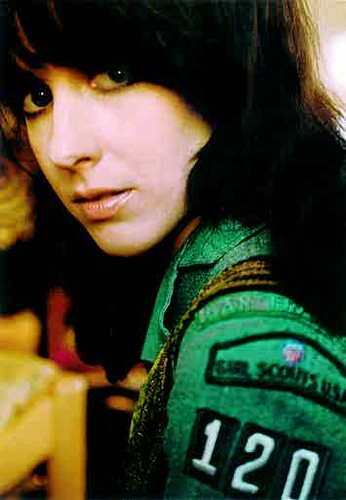
Then there is Slick herself. She looks like a college honor student with her puppy dog eyes and librarian good looks (she was a model before she was a singer). But underneath those American girl looks was a rebel -- a free spirit. You didn't know what Slick would do next. Hell, she wanted to spike U.S. President Richard Nixon's tea with LSD. She brings that shimmering tension to the vocals of "White Rabbit."
The song has had incredible influence and according to the music site All Music, “White Rabbit” has been covered by more than 100 bands, including the gothic punk band the Damned and jazz musician George Benson.
 But the song has had more than just musical influence – it’s a full-blown cultural phenomenon. Listening to “White Rabbit” is like stepping into a time machine back to the 1960s and stirs up striking visuals of the time: Woodstock, round sunglasses, hippies without shirts, headbands, and mood rings.
“White Rabbit” has been featured on the Simpsons – three times. It was featured in Oliver Stones’ “Platoon” and been written about by Stephen King. Blue Man Group has done a cover. It inspired the book “Go Ask Alice.” It’s in video games and was played on “The Sopranos.” It’s everywhere.
What do you think Morpheus was referring to when he said to Neo in “The Matrix”: “You take the blue pill - the story ends, you wake up in your bed and believe whatever you want to believe. You take the red pill - you stay in Wonderland and I show you how deep the rabbit-hole goes”? It certainly wasn’t Lewis Carroll.
Morpheus is talking about “White Rabbit.”
The Lyrics:
One pill makes you larger
And one pill makes you small
And the ones that mother gives you
Don't do anything at all
Go ask Alice
When she's ten feet tall
And if you go chasing rabbits
And you know you're going to fall
Tell them a hookah smoking caterpillar
Has given you the call
Recall Alice
When she was just small
When men on the chessboard
Get up and tell you where to go
And you've just had some kind of mushroom
And your mind is moving slow
Go ask Alice
I think she'll know
When logic and proportion
Have fallen sloppy dead
And the White Knight is talking backwards
And the Red Queen's "off with her head!"
Remember what the dormouse said;
"Feed your head!
“Feed your head!”
Good Songs From Really Awful Bands
Overlooked Albums From Really Good Bands
Highway to Hell: The 10 Greatest AC/DC Songs
Labels: Great Tunes, Jefferson Airplane, Music, Music Review, Songs, White Rabbit
 StumbleUpon |
 Digg |
 del.icio.us |
 Reddit |
 Technorati |
 E-mail


What defines a great cover song? DaRK PaRTY believes there are two crucial elements:
- A complete and successful re-interpretation of the song that stretches the scope of the music in entirely new directions
- When the song title is mentioned, most people believe the song belongs to the cover band rather than the original artist
With that limited criteria as our guide, DaRK PaRTY presents the 10 Greatest Cover Songs of All Time.
All Along the Watchtower (Jimi Hendrix)
Bob Dylan originally sang this one as a folk rocker, but Hendrix rescues it with some scathing electrical guitar work. It’s amazing that Dylan released the song in 1967 and by 1968 most people already considered it a Hendrix song. In fact, Dylan even liked the Hendrix version better and played it “heavier” in concert for years in tribute to Hendrix. This is a perfect example of an artist completely re-interpreting a song to make it better, yet still echoing the original.
I Fought the Law (The Clash)
Does anyone even remember that this song was originally done by the Crickets in 1965? Probably not because before the Clash’s version, the song was made popular by the Bobby Fuller Four (Bobby Fuller was found dead in his car the same day the song hit the Top 40). But for all purposes, the Clash have so thoroughly taken command of this song that it’s become one of about five tunes that people immediately connect with the band. It’s an outstanding cover because the Clash’s punk version is a better fit for the tune musically than the original rockabilly style or the Bobby Fuller Four version.
One Bourbon, One Scotch, One Beer (George Thorogood)
This was an old blues number by John Lee Hooker that George Thorogood and his Destroyers made into one of their signature songs (along with “Bad to the Bone). Thorogood takes Hooker’s insightful, introspective song and creates a party number out of it by ripping it pieces with his masterful slide guitar antics.
Red Red Wine (UB40)
How’s this for stretching the limits on a song? UB40 takes puffy pop standard by Neil Diamond and makes it into a rollicking reggae tune that became one of the defining songs of the 1980 retro-reggae scene. However, UB40 didn’t even know Neil Diamond wrote and recorded it until after “Red Red Wine” was a hit. The band thought the song belonged to another reggae band – Tony Tribe, which recorded it in 1969.
Respect (Aretha Franklin)
Otis Redding said all that needed to be said about Aretha’s version of his original. “I think the bitch stole my song.” That she did. Aretha added the “Sock it to me” line to the song (which is a sexual reference) and added a rocking bridge line to the tune.
Walk This Way (Run DMC)
This may be one of the most significant covers in history. By converting Aerosmith’s p opular rock anthem into a rap song, Run DMC brought hip hop to the mainstream and rescued Aerosmith from the dustbin. Run-DMC stumbled upon the album, but had never heard of Aerosmith (in fact, they thought the name of the band was Toys in the Attic, the album with “Walk This Way” on it). Aerosmith was pretty much over and the song helped revive its career after the disastrous release of the band’s worst album “Done with Mirrors.”
Suspicious Minds (Fine Young Cannibals)
How is it possible to swipe a song from the King? Ask the Fine Young Cannibals who turned Elvis Presley’s last number one song before his death into one of the most popular songs of the alt-rock movement of the 1980s. This is a bouncy, guitar heavy tune that would have made the King proud.
Take Me to the River (Talking Heads)
I’ll never forgive the Talking Heads for taking the Modern Lover’s bass player, but they kind of make up for it with this fantastic cover of an Al Green tune. This is the song that put art rock band Talking Heads on the musical map. This slowed down, bass-heavy rendition of the original became the coda of urban cool and helped usher in the new wave movement in 1978.
You Really Got Me (Van Halen)
This song was the first hit for the Kinks and the first hit for Van Halen. Ray Davies of the Kinks said he liked the Van Halen version better and that the Kinks version was a prop airplane and the Van Halen version was a fighter jet. This song really encapsulates early Van Halen showing off Eddie Van Halen’s guitar mastery and lead singer David Lee Roth’s trademark squeals.
Ring of Fire (Social Distortion)
It’s difficult to unseat Johnny Cash from his own song – never mind pick him up and throw him to the ground. But that’s exactly what Social Distortion does to “Ring of Fire.” They punk it up and own it. The song, however, was really written by June Carter, who wrote it while driving around one night worried about Cash’s wild partying.
Think we blew it? Want to throw a cover song into the mix? Then use the comments section below to tell us what we missed and to add to the list.
StumbleUpon |
Digg |
del.icio.us |
Reddit |
Technorati |
E-mail

 RSS Feed
]saddlebrown]tan]maroon](],](])us.st11.yimg.com/us.st.yimg.com/I/getfishy_1912_2002960]Fishboy]black],]1]10]3]1]1]1]1]1]1]1]1]1],](](]papayawhip])])]DaRK^20PaRTY^20ReVIEW]^3A^3ALiterate^20Blather^3A^3A],](](],](]maroon](](](]brown](],](]maroon](](](],]60]10],](](]^23F5ECE1])])]maroon]0.5]0],](](]^23F5ECE1])])]maroon]^23F5ECE1])])]^23666]16]maroon]maroon],](](]maroon](],](]^23333]^238C4614]tan],](](]^23F5ECE1])])],](](]^23F5ECE1])])],](](]^23F5ECE1])])],](]maroon]maroon]15]3]23]18]maroon],](](],](],](](],](]black](](](],](](](],]black](](](],](](]^23333](](](](](],]^2336F]^23333](],](]Posted^20by^20^24AUTH^20at^20^24TIME.]36],](](]black])])]^23F5ECE1])])]^23666]16]maroon]maroon],](](]maroon](],](]^23333]^238C4614]tan]Contributors]]]^24PROFILE]]]DaRK^20PaRTY^20LiNKS]]]The^20Ambrose^20Bierce^20Site])donswaim.com/]Ambrose^20Bierce]Ironic^20Times])www.ironictimes.com/index.html]Ironic^20Times]Gallery^20Voyer])www.voy-art.com/]Gallery^20Voyer]Tintinologist])www.tintinologist.org/]Tintin]Arcanum^20Cafe])www.arcanumcafe.com/]Arcanum^20Cafe]LADA^20-^20Protect^20our^20Kids])da.co.la.ca.us/pok/poklist.htm]POK^20List]Tom^20Caron^20-^20Boston.com])www.boston.com/sports/nesn/aboutus/onair/tomcaron/]TC]The^20Captain^20Humphreys^20Project])www.captainhumphreys.com/]Captain^20Humphreys]Torpedo^20Design])www.torpedodesign.com/]Torpedo^20Design]^3Cimg^20src^3D^22)us.st11.yimg.com/us.st.yimg.com/I/getfishy_1912_2002960^22^20alt^3D^22Fishboy^22^20style^3D^22border^3A^201px^20none^20black^3B^22^20/^3E])www.fishboy.com/]Fishboy]Etc]]]^3Cimg^20src^3D^22)psyc.horm.org/barimg/bar_psycho.png^22^20width^3D^2280^22^20height^3D^2215^22^20alt^3D^22PsycHo^3A^20Free^20Template^20Generator^22^20style^3D^22border^3A^200px^20solid^20black^22^20/^3E]^24PSYCHO]PsycHo^3A^20Free^20Template^20Generator]^3Cimg^20src^3D^22)psyc.horm.org/barimg/bar_firefox.png^22^20width^3D^2280^22^20height^3D^2215^22^20alt^3D^22Get^20FireFox^21^22^20style^3D^22border^3A^200px^20solid^20black^22^20/^3E])www.mozilla.org/products/firefox/]Get^20Firefox^21]^3Cimg^20src^3D^22)psyc.horm.org/barimg/bar_xhtml.png^22^20width^3D^2280^22^20height^3D^2215^22^20alt^3D^22XHTML^20Validator^22^20style^3D^22border^3A^200px^20solid^20black^22^20/^3E])validator.w3.org/check/referer]XHTML^20Validator]Recent^20Posts]]]^24RECENT]^20]]Archive]]]^24ARCHIVE]^20]]ADVERTISEMENTS]]]^20]]^26^2361470^3BPsycHo})


This work is licensed under a Creative Commons Attribution-No Derivative Works 3.0 License.
The Template is generated via PsycHo and is Licensed.