
Poem: Sunrise Over Worcester
5 Questions About: Jason Pinter
12 Signs That You Might Be A Banker
The 9 Worst Movies to Win Oscars
Book Review: Narrow Miss for "Above the Law"
5 Questions About: Screaming Blue Messiahs
What's Up With All the Fat, Naked Guys?
Thoughts from the Shadows: The Craziness of Publis...
How to Make a Damn Good Horror Movie
Literary Criticism
Fantastically Bad Cinema
Essays
Under God's Right Arm
June 2006
July 2006
August 2006
September 2006
October 2006
November 2006
December 2006
January 2007
February 2007
March 2007
April 2007
May 2007
June 2007
July 2007
August 2007
September 2007
October 2007
November 2007
December 2007
January 2008
February 2008
March 2008
April 2008
May 2008
June 2008
July 2008
August 2008
September 2008
October 2008
November 2008
December 2008
January 2009
February 2009
March 2009
Alcoholic Poet
Baby Got Books
Beaman's World
BiblioAddict
Biblio Brat
Bill Crider's Pop Cultural Magazine
The Bleeding Tree
Blog Cabins: Movie Reviews
A Book Blogger's Diary
BookClover
Bookgasm
Bookgirl's Nightstand
Books I Done Read
Book Stack
The Book Trib
Cold Hard Football Facts
Creator of Circumstance
D-Movie Critic
The Dark Phantom Review
The Dark Sublime
Darque Reviews
Dave's Movie Reviews
Dane of War
David H. Schleicher
Devourer of Books
A Dribble of Ink
The Drunken Severed Head
Editorial Ass
Emerging Emma
Enter the Octopus
Fatally Yours
Flickhead
The Genre Files
The Gravel Pit
Gravetapping
Hello! Yoshi
HighTalk
Highway 62
The Horrors Of It All
In No Particular Order
It's A Blog Eat Blog World
Killer Kittens From Beyond the Grave
The Lair of the Evil DM
Loose Leafs From a Commonplace
Lost in the Frame
Little Black Duck
Madam Miaow Says
McSweeney's
Metaxucafe
Mike Snider on Poetry
The Millions
Moon in the Gutter
New Movie Cynics Reviews
Naked Without Books
A Newbie's Guide to Publishing
New & Improved Ed Gorman
9 to 5 Poet
No Smoking in the Skull Cave
Orpheus Sings the Guitar Electric
Polly Frost's Blog
Pop Sensation
Raincoaster
R.A. Salvatore
Reading is My Superpower
Richard Gibson
SciFi Chick
She Is Too Fond Of Books
The Short Review
Small Crimes
So Many Books
The Soulless Machine Review
Sunset Gun
That Shakesperherian Rag
Thorne's World
The Toasted Scrimitar
This Distracted Globe
Tomb It May Concern
2 Blowhards
Under God's Right Arm
A Variety of Words
The Vault of Horrr
Ward 6
When the Dead Walk the Earth
The World in the Satin Bag
Zoe's Fantasy
Zombo's Closet of Horror
Bookaholic Blogring
Power By Ringsurf
An Interview with Professor Paul Lewis About the Legacy and Life of Poe
(It our continuing celebration of Edgar Allan Poe’s 200th birthday, we reached out to Professor Paul Lewis. Paul, an English professor at Boston College, organized the celebration of the Poe bicentennial in Boston. Those with long memories might recall that we interviewed Paul before about modern humor and his book “Cracking Up: American Humor in a Time of Conflict.” Paul teaches Poe (and others) in his role as a teacher of American literature. He recently wrote an op-ed in the Boston Globe about Poe and his relationship with Boston called “Evermore: The Enduring Legacy of Edgar Allan Poe.” Despite his busy schedule, Paul gave us a crash course on Mr. Poe.)
 DaRK PaRTY: Edgar Allan Poe was born in Boston, yet he's rarely associated with the city. Why is that?
Paul: Poe's parents moved from Boston to Richmond a few months after he was born. He returned after leaving the University of Virginia to enlist in the army and served for a few months at Fort Independence before moving south again.
In 1845, after years of critical combat with New England writers, Poe delivered a lecture at the Boston Lyceum. Local critics panned his performance, and Poe struck back in a series of insulting essays published in The Broadway Journal, which he was then editing. He called Bostonians "Frogpondians," said our hotels were "bad" and our poetry "not so good."
But it's too easy to see Poe's differences with Boston as a matter of purely personal pique. On the contrary, his rejection of the didacticism of New England writers, including Emerson and Longfellow, allowed Poe to arrive at the radical view that poetry and fiction should affect (i.e. powerfully move) readers rather than persuade them. That beauty was more important than truth as an end for literature. Arriving at this emphasis on effects allowed Poe to become a foundational figure in the development of popular culture.
For an overview of the Poe-Boston relationship, see the Boston College library exhibit "The Raven Returns: Poe and the City of Boston, 1809-2009."
DP: Baltimore has claims on Poe, yet he spent more time in Richmond, New York and Philadelphia. What geography do you think had the biggest influence on his writing?
Paul: Many of Poe’s contemporaries Americanized their stories by situating characters in familiar landscapes and historical contexts. Cooper set his warriors loose in the forests of New York. Hawthorne wrote about the world he knew in Boston and Salem. Melville launched his great sea tale from Nantucket. Thoreau “traveled much in Concord.” And even Whitman, who peered around the planet and out into space, was mostly interested in the new nation as a source of democratic vistas.
Although it can often be difficult to see where Poe’s stories are set, their place in the formation of an American mythos is clear. From the start in thinking about fiction, Poe had in mind something like Tocqueville’s observation that democracy focuses attention on the individual. Though some of the dark tales are set in named places (London, the Hudson River Valley), many of them exist inside a single mind responding to dangerous mysteries. This is the landscape he explored.
DP: Poe is often maligned by the literary elite and often dismissed as a hack. Does Poe deserve to be regarded as one of the great American writers? Why?
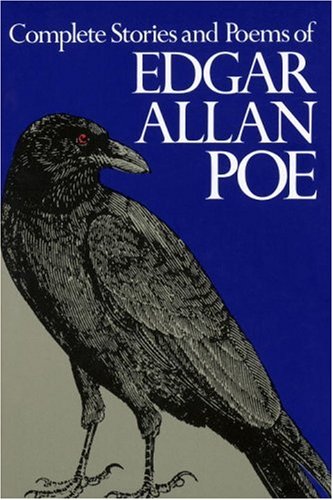 Paul: Edgar Allan Poe hovers over American culture like his raven: brooding, scowling, and winking. Arguably the most influential of our great writers, he has been condescended to by highbrow authors. Emerson called him the “jingle man.” T. S. Eliot said he had a pre-pubescent intellect. Yeats saw him as “vulgar and commonplace.” With detractors like these, no wonder his stories are so much fun!
Best known for a few images—a dead man’s still-beating heart, a decaying mansion falling into its reflecting tarn, a bricked-up, corpse-concealing wall, and, of course, a black cat—Poe’s work is about far more than mere terror.
Poe was our first great critic. In an age of pious reform, he insisted that literature should primarily move (or affect) readers, not inculcate truths. The author of political and social satires, hoaxes and parodies, a long nonfiction study of cosmology and a short novel about polar exploration—he ranged across genres available to him and expanded the list by creating the modern detective story and greatly enriching what the gothic could achieve.
Poe understood what mass audiences desire. The father of the psychological thriller, he has influenced every later writer in the genre from Bram Stoker to Stephen King and Ann Rice. Every pre-human creature H. P. Lovecraft kept in shadow, every inexplicable disruption that detaches Hitchcock’s heroes from their normal lives, every debate between Scully and Mulder, every monster seen through the shaking lens of a camcorder owes a debt to Edgar.
Unfortunate childhood experiences (most notably the early loss of both parents) left Poe with an abiding sense of life as random and cruel but also absurdly comic. Moving beyond the predictability of mind-numbing fear, his genius flashes in moments when responses to the unknown collide and something terrifying suddenly seems funny or vice versa. The speaker’s shifting moods in “The Raven” (1845) are typical. Brooding and isolated when the creature knocks, he moves through denial to attempts to laugh off his concern to an effort to explain what is happening rationally to mournful despair.
DP: What three works of Poe's do think showcase his talents better than any others and why?
Paul: “The Premature Burial” (1844), “Hop-Frog” (1849), and “The Sphinx” (1846). Each of these tales draws on Poe's keen awareness of the proximity of humor to fear, a sensibility that allowed him to work within and make fun of popular genres simultaneously.
DP: Poe's death is shrouded in mystery. He died in Baltimore, yet no one is sure why he was there. He seemed to be wearing someone else's clothing and he shouted a man's name out at the hospital he was taken in delirium before he died. What do you think happened to Poe just before his death?
Paul: No one knows, but however he died does not cast a favorable light on Baltimore!
Did Edgar Allan Poe Write the First Modern Zombie Story?
Great Openings: The First Sentences of 10 Classic Poe Short Stories
Poe: The Mad and Bad Writings of a Genius
Labels: Edgar Allan Poe, interview, literature, Paul Lewis
 StumbleUpon |
 Digg |
 del.icio.us |
 Reddit |
 Technorati |
 E-mail

DaRK PaRTY is celebrating the 200th birthday of Edgar Allan Poe (Poe was born on January 19, 1809) by giving away a hardcover copy of Daniel Stashower's magnificent non-fiction book "The Beautiful Cigar Girl: Mary Rogers, Edgar Allan Poe, and the Invention of Murder."
 Stashower explores the mysterious murder of Mary Rogers, a celebrated beauty who worked in a tobacco shop in Manhattan. She was the Paris Hilton of her day -- famous for her looks and charm. Her strangled and drowned corpse was pulled out of Hudson River in 1841. The murder was the fodder for the penny press newspapers in New York City for months.
Poe, struggling with his own demons, decided to try and solve the case through fiction using his analytical detective C. Auguste Dupin. It resulted in Poe's famous short story "The Mystery of Marie Rogêt."
Stashower combines the story of Poe's life and how it intersects with the Rogers' murder. The book is an amazing read for anyone interested in Poe and his work. Stashower avoids the cliches that often accompany biographies of Poe and paints a portrait of an artistic genius that was his own worst enemy.
We asked people to tell us their favorite Poe story and then to send us an email with their name and address to enter. We held a random drawing and now have a winner. Drum roll, please! The winner is:
Francine A. from Omaha, Nebraska
Francine has been set a copy of the book. Happy reading, Francine, and thanks to everyone who entered. We'll be holding a new book giveaway next week so please stay tuned!
And, of course, Happy birthday, Mr. Poe!
Labels: Contest, Dark Party, Edgar Allan Poe
StumbleUpon |
Digg |
del.icio.us |
Reddit |
Technorati |
E-mail
The Murders in the Rue Morgue
“The mental features discoursed of as the analytical, are, in themselves, but little susceptible of analysis.”
The Purloined Letter
“At Paris, just after dark one gusty evening in the autumn of 18__, I was enjoying the twofold luxury of mediation and meerschaum, in company with my friend, C. Auguste Dupin, in his little black library, or book-closet, au troisieme, No. 33 Rue Dunot, Faubourg St. Germain.”
The Black Cat
“For the most wild yet most homely narrative which I am about to pen, I neither expect nor solicit belief.”
The Fall of the House of Usher
“During the whole of a dull, dark, and soundless day in the autumn of the year, when the clouds hung oppressively low in the heavens, I had been passing alone, on horseback, through a singularly dreary tract of country, and at length found myself, as the shades of the evening drew on, within view of the melancholy House of Usher.”
The Pit and the Pendulum
“I was sick—sick unto death with that long agony; and when they at length unbound me, and I was permitted to sit, I felt that my senses were leaving me.”
The Masque of the Red Death
“The ‘Red Death’ had long devastated the country.”
The Cask of Amontillado
“The thousand injuries of Fortunato I had borne as I best could; but when he ventured upon the insult, I vowed revenge.”
The Tell-Tale Heart
“True!—nervous—very, very dreadfully nervous I had been and am; but why will you say that I am mad?”
Manuscript Found in a Bottle
“Of my country and of my family I have little to say.”
A Descent into the Maelstrom
“We had now reached the summit of the loftiest crag.”
The Raven
“Once upon a midnight dreary, while I pondered, weak and weary,/ Over many a quaint and curious volume of forgotten lore—/ While I nodded, nearly napping, suddenly there came a tapping,/ As of some one gently rapping, rapping at my chamber door.”
The Mad and Bad Writings of Edgar Allan Poe
Literary Criticism: The Masque of the Red Death
Great Openings: Mystery Edition
Labels: Edgar Allan Poe, Great Openings, literature
StumbleUpon |
Digg |
del.icio.us |
Reddit |
Technorati |
E-mail
 On dull, dark, dreary evenings, when the black rain taps at my opaque window, and the street lights create hideous black shapes on my carpet, I enjoy settling by the fire to read the strange, grotesque tales of Edgar Allan Poe. While thumbing through the worn pages of my tome, there is always a moment – like a sudden clarity of vision – when I pause and ask myself:
“Is Poe even a good writer?”
Is there a more polarizing figure in American literature than Edgar Allan Poe? He is either despised (Mark Twain dismissed him) or beloved (George Bernard Shaw was a fan).
His defenders point to his originality – his voice – his imaginative force that created new genres of literature such as detective fiction and science fiction. He greatly influenced horror and gothic fiction and tales of the grotesque.
But his critics can rightly point to his dense, wooden prose – and his almost laughable, emotive poetry. There is ample evidence that Poe is a hackneyed writer. Take this passage from his short story “The Black Cat” (1845):
“From my infancy I was noted for the docility and humanity of my disposition. My tenderness of heart was even so conspicuous as to make me the jest of my companions. I was especially fond of animals, and was indulged by my parents with a great variety of pets. With these I spent most of my time, and never was so happy as when feeding and caressing them. This peculiarity of character grew with my growth, and, in my manhood, I derived from it one of my principal sources of pleasure. To those who have cherished an affection for a faithful and sagacious dog, I need hardly be at the trouble of explaining the nature or the intensity of the gratification thus derivable. There is something in the unselfish and self-sacrificing love of a brute, which goes directly to the heart of him who has had frequent occasion to test the paltry friendship and gossamer fidelity of mere
 ragraphs like this. Poe is like a writer obsessed with his thesaurus. He always seems to choose the next best word for his purposes. Thus he uses “humanity” rather than “kindness” to describe the narrator’s disposition. He oddly selects the word “sagacious” (which means acutely insightful and wise) to describe a dog and pushes the envelope by using “gossamer” to modify fidelity. Is he trying to convey a “wispy” fidelity?
Poe has an unhealthy fondness for adjectives. Why use one when two or even three can do the trick? That’s why he uses “unselfish” and “self-sacrificing” to modify love – both adjectives having nearly identical meanings. It’s like saying a character is “mean” and “cruel.”
And don’t get me started on the phrase “This peculiarity of character grew with my growth.” And can Poe please elaborate on what is so peculiar about a man liking pets?
“The Black Cat” isn’t the exception – it’s the rule. Poe could write brazenly bad prose. His stories are filled with clunky construction, impassive language, and labored metaphors and imagery. In his collection of poetry called “The Best Poems of the English Language,” literary critic Harold Bloom writes: “Poe is a bad poet, a poor critic, and a dreadful prose stylist in his celebrated tales. Poe is also inescapable.”
And that’s why Poe is so polarizing. He is both bad writer and genius at the same time – which is why no conversation about American literature can avoid him. Poe is larger than life – a writer that transcends his meager talents and vaults into legend. Few American writers can claim this mantle (although Hemingway, a far superior writer, may come the closest).
I fall victim to the mythology of Poe every time. I want to love him – in fact, I often think I do love Poe, but not when I’m reading him.
What I’m intoxicated by is this legend. His personal story is enough of a hook: His descent into madness, his battles with alcohol and drugs, his wife's tuberculosis, his bizarre marriage to his teenage cousin, his bankruptcy and poverty, and, of course, the mystery of his death at age 40 (the day before he died in 1849, Poe was found wandering the streets of Baltimore in a delirious state and wearing clothes belonging to someone else).
When I do pick up his work (and I own at least two collections of his stories and several poetry anthologies that include his work), I struggle with it. Poe’s style is agonizing and you wish you could dive into stories like “The Fall of the House of Usher” (1839) or “The Murders in the Rue Morgue” (1841), but you can’t. The language prohibits you from fully entering Poe’s world and instead you wish you could start marking them up with an editor’s red pencil.
But while I can criticize Poe for his writing, the real reason that he’s “inescapable” has less to do with language and everything to do with imagination. This rich imagination what Poet T.S. Eliot meant when he said: “That Poe had a powerful intellect is undeniable: but it seems to me the intellect of a highly gifted person before puberty.”
In other words Poe’s mind – his glorious vision – is genius, but his maturity as a writer leaves much to be des ired.
ired.
There is little doubt of Poe’s Herculean stamp on literature. He did invent the detective story. Sir Arthur Conan Doyle, the creator of Sherlock Holmes, cited Poe as one of his influences and made this incredible statement: “Where was the detective story until Poe breathed the breath of life into it?”
Poe’s tales of the macabre still resonate today. His story “The Masque of the Red Death” (1850) was the grandfather of Stephen King’s “The Stand” and Albert Camus’ “The Plague.” His character Luchresi in “The Cask of the Amontillado” (1846) was the seed of serial killer fiction and the great-great-grandfather of Thomas Harris’ Hannibal Lector.
He was innovative in science fiction with his only novel “The Narrative of Arthur Gordon Pym of
Poe – dark, brooding, troubled Poe – wasn’t a good writer. But he did possess one of the most limitless and breathtakingly original imaginations in literature.
Read our Literary Sketch on Poe's short story "The Masque of the Red Death"
Labels: Edgar Allan Poe, literature
StumbleUpon |
Digg |
del.icio.us |
Reddit |
Technorati |
E-mail

Summary: A terrible plague, known as Red Death, has beset the lands of Prince Prospero. After the plague has killed more than half of his subjects, the Prince gathers up his closest friends and associates and they retreat to a secluded abbey surrounded by high walls. Stocked with ample portions of food and drink, the group shuts itself up to await the plagues demise. Six months later, the Prince holds a grand masquerade ball in his private chambers. One of the guests arrives dressed as Red Death. Enraged, the Prince confronts the man and is struck dead. The rest of the guests realize that the figure really is Red Death and begin to drop dead from the disease.
Analysis: Edgar Allan Poe had a vivid, nightmarish imagination and that creativity is one of the reasons why he has risen to the ranks of the literary elite in American literature. Another reason is because he was such a fascinating character – encompassing failure and post-humorous success, a marriage to his cousin, and, of course, a life-long battle with alcoholism that killed him at the age of 40.
Unfortunately, while many of his stories and poems are horrifyingly original (Poe is truly the literary grandfather of Stephen King), Poe is an inconsistent writer (Give him an A for effort – because Poe tried so hard in everything he ever wrote). “The Masque of the Red Death” is a perfect example of Poe’s strengths and weaknesses as a storyteller.
The limited success of “Masque” lies mainly in Poe’s ability to create a surreal landscape and infuse it with enough creepiness to, if not scare readers, certainly to give us pause. Poe uses this ability to great effect in “The Fall of the House of Usher” and “Black Cat,” two of his better stories. It’s not as prevalent in “Masque,” but he does manage to create just enough sinister atmosphere for the story to work on that level. We also need to tip our cap to Poe for inventing the “epidemic” narrative for without “Masque” we might not have gotten Albert Camus’s The Plague or Stephen King’s The Stand.
Otherwise, “Masque” has several glaring weaknesses. Poe’s writing can be as blunt as a mallet to the head and in “Masque” that obviousness is in full form. The main character, if there is such a thing in this story, is Prince Prospero (even the name lacks subtlety). The Prince for whatever bizarre reason has set up his inner chambers into seven distinct rooms of differing colors: blue, purple, green, orange, white, violet, and black. They represent each stage of human life from birth to death. Overlooking all of this is a gigantic ebony clock that chimes haunting notes on the hour. All of this set decoration seems – and is – so staged. There only because Poe requires it for his story.
When the Prince and his associates, locked away from the Red Death plaguing the kingdom, throw a grand masquerade ball it is within this maze-like rainbow of rooms. The reader is left to ponder why? The only explanation we are given for the ball or the ominous interior design is that the Prince is well… weird.
So is it any surprise that when the costumed reveler who turns out to be Red Death incarnate kills the Prince that they run through all the rooms starting at the first and ending up in the last one – the black one – where the Prince ends up dying? Of course not. “Masque” is a morality play, an allegory that tells us the obvious – “You can’t cheat death.”
But in the end it’s the writing that really harms “Masque.” There are not efforts to even try and establish characters other than the superficial Prince. When he dies (and we know all along that he’ll die) there’s no emotional connection to him. He’s simply another prop in Poe’s allegory. The story is also filled with too much telling and not enough showing. “There were delirious fancies such as the madman fashions. There was much of the beautiful much of the wanton, much of the bizarre, something of the terrible, and not a little that which might have excited disgust.” Poe doesn’t bother to show us the beautiful, wanton, bizarre or terrible with any specific examples.
In the end, “The Masque of the Red Death” only survives as filler in anthologies of Poe’s work. It is minor and inferior in every way.
Read our literary criticism of Anton Chekov's "A Dead Body"
Labels: Edgar Allan Poe, literary criticism, literature
StumbleUpon |
Digg |
del.icio.us |
Reddit |
Technorati |
E-mail

 RSS Feed
]saddlebrown]tan]maroon](],](])us.st11.yimg.com/us.st.yimg.com/I/getfishy_1912_2002960]Fishboy]black],]1]10]3]1]1]1]1]1]1]1]1]1],](](]papayawhip])])]DaRK^20PaRTY^20ReVIEW]^3A^3ALiterate^20Blather^3A^3A],](](],](]maroon](](](]brown](],](]maroon](](](],]60]10],](](]^23F5ECE1])])]maroon]0.5]0],](](]^23F5ECE1])])]maroon]^23F5ECE1])])]^23666]16]maroon]maroon],](](]maroon](],](]^23333]^238C4614]tan],](](]^23F5ECE1])])],](](]^23F5ECE1])])],](](]^23F5ECE1])])],](]maroon]maroon]15]3]23]18]maroon],](](],](],](](],](]black](](](],](](](],]black](](](],](](]^23333](](](](](],]^2336F]^23333](],](]Posted^20by^20^24AUTH^20at^20^24TIME.]36],](](]black])])]^23F5ECE1])])]^23666]16]maroon]maroon],](](]maroon](],](]^23333]^238C4614]tan]Contributors]]]^24PROFILE]]]DaRK^20PaRTY^20LiNKS]]]The^20Ambrose^20Bierce^20Site])donswaim.com/]Ambrose^20Bierce]Ironic^20Times])www.ironictimes.com/index.html]Ironic^20Times]Gallery^20Voyer])www.voy-art.com/]Gallery^20Voyer]Tintinologist])www.tintinologist.org/]Tintin]Arcanum^20Cafe])www.arcanumcafe.com/]Arcanum^20Cafe]LADA^20-^20Protect^20our^20Kids])da.co.la.ca.us/pok/poklist.htm]POK^20List]Tom^20Caron^20-^20Boston.com])www.boston.com/sports/nesn/aboutus/onair/tomcaron/]TC]The^20Captain^20Humphreys^20Project])www.captainhumphreys.com/]Captain^20Humphreys]Torpedo^20Design])www.torpedodesign.com/]Torpedo^20Design]^3Cimg^20src^3D^22)us.st11.yimg.com/us.st.yimg.com/I/getfishy_1912_2002960^22^20alt^3D^22Fishboy^22^20style^3D^22border^3A^201px^20none^20black^3B^22^20/^3E])www.fishboy.com/]Fishboy]Etc]]]^3Cimg^20src^3D^22)psyc.horm.org/barimg/bar_psycho.png^22^20width^3D^2280^22^20height^3D^2215^22^20alt^3D^22PsycHo^3A^20Free^20Template^20Generator^22^20style^3D^22border^3A^200px^20solid^20black^22^20/^3E]^24PSYCHO]PsycHo^3A^20Free^20Template^20Generator]^3Cimg^20src^3D^22)psyc.horm.org/barimg/bar_firefox.png^22^20width^3D^2280^22^20height^3D^2215^22^20alt^3D^22Get^20FireFox^21^22^20style^3D^22border^3A^200px^20solid^20black^22^20/^3E])www.mozilla.org/products/firefox/]Get^20Firefox^21]^3Cimg^20src^3D^22)psyc.horm.org/barimg/bar_xhtml.png^22^20width^3D^2280^22^20height^3D^2215^22^20alt^3D^22XHTML^20Validator^22^20style^3D^22border^3A^200px^20solid^20black^22^20/^3E])validator.w3.org/check/referer]XHTML^20Validator]Recent^20Posts]]]^24RECENT]^20]]Archive]]]^24ARCHIVE]^20]]ADVERTISEMENTS]]]^20]]^26^2361470^3BPsycHo})


This work is licensed under a Creative Commons Attribution-No Derivative Works 3.0 License.
The Template is generated via PsycHo and is Licensed.