
::Literate Blather::
New DaRK
5 Questions About: PornographyPoem: Sunrise Over Worcester
5 Questions About: Jason Pinter
12 Signs That You Might Be A Banker
The 9 Worst Movies to Win Oscars
Book Review: Narrow Miss for "Above the Law"
5 Questions About: Screaming Blue Messiahs
What's Up With All the Fat, Naked Guys?
Thoughts from the Shadows: The Craziness of Publis...
How to Make a Damn Good Horror Movie
Our Ongoing Features
5 Questions AboutLiterary Criticism
Fantastically Bad Cinema
Essays
Under God's Right Arm
Archive
May 2006June 2006
July 2006
August 2006
September 2006
October 2006
November 2006
December 2006
January 2007
February 2007
March 2007
April 2007
May 2007
June 2007
July 2007
August 2007
September 2007
October 2007
November 2007
December 2007
January 2008
February 2008
March 2008
April 2008
May 2008
June 2008
July 2008
August 2008
September 2008
October 2008
November 2008
December 2008
January 2009
February 2009
March 2009
Twitter
DaRK PaRTY NeTWORK
Arcanum CafeAlcoholic Poet
Baby Got Books
Beaman's World
BiblioAddict
Biblio Brat
Bill Crider's Pop Cultural Magazine
The Bleeding Tree
Blog Cabins: Movie Reviews
A Book Blogger's Diary
BookClover
Bookgasm
Bookgirl's Nightstand
Books I Done Read
Book Stack
The Book Trib
Cold Hard Football Facts
Creator of Circumstance
D-Movie Critic
The Dark Phantom Review
The Dark Sublime
Darque Reviews
Dave's Movie Reviews
Dane of War
David H. Schleicher
Devourer of Books
A Dribble of Ink
The Drunken Severed Head
Editorial Ass
Emerging Emma
Enter the Octopus
Fatally Yours
Flickhead
The Genre Files
The Gravel Pit
Gravetapping
Hello! Yoshi
HighTalk
Highway 62
The Horrors Of It All
In No Particular Order
It's A Blog Eat Blog World
Killer Kittens From Beyond the Grave
The Lair of the Evil DM
Loose Leafs From a Commonplace
Lost in the Frame
Little Black Duck
Madam Miaow Says
McSweeney's
Metaxucafe
Mike Snider on Poetry
The Millions
Moon in the Gutter
New Movie Cynics Reviews
Naked Without Books
A Newbie's Guide to Publishing
New & Improved Ed Gorman
9 to 5 Poet
No Smoking in the Skull Cave
Orpheus Sings the Guitar Electric
Polly Frost's Blog
Pop Sensation
Raincoaster
R.A. Salvatore
Reading is My Superpower
Richard Gibson
SciFi Chick
She Is Too Fond Of Books
The Short Review
Small Crimes
So Many Books
The Soulless Machine Review
Sunset Gun
That Shakesperherian Rag
Thorne's World
The Toasted Scrimitar
This Distracted Globe
Tomb It May Concern
2 Blowhards
Under God's Right Arm
A Variety of Words
The Vault of Horrr
Ward 6
When the Dead Walk the Earth
The World in the Satin Bag
Zoe's Fantasy
Zombo's Closet of Horror
Bookaholic Blogring
Power By Ringsurf
Thursday, January 22, 2009
5 Questions About: Edgar Allan Poe
An Interview with Professor Paul Lewis About the Legacy and Life of Poe
(It our continuing celebration of Edgar Allan Poe’s 200th birthday, we reached out to Professor Paul Lewis. Paul, an English professor at Boston College, organized the celebration of the Poe bicentennial in Boston. Those with long memories might recall that we interviewed Paul before about modern humor and his book “Cracking Up: American Humor in a Time of Conflict.” Paul teaches Poe (and others) in his role as a teacher of American literature. He recently wrote an op-ed in the Boston Globe about Poe and his relationship with Boston called “Evermore: The Enduring Legacy of Edgar Allan Poe.” Despite his busy schedule, Paul gave us a crash course on Mr. Poe.)
 DaRK PaRTY: Edgar Allan Poe was born in Boston, yet he's rarely associated with the city. Why is that?
Paul: Poe's parents moved from Boston to Richmond a few months after he was born. He returned after leaving the University of Virginia to enlist in the army and served for a few months at Fort Independence before moving south again.
In 1845, after years of critical combat with New England writers, Poe delivered a lecture at the Boston Lyceum. Local critics panned his performance, and Poe struck back in a series of insulting essays published in The Broadway Journal, which he was then editing. He called Bostonians "Frogpondians," said our hotels were "bad" and our poetry "not so good."
But it's too easy to see Poe's differences with Boston as a matter of purely personal pique. On the contrary, his rejection of the didacticism of New England writers, including Emerson and Longfellow, allowed Poe to arrive at the radical view that poetry and fiction should affect (i.e. powerfully move) readers rather than persuade them. That beauty was more important than truth as an end for literature. Arriving at this emphasis on effects allowed Poe to become a foundational figure in the development of popular culture.
For an overview of the Poe-Boston relationship, see the Boston College library exhibit "The Raven Returns: Poe and the City of Boston, 1809-2009."
DP: Baltimore has claims on Poe, yet he spent more time in Richmond, New York and Philadelphia. What geography do you think had the biggest influence on his writing?
Paul: Many of Poe’s contemporaries Americanized their stories by situating characters in familiar landscapes and historical contexts. Cooper set his warriors loose in the forests of New York. Hawthorne wrote about the world he knew in Boston and Salem. Melville launched his great sea tale from Nantucket. Thoreau “traveled much in Concord.” And even Whitman, who peered around the planet and out into space, was mostly interested in the new nation as a source of democratic vistas.
Although it can often be difficult to see where Poe’s stories are set, their place in the formation of an American mythos is clear. From the start in thinking about fiction, Poe had in mind something like Tocqueville’s observation that democracy focuses attention on the individual. Though some of the dark tales are set in named places (London, the Hudson River Valley), many of them exist inside a single mind responding to dangerous mysteries. This is the landscape he explored.
DP: Poe is often maligned by the literary elite and often dismissed as a hack. Does Poe deserve to be regarded as one of the great American writers? Why?
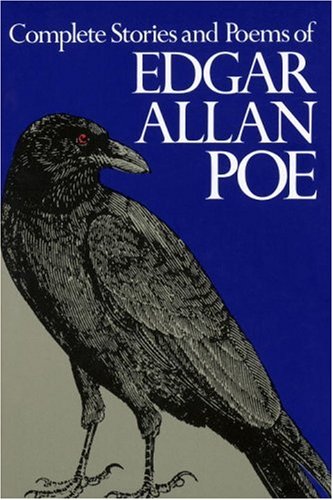 Paul: Edgar Allan Poe hovers over American culture like his raven: brooding, scowling, and winking. Arguably the most influential of our great writers, he has been condescended to by highbrow authors. Emerson called him the “jingle man.” T. S. Eliot said he had a pre-pubescent intellect. Yeats saw him as “vulgar and commonplace.” With detractors like these, no wonder his stories are so much fun!
Best known for a few images—a dead man’s still-beating heart, a decaying mansion falling into its reflecting tarn, a bricked-up, corpse-concealing wall, and, of course, a black cat—Poe’s work is about far more than mere terror.
Poe was our first great critic. In an age of pious reform, he insisted that literature should primarily move (or affect) readers, not inculcate truths. The author of political and social satires, hoaxes and parodies, a long nonfiction study of cosmology and a short novel about polar exploration—he ranged across genres available to him and expanded the list by creating the modern detective story and greatly enriching what the gothic could achieve.
Poe understood what mass audiences desire. The father of the psychological thriller, he has influenced every later writer in the genre from Bram Stoker to Stephen King and Ann Rice. Every pre-human creature H. P. Lovecraft kept in shadow, every inexplicable disruption that detaches Hitchcock’s heroes from their normal lives, every debate between Scully and Mulder, every monster seen through the shaking lens of a camcorder owes a debt to Edgar.
Unfortunate childhood experiences (most notably the early loss of both parents) left Poe with an abiding sense of life as random and cruel but also absurdly comic. Moving beyond the predictability of mind-numbing fear, his genius flashes in moments when responses to the unknown collide and something terrifying suddenly seems funny or vice versa. The speaker’s shifting moods in “The Raven” (1845) are typical. Brooding and isolated when the creature knocks, he moves through denial to attempts to laugh off his concern to an effort to explain what is happening rationally to mournful despair.
DP: What three works of Poe's do think showcase his talents better than any others and why?
Paul: “The Premature Burial” (1844), “Hop-Frog” (1849), and “The Sphinx” (1846). Each of these tales draws on Poe's keen awareness of the proximity of humor to fear, a sensibility that allowed him to work within and make fun of popular genres simultaneously.
DP: Poe's death is shrouded in mystery. He died in Baltimore, yet no one is sure why he was there. He seemed to be wearing someone else's clothing and he shouted a man's name out at the hospital he was taken in delirium before he died. What do you think happened to Poe just before his death?
Paul: No one knows, but however he died does not cast a favorable light on Baltimore!
Did Edgar Allan Poe Write the First Modern Zombie Story?
Great Openings: The First Sentences of 10 Classic Poe Short Stories
Poe: The Mad and Bad Writings of a Genius
Labels: Edgar Allan Poe, interview, literature, Paul Lewis
 StumbleUpon |
 Digg |
 del.icio.us |
 Reddit |
 Technorati |
 E-mail

Friday, February 23, 2007
5 Questions About: Modern Humor
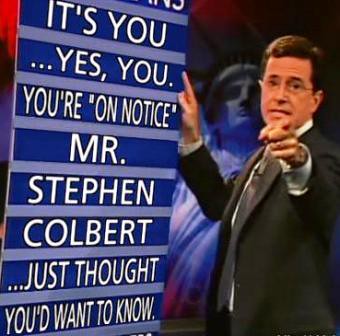
(Paul Lewis is a professor at Boston College. He teaches English -- and even a class on Edgar Allan Poe. But don't let that mild mannered facade fool you. Lewis is a funny guy. Or at least he studies the funny guys. He's written a fascinating book called "Cracking Up: American Humor in a Time of Conflict." The book explores the evolution of humor in American society since the September 11 attacks. DaRK PaRTY caught up with Paul -- despite his business schedule -- and peppered him with some very unfunny questions about his book.)

DaRK PaRTY: Has humor changed in the United States since the terrorist attacks on September 11, 2001? If so, how?
Paul: In Chapter Four of "Cracking Up"("Ridicule to Rule: The Strange Case of George W. Bush"), I follow the impact of 9/11 not on American humor in general but on the rise and fall of one man's standing as the target of jokes. What's strange about this is not that Bush has been mocked; all presidents and many other public figures come in for this. Indeed, for all the Bush-stupidity jokes and all the Bushism collections, Bill Clinton may be our most joked-about president, though this is difficult to quantify.
In any case, just as the Lewinsky revelations unleashed an avalanche of more and less explicit humor, so 9/11 effectively tamped down Bush satire. One can track the correlation between the President's approval ratings and the quantity and hostility of Bush humor before and after the attacks. In the early weeks and months after 9/11, with the entire country desperate to believe in the competence and effectiveness of its leader, anti-Bush jokes were literally uncalled for.
It's true that some progressive cartoonists started to pick up on Bush's political exploitation of terrorism early on and that this observation generated more and more satire in the run-up to the 2002 and 2004 elections. It's also true that whatever remained of Bush's 9/11 Teflon coating washed off in the waters of Katrina and the blood of Iraq. At this point, when he tries to laugh off an unwelcome implication (for instance, that his administration may be putting out cooked intelligence about Iran just as it did to justify the invasion of Iraq--heh, heh!) no one wants to laugh with him.
So the final turn of the screw may be that Bush jokes will seem less and less funny as his destructive presidency stumbles toward its ruinous conclusion.
In any case, just as the Lewinsky revelations unleashed an avalanche of more and less explicit humor, so 9/11 effectively tamped down Bush satire. One can track the correlation between the President's approval ratings and the quantity and hostility of Bush humor before and after the attacks. In the early weeks and months after 9/11, with the entire country desperate to believe in the competence and effectiveness of its leader, anti-Bush jokes were literally uncalled for.
It's true that some progressive cartoonists started to pick up on Bush's political exploitation of terrorism early on and that this observation generated more and more satire in the run-up to the 2002 and 2004 elections. It's also true that whatever remained of Bush's 9/11 Teflon coating washed off in the waters of Katrina and the blood of Iraq. At this point, when he tries to laugh off an unwelcome implication (for instance, that his administration may be putting out cooked intelligence about Iran just as it did to justify the invasion of Iraq--heh, heh!) no one wants to laugh with him.
So the final turn of the screw may be that Bush jokes will seem less and less funny as his destructive presidency stumbles toward its ruinous conclusion.
DP: How would you describe the humor on John Stewart's "The Daily Show?"

Paul: Stewart is a master of irony and skepticism, a cynic in the brilliant tradition of Ambrose Bierce. Hypocrisy, contradiction, corruption, pride, self-righteousness, false piety, and stupidity are his targets. It speaks well for American comedy, if poorly for our politics, that his talented writers have no trouble finding material.
DP: You find humor in strange places. For example, Rush Limbaugh. What's so funny about Rush?
Paul: As I note in "Cracking Up," progressives have trouble seeing that Limbaugh has a sense of humor. But, like Ann Coulter and Scott Ott, Rush is almost always half kidding. Not in the sense that he's a flexible thinker, not at all. His humor is always pointed, always aimed at people he disagrees with. Being Limbaugh means never having to say you're sorry.
He has been mocking Al Gore for years and still has "Al Gore's Doomsday Clock" ticking away on the Limbaugh Web site. For decades, Rush has ridiculed "dunderheaded," "kookburger," "nutso" "environmental wackos" and made fun of the absurd notion that human beings can radically change global climate. People looking back at our time in a hundred years may be even more pressed to see what was funny about this irresponsible, ill-informed rhetoric.
He has been mocking Al Gore for years and still has "Al Gore's Doomsday Clock" ticking away on the Limbaugh Web site. For decades, Rush has ridiculed "dunderheaded," "kookburger," "nutso" "environmental wackos" and made fun of the absurd notion that human beings can radically change global climate. People looking back at our time in a hundred years may be even more pressed to see what was funny about this irresponsible, ill-informed rhetoric.
DP: Humor seems to have become the last refuge of political dissent. Why is that?
Paul: Not the last or only refuge, surely, since there has been plenty of serious criticism of the Bush administration right along. Going back to Mark Crispin Miller's "The Bush Dyslexicon: Observations on a National Disorder," this president has been assailed in a series of incisive monographs that have expanded to an entire bookcase by now.
It's true that Jon Stewart got into this early on, that Stephen Colbert has done some heavy lifting in exposing the extremism of the Republican right, and that publications like "The Onion" and"Funny Times" have contributed to the project. Still, not all wags escape punishment. Bill Maher, who tested the post-9/11 humor limits shortly after the attacks and got smacked down for it, is a counter example, though in this time of comedy marketing to niche audiences he has rebounded. Humor can, of course, provide cover for serious messages, as the wise fool tradition suggests.
It's true that Jon Stewart got into this early on, that Stephen Colbert has done some heavy lifting in exposing the extremism of the Republican right, and that publications like "The Onion" and"Funny Times" have contributed to the project. Still, not all wags escape punishment. Bill Maher, who tested the post-9/11 humor limits shortly after the attacks and got smacked down for it, is a counter example, though in this time of comedy marketing to niche audiences he has rebounded. Humor can, of course, provide cover for serious messages, as the wise fool tradition suggests.
DP: Who are the three most influential comics in America today?
Paul: Jon Stewart, Stephen Colbert and Dave Chappelle.
Not only the most influential but the funniest too—in my utterly subjective opinion!
Read our parody "Reginald, the Creepy Guy, From Your Writing Class"
Read our parody "Batman Wises Up"
Read our parody "Reginald, the Creepy Guy, From Your Writing Class"
Read our parody "Batman Wises Up"
Labels: 5 Questions, Humor, Paul Lewis
StumbleUpon |
Digg |
del.icio.us |
Reddit |
Technorati |
E-mail
Advertisements
DaRK Buttons

 RSS Feed
]saddlebrown]tan]maroon](],](])us.st11.yimg.com/us.st.yimg.com/I/getfishy_1912_2002960]Fishboy]black],]1]10]3]1]1]1]1]1]1]1]1]1],](](]papayawhip])])]DaRK^20PaRTY^20ReVIEW]^3A^3ALiterate^20Blather^3A^3A],](](],](]maroon](](](]brown](],](]maroon](](](],]60]10],](](]^23F5ECE1])])]maroon]0.5]0],](](]^23F5ECE1])])]maroon]^23F5ECE1])])]^23666]16]maroon]maroon],](](]maroon](],](]^23333]^238C4614]tan],](](]^23F5ECE1])])],](](]^23F5ECE1])])],](](]^23F5ECE1])])],](]maroon]maroon]15]3]23]18]maroon],](](],](],](](],](]black](](](],](](](],]black](](](],](](]^23333](](](](](],]^2336F]^23333](],](]Posted^20by^20^24AUTH^20at^20^24TIME.]36],](](]black])])]^23F5ECE1])])]^23666]16]maroon]maroon],](](]maroon](],](]^23333]^238C4614]tan]Contributors]]]^24PROFILE]]]DaRK^20PaRTY^20LiNKS]]]The^20Ambrose^20Bierce^20Site])donswaim.com/]Ambrose^20Bierce]Ironic^20Times])www.ironictimes.com/index.html]Ironic^20Times]Gallery^20Voyer])www.voy-art.com/]Gallery^20Voyer]Tintinologist])www.tintinologist.org/]Tintin]Arcanum^20Cafe])www.arcanumcafe.com/]Arcanum^20Cafe]LADA^20-^20Protect^20our^20Kids])da.co.la.ca.us/pok/poklist.htm]POK^20List]Tom^20Caron^20-^20Boston.com])www.boston.com/sports/nesn/aboutus/onair/tomcaron/]TC]The^20Captain^20Humphreys^20Project])www.captainhumphreys.com/]Captain^20Humphreys]Torpedo^20Design])www.torpedodesign.com/]Torpedo^20Design]^3Cimg^20src^3D^22)us.st11.yimg.com/us.st.yimg.com/I/getfishy_1912_2002960^22^20alt^3D^22Fishboy^22^20style^3D^22border^3A^201px^20none^20black^3B^22^20/^3E])www.fishboy.com/]Fishboy]Etc]]]^3Cimg^20src^3D^22)psyc.horm.org/barimg/bar_psycho.png^22^20width^3D^2280^22^20height^3D^2215^22^20alt^3D^22PsycHo^3A^20Free^20Template^20Generator^22^20style^3D^22border^3A^200px^20solid^20black^22^20/^3E]^24PSYCHO]PsycHo^3A^20Free^20Template^20Generator]^3Cimg^20src^3D^22)psyc.horm.org/barimg/bar_firefox.png^22^20width^3D^2280^22^20height^3D^2215^22^20alt^3D^22Get^20FireFox^21^22^20style^3D^22border^3A^200px^20solid^20black^22^20/^3E])www.mozilla.org/products/firefox/]Get^20Firefox^21]^3Cimg^20src^3D^22)psyc.horm.org/barimg/bar_xhtml.png^22^20width^3D^2280^22^20height^3D^2215^22^20alt^3D^22XHTML^20Validator^22^20style^3D^22border^3A^200px^20solid^20black^22^20/^3E])validator.w3.org/check/referer]XHTML^20Validator]Recent^20Posts]]]^24RECENT]^20]]Archive]]]^24ARCHIVE]^20]]ADVERTISEMENTS]]]^20]]^26^2361470^3BPsycHo})


Advertisements

This work is licensed under a Creative Commons Attribution-No Derivative Works 3.0 License.
The Template is generated via PsycHo and is Licensed.