Poem: Sunrise Over Worcester
5 Questions About: Jason Pinter
12 Signs That You Might Be A Banker
The 9 Worst Movies to Win Oscars
Book Review: Narrow Miss for "Above the Law"
5 Questions About: Screaming Blue Messiahs
What's Up With All the Fat, Naked Guys?
Thoughts from the Shadows: The Craziness of Publis...
How to Make a Damn Good Horror Movie
Literary Criticism
Fantastically Bad Cinema
Essays
Under God's Right Arm
June 2006
July 2006
August 2006
September 2006
October 2006
November 2006
December 2006
January 2007
February 2007
March 2007
April 2007
May 2007
June 2007
July 2007
August 2007
September 2007
October 2007
November 2007
December 2007
January 2008
February 2008
March 2008
April 2008
May 2008
June 2008
July 2008
August 2008
September 2008
October 2008
November 2008
December 2008
January 2009
February 2009
March 2009
Alcoholic Poet
Baby Got Books
Beaman's World
BiblioAddict
Biblio Brat
Bill Crider's Pop Cultural Magazine
The Bleeding Tree
Blog Cabins: Movie Reviews
A Book Blogger's Diary
BookClover
Bookgasm
Bookgirl's Nightstand
Books I Done Read
Book Stack
The Book Trib
Cold Hard Football Facts
Creator of Circumstance
D-Movie Critic
The Dark Phantom Review
The Dark Sublime
Darque Reviews
Dave's Movie Reviews
Dane of War
David H. Schleicher
Devourer of Books
A Dribble of Ink
The Drunken Severed Head
Editorial Ass
Emerging Emma
Enter the Octopus
Fatally Yours
Flickhead
The Genre Files
The Gravel Pit
Gravetapping
Hello! Yoshi
HighTalk
Highway 62
The Horrors Of It All
In No Particular Order
It's A Blog Eat Blog World
Killer Kittens From Beyond the Grave
The Lair of the Evil DM
Loose Leafs From a Commonplace
Lost in the Frame
Little Black Duck
Madam Miaow Says
McSweeney's
Metaxucafe
Mike Snider on Poetry
The Millions
Moon in the Gutter
New Movie Cynics Reviews
Naked Without Books
A Newbie's Guide to Publishing
New & Improved Ed Gorman
9 to 5 Poet
No Smoking in the Skull Cave
Orpheus Sings the Guitar Electric
Polly Frost's Blog
Pop Sensation
Raincoaster
R.A. Salvatore
Reading is My Superpower
Richard Gibson
SciFi Chick
She Is Too Fond Of Books
The Short Review
Small Crimes
So Many Books
The Soulless Machine Review
Sunset Gun
That Shakesperherian Rag
Thorne's World
The Toasted Scrimitar
This Distracted Globe
Tomb It May Concern
2 Blowhards
Under God's Right Arm
A Variety of Words
The Vault of Horrr
Ward 6
When the Dead Walk the Earth
The World in the Satin Bag
Zoe's Fantasy
Zombo's Closet of Horror
Bookaholic Blogring
Power By Ringsurf
Time will tell if "Slumdog Millionaire" (2008) deserves to be added to our list (although we were happy that it won). Here is the DaRK PaRTY list of unworthy winners of the distinction of Best Motion Picture.
Titanic

Year: 1997
Director: James Cameron
Starring: Leonardo DiCaprio, Kate Winslet, Billy Zane, Kathy Bates, Frances Fisher, Bill Paxton and Gloria Stuart
Plot: A free spirited, poverty stricken lad stows away on the Titanic and falls in love with a wealthy teenager promised to a powerful (and utterly evil) industrialist.
Why It Shouldn’t Have Won: “Titanic” at its essence is a gaudy melodrama disguised by its all-star cast and $200 million special effects extravaganza. But the biggest flaw in the film is the fact that 1990s sensibilities are transported back to 1912 – as if the doomed passenger ship fell into a time warp before being sunk by an iceberg. Kate Winslet is a liberated woman – at a time when there weren’t any (she even flips another character the bird). Then there’s the romance between Winslet and DeCaprio that is so corny that it could be the main ingredient in a cornbread recipe.
The Oscar Competition: “L.A. Confidential,” “As Good As It Gets,” “Good Will Hunting,” “The Full Monty”
Film That Should Have Won: “L.A. Confidential.”
Forrest Gump

Year: 1994
Director: Rober Zemeckis
Starring: Tom Hanks, Robin Wright Penn, Gary Sinise, Mykelti Williamson and Sally Field
Plot: A dim-witted, Southern boy grows up in the latter half of the 20th century and is able to overcome his feebleness to become a Vietnam war hero and a successful shrimp fisherman – while participating in many historical events..
Why It Shouldn’t Have Won: These days it’s hard not to think about Robert Downey Jr.’s rant in “Tropic Thunder” (2008) about actors going “retard” to win an Oscar and not consider Tom Hank’s performance in “Forrest Gump.” Hanks plays Forrest as a slack-jawed moron with a heart of gold. His gravelly, clogged-nasal passages monotones may be the most irritating performance ever to win an Academy Award. The movie is pedestrian at best, but its real crime was snatching the best picture award from “Pulp Fiction,” a movie that continues to withstand the test of time and remains one of the most influential in the last three decades.
The Oscar Competition: “Four Weddings and a Funeral,” “Pulp Fiction,” “Quiz Show,” “The Shawshank Redemption.”
Film That Should Have Won: “Pulp Fiction.”
Gladiator

Year: 2000
Director: Ridley Scott
Starring: Russell Crowe, Joaquin Phoenix, Connie Nielsen, Oliver Reed, Djimon Housou, Derek Jacobi and Richard Harris.
Plot: A Roman general in line to replace the ailing Emperor Marcus Aurelius is betrayed by the emperor’s son, Commodus. The general’s family is murdered and escapes execution, but only to be captured by slave traders. He becomes a gladiator and uses his battle skills to catapult himself to fame and to position himself as the new emperor of Rome.
Why It Shouldn’t Have Won: “Joey, do you like gladiator movies?” Captain Oveur asks the little boy in “Airplane” (1980). Clearly, the answer should have been no. The artistic appeal of “Gladiator” remains a mystery – as its nothing more than a clichéd action adventure set in ancient Rome. It’s a depressing, cynical movie that has no heart – and no color (it looks as if it were filmed through dirty cotton). Joaquin Phoenix plays the nasty, cowardly Commodus like a petulant child channeling Nathan Lane numbed down on painkillers. It’s a painful experience to watch the overacting Russell in a series of pontificating speeches about fairness, justice, and blah, blah, blah.
The Oscar Competition: “Chocolat,” “Crouching Tiger, Hidden Dragon,” “Erin Brockovich” and “Traffic.”
Film That Should Have Won: “Crouching Tiger, Hidden Dragon.”
Dances with Wolves
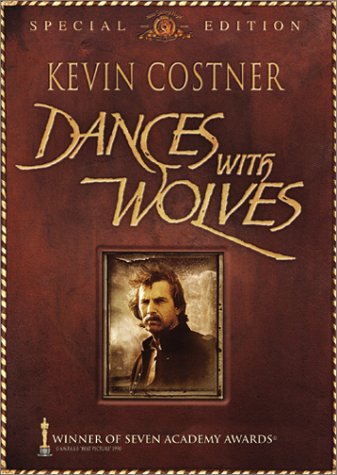
Year: 1990
Director: Kevin Costner
Starring: Kevin Costner, Mary McDonnell, Graham Greene, Rodney A. Grant, Floyd Red Crow Westerman, Tantoo Cardinal and Jimmy Herman
Plot: A burned-out Union soldier about to have his leg amputated tries to commit suicide, but instead ends up a hero. A general’s doctor saves his leg and the officer, John J. Dunbar, is transferred to the western wilderness. He meets a tribe of Sioux and drops out of white man’s society.
Why It Shouldn’t Have Won: “Dances With Wolves” is like a wine you fell in love with at a trendy restaurant, bought a bottle of it, and then a couple of years later you pop it open it has turned to vinegar. And, of course, it surprises you. But try watching “Dances With Wolves” again and you’ll find that it’s heavy-handed and very preachy. It also treats its Native American subjects as children rather than a race of adults. And, of course, the white men are portrayed as despicable monsters. It’s all too simplified, black-and-white and as a result, the movie suffers for it.
The Oscar Competition: “Awakenings,” “Ghost,” “The Godfather, Part III,” “Goodfellas.”
Film That Should Have Won: “Goodfellas.”
Rain Man

Year: 1988
Director: Barry Levinson
Starring: Dustin Hoffman, Tom Cruise and Valeria Golino
Plot: A young car dealer in need of money when he finds out his estranged father has died. Heading home to settle the estate, he discovers that he has an older brother who is an autistic savant and been institutionalized for most his life. In order to get more money out the estate, dealer kidnaps his brother and they travel together across country – bonding.
Why It Shouldn’t Have Won: It’s difficult not to like “Rain Man.” But here is another actor (Dustin Hoffman) “going retard” to earn a best actor award. Hoffman manages to avoid the syrupy performance that plagued Tom Hanks in “Forrest Gump,” but the problem with “Rain Man” his character never transcend beyond Dustin Hoffman playing an autistic guy. In the end, “Rain Man” isn’t a bad movie – it just isn’t Oscar caliber and was only the third best movie nominated in 1988.
The Oscar Competition: “The Accidental Tourist,” “Dangerous Liaisons,” “Mississippi Burning, “Working Girl.”
Film That Should Have Won: “Dangerous Liaisons.”
Oliver!

Year: 1968
Director: Carol Reed
Starring: Ron Moody, Shani Wallis, Oliver Reed, Harry Secombe, Mark Lester, Jack Wild and Hugh Griffith.
Plot: An adaptation of the Dickens’ novel “Oliver Twist.” An orphan escapes a work school to become a pickpocket under the control of Fagin and Bill Sikes. A kindly and wealthy family later adopts him.
Why It Shouldn’t Have Won: Amazingly, 1968 gave us “The Heart is a Lonely Hunter” and “2001: A Space Odyssey,” and yet neither of these films were even nominated. Instead, we get a musical of one of Charles Dickens’ most damning novels of the British welfare system and class structure. One can only imagine how Dickens would have reacted to a group of destitute boys singing “Food Glorious Food” while dancing on streets of slop.
The Oscar Competition: “Funny Girl,” “The Lion in Winter,” “Rachel, Rachel,” “Romeo and Juliet.”
Film That Should Have Won: “The Lion in Winter.”
The Greatest Show on Earth

Year: 1952
Director: Cecil B. DeMille
Starring: Betty Hutton, Cornel Wilde, Charlton Heston, Dorothy Lamour, Gloria Grahhame, Jimmy Stewart and Henry Wilcoxon,
Plot: A struggling circus hires the Great Sebastien to pump some life into the show. His arrival displaces Holly from her spot on the trapeze and the two enter into a dangerous competition against each other while fighting off romantic entanglements outside of the Big Top.
Why It Shouldn’t Have Won: This may be the worst picture to ever bring home the Oscar and in light of the superior competition (notably “High Noon” and “The Quiet Man”) one can only wonder if uber-Hollywood power broker Cecil B. DeMille called in some markers. Vapid, big budget movie making at its tacky worst with a only a flimsy plot and endless shot of real circus performers and kids reacting to it.
The Oscar Competition: “High Noon,” “Ivanhoe,” “Moulin Rouge,” “The Quiet Man.”
Film That Should Have Won: “High Noon.”
How Green Was My Valley

Year: 1941
Director: John Ford
Starring: Walter Pidgeon, Maureen O’Hara, Anna Lee, Donald Crisp and Roddy McDowall.
Plot: The trials of ordinary people in a Welsh coal mining town.
Why It Shouldn’t Have Won: An overly sentimental and romanticized pandering of the class that won the Academy Award because the United States was in the midst of World War II. The coal miners actually march home with picks on their shoulders singing loudly and happily as they exit the mines. The story is supposed to expose the harsh working conditions, but the movie’s kid-glove treatment of the miners dooms it.
The Oscar Competition: “Blossoms in the Dust,” “Citizen Kane,” “Here Comes Mr. Jordan,” “Hold Back the Dawn,” “The Little Foxes,” “The Maltese Falcon,” “One Foot in Heaven,” “Sergeant York.”
Film That Should Have Won: “Citizen Kane.”
Going My Way

Year: 1944
Director: Leo McCarey
Starring: Bing Crosby, Barry Fitzgerald, Frank McHugh, James Brown, Gene Lockhart and Jean Heather.
Plot: A singing and dancing priest brings joy and solutions to social problems to his parish.
Why It Shouldn’t Have Won: Bing Crosby as a priest who will break out into song at any opportunity must have charmed the Academy weary of the bloodshed of World War II. Because there really isn’t another reason for this forgettable movie to even be considered among the best pictures of 1944 or any other year. If you put “Going My Way” in a cup of coffee, you’d return it for being too sweet. It was up against three films that were far superior – especially in hindsight.
The Oscar Competition: “Double Indemnity,” “Gaslight,” “Since You Went Away,” “Wilson.”
Film That Should Have Won: “Double Indemnity.”
Did we miss one? Tell us which movies you think are the worst to win an Oscar.

Fantastically Bad Cinema: X-Files: I Want to Believe
Thanksgiving Movies Rejected by Hollywood
7 Fight Scenes That Flow Like Poetry
Labels: Academy Awards, Movie Review, Movies
 StumbleUpon |
 Digg |
 del.icio.us |
 Reddit |
 Technorati |
 E-mail

How fantastically bad is “The X-Files: I Want to Believe”?
Well, it looks as if director Chris Carter murdered the franchise. It doesn’t feel like one of those “accidental homicides” either. This feels deliberate and mean.
It’s as if Carter waited under a broken streetlight and kidnapped “The X-Files” at knifepoint as it walked home from a fortune telling expo. He tied it up with duct tape and used an oily rag as a gag before shoving it into his car trunk with his golf clubs. He drove it out to an abandoned slaughterhouse on a desolate country road somewhere.
 In the silvery moonlight, he chopped “The X-Files” to pieces with a dull, rusty axe: a horrible, messy dismemberment. Then he dug a hole in the cow manure out back and buried the whole bloody mess in a shallow grave – right next to his writing and directing talent.
That’s how bad this movie is.
And I say this from the vantage point of a diehard fan of the long-running FOX-TV series (which ran from 1993 to 2002). It was my favorite show. For those unfamiliar with “The X-Files,” the show was about two FBI agents, Fox Mulder (played by David Duchovny) and Dana Scully (Gillian Anderson), who investigated paranormal crimes. But the real pleasure of the series was its interaction between “Spooky” Mulder and his logical, scientific partner.
“X-Files: I Want to Believe” was supposed to be the comeback movie that revived the franchise. That won’t be happening. Not unless Carter hires the crazy Russian scientists from this film to try and revive the “The X-Files” from the dead.
The premise for “The X-Files: I Want to Believe” was a stand-alone feature. Carter was going to leave behind the space alien mythology of the series and craft one of the series popular “creature features.” These were all-inclusive, single episodes that resembled a mash-up between “The Twilight Zone” and “Kolchak: The Night Stalker.”
Examples from the TV series included having Mulder and Scully investigating Haitian zombies, exorcism, gargoyles, and a plethora of weird serial killers. “X-Files: I Want to Believe” is supposed to be about a serial killer.
There are many problems here – too many to name really. But the real fault lies with the plot, or the lack of a comprehensive one. It has to do with a gay Russian human organ deliveryman who kidnaps women to harvest their body parts – arms, legs, hands, etc. – for his dying husband (they were married in Massachusetts). Why he wants to replace his lover’s anatomy with female body parts when he’s “gay” is never explained.
One of the victims of the deliveryman is a FBI agent – which sets the plot in motion.
We’re also expected to believe this lone, middle-aged deliveryman manages to finance an operation that includes a creepy, but fully functioning hidden laboratory, a staff of rogue Russian surgeons, and lots of expensive medical equipment. He must belong to a great deliveryman union.
 This deliveryman manages to outwit Mulder, Scully, and an enormous task force of FBI agents (led, believe it or not, by Amanda Peet – who looks all of 25 years old). The guy is, apparently, a brilliant criminal mastermind.
The miscues start to fall like rain at this point. Mulder and Scully are now a couple – kind of bored with each other. There’s no passion, no chemistry between them. One of the best parts of the TV series was the smoldering, unspoken passion between them. All gone.
Now retired (and living in a part of Virginia that apparently has more snow than Alaska), the FBI requests Mulder’s return because a pedophile ex-priest is having visions of the kidnappings. Are the visions real?
Who cares?
There’s no mystery, no suspense, and in the end, Mulder proves to be more of liability than an asset. He manages to get an FBI agent killed, get ambushed by the killer, beaten up and drugged by an elderly surgeon, and needs to be rescued by Scully – using a log as her weapon of choice.
All of these missteps are linked together by logic and evidence only found in poorly written movies and bad mystery novels.
The result: a dead on-arrival motion picture.
Now will somebody please arrest Chris Carter?
Read More Fantastically Bad Cinema:
Tropic Thunder
Music & Lyrics
The Jewel of the Nile
Labels: Bad-Cinema, Movie Review, Movies, X-Files
StumbleUpon |
Digg |
del.icio.us |
Reddit |
Technorati |
E-mail
“Check it out. Dustin Hoffman, 'Rain Man,' look retarded, act retarded, not retarded. Counted toothpicks, cheated cards. Autistic, sho'. Not retarded. You know Tom Hanks, 'Forrest Gump.' Slow, yes. Retarded, maybe. Braces on his legs. But he charmed the pants off Nixon and won a ping-pong competition. That ain't retarded. Peter Sellers, "Being There." Infantile, yes. Retarded, no. You went full retard, man. Never go full retard. You don't buy that? Ask Sean Penn, 2001, "I Am Sam." Remember? Went full retard, went home empty handed.”
-- “Tropic Thunder” controversial speech
“Tropic Thunder,” the movie critics darling from the summer of 2008, suffers from the massive sin of being slightly amusing and painfully disappointing (once you've seen the trailer there's no reason to see the rest).
Critics drooled all over it because Director Ben Stiller skewers Hollywood insiders and there’s nothing that movie critics fawn over more than a movie that savages directors, actors, agents, and filmmaking (because they all secretly hate the business). Besides, the critics can actually understand the in-jokes.
The movie was a huge marketing success – web sites, viral videos, and a massive push by “insiders.” It raked in more than $110 million to qualify for blockbuster status. The hype was that “Tropic Thunder” was raw and controversial (mental health advocates gave the film an enormous boost when they protested against the depiction of mentally-handicapped people in the film).
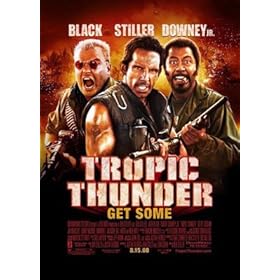 Unfortunately, “Tropic Thunder” is an overhyped dud done in by a lame plot, variety show quality gags, and the seriously defective acting of one Ben Stiller. And the supposedly no-holds barred gags? Saturday Night Live is more controversial.
Here’s the concept: a group of self-absorbed A-list actors are filming a Vietnam movie. Losing control of the movie, the director decides to take his pampered actors into jungle for some guerilla filming. A landmine kills the director and the actors – left on their own – are attacked by real drug-dealing rebels (and think the action is part of the script).
Bored yet?
The plot, of course, only works if the characters are idiots – which they are.
Stiller has the acting range of a turnip. Like his character in “Zoolander,” who uses the same pursed-lip expression in all of his photo shoots, Stiller plays the same character over and over and over again. He’s the Groundhog Day of actors.
This time Stiller plays washed up action star Tugg Speedman (a cross between Rambo and Tom Cruise). He’s hopelessly insecure and utters dialog like: “Somebody said they were close to me?” And, of course, he pouts like only Stiller can pout.
Every time Stiller is on screen is a grating experience. You want to scream: “Stop the madness!” at the top of your lungs.
Robert Downey Jr. fairs better as the Oscar winning method actor Kirk Lazarus. Lazarus has a skin pigmentation process so he can play a black sergeant – and is completely in-character throughout the film. Unfortunately, the role limits Downey’s maniac comedic skills – and he ends up being a one-trick pony. The gag is funny – for about five minutes.
Then there is Jack Black, who is completely wasted as the drug-addicted “fat” comedian. The role is a cliché wrapped in a stereotype and delivered as a typecast. He actually bites a bat in half because it “stole” his drugs and is thrown half-naked over a water buffalo. Cheap gimmickry at its finest.
But the real problem with “Tropic Thunder” is the stupidity of the plot. Nothing makes sense. Once the actors get in the jungle, the film plays like a series of skits cobbled together with duct tape. It’s hard to watch without that sinking feeling in your belly that you have been duped.
The real pain here?
“Topic Thunder” was so successful that it will probably spawn a sequel.
“Stop the madness!”
More Fantastically Bad Cinema:
Rambo
Blade Runner
From Dusk 'Til Dawn
Labels: Bad-Cinema, Ben Stiller, Movie Review, Tropic Thunder
StumbleUpon |
Digg |
del.icio.us |
Reddit |
Technorati |
E-mail
Ironically, for a film that is 86 years old, “Nosferatu” starts off, like a bad, self-produced YouTube video.
Thankfully, it improves.
I’ve always wanted to watch the first vampire movie ever made and the one that is often considered the greatest adaptation of Bram Stoker’s “Dracula.” It’s an unofficial version and Stoker’s estate actually sued German Director F.W. Murnau over it. All copies of the film were ordered destroyed.
 Obviously, it survived.
Murnau, who died in a car crash at age 43, didn’t even try very hard to disguise the movie: naming Harker Huffer and Count Dracula Count Orlok, leaving little doubt about the source material.
It’s difficult for a generation weaned on special effects, surround sound, and the miracle of HD-TV to really appreciate “Nosferatu” (1922) without boredom setting in (even at a short 80 minutes). The pacing is arduous and editing reflects the limited technologies of the day.
“Nosferatu” is black-and-white (and most versions, including the one I watched, are scratchy and a bit faded on the edges). It’s also a silent film, the narrative constantly interrupted by written dialog boxes.
There’s also a lot of overacting employed by actors of the day (after all they needed to convey in action what is now done through speech). But to modern audiences the exaggerated facial expressions get tiresome rather quickly.
Yet if you settle into the right frame of mind – there’s a lot to admire in “Nosferatu.” The highlight is actor Max Schreck as Count Graf Orlok. He’s simply repulsive. Unlike the modern versions of vampires as charming seducers, Schreck’s Orlok is a monstrosity. He’s a hideous skeletal being with long bony fingers, ears like a bat, and fangs that look like they belong on an oversized rodent. There’s nothing enchanting about him.
He’s creepy. Very creepy. The famous shot of him rising up out of coffin – filled with soil from the graveyard of Black Death victims – his body stiff and straight – and it’s easy to understand why the film has lasted more than eight decades.
Murnau accomplished a lot with his limited resources. He expertly uses light and shadow. In fact, Schreck’s shadow could be considered another character in the film. And there are marvelous symbols scattered throughout the film: from a skeleton clock to the Venus Fly trap eating a bug. Murnau is able to cobble together a compelling narrative with few dialog cards, allowing, for the most part, the action to unfold.

But like any horror movie, the real question is: Is “Nosferatu” scary?
The answer, unfortunately, is: hardly.
By today’s standards, the film would have a difficult time scaring a five year old. It has eerie moments – and Schreck is in most of them – but it’s a tame ride for anyone who has watched John Carpenter’s “Halloween” or Stanley Kubrick’s “The Shining.” Amazingly, the film was banned for “excessive horror” in Sweden until 1972.
“Nosferatu” remains an oddity, a film any serious horror aficionado should watch in order to understand the origins of the genre. The film’s greatest impact may have been in bringing the world the concept of sunlight killing vampires. “Nosferatu” is the source material for that bit of legend.
Watch it, but don’t expect too much. The hype and the legend around “Nosferatu” are much better than the actual film.
7 Scary Water Movies
Ode to "Dawn of the Dead"
5 Questions About: Dracula
Labels: Horror, Movie Review, Nosferatu, Vampire
StumbleUpon |
Digg |
del.icio.us |
Reddit |
Technorati |
E-mail
“Did they look like psychos? Is that what they looked like? They were vampires. Psychos do not explode when sunlight hits them, I don't give a fuck how crazy they are!”
-- Seth Grecko (George Clooney)
It’s not a good sign when your vampire movie begins to suck donkey balls when the vampires show up.
But that’s the unfortunate circumstance in “From Dusk Till Dawn” (1996).
Make no mistake: “From Dusk Till Dawn” is B-movie camp all the way. Director Robert Rodriguez and Screenwriter Quentin Tarantino embrace cheesy cinema in much the same way that John McCain is now gushing about government regulations: a bit over the top.
B-movies can be artful. Look no further than Rodriguez and Tarantino’s recent collaboration on “Grindhouse” (2007).
But 11 years ago, they didn’t quite have the recipe down yet. The result is that “From Dusk Till Dawn” is an uneven effort that tumbles down the rat hole of fantastically bad cinema right about the time the strippers turn into blood suckers.
The first half of the film is downright good: a gritty, hard-boiled crime caper featuring odd-ball personalities and crisp, crackling dialogue. It starts out with bank robbers Seth (George Clooney) and Richard (Tarantino) Gecko on the run in southern
The two outlaws – dressed like they were part of the “Reservoir Dogs” (1992) crew – have kidnapped a bank teller and speed off into the desert. They end up at Benny’s Liquor Mart for the best scene of the movi e.
e.
The liquor store clerk, Pete Bottoms, is chatting with Texas Ranger Earl McGraw who has come in for a beer. They babble on a bit before the Ranger mentions that the Geckos are coming through and if he sees them – “pay back.” He goes to use the toilet and we find out the Geckos are already in the liquor store – holding two female customers hostage.
Of course, it turns into a blood bath – but not before we get some patented snappy dialogue from Tarantino. The Geckos end up at a sleazy motel with the kidnapped cashier. The second best part of the movie is when Seth leaves the poor woman alone with misbehaving brother, Richie. When Seth gets back – well, only chunks of the woman are left.
If only the movie continued with the story of the Geckos and their run from the law.
Alas, it does not.
Instead we’re introduced to Harvey Keitel as Jacob Fuller, a minister on a trip with his two teenage children (Juliette Lewis and Ernest Liu). Fuller has lost his faith after the death of his wife and he’s decided to ride his Winnebago into the sunset.
The Fuller family has the misfortune of meeting up with the Geckos – and, well, a kidnapping ensues. The Geckos (with Fullers in tow) escape to
Here’s the catch. At the “Titty Twister” the strippers and staff are vampires that use the bar as a lure to unsuspecting truckers and bikers (we never get any explanation). Here the movie stalls -- badly. It transforms from crime spree flick into a cheap, not-very-frightening horror movie. The special effects are terrible, the campy nature of film slides into the ludicrous, and the one-liners become groan inducing.
The transformation from one movie genre to another is jarring. There’s no segue at all. Suddenly, we’re in a cheesy horror movie. Wham-O!
There are so many stupid things happening in the second half that its enough to make you vote Republican: one of the characters is named Sex Machine (he has a gun at his crotch that fires when erect); the characters actually stop and converse while in the middle of a vampire melee; and then there’s Harvey Keitel eye-rolling monologue trying to convince his kids to kill him when he transforms into a vampire after being bit. It hurts.
Add to this pap the miserable vampire make-up – I’ve seen better Halloween costumes – and the clunky new characters and you’ve got some seriously bad film making.
Do yourself a favor. Watch the first half – then turn it off.
More Fantastically Bad Cinema:
Pirates of the Caribbean: At World's End
Labels: Bad-Cinema, From Dusk Till Dawn, Horror, Movie Review, Movies
StumbleUpon |
Digg |
del.icio.us |
Reddit |
Technorati |
E-mail
Observations and Rants While Watching the Horror Movie That Changed the Genre
I saw the original “Halloween” for the first time when I was in eighth grade. To say it scared the shit out of me is to reduce the term “scared the shit out of me” to meaninglessness. The movie gave me nightmares – for weeks. Hell, it changed my perceptions on fear. I still think about butcher-knife welding madmen every damn time I hear a strange noise in the night.
Can it be argued that the United States’ obsession with serial killers started with this low-budget slasher flick (that cost about $300,000 to make)? Can it be argued that Michael Myers – the demented seemingly supernatural killer – is the grandfather of Hannibal the Cannibal, Jason Voorhees, Darkly Dreaming Dexter, Freddy, and all the rest of our gloriously worshiped Hollywood mass murderers?
Yes, it can be. So on the year that “Halloween” turns 30 I decided to rent the 25th anniversary edition and watched it – alone – to take only my second look at the horror movie that changed everything.
Here’s my real-time running commentary on the film (the parenthetical comments were all added later):
- John Carpenter’s piano score is one of the creepiest themes to a horror movie. The opening sequence shows a jack o’lantern with a bemused expression -- a candle glowing within it's plump interior. The music pounds away and I can feel a lump growing in my throat – this is truly a moment of hesitancy and I’m thinking: “Why the hell am I doing this?” The music grows and the camera gets closer and closer to the pumpkin and the bemused expression starts to subtly change – into a very demented face and then it all goes dark and I know I’m friggin' in for it.
- The first person point of view is brilliant. The sister is making out with her boyfriend – so you know that her number is up. Where did the idea that sex will get you killed in a horror movie come from anyway? Oh, yeah -- "Halloween.” It was John Carpenter that introduced for modern audiences the concept of “immoral” teenagers literally getting the knife. One of the criticisms of the film is that sexual active characters are the first die. Carpenter dismisses this as nonsense – but there it is.

- The first time you see the movie – you think the first-person is some adult killer. He puts on the mask and just starts hacking up his sister. It’s a terrible, shocking scene. When he runs down the stairs and the car pulls up with his parents inside. Wow. There’s this little kid in a clown suit and the knife is so big in his hand it looks like a sword. Blows you away. Even now when I know its coming. Is there a better opening for a horror flick?
- Donald Pleasence is an ugly bastard. Why do I immediately start thinking about Nazis when I see him?
- Pleasence is driving with a nurse who is dressed like Florence Nightingale. She’s actually wearing a black-and-red cape. I'm not kidding.
- Uh oh, here comes the music!
- There are mental patients wandering the lawn – at night, in the rain! Donald don’t leave the goddamn car!
- Michael has escaped and Donald shouts: “The evil is gone! The evil is gone from this place!” Jesus, what a jackass.
- Jamie Lee Curtis makes her appearance at 11 minutes in. She’s a high school girl in nearby Haddonfield – where Michael Myers grew up. Hmm. He escaped from the mental institute. Wonder where the plucky bastard is heading?
- Jamie Lee is hot.
- Holy crap! Michael is in the goddamn house! Oh, man, he’s following her and you can hear him breathing.
- Classroom scene. Look at all those terrible 70s haircuts. Nice bangs.
- Whoa, Michael is outside the school watching Jamie. Damn this movie is scary (It’s no wonder Entertainment Weekly named it the 5th scariest of all time).
- Donald finds a truck that Michael stole and runs off. The camera pans back and there’s a dead body in the bushes. For those counting – Michael has already murdered two people: his sister and this unknown pick-up truck driver. Donald, by the way, was wearing a suit with a vest. Quite sharp.
- Jamie is walking with her two girlfriends – and the girlfriends share a smoke. They’re dead (the girlfriends are P.J. Soles and Nancy Kyes. Soles is probably best known as the sexy MP who romanced Bill Murray in “Stripes.” Kyes appeared in “Halloween II” and “The Fog” and then pretty much disappeared).
- Carpenter just doesn’t let up. One of the incredible things about the film is how he makes the scenes so tense and creepy – even when they are taking place in broad daylight. Michael drives slowly by the Jamie and the girlfriends and one of them yells out at him. He brakes in the middle of the road. It’s really quite scary – yet it is right after school.
- By the way, if its autumn in Illinois then why are all the trees green? (Turns out the film was done in California – in the late spring. The crew made fake dead leaves and threw them all over the set. Couldn’t do much about the real trees, however, and apparently there are a few palm trees in the movie).
- The music really does add an element of eeriness to the entire proceedings.
- There’s Michael again behind a shrub. This guy is quite persistent.
- Hmm. Suddenly the streets and sidewalks are soaking wet. When did it rain?
- Michael’s in the laundry in the backyard!
- Donald is back – checking out the graveyard of Michael’s sister, Judith. The headstone is gone. Donald says: “He came home.” Captain Obvious!
- Fabulous. “Don’t Fear (the Reaper)” by Blue Oyster Cult is playing in the car with Jamie and Kyes. Michael, of course, is following them.
- Whoa. It’s suddenly pitch black. Night falls fast in Illinois.
- Apparently, Michael ate a dog when hiding out in his old, abandoned house. Donald and the Sheriff are checking out the house. Donald tells the Sheriff “This is no man.”
- Oh, man. A rock gets thrown through the window. I may have a skid mark on my boxers.
- Donald is talking about dark eyes and devil eyes. He thinks Michael is evil and he spent six years trying to reach him and another six trying to keep him locked up.
- Look at the size of those telephones!
- Kyes is in deep, deep trouble. She just took off her shirt and pants in the kitchen and Michael is watching her. Call me nuts, but I don’t think he likes naked women much.
- Michael kills another dog. Death count: 2 dogs, 2 humans.
- Jamie and the boy she babysits are watching “The Thing,” which John Carpenter would end up remaking (in 1982).
- The people Kyes are babysitting have no washer and dryer in the house. It’s in a dark shed in the backyard. Very unfortunate for her. Oh, man, here it comes!
- She made it.
- Michael is like a jack-in-the-box.
- Kyes is alone again – after dropping off her ward with Jamie. The way she’s parading around it’s only a matter of when. She in her car and she leans forward to wipe condensation off the windows (really nice touch) and then Michael pops out of the backseat and kills her.
- Body count: 3 dead people.
- P.J. Soles just showed up with her boyfriend – and they’re drinking beer. They’re heading into the house where Kyes was babysitting and now it’s completely dark. Now they are making out. Won’t these kids ever learn?
- Now they’re upstairs in bed and Michael’s shadow passes across them.
- Soles has an annoying giggle.
- Michael just pinned the boyfriend to the wall with the butcher knife. He standing back to admire his handiwork. Brutal.
- In one of the more twisted scenes, Michael puts a sheet over his head and put glasses on it. He goes to see Soles. She calls Jamie, who – swear to God – is knitting. Michael then proceeds to choke Soles to death with the phone chord.
- Body count: 5 dead people
- Donald sees the car Michael stole down the street. You think he would have, you know, turned around earlier.
- Jamie has walked acr
 oss the street – into the house of death.
- She creeps up the stairs and there is Kyes lying on the bed with her throat slashed and Judith Myers gravestone behind her. She whimpers, bangs into the closet door, and the boyfriend swings out (putting another skid in my poor boxers). Jamie screams. Run, Jamie, run!
- And then another door squeaks open and there’s Soles. Another scream. Jamie really can scream.
- Then Michael is behind her and stabs – and actually misses. The bastard rips her shirt and she falls down the stairs. But how did he miss?
- She runs across the lawn screaming help. But the neighbors don’t do anything. Sounds more like California than Illinois.
- Here comes Michael. She’s banging on the door trying to get in and he walks across the street. It’s a tense scene. But the little boy finally does let her in. Unfortunately, he’s already in the house.
- Michael pops up from behind the couch – and misses again. It’s a bloody easy shot! The dude is 0 for 2. So Jamie sticks a knitting needle in his neck.
- Donald is wandering the streets aimlessly.
- Jamie goes to get the children – but she should have called 911 first. Here comes Michael again. Jamie locks herself in the closet and the rattling starts. This is the famous scene with the light bulb swinging and then she stabs him in the eye with a coat hanger and then with his own knife. Jesus.
- Michael is up again. He grabs Jamie and starts to choke her. Donald runs in and shoots the living blazes out of him. Hits him like six times and he falls out of the second floor onto the ground. Jamie says: “Was that the Boogie Man?” Donald says: “As a matter of fact, it was.”
- When he looks down. Michael is gone. The music starts and Donald looks really, really scared.
- The movie ends with Jamie whimpering. Then the breathing from every where.
- Damn that’s a scary movie.
Ode to "Rope"
10 Bizarre Serial Killers in History
Everything You Ever Wanted to Know About Jack the Ripper
Labels: Halloween, Movie Review, Movies
StumbleUpon |
Digg |
del.icio.us |
Reddit |
Technorati |
E-mail
A Celebration of one of Hitchcock's Best Films
Alfred Hitchcock’s “Rope” (1948) is a claustrophobic masterpiece – a spiraling descent into the dark recesses of human nature. Hitchcock explores the rough edges of ego and impulse and how they can lead to horri ble consequences.
It may be Hitchcock’s greatest movie. Certainly it is his most tightly constricted piece – filled with long takes in near real-time. It’s an amazing achievement of controlled tension.
The only exterior shot in the film comes during the opening credits. The camera rests on an apartment window with the curtains pulled shut. There is a muffled scream and then suddenly we’re inside the apartment where David Kentley is being strangled to death by two of his friends.
The movie setting goes internal. It reflects the direction of the film because we’re about to get inside the minds, motivations, and the personalities of the characters. We’re trapped inside the apartment for good – just like poor, dead David who has been stuffed into a chest.
His murderers are two wealthy, intellectual young men named Brandon Shaw (John Dall) and Philip Morgan (Farley Granger). They have killed their friend for one reason – to experience the sensation of murder. They want to pull off the perfect crime – and revel in their superiority.
To make matters even more horrifying, Brandon and Philip are throwing a dinner party and inviting David’s family, his girlfriend (Janet), the girlfriend’s ex-boyfriend, and their former academy teacher Rupert (their mentor who has inspired their crime with his misinterpretations of Nietzchian philosophies of the Superman).
“Nobody commits a murder just for the experiment of murder,”
But the celebration isn’t what
But even the cool and calm
Rupert (Jimmy Stewart) doesn’t show up until 30 minutes into the film. And once he arrives the film becomes his. Stewart – one of the greatest actors in American history – is amazing in “Rope.” Personally, he didn’t like his performance, but the movie is in essence about the transformation of Rupert – his growth from a bitter cynic into a connected human b eing. And it works.
Here’s a peek into Rupert. Introduced to Janet (Joan Chandler):
“Ah, Miss Walker,” he says.
“How did you know?” she asks.
“
“Did he do me justice?”
“Do you deserve justice?” he asks and then waltzes off with a smirk.
The commanding personality of Rupert begins to melt
Rupert – a naturally suspicious and cunningly observant man – gets his first thread to pull when Brandon – a game player – serves chicken for dinner. Philip no longer eats chicken after having to strangle one at
He comes up with gems like this: “You’re more than unusually allergic to the truth tonight Philip. That’s the second time you haven’t told it.”
Ultimately the keen Rupert finally discovers the grim secret in the bottom of the trunk. It’s a chilling scene. The movie ends with Rupert throwing open the apartment window and letting the outside cleanse the inside of the apartment with its noise and voices.
And Philip utters the last words of the movie: “They’re coming.” They don't make movies like "Rope" anymore. But they should.
Fantastically Bad Cinema: Rambo
How Hollywood Ruined Beowulf
Labels: Hitchcock, Movie Review, Movies, Ode To, Rope
StumbleUpon |
Digg |
del.icio.us |
Reddit |
Technorati |
E-mail
The fourth installment of the Rambo series – simply titled “Rambo” (amazingly that wasn’t taken) – has an uncomplicated message:
Non-violence is for pussies.
That’s why more than 230 people are killed – on screen – in this blood lust of a movie. The violence is graphic: limbs blown off, skulls crushed under boots, throats torn out, and heads decapitated.
But all in the name of truth and justice!
“Rambo” (2008) exploits the deplorable situation in
"Rambo" is a bad film. But it wants to be more than the sum of its parts. It wants to be an "important" action film -- blood, sweat, and bullets with a message. But it ain't.
“Rambo” features a lumbering Sylvester Stallone reprising his role as the conflicted, ultra-violent ex-Green Beret John Rambo. Stallone resembles the giant from Jack in the Beanstalk as he thuds heavily across the screen grunting and muttering gems like: “They would've raped her 50 times and cut your fucking heads off” and “Fuck the world.” He's supposed to be the wise old warrior -- but he comes across as a retarded oaf.
As the movie opens, we find a sweaty, bloated Rambo living in
The missionaries, with the exception of the pretty blond Sarah (played by Julie Benz), are portrayed as a bunch of sheltered, self-righteous wimps. When a perspiring Rambo mumbles that the only way to help the victims is to smuggle in weapons, the missionaries become aghast. Rambo, oozing like a sponge, scowls at them.
It’s amazing that the Christian Right didn’t go ballistic over “Rambo” because the underlying message of the film is that the Christian approach to conflict resolution: humanitarian aid, peaceful co-existence, etc. is crap. The movie portrays these do-gooder Christians as arrogant, weak-kneed morons.
As one of the mercenaries later growls at the leader of the church group: “God didn't save you, we did.”
Rambo reluctantly takes the missionaries into
The missionaries aren’t killed, of course, but taken prisoner so they can be tortured in creative ways (such as being devoured alive by starving hogs). Rambo, dripping wet after a rain storm, is hired by the missionary group’s reverend to lead a pack of mercenaries into
“There isn't one of us that doesn't want to be someplace else. But this is what we do, who we are. Live for nothing, or die for something,” Rambo mumbles at one point  (wetness dripping from his forehead).
Now the real blood sport begins. The movie makes sure to justify all of the ruthless violence administered by Rambo – because the bad guys have already committed so many atrocities that the audience can only root for Rambo to kill them all.
And he does a damn good job. In fact, it's fantastically bad cinema at its finest (and dampest).
Unfortunately, “Rambo” doesn’t elevate much beyond the gore and the eye-for-an-eye mentality. What the movie does best is show the results of human growth hormone on the body of a 61-year-old actor (visualize: waterlogged).
Fantastically Bad Cinema: CocktailM. Night Shyamalan: I See Bad Director
Is Indiana Jones a Misogynist?
Labels: Bad-Cinema, Movie Review, Movies, Rambo, Sylvester Stallone
StumbleUpon |
Digg |
del.icio.us |
Reddit |
Technorati |
E-mail
M. Night Shyamalan's Amazing Fall From Grace
It’s an ancient story: one day you’re the shiniest, most magnificent trout in the river and the next day they’re gutting you with a fillet knife and tossing your head into a bucket of guts.
Welcome to Hollywood M. Night Shyamalan.
“The Happening,” which opened last week to an onslaught of gleefully negative reviews, never stood a chance. By most accounts the film is a middle-of-the-road thriller with some spooky moments and a rather mediocre twist at the end.
New York Times film critic Manohla Dargis captured the mood perfectly:
“A fine craftsman with aspirations to the canon, this would-be auteur has, in the last few years, experienced a sensational fall from critical and commercial grace, partly through his own doing — by making bad movies and then, even after those movies failed, by continuing to feed his ego publicly — and partly through the entertainment media that, once they smell weakness, will always bite the hand they once slathered in drool.”
The reviews for “The Happening” have been vicious. Here’s Ty Burr, film critic of the Boston Globe:
“M. Night Shyamalan has metaphors to torture. Actors and audiences, too. “The Happening” asks what would happen if Planet Earth decided to reject the species bedeviling its surface, and the best it can come up with is a slack, increasingly ludicrous B-movie about people running in terror from... wind.”
Here is Justin Chang of Variety’s scathing observation:
“One might charitably describe "The Happening" as a transitional work for M. Night Shyamalan. In an attempted rebound from the critical and commercial calamity of "Lady in the Water," the writer-director has scaled back most of his characteristic touches -- the contorted horror/fantasy mythology, the "gotcha" twist ending, even his trademark cameo -- instead serving up a patchy, uninspired eco-thriller whose R rating (a first for Shyamalan) looks more like a B.O. hindrance than an artistic boon. After an initial bloom of interest, the Fox release will likely wilt quickly in the summer heat.”
It’s hard to believe that “The Sixth Sense,” the highest grossing movie of 1999 ($294 million), was nominated for six Academy Awards, including best director and best picture. Those were the days when Shyamalan was the Moby Dick of fish swimming in the 
So here’s the question. Is M. Night Shyamalan a bad director? Unfortunately for him there’s plenty of evidence in his body of work that “The Sixth Sense” was an aberration (kind of like Bucky Dent hitting that &$#@% homerun against the Boston Red Sox).
Shyamalan has one good movie (well, one great movie actually) and the rest, well, the rest are pretty terrible. Here’s the roll call (and it’s ugly):
Praying With Anger (1992)
An autobiographical film about a young Indian (Shyamalan) who was raised in the United States, but then returns to India on a college exchange. It’s one of those fish out of water stories that secured mediocre reviews and passed into the dustbin of Hollywood also rans without much fanfare. Film critic James Berardinelli called it “tedious because of its lack of originality,” but found glimpses of promise in the young director.
Wide Awake (1998)
A Rosie O’Donnell comedy vehicle (she plays a nun with a baseball jones). The story centers around a boy who loses his grandfather and then tries to find a sign from God that his grandpa is doing all right in heaven. It’s one of those heavy-handed tear-jerking comedies that don’t know what to do with itself. Film critic Roger Ebert gave it two stars. It says a lot that the film was made in 1995 and wasn’t released until three years later.
The Sixth Sense (1999)
There’s no doubt that “The Sixth Sense” is a brilliant psychological thriller. It stuck to the ribs of American culture to the point where the line “I see dead people” became part of the lexicon. The amazing thing about “The Sixth Sense” is where it came from. There’s no evidence in the two films Shyamalan directed beforehand that he had this kind of taut, spooky film inside him.
Unbreakable (2000)
Shyamalan’s take on the superhero origin story. Ray Pride of Salon called “Unbreakable” a soggy follow-up to “The Sixth Sense.” He’s right. The film is plodding and dense and no one seems to be having a good time. It’s the kind of film audiences want to enjoy (and kind of do because of how much they liked “The Sixth Sense”), but ultimately the film is a let down.
Signs (2002)
Probably Shyamalan’s best film after “The Sixth Sense.” It’s an alien invasion movie at the micro-level – as the viewer sees the entire takeover through the eyes of a small farming family. Yet, the movie remains too small – too micro to please. In the end, “Signs” disappoints because the audience is expecting a better pay-off. There’s too much set-up. That’s why Variety’s Todd McCarthy called it “all  smoke and mirrors.”
The Village (2004)
This movie is similar to “Signs.” It is so meager and small – that viewers are left with disappointment. It’s supposed to be a monster movie – but there aren’t any monsters. A.O. Scott of the New York Times said: “It is hard to think of another filmmaker so utterly committed to the predictable manufacture of narrative surprise.” That’s a poignant point about “The Village.” It’s carefully constructed twist feels like it was built in a machine shop.
Lady in the Water (2006)
A disaster. One of the worst movies of 2006 and the winner of two Razzies: for worst director and worst supporting actor (it was also nominated for worst picture and worst screenplay). The plot has something to do with a water fairy being found in a motel swimming pool. James Berardinelli called it “the biggest misfire of M. Night Shyamalan's career.” He’s right – until, of course, “The Happening.”
The evidence in place, we have no choice but to sharpen our own fillet knife and start scraping the scales off of Shyamalan’s hide. The evidence speaks for itself – and we see a bad director.
Is Indiana Jones a Misogynist?
Save Molly: 10 Great Teen Flicks from the 1980s
The 10 Superheroes with the Coolest Powers
Labels: Horror, M. Night Shyamalan, Movie Review, Movies
StumbleUpon |
Digg |
del.icio.us |
Reddit |
Technorati |
E-mail

 RSS Feed
]saddlebrown]tan]maroon](],](])us.st11.yimg.com/us.st.yimg.com/I/getfishy_1912_2002960]Fishboy]black],]1]10]3]1]1]1]1]1]1]1]1]1],](](]papayawhip])])]DaRK^20PaRTY^20ReVIEW]^3A^3ALiterate^20Blather^3A^3A],](](],](]maroon](](](]brown](],](]maroon](](](],]60]10],](](]^23F5ECE1])])]maroon]0.5]0],](](]^23F5ECE1])])]maroon]^23F5ECE1])])]^23666]16]maroon]maroon],](](]maroon](],](]^23333]^238C4614]tan],](](]^23F5ECE1])])],](](]^23F5ECE1])])],](](]^23F5ECE1])])],](]maroon]maroon]15]3]23]18]maroon],](](],](],](](],](]black](](](],](](](],]black](](](],](](]^23333](](](](](],]^2336F]^23333](],](]Posted^20by^20^24AUTH^20at^20^24TIME.]36],](](]black])])]^23F5ECE1])])]^23666]16]maroon]maroon],](](]maroon](],](]^23333]^238C4614]tan]Contributors]]]^24PROFILE]]]DaRK^20PaRTY^20LiNKS]]]The^20Ambrose^20Bierce^20Site])donswaim.com/]Ambrose^20Bierce]Ironic^20Times])www.ironictimes.com/index.html]Ironic^20Times]Gallery^20Voyer])www.voy-art.com/]Gallery^20Voyer]Tintinologist])www.tintinologist.org/]Tintin]Arcanum^20Cafe])www.arcanumcafe.com/]Arcanum^20Cafe]LADA^20-^20Protect^20our^20Kids])da.co.la.ca.us/pok/poklist.htm]POK^20List]Tom^20Caron^20-^20Boston.com])www.boston.com/sports/nesn/aboutus/onair/tomcaron/]TC]The^20Captain^20Humphreys^20Project])www.captainhumphreys.com/]Captain^20Humphreys]Torpedo^20Design])www.torpedodesign.com/]Torpedo^20Design]^3Cimg^20src^3D^22)us.st11.yimg.com/us.st.yimg.com/I/getfishy_1912_2002960^22^20alt^3D^22Fishboy^22^20style^3D^22border^3A^201px^20none^20black^3B^22^20/^3E])www.fishboy.com/]Fishboy]Etc]]]^3Cimg^20src^3D^22)psyc.horm.org/barimg/bar_psycho.png^22^20width^3D^2280^22^20height^3D^2215^22^20alt^3D^22PsycHo^3A^20Free^20Template^20Generator^22^20style^3D^22border^3A^200px^20solid^20black^22^20/^3E]^24PSYCHO]PsycHo^3A^20Free^20Template^20Generator]^3Cimg^20src^3D^22)psyc.horm.org/barimg/bar_firefox.png^22^20width^3D^2280^22^20height^3D^2215^22^20alt^3D^22Get^20FireFox^21^22^20style^3D^22border^3A^200px^20solid^20black^22^20/^3E])www.mozilla.org/products/firefox/]Get^20Firefox^21]^3Cimg^20src^3D^22)psyc.horm.org/barimg/bar_xhtml.png^22^20width^3D^2280^22^20height^3D^2215^22^20alt^3D^22XHTML^20Validator^22^20style^3D^22border^3A^200px^20solid^20black^22^20/^3E])validator.w3.org/check/referer]XHTML^20Validator]Recent^20Posts]]]^24RECENT]^20]]Archive]]]^24ARCHIVE]^20]]ADVERTISEMENTS]]]^20]]^26^2361470^3BPsycHo})


This work is licensed under a Creative Commons Attribution-No Derivative Works 3.0 License.
The Template is generated via PsycHo and is Licensed.