Poem: Sunrise Over Worcester
5 Questions About: Jason Pinter
12 Signs That You Might Be A Banker
The 9 Worst Movies to Win Oscars
Book Review: Narrow Miss for "Above the Law"
5 Questions About: Screaming Blue Messiahs
What's Up With All the Fat, Naked Guys?
Thoughts from the Shadows: The Craziness of Publis...
How to Make a Damn Good Horror Movie
Literary Criticism
Fantastically Bad Cinema
Essays
Under God's Right Arm
June 2006
July 2006
August 2006
September 2006
October 2006
November 2006
December 2006
January 2007
February 2007
March 2007
April 2007
May 2007
June 2007
July 2007
August 2007
September 2007
October 2007
November 2007
December 2007
January 2008
February 2008
March 2008
April 2008
May 2008
June 2008
July 2008
August 2008
September 2008
October 2008
November 2008
December 2008
January 2009
February 2009
March 2009
Alcoholic Poet
Baby Got Books
Beaman's World
BiblioAddict
Biblio Brat
Bill Crider's Pop Cultural Magazine
The Bleeding Tree
Blog Cabins: Movie Reviews
A Book Blogger's Diary
BookClover
Bookgasm
Bookgirl's Nightstand
Books I Done Read
Book Stack
The Book Trib
Cold Hard Football Facts
Creator of Circumstance
D-Movie Critic
The Dark Phantom Review
The Dark Sublime
Darque Reviews
Dave's Movie Reviews
Dane of War
David H. Schleicher
Devourer of Books
A Dribble of Ink
The Drunken Severed Head
Editorial Ass
Emerging Emma
Enter the Octopus
Fatally Yours
Flickhead
The Genre Files
The Gravel Pit
Gravetapping
Hello! Yoshi
HighTalk
Highway 62
The Horrors Of It All
In No Particular Order
It's A Blog Eat Blog World
Killer Kittens From Beyond the Grave
The Lair of the Evil DM
Loose Leafs From a Commonplace
Lost in the Frame
Little Black Duck
Madam Miaow Says
McSweeney's
Metaxucafe
Mike Snider on Poetry
The Millions
Moon in the Gutter
New Movie Cynics Reviews
Naked Without Books
A Newbie's Guide to Publishing
New & Improved Ed Gorman
9 to 5 Poet
No Smoking in the Skull Cave
Orpheus Sings the Guitar Electric
Polly Frost's Blog
Pop Sensation
Raincoaster
R.A. Salvatore
Reading is My Superpower
Richard Gibson
SciFi Chick
She Is Too Fond Of Books
The Short Review
Small Crimes
So Many Books
The Soulless Machine Review
Sunset Gun
That Shakesperherian Rag
Thorne's World
The Toasted Scrimitar
This Distracted Globe
Tomb It May Concern
2 Blowhards
Under God's Right Arm
A Variety of Words
The Vault of Horrr
Ward 6
When the Dead Walk the Earth
The World in the Satin Bag
Zoe's Fantasy
Zombo's Closet of Horror
Bookaholic Blogring
Power By Ringsurf
Historian Michael W. Kauffman’s Account of John Wilkes Booth and the
On the evening of Good Friday, April 14, 1865, John Wilkes Booth stared through a boring hole he made in the door to the balcony where Abraham Lincoln sat with his wife and other couple enjoying the play “Our American Cousin.”
Booth, a famous stage actor from a well-established theater family, steeled his nerves and walked unannounced into the balcony. He pressed a .44 caliber single shot derringer against the back of
Brandishing a knife, Booth slashed the wrist of Major Henry Rathbone and leaped from the balcony railing to the stage below. Turning to look at the audience, Booth lifted the dagger over his head and thundered: “The South shall be free!”
Then Booth darted across the stage, out through the back of Ford’s Theater, and jumped onto the back of his waiting mount. He disappeared down the back alley and into the darkness.
The bullet lodged behind the left eye of the president and killed him at 7:22 a.m., April 15, 1865.
This is how Lincoln, the 16th president of the
Kauffman’s painstaking research sorts through the historical records: diary entries, newspaper accounts, letters, court records, and eyewitness accounts – dismissing everything that can’t be validated by more than one source.
What’s left is a dramatic and authoritative account of Booth’s politics and motivations as he launches into a conspiracy to over throw the Union government and try to give the Confederacy one last chance at victory.
The best way to delve into this captivating history is simply to list the fascinating information Kauffman unleashes on his readers:
- One of the enduring myths of the
- Major Rathbone, the man slashed by Booth during
- Booth was a master of manipulation and perfected the art of blackmail and guilt by association. He carefully framed each of his conspirators, building up a cache of evidence against them. It helped him keep his conspirators in line and prevent even the weakest willed among them from turning against him.
- Booth originally planned to kidnap the president, but changed his mind a few days before Good Friday because of a speech
- Booth assigned himself to kill
- Booth’s elaborate conspiracy stretched through many people and places, but only eight people were tried for being involved in the conspiracy and it’s likely that Dr. Samuel Mudd was innocent. Powell, Atzerodt, David Herold and Mary Surrott were hanged to death for their roles in the conspiracy.
- Booth fled for 12 days after the assassination in the company of Herod. He was shocked at the negative reaction his deed caused, especially in the South. Booth thought of himself as a hero and had a difficult time dealing with the reality that he was a villain. Booth and Herod were finally trapped by Union Calvary in a tobacco barn in
- Kauffman concludes: “If Booth intended to make himself a modern Brutus, he succeeded too well. Like the assassination of Julius Caesar, the killing of
Read our Literary Sketch of Ambrose Bierce's "An Occurrence at Owl Creek Bridge"
Read our 5 Questions About: Shopping
Labels: book review, books, History, John Wilkes Booth, Lincoln, Michael W. Kauffman
 StumbleUpon |
 Digg |
 del.icio.us |
 Reddit |
 Technorati |
 E-mail


(Kim Harrison struck writers’ gold with her Rachel Morgan (also known as the Hollows) series. And it couldn't have happened to a nicer person -- or one with a larger imagination. The novels have been enormous hits and staples on the New York Times bestseller list. The novels take place in an alternate universe where a plague kills about a quarter of the world’s population and reveals that fantasy creatures live amongst the humans: vampires, witches, pixies, elves, werewolves, fairies, trolls and demons. The novels center on Rachel, a pure-bred witch who also happens to be a detective. She has two partners: Ivy Tamwood, a vampire, and Jenks, a pixy. Kim is currently on a book tour promoting her latest book in the series “The Outlaw Demon Wails” and was kind enough to answer five questions about her writing and her successful series)
DaRK PaRTY: Okay, genetically modified tomatoes kill most of the world's population. It's so ludicrous that it makes perfect sense! Where in the world did the idea for the alternative universe that has been the setting for your popular witch Rachel Morgan?
Kim: It makes sense to me, too, but I've had emails from genetic engineers who assure me that it is impossible for a mammalian gene to spontaneously adhere to a vegetable strand of DNA. I don't know. I still have my doubts. But you asked about the idea for an alternate universe. Actually, I had to create an alternative universe to make the story work at all, and making tomatoes the means to humanities dest ruction just seemed . . . right.
As a general rule, urban fantasies fall into two camps. Either the supernatural beings are living in hiding and known only to a few, or the supernatural beings are out of the closet, bringing fear and distrust into play. I didn't want to deal with the fear, so I decided that supernaturals living among us peacefully might be more plausible if I moved the "coming out party" into the past, hence the alternative history starting way back with Watson, Crick, and Roslyn Franklin. Beginning at the dawn of our understanding of genetics also ties in nicely to the themes of genetic manipulation that carry through from book to book to book. It's almost like background music to the trials that Rachel deals with.
But if you really want to get down to the first idea of the story itself, it grew from throwing a witch, a vampire, and a pixy into a bar, and seeing what happened.
DP: What attracts you to write about witchcraft and the supernatural?
Kim: I grew up reading both science fiction and fantasy, mixing Heinlein and Grimm fairy tales with no prejudice. When I picked up that pen for the first time, it was second nature to try to blend the best of both genres. For me, basing a story about witches and vampires in a present-day society helps ground the magic itself, allowing the reader to immerse himself easier and accept the magical aspects with less resistance. It's easier to relate to and sympathize with a character that has the same problems of rent, relationships, dropped calls, and the cops staking out your house. Well, maybe not the cops, but you get the idea.
The concept of magic itself has always fascinated me, and though I know you can't wave a wand and make magic happen, the idea of "what if I could" keeps me trying to find ways that it might. I have a background in the sciences, and the "black box" magic in many stories as I was growing up bothered me. As a reader, I will accept that you can wave a wand and magic happens, but as a writer, I want a plausible reason to go along with it. I want the magic to be backed up with some thought, making me have to go a step or two further to see that, alas, it's just a story. Hopefully by that point, the reader will realize that the magic is the spice, and the true story is of a character dealing with real issues of love, family, security, and the shades of gray morality that touch all of us.
DP: We understand that you guard your privacy closely, but what did you do before you became a full-time writer? And have you been surprised by the enormous success of Rachel Morgan series?
Kim: Before I became a full-time writer, I had a handful of odd jobs. A research project had me running trap lines for two summers, tagging and releasing chipmunks, mice, and one really mad weasel. After graduation, I worked at a large company babysitting sterile algae and later, documenting an experimental product from production, to testing, to disposal. I worked as a vet technician for awhile, until I got bitten one too many times. I was never bitten by the wild animals, but the tame ones were vicious. All of my jobs after a certain point were part-time, leaving me weekends and half-days to work on my writing. I always treated my writing before finding publication as a part-time job. I figured, if I wanted to write for a living, I ought to write like I made my living at it. My favorite piece of advice for aspiring authors is write like you've got the contract.
Have I been surprised by the success of the Rachel Morgan series? Absolutely. Every writer has daydreams of hitting high on the New York Times bestseller list, and to have that dream become a reality is always a shock. But on the other hand, it shouldn't be a complete surprise. There is, behind any success, untold hours put in by the artist, the support of a spouse or significant other, and the leap-of-faith backing of the parent-company's marketing machine. That's not even getting into the support of the readers. The surprise should stem from everything coming together perfectly: the raw story, the unsurpassed editing, and the priceless chaperoning of an infant book, the pinpoint marketing, and just plain luck. And when it works, it is fantastic.
DP: Unlike many authors who throw up walls -- you embrace your fans by maintaining your own web site, creating a Yahoo! Groups, and signing books when fans send you them. It's so refreshing. What's your philosophy about your readers?
Kim: Thank you! I'm glad you noticed. (Grin). It's a lot of work to keep up with everything, but for me, the rewards have come back ten-fold. I like my readers, and they are a big part of me finding the success that I have. They have interesting ideas and I enjoy seeing what they're getting out of my work. It is gratifying to know that the hours I put in on these characters and their moral dilemmas, are living past the pages and being talked about in open forums.
By nature, I'm a raging introvert, and when I first started seeing the possibility of becoming a well-known author, I took the time to see how other authors handled their reader relations, not seeing any benefit to walling myself off, and tons of opportunities if I learned the new trick of being accessible. The Internet makes it easy, and if I can make a prediction, we are probably going to see this becoming more of the norm as times goes on, especially in the sci-fi/fantasy genres. Fortunately, it's the writer who sets their own boundaries, barriers, and limits, and in most cases, the reader respects them. I've gained a lot from staying accessible, and I hope that I can continue to maintain some contact as my time becomes even more parceled out.

DP: Your books have the best titles -- "A Fistful of Charms" and "The Good, the Bad, and the Undead" to name two. So what's the deal with Clint Eastwood?
Kim: Ah, the Clint Eastwood titles! There's a reason for that. I've always enjoyed the characters that Clint played, especially in the westerns. The loner coming in off the prairie, able to solve the problems of the town but not really wanting to, and not necessarily in a legal way. It sort of reminds me of Rachel. If Clint had a pixy for backup and a boot fetish. And maybe a perchance to talk a lot more. And perhaps a convertible instead of a horse. And a love interest cluttering things up. Okay, maybe they aren't alike at all, but they both have strong personalities and do what needs to be done, regardless of the law.
Another, less flashy reason for the Clint titles is that I wanted a way to brand the books with something that was already highly recognized. I needed a way to help prevent someone from walking into a bookstore and asking for the blue book about witches and vampires, and walking out with something else. Add on "It has a title like a Clint Eastwood movie," and the right book goes home.
DP: And one bonus question: any movie adaptations in the works?
Kim: No, but my agent Richard Curtis and I are always open for real, solid offers. Until then, I'm happy to play in the Hollows by myself. A strong female protagonist with friends who actually likes her life has a lot of potential, and I'm eager to see for myself where I can take her.
Michael Marshall, author of "Straw Dogs"
Dave Zeltserman, author of "Bad Thoughts"
Steve Almond, author of "Candy Freak"
Labels: 5 Questions, Horror, interview, Kim Harrison, Science Fiction, Writing
StumbleUpon |
Digg |
del.icio.us |
Reddit |
Technorati |
E-mail

While in the cashier line at Whole Foods last week, I watched a gray-haired gentleman in a cashmere sweater and expensive slacks place two heavy cases of San Pellegrino water on the conveyor belt. The sparkling mineral water from
But it may shock some people to learn that this high-end water supplier is owned by Nestle, the same company that manufactures Hot Pockets and Butterfinger candy bars. Nestle also owns 26 other brands of bottled water included Perrier and Poland Spring.
Americans spent more than $15 billion on bottled water last year – more than we spent on iPods or movie tickets, according to Fast Company magazine. This was clearly evident at Whole Foods as I watched the gray-haired gentleman shell out about $60 for his purchase.
Has there ever been an advertising and marketing triumph quite like bottled water? We have allowed ourselves to be duped into believing in luxury brands of water – that spring or glacial water is somehow a premium worth shelling out money for. This despite the fact that water flows for free out of most people’s kitchen and bathroom taps.
San Pellegrino is a perfect example of this charade. The Italian water isn’t naturally sparkling. It is mineral water infused with carbonation. Analysis shows that the water quality is about the same as water that flows from the average sink.
Some bottle water, in fact, really is municipal tap water. It may be as much as 25 percent of all bottled water, according to a report on ABC News. Pepsi Colas’ Aquafina and Coca-Cola’s Dasani brands have admitted that they are simply filtering tap water.
“Whether bottled water is better than tap water, and justifies its expense, remains under debate,” according to the U.S. Food and Drug Administration.
This fact has done little to hinder the success of the bottled water industry:
- In 2004, more than 41 billion gallons of bottled water was consumed. The
- It takes about 17 million barrels of oil to manufacture the plastic bottles for water, according to the Pacific Institute. This caused more than 2.5 million tons of carbon dioxide to be released into the atmosphere.
- Approximately 80 percent of the plastic bottles used for water end up in landfills – only 20 percent are recycled.
- In the

Marketing and advertising, of course, play an enormous role. We’ve been fooled into thinking that bottled water tastes better and is safer than tap water. But we’re also turning water into a valuable commodity that is enriching corporations and forcing a privatization of what was once a public resource: water. With the well-off consuming bottled water are we in danger of ignoring or letting public water supplies deteriorate?
Water is too valuable – too necessary – to our public health to hand over to corporations. Water needs to remain a public resource for the world – and not a luxury for the rich.
The good news is that there is a developing backlash against the dangers posed by bottled water. What can you do? I’ve vowed to stop buying bottled water (and save myself a lot of money). I’ve purchased a water pitcher with a filter that I keep in the refrigerator. Rather than buy bottled water, I now use a refillable plastic bottle that can be washed and reused over and over again.
Now if we can only convince well-to-do gray-haired gentlemen to do the same.
Read our essay on slowing down to the speed of life
Read our essay on global warming
Labels: environment, Essay, water
StumbleUpon |
Digg |
del.icio.us |
Reddit |
Technorati |
E-mail
The Most Notable Gunslingers, Thieves, and Cold Blooded Killers Who Ever Drew a Six-Gun
(DaRK PaRTY has been on a western kick lately. We blame watching Brad Pitt play Jesse James in “The Assassination of Jesse James by the Coward Robert Ford.” Pitt plays the outlaw with an inner savageness that got us thinking about the real Jesse James – and the other vicious gunslingers of the Old West. So let us introduce you to the real deal – our picks for the meanest hombres ever to saddle a horse or draw a six gun. The Old West photographs in this post are courtesy of the travel site Legends of America.)
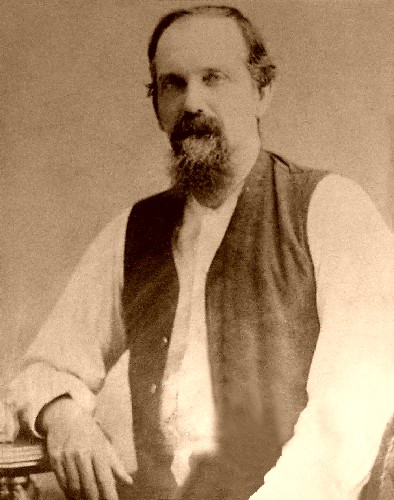
Clay Allison
Born: September 2, 1840
Died: July 3, 1887
Method of Death: He fell off a wagon and the wheel rolled over his neck, snapping it. His tombstone reads: “He never killed a man that did not need killing.”
Quick Bio: He was the fourth of nine children of a Presbyterian minister. Even as a child, he was known for his mercurial temper and violent mood swings. During the Civil War, he fought for the Confederate Army for the 9th Tennessee Cavalry. After the war, he joined the Ku Klux Klan. Later moving to
Why He Was a Bad Man: He killed several men in gunfights, including a sheriff. Once he went to dinner with Chunk Colbert, a notorious murderer who hated Allison. A gunfight erupted during dinner with Allison winning the battle. When asked why he go to dinner with a man who wanted him dead, Allison said, “Because I didn’t want to send a man to hell on an empty stomach.”
Myth Busting: Technically, Allison wasn’t a criminal. While he was arrested for murder several times, he always beat the rap and never spent any time in jail.
Actors Who Have Played Him: Unknown
Best Movie about Him: None
DP Cool Fact: Shortly before his death, while ranching in
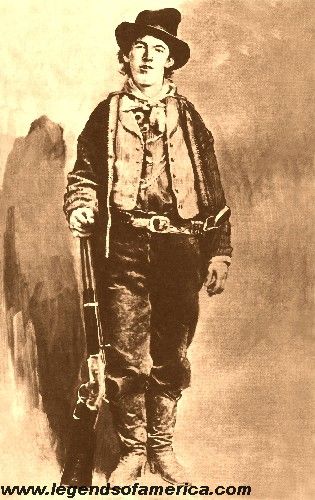
Billy the Kid
Born: November 23, 1859
Died: July 14, 1881
Method of Death: Ambushed and gunned down by Sheriff Pat Garrett and two deputies.
Quick Bio: Little is known about William Henry McCarty until his criminal life began, but most historians think he was born in
Why He Was a Bad Man: McCarty was a cold-blooded killer and a crack shot with his pistol and rifle. He once murdered a man while playing cards together. Joe Grant boasted he would kill Billy the Kid without being aware that the man across from the table was, in fact, Billy the Kid. McCarty asked to see his pistol and allegedly emptied the chamber. When he identified himself as Billy the Kid, Grant drew on him and clicked on the empty chambers. McCarty then shot him down allegedly saying: “it was a game for two and I got there first.”
Myth Busting: McCarty is said to have killed 21 men, but the likely number is about 9 and most of those came during gun battles with the Regulators.
Actors Who Have Played Him: Roy Rogers, Audie Murphy, Val Kilmer and Emilio Estevez,
Best Movie about Him: “Billy the Kid” (1989)
DP Cool Fact: Billy the Kid is an outlaw who has captured the imagination of singers and rock stars. He is the subject of songs by Bob Dylan, Tom Petty, Charles Daniels, Billy Dean and Billy Joel.

Butch Cassidy
Born: April 13, 1866
Died: November 6, 1908
Method of Death: Most likely gunned down by Bolivian soldiers after a botched attempt to steal a mining company payroll with his friend the Sundance Kid. Although there is some evidence that Cassidy survived and returned to the
Quick Bio: Born Robert LeRoy Parker in
Why He Was a Bad Man: A thief and murderer who formed one of the most prolific bank robbery gangs in history.
Myth Busting: Popular culture has whitewashed many of the crimes by Butch Cassidy by portrayed him as preferring to use non-violent methods when engaged in robbing banks. This files in the face of the historical record that shows that many innocent people were killed by Cassidy and his gang of cutthroats.
Actors Who Have Played Him: Paul Newman and Tom Berenger
Best Movie about Him: “Butch Cassidy and the Sundance Kid” (1969)
DP Cool Fact: Cassidy once dated female outlaw Ann Bassett.
John Wesley Hardin
Born: May 26, 1853
Died: August 19, 1895
Method of Death: Shot three times in the back by John Selman, an
Quick Bio: Born in
Why He Was a Bad Man: He was gambler, drinker, gunslinger, and murderer. At one point near the end of his life, Hardin said about himself: “They tell lots of lies about me. They say I killed six or seven men for snoring. Well, it ain't true, I only killed one man for snoring.”
Myth Busting: Hardin is credited with several murders that he probably had nothing to do with. For example, he claimed to have murdered three Union soldiers in 1868 and there is no evidence connecting him to the crime. He also claimed to have gunned down a pair of Pinkerton detectives in
Actors Who Have Played Him: Rock Hudson, Randy Quaid, and Jack Elam
Best Movie about Him: “The Lawless Breed” (1953)
DP Cool Fact: Novelist Larry McMurtry included Hardin in his novel “Streets of Laredo.”

Tom Horn
Born: November 21, 1860
Died: November 20, 1903
Method of Death: Hanged to death for a murder he most likely had nothing to do with.
Quick Bio: He was born in
Why He Was a Bad Man: Horn had a late career as the first frontier hitman.
Myth Busting: There’s some revivalist literature out there that claims Horn gets a bad wrap as an outlaw when most of his exploits took place while carrying a badge. But wearing a badge and being a lawman are two different things. There’s little doubt that Horn deserves his reputation.
Actors Who Have Played Him: Steve McQueen and David Carradine
Best Movie about Him: “Tom Horn” (1980)
DP Cool Fact: Horn joked with the guards as they lead him to the gallows to be hanged.
Jesse James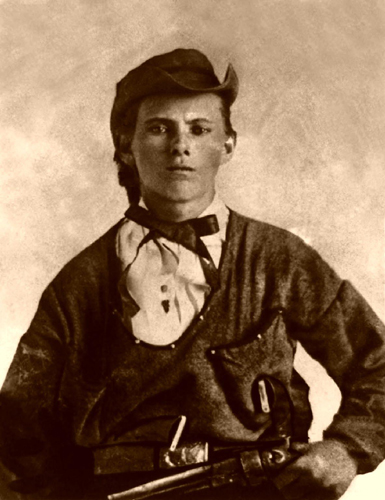
Born: September 5, 1847
Died: April 3, 1882
Method of Death: Shot in the back by cohort turned assassin Robert Ford
Quick Bio: Jesse Woodson James, probably the most famous western outlaw, was another minister’s son gone bad. Born in
Why He Was a Bad Man: Train and bank robber, cold-blooded murder.
Myth Busting: The idea that Jesse James was an Old West Robin Hood is completely misplaced. He is held up as a hero by neo-Confederate groups, but James was a ruthless killer and career criminal.
Actors Who Have Played Him: Tyrone Power, Audie Murphy, Robert Wagner, Robert Duvall, James Keach, Kris Kristofferson, Rob Lowe, Colin Farrell, Brad Pitt
Best Movie about Him: “The Assassination of Jesse James by the Coward Robert Ford” (2007)
DP Cool Fact: There have been more than 20 movies made about Jesse James since 1921.
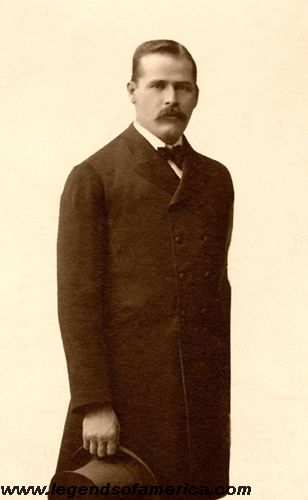
Harry Longabaugh (“Sundance Kid”)
Born: Sometime in 1867
Died: November 1908 (?)
Method of Death: Probably died with Butch Cassidy during a shootout in
Quick Bio: Not much is known about Sundance. He was a rancher for a while in
Why He Was a Bad Man: He was a convicted horse thief and notorious bank robber.
Myth Busting:
Actors Who Have Played Him: Robert Redford and William Katt.
Best Movie about Him: “Butch Cassidy and the Sundance Kid” (1969)
DP Cool Fact: The Sundance Film Festival, founded by
Cole Younger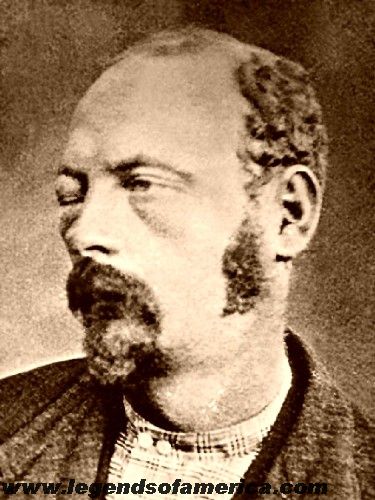
Born: January 15, 1844
Died: March 21, 1916
Method of Death: After prison, he became a born-again Christian and died of old age
Quick Bio: The son of a slave-holding farmer, Younger became a guerrilla fighter in
Why He Was a Bad Man: Bank and train robber and murderer. After he was caught, Younger said: “We tried a desperate game and lost. But we are rough men used to rough ways, and we will abide by the consequences.”
Myth Busting: Younger tried to portray himself as a Confederate rebel, but he was simply a criminal.
Actors Who Have Played Him: Cliff Robertson, David Carradine, Randy Travis, Scott Caan
Best Movie about Him: “The Long Riders” (1980)
DP Cool Fact: Younger was one of 14 children – four of which became ruthless outlaws.
Cowboy Up! Our Picks for the 10 Best Western Movies
5 Questions About: The Pilgrims
StumbleUpon |
Digg |
del.icio.us |
Reddit |
Technorati |
E-mail
(Otto knows mysteries. Yes, we’ve been dying to deliver that line. If no one has done so yet, DaRK PaRTY will officially declare Otto Penzler as th
 e Mad Monarch of Mystery. As the owner of famous The Mysterious Bookshop in New York City and a publisher who founded the Mysterious
 DaRK PaRTY: What are the elements of a good mystery story?
Otto: The same requirements as a good novel or story of any kind. Strong characters, realistic dialogue, interesting background, a theme of substance beyond the plotline, with the added requirement of the classic story arc-- beginning, middle, end, with a satisfying denouement.
DP: You are the proprietor of the Mysterious Book Shop in
Otto: Mysteries are fairy tales for adults. They mainly depict the battle between the forces of good and the dispensers of evil. In most mystery fiction, there is a comforting restoration of order after the social fabric has been rent, which is satisfying to us as readers, whereas this is not always the case in real life.

DP: You are also the editor of "The 50 Greatest Mysteries of All Time." If you had to narrow the book down to three stories -- which three would you have selected and why?
Otto: Those three stories would change on any given day. But any list, no matter how small or how long, would have to include a Sherlock Holmes story, as he is the single greatest character in the history of literature, a man of wisdom, reason and fairness, as well as being colorful enough because of eccentricities that are not so outré as to make him farcical.
There would also always be a story by Stanley Ellin, as no writer produced the equal of his perfectly polished gems. There are half-a-dozen of his stories that could easily have been included among the top 50. Assuming no difficulty in clearing rights, I would also always be inclined to use a story by Raymond Chandler, one of the handful of most stylistically compelling American writers who ever lived-- in or out of the mystery genre.
DP: Which two writers from the past do you think had the most influence on mystery writing?
Otto: Edgar Allan Poe, as the inventor of the detective story, and Arthur Conan Doyle, as the author who made the genre beloved and, therefore, popular. Make it three, and I'd add Dashiell Hammett, who made the American hard-boiled detective story the dominant sub-genre for nearly a century in terms of talented writers employing the style and substance of his quintessentially American theme of the lone hero doing the necessary thing to set things right, which often seems quixotic to those without a mor al center.
DP: Which mystery writers today do you recommend and why?
Otto: Too many to mention all, but those that come readily to mind are James Crumley, Robert Crais, Michael Connelly, Thomas H. Cook, George Pelecanos, Dennis Lehane, John Harvey, Elmore Leonard, Robert B. Parker, Joyce Carol Oates, Charles McCarry and William Gay.
There are 15 or 20 or more others who I love, too, in this great platinum age of mystery writing. I like them for different reasons, but they have in common a comfort with the language that allows them to use it in ways that no one else can use it, whether in the poetry of the prose or the creation of characters that will be familiar to readers a hundred years from now.
If you liked this interview try:
So You Want to Be a Private Eye
The 7 Toughest Detectives in Fiction
An Interview with Novelist Kim Harrison
Labels: 5 Questions, interview, mysteries, Otto Penzler, Writing
StumbleUpon |
Digg |
del.icio.us |
Reddit |
Technorati |
E-mail
Nobody wants to talk about it, of course. We’re too polite. But there’s a growing crisis with picture books written for toddlers and pre-schoolers today. So it’s important for us to be f rank.
rank.
The content in most of these picture books makes adults want to pluck out their eyeballs.
I’m not kidding.
These offending books either promote terrible behavior for young children or they are so poorly written they can barely withstanding a single reading.
The problem has become critical in my house. I’ve fallen on desperate measures to keep my sanity. As a result, I’m now hiding some of my 4-year-old daughter’s books.
Oops!
Did daddy accidentally just kick “Oh Say Can You Say What’s the Weather Today” under the bed? Oh, my, it appears that “Kiss Good Night, Sam” has been shoved into a dark, dank corner of the closet (where hopefully mold will begin to rot the pages – Die, Sam, die!).
The alternative is worse. If I read one more of these damnable books I’ll be transformed into a drooling madman that’s libel to run naked through the streets of my neighborhood with a pair of scissors.
Some picture books simply need to be avoided, at all costs. For example, the Olivia series by Ian Falconer are abhorrent. Want to plant the seeds of discontent and misbehavior in your impressionable youngster? Then read these evil, little tomes. They are basically blueprints for making your kids talk back and whine.
Why put yourself through the challenge of correcting bad behavior that is showcased by Olivia the Pig? She’s brat – and acts it. Olivia should be dipped in honey, baked for about an hour with an apple shoved into her screeching maw, and served with a fruity white wine.
Children – especially young ones – want their book read over and over and over and over again. There are few books that can withstand this heavy usage without driving an adult completely bonkers.
But there are, thankfully, books out there that will delight your children and are actually fun for parents to read – even if you’ll be forced to read them dozens, perhaps hundreds of times. Here are a few of our recommendations:
Duck in the Truck
By Jez Alborough
Jez Alborough is the crown prince of delighting young children. I can’t say enough good things about this storyteller and illustrator other than he’s fantastic. You generally can’t go wrong with any of his picture books, but I happen to have a great love for “Duck in the Truck” – a hidden gem. It’s a rollicking adventure about a duck that gets his pick-up truck stuck in the muck. He gets help from Frog, Sheep and Goat to get it unstuck.
The book is so well written that I still enjoy reading it out loud. It never gets boring because the language is so magical. But even better than the verse are the illustrations. Bold! Colorful! The pictures seem to move like a cartoon and there are new discoveries every time you read it.

Goodnight Moon
By Margaret Wise Brown and Clement Hurd
It’s a classic for a reason. Once again the language drives this picture book from simply good to great. “Goodnight Moon” was first published more than 60 years ago, but the text remains timeless. Margaret Wise Brown captivates through the use of a free verse poem about a bunny rabbit getting ready for bedtime. The story has the bunny saying good night to all of items in his room in a way that is comforting for a young child. The accompanying illustrations by Clement Hurd are a mix of black-and-white pencil drawings and bold and colorful paintings.
Brown is another children’s writer who should grace the libraries of most nurseries. She is a terrific writer with a strong body of work. I also recommend “Big Red Barn” and “The Runaway Bunny” (also illustrated by Clement Hurd).
A Good Day
By Kevin Henkes
Kevin Henkes is probably best known for his character Lilly, a precocious mouse that is a much better role model than the obnoxious pig that is Olivia. However, I prefer Henkes’ other projects with “A Good Day” being among his finest.
“A Good Day” has such a positive message – how to turn bad situations in good ones. It reminds me of the saying the teachers use at my daughter’s pre-school: “You get what you get and you don’t get upset.” The story is about different animals facing trying dilemmas and how each of them turns a negative into a positive. The pastel water colors are beautiful and full of energy and happiness. Another one of Henkes’ books worth buying is “Kitten’s First Full Moon.”

In the Night Kitchen
By Maurice Sendak
If your children can handle some full frontal nudity from a small mischievous boy then there’s nothing but wonder and magic in this fairy tale by Maurice Sendak. The story revolves around Mickey and his vivid dream of traveling to the night kitchen to help the bakers bake cake for breakfast.
Sendak is a master of the surreal and “In the Night Kitchen” is a romp through imagination. It’s a story with several layers and the action seems to change each time you read it. The illustrations are top-notch, but it is the free verse poetry that makes this book timeless. Also recommended are Sendak’s “Little Bear” series and his other classic “Where the Wild Things Are” (although this one may not be suitable for younger or more immature youngsters because of the scary monster inside).
Off We Go
By Jane Yolen and Laurel Molk
Any children’s book that gets you to read out loud phrases like: “Hip-hop, hippity hop” and “Slither-slee, slithery slee” is going to be a blast to read. The concept of the book is that various little animals (mouse, frog, mole, snake, spider, and duck) are all traveling to visit their grandmothers. The illustrations are action packed and fun to look at – with frogs practically hopping off the pages and moles digging furiously through the ground.
Jane Yolen is another author to keep an eye on. She has a series of books with Mark Teague about Dinosaurs that teach children manners and go by names like “How Dinosaurs Play With Their Friends” and “How Do Dinosaurs Say Goodnight” that are w orthy of any collection of children’s books.
The Very Lonely Firefly
By Eric Carle
Eric Carle is a child’s best friend. He creates visually stunning works of art that children naturally gravitate toward. One of his best works is “The Very Lonely Firefly,” which is about a baby firefly that tries to find his family – in a very confusing night world filled with candles, lanterns, flashlights and even fireworks. Carle is famous for his multi-media drawings and he’s at the top of his game here.
Other books by Carle to look for are “The Very Hungry Caterpillar” and “The Very Quiet Cricket.”
Pigsty
By Mark Teague
Mark Teague creates lush, beautiful illustrations and one of his best efforts is “Pigsty.” It’s hard not to love the protagonist, Wendell Fultz, who is ordered to clean his pigsty of a room by his mother. Wendell’s imagination gets away from him and soon his room becomes a home away from home for a gang of pigs who make the room an even bigger disaster. Wendell realizes that he’ll finally have to clean it before he loses all of his things.
But the real joy is Teague’s acrylic paintings that accompany the story. The colors are bright and the drawings bring children inside the over active imagination of Wendell. Teague has an excellent body of work and another gem is “The Field Beyond the Outfield.”
 Barnyard Dance
By Sandra Boynton
Sandra Boynton can be hit or miss, so be careful. She’s become an institution for pre-school board books, but on occasion you get the feeling that the pressure of creating more and more books has cut into her creativity. So avoid fare like “Belly Button Book” or “Hey! Wake Up!” and focus on her better material like “Barnyard Dance” (and the delightful “Pajama Time!”)
Boynton specializes is friendly cartoon animals with big eyes and big hearts. Her pigs, dogs, cows, and hippos are great fun for little kids. “Barnyard Dance” has a cow playing on a fiddle as the rest of the farm animals square dance around the barn. It’s great fun and filled with energy and urgency that kids respond to.
Read how Robert Cormier radicalized Teen Literature here
Read about the Magical World of Margaret Wise Brown here
Labels: books, Maragret Wise Brown, Parenting
StumbleUpon |
Digg |
del.icio.us |
Reddit |
Technorati |
E-mail

 RSS Feed
]saddlebrown]tan]maroon](],](])us.st11.yimg.com/us.st.yimg.com/I/getfishy_1912_2002960]Fishboy]black],]1]10]3]1]1]1]1]1]1]1]1]1],](](]papayawhip])])]DaRK^20PaRTY^20ReVIEW]^3A^3ALiterate^20Blather^3A^3A],](](],](]maroon](](](]brown](],](]maroon](](](],]60]10],](](]^23F5ECE1])])]maroon]0.5]0],](](]^23F5ECE1])])]maroon]^23F5ECE1])])]^23666]16]maroon]maroon],](](]maroon](],](]^23333]^238C4614]tan],](](]^23F5ECE1])])],](](]^23F5ECE1])])],](](]^23F5ECE1])])],](]maroon]maroon]15]3]23]18]maroon],](](],](],](](],](]black](](](],](](](],]black](](](],](](]^23333](](](](](],]^2336F]^23333](],](]Posted^20by^20^24AUTH^20at^20^24TIME.]36],](](]black])])]^23F5ECE1])])]^23666]16]maroon]maroon],](](]maroon](],](]^23333]^238C4614]tan]Contributors]]]^24PROFILE]]]DaRK^20PaRTY^20LiNKS]]]The^20Ambrose^20Bierce^20Site])donswaim.com/]Ambrose^20Bierce]Ironic^20Times])www.ironictimes.com/index.html]Ironic^20Times]Gallery^20Voyer])www.voy-art.com/]Gallery^20Voyer]Tintinologist])www.tintinologist.org/]Tintin]Arcanum^20Cafe])www.arcanumcafe.com/]Arcanum^20Cafe]LADA^20-^20Protect^20our^20Kids])da.co.la.ca.us/pok/poklist.htm]POK^20List]Tom^20Caron^20-^20Boston.com])www.boston.com/sports/nesn/aboutus/onair/tomcaron/]TC]The^20Captain^20Humphreys^20Project])www.captainhumphreys.com/]Captain^20Humphreys]Torpedo^20Design])www.torpedodesign.com/]Torpedo^20Design]^3Cimg^20src^3D^22)us.st11.yimg.com/us.st.yimg.com/I/getfishy_1912_2002960^22^20alt^3D^22Fishboy^22^20style^3D^22border^3A^201px^20none^20black^3B^22^20/^3E])www.fishboy.com/]Fishboy]Etc]]]^3Cimg^20src^3D^22)psyc.horm.org/barimg/bar_psycho.png^22^20width^3D^2280^22^20height^3D^2215^22^20alt^3D^22PsycHo^3A^20Free^20Template^20Generator^22^20style^3D^22border^3A^200px^20solid^20black^22^20/^3E]^24PSYCHO]PsycHo^3A^20Free^20Template^20Generator]^3Cimg^20src^3D^22)psyc.horm.org/barimg/bar_firefox.png^22^20width^3D^2280^22^20height^3D^2215^22^20alt^3D^22Get^20FireFox^21^22^20style^3D^22border^3A^200px^20solid^20black^22^20/^3E])www.mozilla.org/products/firefox/]Get^20Firefox^21]^3Cimg^20src^3D^22)psyc.horm.org/barimg/bar_xhtml.png^22^20width^3D^2280^22^20height^3D^2215^22^20alt^3D^22XHTML^20Validator^22^20style^3D^22border^3A^200px^20solid^20black^22^20/^3E])validator.w3.org/check/referer]XHTML^20Validator]Recent^20Posts]]]^24RECENT]^20]]Archive]]]^24ARCHIVE]^20]]ADVERTISEMENTS]]]^20]]^26^2361470^3BPsycHo})


This work is licensed under a Creative Commons Attribution-No Derivative Works 3.0 License.
The Template is generated via PsycHo and is Licensed.