
Poem: Sunrise Over Worcester
5 Questions About: Jason Pinter
12 Signs That You Might Be A Banker
The 9 Worst Movies to Win Oscars
Book Review: Narrow Miss for "Above the Law"
5 Questions About: Screaming Blue Messiahs
What's Up With All the Fat, Naked Guys?
Thoughts from the Shadows: The Craziness of Publis...
How to Make a Damn Good Horror Movie
Literary Criticism
Fantastically Bad Cinema
Essays
Under God's Right Arm
June 2006
July 2006
August 2006
September 2006
October 2006
November 2006
December 2006
January 2007
February 2007
March 2007
April 2007
May 2007
June 2007
July 2007
August 2007
September 2007
October 2007
November 2007
December 2007
January 2008
February 2008
March 2008
April 2008
May 2008
June 2008
July 2008
August 2008
September 2008
October 2008
November 2008
December 2008
January 2009
February 2009
March 2009
Alcoholic Poet
Baby Got Books
Beaman's World
BiblioAddict
Biblio Brat
Bill Crider's Pop Cultural Magazine
The Bleeding Tree
Blog Cabins: Movie Reviews
A Book Blogger's Diary
BookClover
Bookgasm
Bookgirl's Nightstand
Books I Done Read
Book Stack
The Book Trib
Cold Hard Football Facts
Creator of Circumstance
D-Movie Critic
The Dark Phantom Review
The Dark Sublime
Darque Reviews
Dave's Movie Reviews
Dane of War
David H. Schleicher
Devourer of Books
A Dribble of Ink
The Drunken Severed Head
Editorial Ass
Emerging Emma
Enter the Octopus
Fatally Yours
Flickhead
The Genre Files
The Gravel Pit
Gravetapping
Hello! Yoshi
HighTalk
Highway 62
The Horrors Of It All
In No Particular Order
It's A Blog Eat Blog World
Killer Kittens From Beyond the Grave
The Lair of the Evil DM
Loose Leafs From a Commonplace
Lost in the Frame
Little Black Duck
Madam Miaow Says
McSweeney's
Metaxucafe
Mike Snider on Poetry
The Millions
Moon in the Gutter
New Movie Cynics Reviews
Naked Without Books
A Newbie's Guide to Publishing
New & Improved Ed Gorman
9 to 5 Poet
No Smoking in the Skull Cave
Orpheus Sings the Guitar Electric
Polly Frost's Blog
Pop Sensation
Raincoaster
R.A. Salvatore
Reading is My Superpower
Richard Gibson
SciFi Chick
She Is Too Fond Of Books
The Short Review
Small Crimes
So Many Books
The Soulless Machine Review
Sunset Gun
That Shakesperherian Rag
Thorne's World
The Toasted Scrimitar
This Distracted Globe
Tomb It May Concern
2 Blowhards
Under God's Right Arm
A Variety of Words
The Vault of Horrr
Ward 6
When the Dead Walk the Earth
The World in the Satin Bag
Zoe's Fantasy
Zombo's Closet of Horror
Bookaholic Blogring
Power By Ringsurf
“I am Ripper... Tearer... Slasher... Gouger. I am the Teeth in the Darkness, the Talons in the Night. Mine is Strength... and Lust... and Power! I AM BEOWULF!”
- Beowulf, from the 2007 movie
It was with great anticipation that we finally rented the DVD “Beowulf.” As enormous fans of the Old English poem about heroism (especially the masterful translation by Poet Seamus Heaney), we eagerly looked forward to the visual interpretation of the story.
We were left with stomach cramps and a strong desire to seek out director Robert Zemeckis at his favorite bistro and kick him in the nuts. They should have been forbidden to name the movie after the poem – instead opting for a more appropriate title: “Beo-Whimp.”

Leave it to Hollywood to alter a story that has riveted generations for more than a thousand years because they didn’t it find the narrative gripping enough for modern audiences. So instead of trusting the material they did what they always do – dumbed it down by infusing it with an episode of Jerry Springer.
“Beowulf” – the poem – is the oldest piece of surviving English literature written around the 8th century. The poem is the epic tale of Beowulf, a warrior of the Geats (part of Sweden), who battles three antagonists: Grendel, a monster, Grendel’s mother, and later an unnamed dragon. He is killed in the final battle.
The poem is notable for the character of Beowulf – a hero who becomes king by testing his courage and strength against evil creatures of great supernatural power. He travels to Denmark to aid King Hrothgar and his court when Grendel, a monster and possibly a demon, terrorizes them.
Beowulf, without his sword, tears Grendel’s arm off in battle and the creature returns to his bog to die. While the Danes celebrate Beowulf’s victory, Grendel’s mother attacks the court and kills many while Beowulf sleeps in another dwelling.
Vowing revenge, Beowulf tracks Grendel’s mother to her lair under the bog and during an epic battle he slays her with a magic sword he discovers among her plunder. He returns to Geatland and eventually becomes king for 50 years. When a dragon attacks his kingdom, Beowulf tracks the beast to its lair and cuts it in half with a dagger. Poisoned by the dragon’s horn, Beowulf dies after the battle. He is buried in a barrow.
One would imagine that this heroic tale filled with blood, guts, and courage would be more than enough to satisfy modern audiences. But leave it to Hollywood to “sex it up” with its own misguided interpretation. The Hollywood hackers justified these flights of fancy by claiming Beowulf is an unreliable narrator. Here are the major changes:
- Grendel becomes more of a confused teenager struggling with his isolation. He kills because men reject and hate him for his differences (instead of being a devil-spawned mass murder). In fact, during his death scene he becomes a wounded child
- Grendel’s mother (played by Angelina Jolie) becomes a sexy seductress who charms King Hrothgar and then later Beowulf
- Hrothgar is a drunk and philanderer
- Grendel is King Hrothgar’s illegitimate child
- Instead of killing Grendel’s mother, Beowulf is seduced by her
- Grendel’s mother gives birth to Beowulf’s illegitimate child – the dragon
- Beowulf kills his son and his son kills him
- The movie ends with Beowulf’s second in command being beckoned for seduction by Grendel’s mother

In other words, the entire point of the poem is tied up, dragged into a closet, and beaten to death with an axe handle. The real monsters are humans – who make the poor misunderstood Grendel an outcast because he looks different (not because he’s an evil bastard who dines on their flesh).
There’s no greater casualty than Beowulf. The noble warrior who risks all for others becomes a lying, boastful egotist – an adrenaline and sex junkie instead of an epic hero. He’s a thoroughly modern leader in the mold of CEO – flawed, greedy, arrogant, and completely self-possessed. The scene where he strips naked to fight Grendel (and then has his private parts covered in creative ways) plays more than Austin Powers than legendary warrior.
How can we say this? Oh, yeah: Beo-Whimp.
Thankfully, we aren’t alone is condemning this tripe. British writer Michael Morpurgo criticized the movie this way:
“The film changes the very nature of its hero. He becomes vulnerable and flawed, and he loses much of his nobility. The minute he starts lying, he becomes less interesting. The monster, Grendel, is also rather diminished here. He is imagined as a pathetic creature - you feel as if he's being eaten from the inside by maggots. I never had the sense of his enormous and terrifying strength. They've created a whole new plot about who slept with Grendel's mother, which feels clunky."Bonnie Wheeler, director of Medieval Studies at Southern Methodist University had little use for the film as well:
“It’s a great cop-out on a great poem... For me, the sad thing is the movie returns to… a view of the horror of woman, the monstrous female who will kill off the male. It seems to me you could do so much better now. And the story of Beowulf is so much more powerful.Our advice: buy the poem – avoid the film
Thor: Sex Advice Columnist
Ode to "Dawn of the Dead" (both movies)
 StumbleUpon |
 Digg |
 del.icio.us |
 Reddit |
 Technorati |
 E-mail

An Interview with Indie Rock Queen
Linda Strawberry
(Remember “The Godfather” when the horse head ends up in the mobster’s bed? That head? It’s the music business in 2008. MP3s, music sharing, playlists, iPods, and the death of CDs have the industry fretting like a mobster without his prized race horse. Yet despite the blood and guts, there is still good music being made. Case in point: Linda Strawberry – a talented singer and keyboardist. Linda has developed a rabid following of fans – pretty much by herself. It speaks to her talent and her ability to reach out to her fans through the magic of the Internet – using YouTube, MySpace and other social media sites to distribute her music. Linda took some time between gigs (yeah, we like that word) to answer some of our questions.)

DaRK PaRTY: How did you get started in the music business?
Linda: My parents are freakishly talented. They are both amazing pianists, vocalists, and composers (currently in the Mormon Tabernacle Choir). So, I was always around music since I can remember. When I was 13 my dad set me up with a little writing studio in a closet in the basement and that was the beginning of my song writing. When I was 17, I had written about 70 songs and my mom helped me go to every producer in the state to try to pursue what to do with them. I eventually met Bjorn Thorsrud and Tony Zito who helped me record my first demo and introduced me to Billy Corgan.
Then I realized I didn’t know who I was yet or exactly the artist I wanted to be so Billy suggested I take a little time to get to know myself. So I put my own music aside for a while and began working in the studio. I had just left Mormonism so I had about two years where I was just sorting out my head and reading everything I could get my hands on. By the time I was 21, I felt I had a good grip on what I wanted and a good background on what a mess the music business was.
So, I jumped head first into it. In the last five years I have recorded about 40 songs and written at least 100 with only six released. I have had and lost deals as I’ve watched the music business grind to a halt. Now signing with one of the only remaining labels seems more risky than starting my own and trying to build what I’ve done independently so I’ve started Lovely Chaos Records in my house. I am trying to do whatever I can on my own until things get better.
It’s a hard business to be in right now. Lately, I have been focusing my creative efforts more in visual art to pay the bills. I have the mentality of doing everything I possibly can on my own and not relying on other people to make it happen. It can be tiring though recording, writing, mixing, doing all the album art, business stuff, and running all the promotions... but that’s where I’m a t.
t.
DP: You toured with Billy Corgan (playing keyboards) during his solo tour in 2005. How did you meet him and get connected with his project? And did it influence the way you approached your own music?
Linda: I sort of answered this in the above answer. I met Billy when I was 18 through Bjorn Thorsrud (producer/engineer). The first time I met him face to face was at a Smashing Pumpkins in-store performance in
The first thing Billy ever said to me was “Can you help me tie my dress?” That’s when he was wearing those leather dresses. I was petrified of him. He immediately reached out to me though and started pushing me. My first time ever on stage was singing “To Sheila” at the last Smashing Pumpkins show.
My first time having a song released was a recording of “Love to Love” we did for the SPUN soundtrack. Now, eight years later, we are still really good friends and I have never known a harder working or more talented musician. I can’t even think of how many songs I’ve watched him write over the years or it will make my brains explode. He NEVER STOPS! It makes me work harder!
How I came to be on the solo tour was that I was recording in
DP: We have been digging, well, your song "Dig." Can you tell us more about it?
Linda: I wrote “Dig” at a very low time. I was in love with a very dangerous man. H e treated me like shit, controlled me, manipulated me and I still stuck around like a moron. When I wrote “Dig,” I was in
“My mouth is hung/ Lips bee-stung from tears/ I could die/ I could die/ I could die but I backbend to push you in farther than you’ve ever been/ I’ve never believed such words as I believe when you string them up.” That’s all sex and me knowing that I shouldn’t be there but doing it anyway and risking everything even knowing that everything out of his mouth was bullshit.
“Love I forget where my endings begin/ never such a calm undoing as this/ pierced right through by a single kiss.” About how I would try to leave but would end up back and there was no boundary. I was like calmly accepting my own undoing just to walk through his door and kiss him. What’s that line? “Casting pearls before swine…”
Now the song has an entirely different sexy meaning. When I sing it it’s to my new amazing boyfriend who has healed me so much (and who I hope I’ll marry) and its still dirty and seductive but in the best ways plus true devotion (which is so much hotter).
DP: You've been a master at using the Web to grow your fan base -- leveraging YouTube, MySpace, etc. Do you like going directly to the fans or would you prefer working with a recording label?
Linda: I love having direct contact with people. I have lots to say and it’s nice to have a place to talk about what’s going on in my head. Our culture is changing so much about the way we communicate and listen to each other. Also, with things being so dead in the industry there’s no way I could just sit back and assume any of this would get done without me doing it myself. So, I do whatever I can. Its tiring but I’ll continue to do it for as long as it takes to get where I’m trying to go. The fans who write me keep me going.
DP: What musical artists have influenced your work the most and which bands are you listening to these days?
Linda: Musical Influences – obviously Billy Corgan/Smashing Pumpkins , Siouxsie Sioux, P.J. Harvey, The Cars, Depeche Mode, Diamanda Galas, Marianne Faithfull, Annie Lennox, Irving Berlin, Steve Reich, Joy Division, Tori Amos, Kate Bush, Bjork, the Go Go’s, Roxette, Billie Holliday, and Nico.
New bands... Hmmm. Its hard to name specific bands because I listen to everything. Can I sneak past this question?
5 Questions About: The Feelies (with Glenn Mercer)
Overlooked Albums by Some Great Bands
10 Really Bad Videos from the 1980s
Labels: 5 Questions, Linda Strawberry, Music
StumbleUpon |
Digg |
del.icio.us |
Reddit |
Technorati |
E-mail
Exploring the Flawed and Ugly Character of One of Cinema’s Most Popular Heroes
There’s a scene in “Indiana Jones and the Last Crusade” (1989) that captures the essence of the Indiana Jones’ character.
He has just arrived in Venice with University Provost Marcus Brody. Dr. Elsa Schneider, an Austrian professor and gorgeous blond, meets them at the docks. Jones immediately become smitten and unmercifully flirts with her (even stealing a flower to put in her lapel).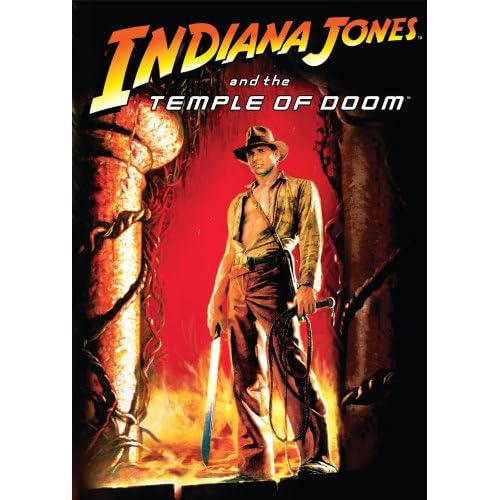
“You have your father’s eyes,” she tells him.
“And my mother’s ears. The rest belongs to you,” he tells less than 10 seconds after they meet.
Indiana’s aggressive pursuit gets to the point where Brody actually asks for him to stop. It’s almost embarrassing how Jones is unable to control his sexual desire – even in front of his boss and friend.
This is the essence of a man with no control over his emotions, especially as they pertain toward women. He’s a man-child unable – and unwilling – to put parameters around his urges. There’s no question that Indiana Jones is a courageous and noble adventurer, but there’s also ample evidence from the four Indiana Jones films that he’s an angry misogynist prone to sexual harassment and unprovoked outbursts of violence toward the women he is sexually attracted to.
In fact, Indiana displays at least six of the 10 warning signs of a man who is an abuser, according to Seeing It and Stopping It, an organization for the prevention of violence against women and children.
The pattern appears to be of a man who relentlessly pursues a woman he finds attractive and then, when he finally captures their hearts, abandons them. Obviously, he has serious issues with commitment – especially with strong, independent women. In the “Last Crusade” Indiana ends up in a hotel room with Elsa and his eyes rejoice as she shuts the door to his room behind her. He grabs her roughly by the shoulders as she turns from him and he forcibly kisses her.
“How dare you kiss me!” she shouts. But then roughly returns the kiss.
Indiana pushes her away. “Leave me alone! I don’t like fast women.”
Elisa bites his ear. “And I hat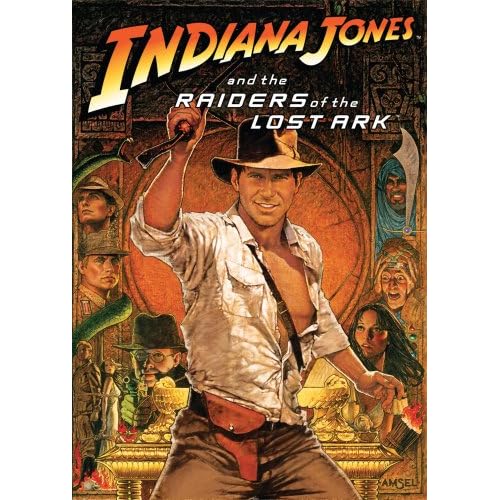 e arrogant men!”
They end up in bed together.
A similar – pseudo rape scene – happens in “Indiana Jones and the Temple of Doom” (1984). Jones and Willie Scott are guests in an Indian palace – staying in rooms across the hall from one another. Stalking into each other’s rooms, the two have a heated argument about sexual attraction.
“You know what your problem is, Princess?” Jones shouts. “You’re too used to getting your own way!”
“And you’re too proud to admit that you’re crazy about me, Dr. Jones!” she shouts back.
“If you want me Willie, you know where to find me.”
“Five minutes!” she says. “You’ll be back over her in five minutes!”
“I’ll be asleep in five minutes!”
“Five,” she screams after him after he stalks out of her room. “You know it! And I know it!”
Clearly, Jones has problems maintaining normal relationships with women. He’s sexually attracted to anger and fighting with women. Rather than tenderness, Jones resorts to aggression and abusive behavior. He is fond of diminishing them with sexist labels such as princess, doll, and sweetheart. And who can forget the scene in “Raiders of the Lost Ark” (1981) when Marion Ravenwood sees Indiana for the first time since their relationship ended in disaster.
She greets him with a punch to the face and screams: “I’ve learned to hate you in the last 10 years!”
We learn that Indiana seduced Marion, the young daughter of his mentor. “I was a child,” Marion says. “I was in love. It was wrong and you knew it.”
To Indiana, however, it was nothing but another sexual conquest. Another woman he relentlessly pursued and then dumped when she got too close.
“You knew what your were doing,” he tells Marion.
This callous behavior symbolizes a man who doesn’t like women very much. We know his father was an emotionally detached widower with a tendency to bully. We also know his mother died early in his life (before the age of 13). Clearly, Indiana has trouble relating to women outside of their role as sex o bjects.
In “Indiana Jones and the Kingdom of the Crystal Skull” (2008), it is revealed that Indiana dumped Marion again (after they fell in love for a second time in “Raiders”) and abandoned her a week before their planned wedding. Even worse, she was so emotional damaged by the rejection that she didn’t tell him she was pregnant with his son and ended up raising the boy alone.
When Indiana and Marion encounter each other for the first time in “Crystal Skull,” they get into a heated shouting match – blaming each other for the break-up. Indiana lamely claims: “I didn’t want to hurt you” as an excuse for dumping her.
Maybe there’s a reason why Indiana’s favorite weapon is a whip.
He’s smart, brave, strong, and wily, but let’s face the facts. Nobody would want Indiana Jones dating their sister.
10 Superheroes with the Coolest Powers
Fantastically Bad Cinema: Pirates of the Caribbean: At World's End
Labels: Indiana Jones, Movies
StumbleUpon |
Digg |
del.icio.us |
Reddit |
Technorati |
E-mail

Getting into the woods is easy--
Even in a park you leave the path
Only a moment--turned around--
Everything is almost right--
That beech was an oak--
The creek gone underground for a spell
Three notes sounding smooth rocks
Quartz breaking open in the hand--
In the thicket wait
Burrs, cuts, and ticks
Up the stony hill
Trampled ferns and asthma
Down the gully broken logs
Or is it legs?
Well. Nothing for it
But to get on with it.
This time you're on your own.
(Mike Snider, a computer programmer, with the heart and soul of a poet and musician. He scribbles with passion at his poetry blog Mike Snider on Poetry. He also plays in the band the Baker Boys in his home state of Maryland. This is Mike's first poem on DaRK PaRTY.)
Read Christine Larson's poem "Five"
Read Kara Emily Krantz's poem "Spanish Poetry"
Labels: Mike Snider, Poem
StumbleUpon |
Digg |
del.icio.us |
Reddit |
Technorati |
E-mail

(Culling the very best from the DaRK PaRTY NeTWORK)
- Think you have a wretched life? Then cheer yourself up by reading the wrist-slashing depressing poetry over at the Alcoholic Poet. You’ll either look good in comparison or drink Drano. So roll the dice…
- SQT over at the Fantasy & Sci-Fi Lovin’ Blog is using transformers to bribe her 4-year-old son to become potty trained. We won’t get into the fact that the boy should have been trained at least a year ago, but we suppose using toys as enticements is better than say – whacking him with a stick.
- The BiblioAddict has a link to an amazing YouTube video about a dead screenwriter named Leonard Schrader who collected more than 100,000 books in his life. Every room in the guy’s house is filled with overflowing bookshelves. It’s heaven.
- Ben over at Gravetapping is digging Richard Matheson and TOR’s decision to re-release five of Matheson’s short novels such as “The Incredible Shrinking Man” (which we just picked up), “Earthbound,” and “Stir of Echoes.”
- S.M. Duke at The World in the Satin Bag realizes he has a problem with fruit.
- Jeff over at When the Dead Walk the Earth has an amusing take on the first three Indiana Jones movies.
- No Smoking in the Skullcave takes a look at an overlooked movie: Witches (which – no pun intended – starred a rather sexy-looking Angelica Huston).
- Jeremy Richey at Moon in the Gutter gets pissed off at theater owners who do a poor job of showing vintage films.
- And finally here’s vintage rant we did a long time ago on why we hate TV.
(Have what it takes to be part of the DaRK PaRTY NeTWORK? If you have a blogabout culture, literature, books, movies, poetry, music or writing then why not exchange links with us? We promise not to follow you home from the subway on dark nights. And we only eat with our hands when necessary. So drop us a note at darkpartyreview(AT)gmail(DOT)com or leave us a comment. Tell us about your blog and we’ll see if we can exchange links. It’s that easy.)
Labels: Dark Party, links, Magical Mystery Tour
StumbleUpon |
Digg |
del.icio.us |
Reddit |
Technorati |
E-mail
 (Summary: A group of six crusty, old men have a dinner club called The Black Widowers. They enjoy inviting guests to dinner in order to ponder over mysteries or puzzles. One of the widowers brings to dinner John Sands who regales them with a complicated tale. Sands, who cannot tell a lie, tells the group that he is accused of stealing money and bonds from his company. As a gambler, Sands says he was in dire need of cash and he is one of the few people with the combination to the safe. But he tells the widowers: “I did not take the cash or the bonds.” But after much questioning the club’s enigmatic waiter, Henry, figures out the puzzle with simple logic: “If we cannot lie, we must make the truth lie for us.” With Sands glowering on, Henry asks him one question: “Did you, by any chance, take the cash and the bonds?” Sands grabs his coat and departs, reminding the widowers that they cannot repeat dinner conversations outside of their club.)
 Analysis: “The Man Who Never Told a Lie” was originally published in 1972 under the name “Truth to Tell” (it appeared in the collection of short stories about the Black Widowers called “Tales of the Black Widowers”).
Isaac Asimov, the prolific science fiction writer, created the Black Widowers for a series of mysteries that originally appeared in Ellery Queen’s Mystery Magazine in 1971. The series became extremely popular and influential, especially among other mystery writers.
The group of six Black Widowers were based on an actual dinner club that Asimov belonged to called Trap Door Spiders. Each of the Black Widowers has a real life counterpart:
- Geoffrey Avalon is based on L. Sprague de Camp (a science fiction and fantasy writer who is perhaps best known as reviving the Conan writings of Robert E. Howard).
- Emmanuel Rubin is based on Lester del Rey (the science fiction editor and founder of Del Rey Books).
- James Drake based on Dr. John D. Clark (a scientist and writer who also helped revive the Conan series).
- Thomas Trumbull is based Gilbert Cant (a journalist who wrote for the New York Post and Time).
- Mario Gonzalo is based on Lin Carter (a science fiction writer and editor).
- Roger Halsted is based on Don Bensen.
“The Man Who Never Told a Lie” follows the predictable pattern of most of the stories in the series. The six members have a guest join them for dinner and they try to puzzle out the mystery the guest lays out before them. There’s much squabbling and digressions during the dinner. And then, per usual, Henry, the mysterious waiter, ends up cutting through the clutter to provide a simple and logical solution. While Henry isn’t based on any real-life character, Asimov was an enormous fan of P.G. Wodehouse and said Henry was inspired by Wodehouse’s character Jeeves.
The Black Widower stories are great fun – and while the tales hold up well alone, they are much better read in large chunks. That’s because Asimov has developed a supper club with complex and intriguing characters. The personality traits and histories of each of the Black Widowers get revealed slowly and carefully over the course of the series (until they begin to feel like old friends). The collection is like fine wine and gets more intricate and flavorful the longer it ages.
“The Man Who Never Told a Lie” is similar to the other stories in that it is fast-pace – and yet it seems leisurely at the same time. Asimov was a fantastic writer – a master of genre fiction for the thinking reader. His confidence and skill as a writer are in top form in this series. Readers can delight in the sidetracks and minor sojourns into the lives of the Black Widowers – without the stories ever losing focus on the mysteries.
Asimov died in 1992 and left behind more than books and about 9,000 letters. His science fiction (especially his Foundation and Robot series) was so influential and popular that it’s easy to forget that he was an excellent mystery writer as well. The Black Widower series is a great way to remember that and “The Man Who Never Told Lie” is a great starting point.
5 Writers Every Man Should Read
Literary criticism of Ring Lardner's "Haircut"Lurid Confessions of a Man-Book Whore
Labels: Isaac Asimov, literary criticism, literature
StumbleUpon |
Digg |
del.icio.us |
Reddit |
Technorati |
E-mail
A Literary Quest to Visit the World-Famous
I am a lost soul.
But I know that I’m not alone. We’re all lost in one way or another. Some of us are lost in the hedonism of youth – blind to everything except the next party, the next pick-up, and the next fun-filled weekend. Others are lost in family obligations – mortgages, diapers, tuition, taxes, and car payments. Yet others are lost in the meaningless pursuit of career and money – selling software or hardware, flying to conventions, attending meetings, and focused on providing solutions to make business faster, easier, and more productive.
Lost in the complications of modernity. But I am really lost – in
Unlike all the other lost souls – I know the way out. I am on a quest. I am in search for a place that holds all the answers. A mystical place with all the collected wisdom of the ages. A place where the dead speak.
I am looking for a book store. A book store called City Lights.
There’s only one thing for me to do now.
Eat.
The restaurant is called
There is a white couple at the table next to me. As I study the menu, I overhear the man (who has an oval head and short, prickled hair like the bristles of a toothbrush) say to the woman (his daughter?):
“The Catholics cut a deal with Hitler and they’ve been rationalizing it away ever since.”
The rather careless waitress spills my green tea and doesn’t seem very concerned about it. I mop it up with my napkin after she departs. Overhead a sugary Chinese pop song plays on the hidden speakers. It is the kind of music that would cause inmates to riot and depressed teenagers to drown themselves in their family bathtubs.
But my instincts about the food were dead on. It’s hot and delicious. The shrimp dumplings are tasty and the barbequed pork melts on my tongue.
I follow the directions given to me by the host. Evening has settled in and the chill has become a frigid cold. I walk, hands buried deep in my pockets, pass the shops selling t-shirts, Bud dha figurines, and other trinkets.
Soon I’m at
City Lights Bookstore was founded in 1953 by the beat poet Lawrence Ferlinghetti (and Peter D. Martin). The store (named after the Charlie Chaplain movie) became a hang-out for the Beats. City Lights became world-famous after it was sued for obscenity for publishing Allen Ginsberg’s “Howl,” now considered a classic beat poem. The independent book store is now a
This being
The interior is crowded with wooden book shelves – overflowing with tomes. The first floor is filled with novels, best-sellers, and magazines. I follow the squeaky wooden steps down to the basement. It is a wonderful place with signs describing the categories of books: “Stolen Continents,” “Muckraking,” “Anarchism,” “Class War,” and “People’s History.”
Ah.
I buy lots of books. I am lost no more.
5 Questions About: Jane Austen
Knock Your Socks Off Great Books
Read our literary criticism of Ring Lardner's "The Haircut"
Labels: books, City Lights Bookstore, Essay
StumbleUpon |
Digg |
del.icio.us |
Reddit |
Technorati |
E-mail
Classic Rock Bands That Are Nobody's Favorites
This is the musical equivalent of the old idiom: “Always the bridesmaid, but never the bride.”
There are classic rock bands that simply demand favorite status: the Beatles, Rolling Stones, Led Zeppelin, Bruce Springsteen, U2, Van Halen, Nirvana, Pearl Jam, the Grateful Dead, Pink Floyd, The Who, etc. Their music touches people’s souls. They’ve got fan clubs and rabid fans – these are the bands that used to have their logos scrawled on high school book covers.
But then there are these classic rock bands – staples really – that are good, damn good in some instances, but they just don’t rate favorite status. Most people like these bands, but for whatever reason they don’t ignite the same passions as the great bands do.
It’s like being a B student with an older sister who is in National Honor Society. She’s got a leg up on you.
Here is our list of the 10 Greatest, But Not Favorite Classic Rock Bands:

Rush
The power rock trio from
Bad Company
Rugged rock band Bad Company was the first band produced on Led Zeppelin’s label. The band was formed from the remains of Free, Mott the Hoople, and King Crimson, but they never achieved “great” status. But they did have some excellent early albums in “Bad Company” and “Straight Shooter.” Their self-titled “Bad Company” remains a classic heavy rock song (along with “Can’t Get Enough,” “Rock Steady,” and “Feel Like Makin’ Love”). Yet, the somehow none of Bad Company’s music hit it out of the park – great stuff, but just not favorite stuff.

ZZ Top
ZZ Top were the darlings of MTV in the early 1980s. They had a string of hits in “Pearl Necklace,” “Sharp Dressed Man,” “Legs,” and “Gimme All Your Lovin’.” But the southern fried pop rock quickly wore thin (as did the concept of hot chicks driving around in a flaming red hot rod). It’s hard not to like ZZ Top’s guitar driven music, but you’re definitely not going to have their logo tattooed on your forearm.
Boston
Surprise, surprise, surprise, the band Boston hails from Boston, Massachusetts. Talk about a band that’s got an iron grip on classic rock stations. Is it possible to listen to these stations for an hour without hearing “Smokin’,” “More Than a Feeling,” “Foreplay/Long Time” or “Don’t Look Back”? Yet despite wide-spread popularity and best selling albums this 1970s dynamo is rarely considered anybody’s favorite band.
Creedence Clearwater Revival
American roots rock band, Creedence Clearwater Revival, is another band with a lock on classic rock stations. They loaded up the charts in the 1960s and 1970s with a string of hits including: “Suzie Q,” “Proud Mary,” “Bad Moon Rising,” “Down on the Corner,” and “Run Through the Jungle.” CCR has the added advantage of being a band that makes you turn up the volume on the radio. But a favorite? Nah!

Foreigner
Foreigner barely skirts being a guilty pleasure band – barely. But they survive on classic rock stations because of their pop-infused hard rock numbers like “Feels Like the First Time,” “Cold as Ice,” “Hot Blooded,” “Head Games,” and “Dirty White Boy.” It actually surprising how many good songs are in the Foreigner catalog. Yet I venture that only one or two people in the world would admit to Foreigner being their favorite band of all time (and those people are probably the mothers of a couple of the members).
The Steve Miller Band
Is there any rock fan that doesn’t like a Steve Miller song? Here’s another classic rock band that has a long list of hit singles: “The Joker,” “Take the Money and Run,” “Fly Like an Eagle,” and “Jet Airliner.” Steve Miller rocks. But is there anyone out there that lists Steve Miller as number one? Have you seen Steve Miller lately? He looks like an accountant. And maybe that’s what held them back from reaching the next plateau – they just weren’t that interesting.
Traffic
The English psychedelic rock band responsible for the incredible “John Barleycorn Must Die” album. And who can’t get their feet tapping when “Dear Mr. Fantasy” comes on the radio? Yet Traffic suffers from being too esoteric and arty for anyone but Soho artists. Couple of cool songs – one great album – and always the bridesmaid.
Blue Oyster Cult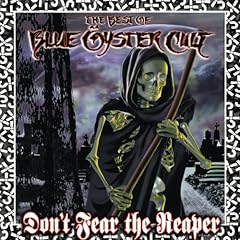
One of the best named bands in history (Blue Oyster Cult is from a poem by the band’s manager about a group of aliens that secretly manipulate human history). Here’ s a heavy metal band that gave us “(Don’t Fear) The Reaper,” “Burnin’ for You” and the always popular “Godzilla.” But here’s another band that suffered from a lack of personality and magnetism. Take away the music and they were boring – and dull bands aren’t favorite bands.
The J. Geils Band
I was a big fan of J. Geils Band during their heyday in the early to mid- 1980s. They put on a rollicking live concert with its blues-infused R&B rock. Peter Wolf was a great front man and lead singer and they gave us the seminal hit album “Love Stinks.” Here’s a band with a lot of great songs: “Must of Got Lost,” “Southside Shuffle,” “Whammer Jammer,” “Centerfold” and, of course, “Lost Stinks.” But even when I was loving J. Geils they were never my favorite band. They just couldn’t put enough points on the board for that (see video below).
The 9 Greatest Songs by Led Zeppelin
Labels: Bad Company, Blue Oyster Cult, Boston, Creedence Clearwater Rivival, Foreigner, J. Geils Band, Music, Rock, Rush, Steve Miller Band, Traffic, ZZ Top
StumbleUpon |
Digg |
del.icio.us |
Reddit |
Technorati |
E-mail
The Age of Innocence
By Edith Wharton
This one is a crier. But it is also a scathing rip at upper crust society -- particularly New Yorkers of the 1870s. Make no mistake about “The Age of Innocence” -- its a masterpiece and a joy to read. It's one of those books perfect for curling up on the couch with a warm cup of tea. In fact, it demands it. It is the story of how the narrow minds and strict protocols of
Archer is firmly entrenched in high society, yet experiences flashes of rebellion at its fastidious rules about appearance and reputation. He becomes engaged to May
Yet his love for the countess never falters. He he remains trapped in a marriage to May until her death 25 years later. When he has a chance to see the countess again in Paris, the widowed Archer decides against it. The reader can decide if it is because his memory of the countess is better than his reality or if he now embarks on a love affair with her if he's admitting to his own weakness at having failed to pursue her 25 years earlier. “The Age of Innocence” is a powerful and heart-wrenching story – and one that every bibliophile should devour.
Grade: A
Strangeways: Murder Moon
By Matt Maxwell and Luis Guaragna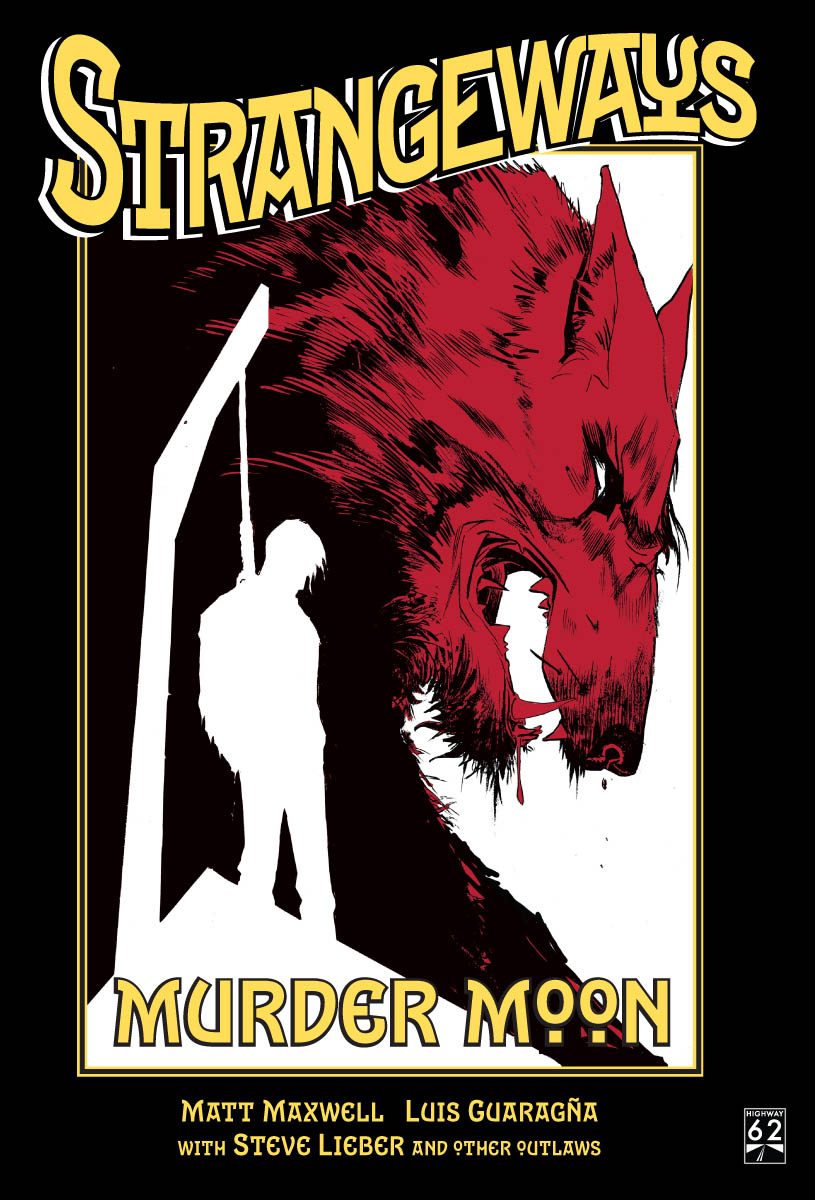
Fangs and fast guns. This is Matt Maxwell's great idea for a mash-up – combine a Western with a werewolf story. Think about "High Noon" superimposed on "American Werewolf in London."
The result is “Strangeways: Murder Moon,” a rip-roaring graphic novel that delivers scares and shoot-outs. The story features Seth Collins – a Western arch-type (the quiet loner with a quick gun). Collins ventures out West to meet up with his estranged sister and gets attacked by a werewolf while riding shotgun on a stage coach. When his best friend Webster is accused of being the werewolf, Collins sets out to capture the real monster.
There are lots of subplots and hidden agendas in “Strangeways” and some of them can be difficult to navigate. The character of Collins is also a problem as he often seems more like a conduit and plot device rather than a strong central character. But for the most part “Strangeways” delivers on its promise. The art is dark and moody – and there’s plenty of fast action to keep readers turning the pages. The graphic novel also contains an extra at the end – an excellent origin story for the werewolf, which puts an entire new spin on the main story.
If you’re into lycanthropy and six-shooters – you may have entered Nirvana.
(Full Disclosure: Matt Maxwell runs a blog called “Highway 62” that DaRK PaRTY links with)
Grade: B
Yellow Medicine
By Anthony Neil Smith
You are not going to like Deputy Sheriff Billy Lafitte. Why? Because he's a bastard.
“Yellow Medicine” is a rocket ride of a thriller set in plains of rural
Yet the strength of the novel is the voice of Lafitte – and watching how he adapts and changes when confronted with the difficult situations he falls into. Deep down, Lafitte has a soul, but unfortunately it rarely manifests itself. The plot stumbles a bit (how the terrorists get to the flatlands of
Grade: B
All Quiet on the Western Front
By Erich Maria Remarque
“All Quiet on the Western Front” is one of the greatest anti-war novels ever written. It’s vivid portrayal of the horrendous conditions and life threatening dangers of trench warfare during the Great War. Paul Baumer is a young, enthusiastic student who joins the German Army at the outbreak of the war with
Grade: A
Read our last Cracked-Back Reviews, includes "World War Z" and "99 Coffins"
Read our apology to Novelist Cormac McCarthy
Labels: Anthony Neil Smith, book review, books, Cracked-Back, Edith Wharton, Erich Maria Remarque, Matt Maxwell
StumbleUpon |
Digg |
del.icio.us |
Reddit |
Technorati |
E-mail
The True Story of How H.R. Pufnstuf Destroyed a Boy's Life
By Rev. Colson Crosslick
Stevie Shetkan is a member of my congregation at the Pretty Good Shepherd Church in Ripsaw, Arkansas. He’s a reformed heroin addict and male prostitute (who admittedly has nice thighs) who used to do anything – and I mean anything – to score his next fix.
When Stevie let the shining golden light lasers of Jesus into his life – his life turned around. He’s now a successful day laborer living in a boarding house and earning just enough money to squeeze by while paying his ex-wife alimony and child support. His life wasn’t always this good.
Stevie used to live in an expensive hotel in downtown
How did St evie Shetkan become a drug-addled vamp?
The answer will amaze your Christian sensibilities – the TV show “H.R. Pufnstuf.” The younger folks among you might not remember this staple of Saturday mornings. Supposedly it was a live-action puppet show full of fun and innocent silliness. The plot revolved around a young boy and his magic flute being transformed to another realm lead by a friendly dragon named H.R. Pufnstuf.
But in reality “H.R. Pufnstuf” was a subversive counterculture TV show that lured innocent children into the drug culture of the 1970s and 1980s. The program, as you’ll see, urged children to smoke marijuana and try acid – two dangerous illegal narcotics that lead children to cocaine and heroin addiction as well as to experimentation with the dark pleasures of homosexuality.
The show is almost as bad as the “Curious George” books – one of the most anti-Christian children’s series in world history. It was also the grandfather of other modern shows allegedly for children, but actually subversive liberal brainwashing programs (“Barney” and “The Teletubbies,” for example).
The “H.R. Pufnstuf” program was the creation of two evil men – Sid and Marty Krofft (who have a mysterious Jewish sounding name – not that I have anything against Hebrews other than they scorn the Lord Christ Jesus). The Kroffts are responsible for many children’s TV shows such as “Land of the Lost,” “Sigmund and the Sea Monsters,” and “The Bugaloos.”
But “H.R. Pufnstuf” was their shining tribute to illegal drugs. How do I know this? Because, my friends, the evidence can be found on the Internet. “Like many good things from that era, H.R. Pufnstuf was full of nods to the prevailing stoner counter-culture, and included many sly pot and drug references,” according to the Web site of Cannabis Culture Magazine (a left-wing liberal pro-drug rag).
The loony liberal magazine goes on to say:
“Although the marijuana and drug references are sometimes subtle, they are laced throughout the entire series. Some highlights include Witchiepoo offering a minion a "roach beef sandwich," Freddy the Flute getting turned into a magic mushroom, Pufnstuf telling Cling and Clang to "stop sniffing" the magic smoke, and Jimmy dosing Witchiepoo with a Love Potion.”
Then there is the matter of H.R. Pufnstuf’s name – which is pronounced “Puffing Stuff.” He’s also a magic dragon in much the same way as “Puff the Magic Dragon,” a marijuana tribute song by Peter, Paul, and Mary.
Marty Krofft, in a moment of candor, has even admitted that H.R. Pufnstuf was an intentional marijuana reference. The sly evildoer! But all you have to do is watch the show. It’s obvious! Look at the trippy colors, the weird props, and the talking mushrooms practically begging children to fire up the water bong.
“Every episode is like an acid trip,” Stevie Shetkan told me. “After watching it, I wanted to smoke pot like you read about. And I didn’t even know what pot was!”
He soon found out from his older brother (who was also hypnotized by the uber-liberal show). First came the dope – then came the hard drugs – and then, of course, the sex with horny, well-toned men. These kinds of “children” shows should be banned – and we should be going at “Barney” and “Teletubbies” just hard!
Stop them before they turn your child into another Stevie Shetkan.
(The Rev. Colson Crosslick is pastor of the
Enter the intellectual Christian world of Rev. Colson Crosslick:
The Sin of Halloween
Comic Books and Satan
Dungeons & Dragons -- The Devil's Game
Labels: Culture, HR Pufnstuf, Parody, TV, Under God's Right Arm
StumbleUpon |
Digg |
del.icio.us |
Reddit |
Technorati |
E-mail

In the sci-fi classic “The Matrix,” a software program that tracks and eliminates rogue humans called Agent Smith shares his low opinion of the human race, which, he admits, disgust him:
“I'd like to share a revelation that I've had during my time here. It came to me when I tried to classify your species and I realized that you're not actually mammals. Every mammal on this planet instinctively develops a natural equilibrium with the surrounding environment but you humans do not. You move to an area and you multiply and multiply until every natural resource is consumed and the only way you can survive is to spread to another area. There is another organism on this planet that follows the same pattern. Do you know what it is? A virus. Human beings are a disease, a cancer of this planet.”
It’s a disturbing image – and one that might be difficult to refute these days. Conventional wisdom suggests that we’ve entered a tipping point on the environment. Our culture of modern conveniences, technologies, and machines has knocked the natural order of the planet, well, into orbit.
Our sins are many from increases in industrial farming (requiring chemical fertilizers, ever-increasingly potent pesticides, and overuse of antibiotics on cattle and chickens) to an overabundance of smog-clogging automobiles causing air pollution and ozone depletion.
But a careful review of the mounting evidence seems to show that we aren’t heading for a major crisis – but that we’re already knee-deep in one. Just take a glimpse at the recent news headlines:
- Honeybees are dying by the millions – up to 90 percent of hives in some regions. Biologists call the unknown killer “colony collapse disorder” – a colorless government term for labeling this fierce and mysterious plague. Honeybees are crucial to pollinating flowers and fruits (apples and oranges, for example, can’t grow without them). In fact, the U.S. Department of Agriculture says honeybees pollinate about $15 billion worth of crops in the
- Thousands of bats in the Northeast are dying from a mysterious disease and biologists are worried that tens of thousands of bats could die this year. Many bat caves have seen 100 percent mortality rates. Scientists are speculating that that toxins and pesticides have weakened the bats and destroyed a lot of their food supplies in the last few years – making them susceptible to disease. There has also been speculation that the electromagnetic radiation emitted by cell phones is responsible. Bats are crucial to controlling insect populations – especially mosquitoes.
- Climate change, caused by carbon dioxide emissions, continue unabated. The number of category 4 and 5 hurricanes has doubled in the last 30 years, Malaria has spread to higher altitudes, ice flow from glaciers in Greenland has more than doubled in the last 10 years, and 279 species of plants and animals are moving closer to the poles, according Al Gore’s movie “An Inconvenient Truth.”
- The dead zone in the Gulf of Mexico at the mouth of the Mississippi River has become as large as the state of
If these four examples don’t convince you that human activity is changing the environment then perhaps reports from the World Health Organization that global cancer rates may increase by as much as 50 percent by 2020 will.
Yet, the conversation on how to turn back – to save what we haven’t yet destroyed – continues to be a backburner issue, especially in the United States.
Perhaps one reason is our arrogance and unfounded confidence that the technologies that brought us to this precipice will ultimately save us. This is ironic since these technologies (automobiles, air conditioning, plastics, radiation, etc.) are what have led us here in the first place.
We have a tendency to embrace new technologies before we fully understand how they will affect us in the long term. Isn’t that why we painted our homes with lead paint and used asbestos to insulate our pipes? Recently, we’re learning that plastic water bottles – already owned by most American families – may increase the risk of cancer.
As Agent Smith might have observed, human beings think they can improve Mother Nature. We believe that we can do it better – despite a history of shoddy results.
That’s why we end in situations like this one: We force feed our cattle corn – when they evolved to eat grass. By forcing them to eat corn, the majority become sick, so we treat the corn with antibiotics to keep the cattle alive and healthy long enough to slaughter them. As a result, we dine on sick, drug-infused beef while overusing antibiotics to a point that they’re becoming less effective.
Or why we end up pouring tons of chemicals on our lawns – forcing grass to grow lush and green in environments unnatural to the species. Believe it or not, but Arizona isn’t supposed to have grass. It’s a desert.
It’s time for the environment to become a top and urgent priority in the
Read some of our other essays:
How Leaf Blowers Are Causing Too Much Air PollutionThe Trouble with the Mormon Religion
Labels: environment, Essay, Global Warming, water
StumbleUpon |
Digg |
del.icio.us |
Reddit |
Technorati |
E-mail

 RSS Feed
]saddlebrown]tan]maroon](],](])us.st11.yimg.com/us.st.yimg.com/I/getfishy_1912_2002960]Fishboy]black],]1]10]3]1]1]1]1]1]1]1]1]1],](](]papayawhip])])]DaRK^20PaRTY^20ReVIEW]^3A^3ALiterate^20Blather^3A^3A],](](],](]maroon](](](]brown](],](]maroon](](](],]60]10],](](]^23F5ECE1])])]maroon]0.5]0],](](]^23F5ECE1])])]maroon]^23F5ECE1])])]^23666]16]maroon]maroon],](](]maroon](],](]^23333]^238C4614]tan],](](]^23F5ECE1])])],](](]^23F5ECE1])])],](](]^23F5ECE1])])],](]maroon]maroon]15]3]23]18]maroon],](](],](],](](],](]black](](](],](](](],]black](](](],](](]^23333](](](](](],]^2336F]^23333](],](]Posted^20by^20^24AUTH^20at^20^24TIME.]36],](](]black])])]^23F5ECE1])])]^23666]16]maroon]maroon],](](]maroon](],](]^23333]^238C4614]tan]Contributors]]]^24PROFILE]]]DaRK^20PaRTY^20LiNKS]]]The^20Ambrose^20Bierce^20Site])donswaim.com/]Ambrose^20Bierce]Ironic^20Times])www.ironictimes.com/index.html]Ironic^20Times]Gallery^20Voyer])www.voy-art.com/]Gallery^20Voyer]Tintinologist])www.tintinologist.org/]Tintin]Arcanum^20Cafe])www.arcanumcafe.com/]Arcanum^20Cafe]LADA^20-^20Protect^20our^20Kids])da.co.la.ca.us/pok/poklist.htm]POK^20List]Tom^20Caron^20-^20Boston.com])www.boston.com/sports/nesn/aboutus/onair/tomcaron/]TC]The^20Captain^20Humphreys^20Project])www.captainhumphreys.com/]Captain^20Humphreys]Torpedo^20Design])www.torpedodesign.com/]Torpedo^20Design]^3Cimg^20src^3D^22)us.st11.yimg.com/us.st.yimg.com/I/getfishy_1912_2002960^22^20alt^3D^22Fishboy^22^20style^3D^22border^3A^201px^20none^20black^3B^22^20/^3E])www.fishboy.com/]Fishboy]Etc]]]^3Cimg^20src^3D^22)psyc.horm.org/barimg/bar_psycho.png^22^20width^3D^2280^22^20height^3D^2215^22^20alt^3D^22PsycHo^3A^20Free^20Template^20Generator^22^20style^3D^22border^3A^200px^20solid^20black^22^20/^3E]^24PSYCHO]PsycHo^3A^20Free^20Template^20Generator]^3Cimg^20src^3D^22)psyc.horm.org/barimg/bar_firefox.png^22^20width^3D^2280^22^20height^3D^2215^22^20alt^3D^22Get^20FireFox^21^22^20style^3D^22border^3A^200px^20solid^20black^22^20/^3E])www.mozilla.org/products/firefox/]Get^20Firefox^21]^3Cimg^20src^3D^22)psyc.horm.org/barimg/bar_xhtml.png^22^20width^3D^2280^22^20height^3D^2215^22^20alt^3D^22XHTML^20Validator^22^20style^3D^22border^3A^200px^20solid^20black^22^20/^3E])validator.w3.org/check/referer]XHTML^20Validator]Recent^20Posts]]]^24RECENT]^20]]Archive]]]^24ARCHIVE]^20]]ADVERTISEMENTS]]]^20]]^26^2361470^3BPsycHo})


This work is licensed under a Creative Commons Attribution-No Derivative Works 3.0 License.
The Template is generated via PsycHo and is Licensed.